Microfiber vs. Standard Towels: What Actually Keeps Your Car Interior Streak-Free
A high-absorbent microfiber towel picks up 5-8 times its weight in liquid without leaving streaks, lint, or scratches — a standard cotton towel or paper towel does none of those three things well. If you're still reaching for an old bath towel to wipe down your interior, here's what you're actually giving up.
Why Microfiber Outperforms Standard Towels
Microfiber is made of split synthetic fibers far finer than a human hair, which creates enormous surface area for trapping dust, dirt, and moisture instead of just pushing it around. Standard cotton towels and paper towels have much larger, looser fibers that tend to smear liquid and can leave lint behind on dashboards, screens, and glass.
What "High Absorbent" Actually Means
Absorbency comes down to GSM (grams per square meter) — the density of the towel's fibers. Higher GSM towels (300+) hold more liquid before they start pushing it around instead of soaking it up, which matters most when drying door jams, wiping up spills, or cleaning navigation screens without streaking. Ultra-soft, high-GSM towels are also less likely to scratch soft-touch plastics, leather, and glossy trim than a coarser towel.
Picking the Right Microfiber Towel for the Job
- Dashboards and screens: a soft, high-absorbent microfiber cloth to avoid streaking or micro-scratching touchscreens.
- Leather and vinyl seats: a plush microfiber towel that won't drag grit across the surface.
- Wet cleanup and drying: a large, high-GSM towel sized around 60x40cm gives enough surface area to dry a section of interior in one pass.
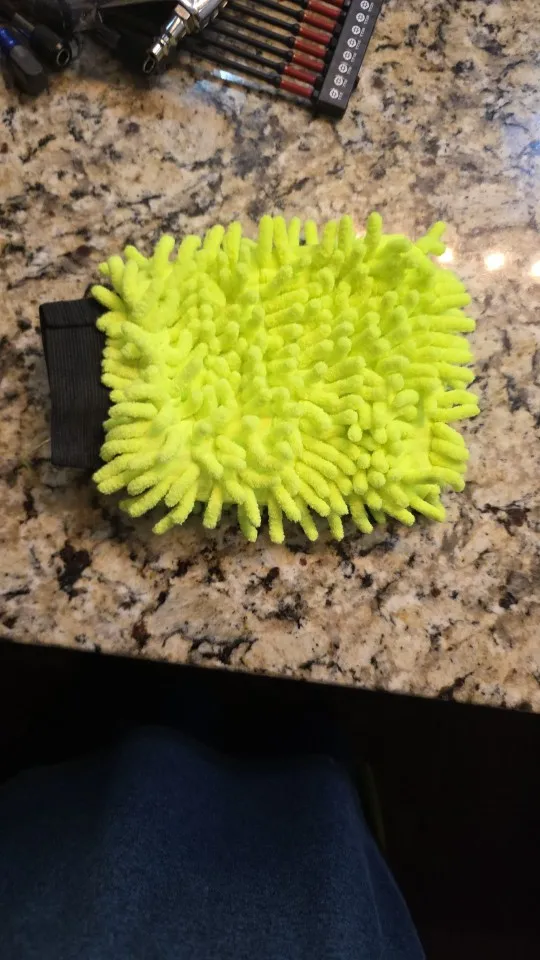
- General wipe-downs: a lint-free microfiber glove or two-piece set makes quick work of dashboards, vents, and trim without needing a separate cloth for each spot.
Keeping Microfiber Effective
Microfiber loses its advantage if it's washed with fabric softener (it coats the fibers and kills absorbency) or dried on high heat (it melts the fibers). Wash separately in cool water and air dry or tumble dry on low, and a towel will keep performing well past the point a standard towel would already be threadbare.
Frequently Asked Questions
Why does fabric softener ruin microfiber towels?
Fabric softener coats the fibers with a residue that kills absorbency, defeating the entire point of using microfiber in the first place. Washing microfiber separately, without softener, keeps it performing at full capacity.
Can I dry microfiber towels in a regular dryer?
Only on low heat — high heat melts the synthetic fibers and permanently damages the towel's texture and absorbency. Air drying or tumble drying on low are the safer options.
What GSM should I look for in a car detailing towel?
300+ GSM is a good baseline for high-absorbency performance, holding more liquid before pushing it around instead of soaking it up — important for drying jambs, wiping spills, or cleaning screens without streaking.
Is one microfiber towel enough for the whole car?
Not ideally — different areas benefit from different towel types, like a soft cloth for screens versus a plush towel for leather. Keeping a few dedicated towels or a glove set on hand covers more surfaces without cross-contaminating grit between them.
A high-absorbent microfiber wash towel covers most exterior and interior drying jobs, and a set of lint-free microfiber cleaning gloves is handy for dashboards and trim where you want more control than a flat towel gives you.
Shop Related Parts & Accessories
Pair your towels with these for a complete interior detailing routine:
- High-Absorbent Microfiber Towel — $12.84
- Lint-Free Microfiber Cleaning Gloves — $11.70
- Car Cleaning Brush Kit — $11.85
- Air Vent Cleaning Brush — $12.08
- 26-Piece Car Detailing Brush Kit — a complete detailing kit to pair with your towels.