
Code U1501 is a network communication code indicating a loss of communication between modules on the vehicle's data bus — specifically, an invalid or missing data message expected from another control module. It points to a communication breakdown rather than a fault in any single sensor or actuator.
Jump to a section: What U1501 means · Common causes · Symptoms you might notice · How it's diagnosed · Quick reference table · FAQ
What U1501 Means
The vehicle's modules communicate constantly over a shared data network, and each module expects to receive certain messages from others on a regular basis. U1501 sets when an expected message doesn't arrive or arrives invalid, meaning the network connection to or from a specific module has broken down.
Common Causes
A wiring fault in the communication bus itself, a failed or unresponsive module that has stopped transmitting, a blown fuse powering a module, corrosion or damage at a connector along the network, or a dead/disconnected battery affecting network communication are the most frequent causes.
Shutter parts
 Dorman Active Grille Shutter 601374 for 2017-2019 Chevy & GMC
$311.99Active grille shutter assemblies — confirm year. Confirm fitment by VIN before ordering.
Dorman Active Grille Shutter 601374 for 2017-2019 Chevy & GMC
$311.99Active grille shutter assemblies — confirm year. Confirm fitment by VIN before ordering.

Symptoms You Might Notice
Because this code reflects a broader communication failure, symptoms can be wide-ranging and sometimes seem unrelated to any single system — multiple warning lights illuminating together, certain features becoming unresponsive, or gauges behaving erratically are all possible depending on which module lost communication.
Battery and wiring
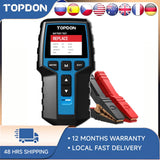 TOPDON BT200 12V Car Battery Tester Digital Automotive
$103.99Battery and connector checks.
TOPDON BT200 12V Car Battery Tester Digital Automotive
$103.99Battery and connector checks.
 ACDelco Wire Connectors, Replacement, 2 Pins
$90.99Battery and connector checks. Confirm fitment by VIN before ordering.
ACDelco Wire Connectors, Replacement, 2 Pins
$90.99Battery and connector checks. Confirm fitment by VIN before ordering.
 Nomex Split Loom, 1 in. x 10 ft
$105.66Battery and connector checks. Confirm fitment by VIN before ordering.
Nomex Split Loom, 1 in. x 10 ft
$105.66Battery and connector checks. Confirm fitment by VIN before ordering.


How It's Diagnosed
A scan tool that can access the full list of modules on the network helps identify which specific module isn't communicating. From there, checking that module's power, ground, and network wiring connections narrows down whether it's a wiring issue or a failed module itself.
Scanners
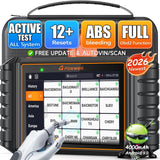 FOXWELL NT726 Bidirectional OBD2 Scanner
$368.99Command the shutter and read LIN data.
FOXWELL NT726 Bidirectional OBD2 Scanner
$368.99Command the shutter and read LIN data.
 FOXWELL NT614 Elite OBD2 Scanner
$233.69Command the shutter and read LIN data.
FOXWELL NT614 Elite OBD2 Scanner
$233.69Command the shutter and read LIN data.
 FOXWELL NT604 OBD2 Scanner
$209.09Read module codes.
FOXWELL NT604 OBD2 Scanner
$209.09Read module codes.


Quick Reference Table
| Step | What To Check |
|---|---|
| 1 | Identify which module isn't communicating |
| 2 | Check that module's fuse and power supply |
| 3 | Inspect network wiring and connectors |
| 4 | Test battery and charging system voltage |
Frequently Asked Questions
Can a weak battery cause U1501?
Yes — modules need stable voltage to communicate properly, so a weak or failing battery is a surprisingly common contributor to network communication codes like this one.
Will this code cause my car not to start?
It depends entirely on which module lost communication; if it's a module critical to starting (like the engine or ignition module), yes, but many communication codes affect only specific features rather than the ability to start.
Can I diagnose this without a professional-grade scan tool?
A basic code reader will show the code, but identifying exactly which module is missing from the network typically requires a scan tool capable of module-network diagnostics, which goes beyond basic code readers.
Does disconnecting the battery help?
Briefly disconnecting and reconnecting the battery can sometimes reset a temporary communication glitch, but if the code returns, there's an underlying wiring or module issue that needs proper diagnosis.
Shop the Parts Mentioned
-
 KONNWEI KW850 OBD2 Scanner — $83.11, retrieves generic (P0, P2, P3, U0) and manufacturer-specific (P1, P3, U1) codes, so it reads network codes like this one. Live data with graphing, freeze frame, O2 and EVAP tests, battery voltage check, and a built-in DTC lookup library. Engine-system coverage only — it does not read ABS or airbag modules.
-
 VDIAGTOOL BT500 Battery Tester — $57.53, tests battery health, cranking and charging on 6V/12V/24V systems with ripple analysis and a voltage waveform — rules out low system voltage, a common trigger for spurious module-communication codes.
-
 Battery Terminal Cleaning Brush — clears corrosion contributing to communication faults.
-
 95-Piece Mechanics Tool Set (Metric & SAE) — for inspecting network wiring and connectors.
-
 3-In-1 Cordless Impact Wrench & Screwdriver Kit — for module removal and connector access.