
P0562 is "System Voltage Low" — the control module has seen battery system voltage sit below its minimum threshold for long enough to log a fault. Most guides answer this with "test the battery, then the alternator." That is not wrong, but on GM vehicles it misses the two things that actually matter: GM's charging system deliberately lowers voltage under normal conditions, and GM has published a bulletin that names P0562 directly, lists four specific causes, and gives exact pass/fail numbers for testing the cables.
Jump to a section: What P0562 means · First: low voltage may be normal on a GM · The GM bulletin that names P0562 · GM's voltage drop test, done properly · The insulator mat under the ground stud · Torque specs that matter · What the companion codes tell you · Symptoms · Causes and how to confirm each · How it's diagnosed · Parts and cost · GM documents · What other pages get wrong · FAQ
What Does P0562 Mean?
The module monitors system voltage on its ignition feed. When that voltage falls below a calibrated minimum and stays there for a calibrated period, P0562 sets. Commonly cited thresholds are in the region of 10 volts sustained for around a minute, though the exact figures vary by platform and calibration.
Two implications worth holding onto.
First, this is an electrical code, not an engine code. Nothing about fuel, timing or airflow is being questioned. The module is reporting on the health of the power feeding it.
Second, and more usefully, voltage can be low for two entirely different reasons: the system is not producing or storing enough, or the system is producing plenty but losing it in the wiring on the way. Those lead to completely different repairs, and the test that separates them is a voltage drop test — which GM specifies precisely, and which almost nobody performs correctly. More on that below.
First — On a GM, Low Voltage Readings Can Be Normal
Before diagnosing anything, understand this, because it prevents a lot of unnecessary alternator purchases.
Most modern GM vehicles use a regulated voltage control strategy. Rather than holding a fixed 14 volts all the time, the module actively commands the generator's output based on what a battery sensor reports about state of charge, temperature and current flow. When the battery is well charged and demand is low, the system deliberately backs output down — improving fuel economy by reducing the load the generator places on the engine.
The practical consequence: seeing 12.7 or 13.0 volts on a dash gauge or scan tool on a healthy GM is often the system working as designed, not a failing charging system. It will command higher output again when the battery needs it, when electrical demand rises, or in cold conditions.
So a low reading by itself is not a diagnosis. We have a separate guide on what it means when the battery gauge reads 12 on a Silverado cluster that covers this behaviour in more depth.
P0562 is different — that is the module reporting voltage genuinely below its operating minimum, not the normal regulated dip. But the distinction matters when someone glances at a gauge, sees 12.8, and concludes the alternator is dying.
Tools for testing system voltage
 TOPDON BT200 Battery Tester
$103.9912V battery and charging system tester.
TOPDON BT200 Battery Tester
$103.9912V battery and charging system tester.
 FOXWELL BT705 Battery & Alternator Tester
$159.89Battery, alternator and load tester.
FOXWELL BT705 Battery & Alternator Tester
$159.89Battery, alternator and load tester.
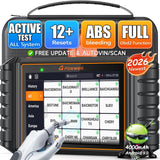 FOXWELL NT726 Bidirectional Scanner
$368.99Reads module voltage and charging system data.
FOXWELL NT726 Bidirectional Scanner
$368.99Reads module voltage and charging system data.

The GM Bulletin That Names P0562
This is the document to know about, and it is unusually comprehensive.
GM bulletin 18-NA-161 (version 6, March 2022) carries a long subject line describing a remarkable range of symptoms: steering jerks or kicks back, reduced power steering assist, engine stall, no start, Service StabiliTrak, IPC, radio and HVAC going blank, various DTCs, various functions inoperative, lamps and displays dimming, and various operations intermittent or inadvertent.
Buried in its DTC list, alongside a long string of B, C and U codes, is P0562. GM also lists "low system voltage or service battery message — not charging" among the customer conditions.
Vehicles covered
| Brand | Model | Model years |
|---|---|---|
| Chevrolet | Silverado 1500 | 2014 |
| Chevrolet | Silverado | 2015–2018 |
| Chevrolet | Silverado LD | 2019 |
| Chevrolet | Silverado 2500 / 3500 | 2015–2019 |
| Chevrolet | Suburban, Tahoe | 2015–2020 |
| GMC | Sierra 1500 | 2014 |
| GMC | Sierra | 2015–2018 |
| GMC | Sierra Limited | 2019 |
| GMC | Sierra 2500 / 3500 | 2015–2019 |
| GMC | Yukon models | 2015–2020 |
| Cadillac | Escalade models | 2015–2020 |
GM adds two important notes: for 2014 vehicles, check VIN status against safety recall 17276, and for 2015 vehicles, check VIN status against safety recall 18289. If the status is open, act on it. That is a free check worth making before anything else.
GM's four causes
- Battery cables with high resistance and/or loose connections — at the positive or negative battery cables, or the battery fuse block.
- A poor BCM ground at G218.
- A shorted B+ battery cable at the starter solenoid, caused either by a loose starter shield contacting the cable terminal ring, or by a ring terminal that was mis-installed or rotated when fitted.
- A discharged or faulty battery.
Notice what is not on that list: the alternator. GM's four named causes for this symptom set are three connection problems and a battery. That is the single most useful thing this bulletin tells an owner.
GM also notes that these causes may cause the battery to discharge — so a battery that keeps going flat is a symptom here, not necessarily the root fault.
GM's Voltage Drop Test, Done Properly
A voltage drop test measures how much voltage is lost across a cable while current is actually flowing. It finds bad cables that look perfect and read fine on a resistance check — including corrosion hidden inside the insulation.
GM is specific about method, and the method is where most people go wrong:
- Perform it with the fuel system disabled (or hold the accelerator at wide open throttle) while cranking the engine. The test needs real current flowing.
- Do NOT use MIN/MAX on the multimeter. GM says this explicitly.
- Monitor the reading at a steady crank, not during the initial spike.
- Do the measurement before grasping or rotating the cables — GM notes that handling them first can affect the readings.
And the pass/fail numbers, which are the part worth writing down:
| Cable | GM's limit | Action |
|---|---|---|
| Short positive battery cable | Voltage drop above 100 mV | Replace the affected cable |
| Negative battery cable | Voltage drop above 200 mV | Replace the affected cable |
Those are tenths of a volt. A cable can look immaculate, torque up tight, and still fail this test — which is exactly why GM published numbers rather than "inspect for corrosion."
GM's inspection continues past the meter:
- Battery posts must protrude 1–2 mm (0.040–0.080 in) above the cable clamps to be properly installed. If they do not, the clamp is not seating correctly.
- After tightening, grasp each cable near the post and check it does not spin. If it spins, replace the cable.
- Check the battery fuse block cable connections the same way — grasp near the eyelet and verify they do not rotate on the stud.
- Check the negative cable where it connects to the engine block, again by grasping near the eyelet to confirm it does not rotate.
If no loss-of-power component or interface is found, GM suggests considering replacing both the negative cable and the BDU cable and torquing them appropriately.
The Insulator Mat Under the Ground Stud
This is GM's second named cause, and it is one of the most specific — and most satisfying — faults in the whole bulletin.
G218 is a body control module ground. On light-duty trucks and SUVs built prior to June 2015, GM instructs technicians to inspect it for two things:
- The nut being loose or cross threaded — repair and tighten as necessary.
- The front of dash insulator mat being trapped between the ground eyelet and the body or stud.
If the mat is trapped, GM's correction is to cut the mat away from the ground stud so it no longer interferes, then reinstall the eyelet and nut and retighten.
That is a factory assembly issue — a piece of insulation pinched under a ground connection during build, creating a high-resistance path that degrades over time. No part required, and it explains why a vehicle can produce a bewildering spread of unrelated-seeming electrical symptoms at once. The bulletin's symptom list runs to dozens of items precisely because one poor ground affects everything downstream of it.
If you own a covered truck or SUV built before June 2015 and you have P0562 alongside odd electrical behaviour, this inspection costs nothing but trim removal.
Torque Specs That Matter Here
Loose is the same as corroded as far as resistance is concerned, and GM publishes the figures.
| Connection | Torque |
|---|---|
| Positive and negative battery cable clamp nuts | 7 Nm (62 lb in) |
| Battery fuse block cable nuts | 15 Nm (11 ft lb) |
| Negative battery cable at the engine block | 45 Nm (33 ft lb) |
Note how different those three are. A battery clamp torqued to engine-block spec will be damaged; an engine-block ground torqued to clamp spec will work loose. This is a place where guessing has consequences.
What the Companion Codes Tell You
P0562 rarely appears alone, and on GM the pattern of what accompanies it is diagnostic.
| Alongside P0562 | What it suggests |
|---|---|
| A spread of U-codes (lost communication with various modules) | Classic low-voltage cascade. Modules drop off the bus when voltage sags. Chase the voltage, not each module |
| C0800 (device power 1 circuit low) | A control module reporting low voltage. Named in the same bulletin as P0562 |
| Service StabiliTrak, brake or power steering messages | Safety systems are voltage-sensitive and complain early. Named in 18-NA-161's condition list |
| P0606 (control module processor) | Reported to appear with P0562 on newer platforms, where bulletins advise against replacing the module for it |
| P0513, P0826, B-codes for body systems | Also in 18-NA-161's DTC list — a wide, scattered code set points at power and ground rather than at each named system |
The rule of thumb: when a scan produces a long list of unrelated codes across many modules, suspect power and ground first. Replacing modules to chase a voltage problem is expensive and does not work.
Symptoms of P0562
- Check engine light, often with several other warning messages at once
- Service StabiliTrak, service power steering, or service battery messages
- Engine stall or no start
- Instrument cluster, radio or HVAC display going blank
- Interior and exterior lamps dimming or flickering
- Steering that jerks or kicks back, or reduced power steering assist on electric-steering models
- Doors locking or cycling on their own, wipers parking incorrectly, horn sounding without input
- Repeated dead batteries
- Slow cranking
That list is drawn largely from GM's own condition list in 18-NA-161, and its breadth is the point. If several unrelated systems misbehave at once, that is a power and ground signature, not several coincidental failures.
On safety: GM's list includes engine stall, no start and reduced power steering assist. Those are not inconveniences. Diagnose this rather than driving on it indefinitely.
What Causes P0562 — and How Do You Confirm Each One?
| Cause | How to confirm it | Source |
|---|---|---|
| High resistance in the positive battery cable | Loaded voltage drop test while cranking. Above 100 mV means replace | 18-NA-161 — verified |
| High resistance in the negative battery cable | Loaded voltage drop test while cranking. Above 200 mV means replace | 18-NA-161 — verified |
| Loose battery clamps or improperly seated posts | Posts should protrude 1–2 mm above the clamps. Cables must not spin when grasped | 18-NA-161 — verified |
| Loose battery fuse block connections | Grasp near each eyelet; it must not rotate on the stud. Torque 15 Nm | 18-NA-161 — verified |
| Poor BCM ground at G218 (insulator mat trapped) | Inspect under the dash; cut the mat away from the stud if trapped. Applies to LD trucks and SUVs built before June 2015 | 18-NA-161 — verified |
| B+ cable shorting at the starter solenoid | Inspect for the heat shield contacting the terminal ring, or a mis-installed or rotated ring terminal | 18-NA-161 — verified |
| Discharged or faulty battery | GM specifies the battery inspection and test procedure using the GR8 tester | 18-NA-161 — verified |
| Parasitic drain flattening the battery overnight | Measure current draw after all modules sleep — see our parasitic drain guide | — |
| Failed alternator or regulator | Output testing under load, after connections are proven. See our alternator failure guide | — |
| Corroded or undercoated chassis and engine grounds | Inspect frame and block ground points for corrosion or coating over the contact face | — |
Battery and cable parts
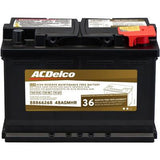 ACDelco Gold AGM Battery, Group 48
$300.99ACDelco Gold AGM battery, Group 48. Confirm fitment by VIN before ordering.
ACDelco Gold AGM Battery, Group 48
$300.99ACDelco Gold AGM battery, Group 48. Confirm fitment by VIN before ordering.
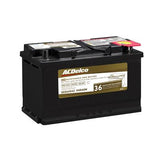 ACDelco Professional AGM Battery, Group 94R
$327.99ACDelco Professional AGM battery, Group 94R. Confirm fitment by VIN before ordering.
ACDelco Professional AGM Battery, Group 94R
$327.99ACDelco Professional AGM battery, Group 94R. Confirm fitment by VIN before ordering.
How Is P0562 Diagnosed?
- Record history and current codes from all modules before clearing anything. GM asks for this explicitly, and a wide scattered code set is itself a clue.
- Check VIN status against the recalls — 17276 for 2014 vehicles and 18289 for 2015 vehicles on covered platforms.
- Test the battery properly with a load or conductance tester, not just a resting voltage reading.
- Inspect the battery posts and clamps. Posts should stand 1–2 mm proud of the clamps; cables must not spin when grasped.
- Perform the loaded voltage drop test on the positive and negative cables while cranking, with the fuel system disabled, no MIN/MAX, reading at a steady crank.
- Check the battery fuse block and engine block ground connections for rotation, and torque to spec.
- Inspect G218 on covered light-duty trucks and SUVs built before June 2015 for a loose or cross-threaded nut and for trapped insulator mat.
- Inspect the starter solenoid B+ cable for contact with the heat shield or a rotated ring terminal.
- Check for parasitic drain if the battery keeps going flat despite a good charging system.
- Only then test the alternator under load — and interpret the result against the regulated voltage control behaviour described above.
Parts and Cost
| Repair | What it involves | Cost picture |
|---|---|---|
| Clean and torque battery connections | Wire brush, correct torque, verify posts seat properly | Near zero — and it resolves a real share of these |
| Cut the insulator mat clear of G218 | Trim removal, a utility knife, reinstall and retighten | No parts required in GM's correction |
| Negative battery cable | Where the loaded drop test exceeds 200 mV. Order by VIN from the parts catalogue | Modest, and a realistic DIY job |
| Positive battery cable or BDU cable | Where the drop test exceeds 100 mV | Modest to moderate depending on the assembly |
| Starter B+ cable and heat shield | Where the cable has been shorting on the shield — GM replaces both together | Moderate; access varies |
| Battery | Where it fails the GR8 test | The common outcome, and often the correct one |
| Alternator | Last, after connections and battery are proven | The expensive guess when bought first |
| Control module | Rarely the answer. Bulletins on newer platforms specifically advise against replacing modules for low-voltage codes | The most expensive wrong turn available |
The shape here favours the owner more than most codes: GM's own four causes are three connections and a battery, and two of the corrections need no parts at all.
Cables and charging
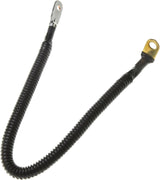 ACDelco 4ST18 Positive Fuse Block Cable
$15.84ACDelco positive battery fuse block cable. Confirm fitment by VIN before ordering.
ACDelco 4ST18 Positive Fuse Block Cable
$15.84ACDelco positive battery fuse block cable. Confirm fitment by VIN before ordering.
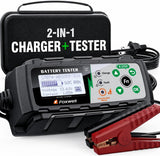 FOXWELL BC521 Battery Charger & Tester
$162.35Charger and tester to recover a run-down battery.
FOXWELL BC521 Battery Charger & Tester
$162.35Charger and tester to recover a run-down battery.
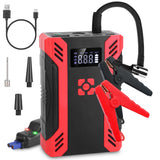 Jump Starter with Air Compressor
$177.99Jump starter with built-in air compressor.
Jump Starter with Air Compressor
$177.99Jump starter with built-in air compressor.
GM Documents Relevant to P0562
| Document | Date | Subject | Coverage |
|---|---|---|---|
| 18-NA-161 (v6) | Mar 2022 | Steering jerks, reduced power steering assist, engine stall, no start, Service StabiliTrak, blank displays, dimming, various DTCs including P0562. Four causes: cable resistance, BCM ground G218, shorted starter B+ cable, faulty battery. Voltage drop limits, torque specs, and the insulator mat correction | Silverado 2014–2019 (incl. 2500/3500 and LD), Sierra 2014–2019 (incl. 2500/3500 and Limited), Tahoe, Suburban and Yukon 2015–2020, Escalade 2015–2020 |
| Safety recall 17276 / 18289 | — | Referenced by 18-NA-161 for VIN status checks on 2014 and 2015 vehicles respectively | Check VIN before proceeding |
| PIT6347B / 24-NA-050 | — | Reported to link low voltage to brake and StabiliTrak messages with P0562 and P0606 on newer platforms, and to advise against replacing the module | Corroborated, not opened |
What Other P0562 Pages Get Wrong
- Jumping straight to the alternator. GM's four named causes in 18-NA-161 are battery cable resistance, a BCM ground, a shorted starter cable and a faulty battery. The alternator is not among them. It gets tested after the connections are proven, not before.
- Saying "check for corrosion" instead of giving numbers. GM publishes pass/fail limits — above 100 mV on the positive cable and above 200 mV on the negative cable means replace. A cable that looks perfect can fail that test, which is the entire reason the test exists.
- Describing the voltage drop test without the method. GM says to perform it while cranking with the fuel system disabled, to read at a steady crank, and specifically not to use MIN/MAX on the meter. Done casually with the engine off, the test proves nothing.
- Confusing normal regulated voltage with a fault. GM's charging strategy deliberately reduces output when the battery is charged and demand is low. A gauge showing 12.7 volts on a healthy truck is often the system working as designed.
- Never mentioning G218. A piece of dash insulator mat trapped under a ground stud during assembly is a documented cause on light-duty trucks and SUVs built before June 2015, and the fix requires no parts at all.
- Chasing each module in a long code list. When voltage sags, modules drop off the communication bus and log codes against each other. That scattered U-code spread is a symptom of the power problem, not ten separate faults.
- Ignoring torque. Battery clamps take 7 Nm, fuse block nuts 15 Nm, the engine block ground 45 Nm. Loose creates the same resistance as corroded.
We publish specifications, torque figures and coverage only where we could read them in GM's own documentation, and we flag anything reported from secondary sources.
Frequently Asked Questions
Is it safe to drive with P0562?
Not really. GM's own condition list for the bulletin covering this code includes engine stall, no start, and reduced or lost power steering assist on electric-steering models. A vehicle that can stall or lose steering assist unpredictably needs diagnosing rather than driving. It may also leave you stranded with a flat battery.
Does P0562 mean I need a new alternator?
Not on the evidence of the code alone. GM's four named causes are high-resistance battery cables, a poor BCM ground, a shorted starter B+ cable, and a discharged or faulty battery. Test the connections and battery first — the alternator is where this diagnosis ends, not where it starts.
My battery gauge reads 12.6 volts. Is that a problem?
Often not. GM's charging system varies output deliberately based on battery state of charge and electrical demand, so a lower reading on a well-charged battery with light load is frequently normal operation rather than a fault. P0562 is a different matter — that is voltage below the module's operating minimum, not the normal regulated dip.
What is a voltage drop test and why does it matter?
It measures voltage lost across a cable while current is actually flowing, which reveals high resistance that a visual inspection or a simple resistance check will miss — including corrosion hidden inside the insulation. GM's limits are 100 mV on the positive cable and 200 mV on the negative. Perform it while cranking with the fuel system disabled, reading at a steady crank, without using MIN/MAX on the meter.
What is the G218 ground issue?
On covered light-duty trucks and SUVs built before June 2015, the front of dash insulator mat can be trapped between the body control module's ground eyelet and the body during assembly, creating a high-resistance connection. GM's correction is to cut the mat away from the stud, reinstall the eyelet and nut, and retighten. No parts needed.
Why do I have so many unrelated warning lights at once?
Because that is what low voltage looks like. Modules across the vehicle need stable power to operate and to communicate; when voltage sags they misbehave and log codes about each other. GM's bulletin lists dozens of symptoms from one root cause. Treat the scattered code set as a pointer toward power and ground, not as a list of separate repairs.
Can a bad ground really cause all this?
Yes. Current has to return to the battery, and every module downstream of a high-resistance ground is affected. That is exactly why GM built an entire bulletin around cables, grounds and connections rather than around any single component.
My battery keeps dying. Is that this code?
It can be related. GM notes that the causes in this bulletin may cause the battery to discharge — so repeated flat batteries can be a symptom of the connection problem rather than a bad battery. If the charging system and connections test good, look at parasitic drain instead.
Shop Related Parts & Tools
Most of GM's named causes here are connections rather than components, so the useful items are a tester and the cables themselves. Always confirm fitment against your VIN before ordering.
-
 VDIAGTOOL BT500 Battery Tester — tests battery health, cranking and charging with ripple analysis and a voltage waveform. The right first step on this code.
-
 ACDelco Gold Negative Battery Cable — the replacement GM's procedure calls for when the negative cable exceeds 200 mV of voltage drop.
-
 MOTOPOWER MP69033 OBD2 Scanner — records the full code set across modules before you clear anything, which GM asks for specifically.
-
 95-Piece Mechanics Tool Set (Metric & SAE) — for the battery clamps, fuse block studs and ground fasteners.