
P1271 is Accelerator Pedal Position Sensor 1-2 Correlation. Your accelerator pedal contains more than one position sensor, and they are supposed to agree about where your foot is. P1271 sets when they disagree — and when the module cannot trust what the pedal is telling it, it stops trusting the pedal altogether. That is why this code so often arrives with Reduced Engine Power and a vehicle that will barely move.
Jump to a section: What P1271 means · Why there are two sensors · Pedal sensors, not throttle body sensors · Reduced Engine Power and safety · You usually buy the whole pedal · The shared reference and the wiring · Check under the pedal first · A warning about GM P1xxx codes · A note on sourcing · Symptoms · Causes and how to confirm each · How it's diagnosed · Parts and cost · What other pages get wrong · FAQ
What Does P1271 Mean?
On a drive-by-wire vehicle there is no cable between your foot and the engine. The accelerator pedal is a sensor assembly, and the only thing telling the engine how much power you want is an electrical signal.
Because that signal matters so much, GM does not rely on a single sensor. The pedal contains multiple independent position sensors — commonly two, sometimes three — each reporting pedal position separately.
The module reads them all and checks them against each other. In normal operation they track together: press the pedal, and every sensor reports the movement in the way the module expects.
P1271 sets when sensor 1 and sensor 2 no longer agree. One is saying something the other is not.
And that is a genuinely difficult position for the module to be in, because it has no way to know which sensor is lying. Two sources disagree, both were supposed to be reliable, and there is no third opinion to break the tie. So it does the only safe thing available: it stops trusting the pedal.
Why There Are Two Sensors in the First Place
The design reasoning here is worth understanding, because it explains the whole diagnostic.
A single pedal sensor that failed high would command power the driver never asked for. That is an unacceptable failure mode, so the system is built so no single sensor failure can produce it. Two independent sensors must agree before the module acts on what they say.
The sensors are also deliberately designed not to fail the same way. They typically operate over different voltage ranges, or move in different directions, or rise at different rates. That is intentional — it means a single fault affecting both circuits equally does not fool the system into thinking they agree.
Two consequences follow, and they matter diagnostically:
- The correlation check is doing exactly what it was designed to do when it sets this code. The system is not malfunctioning; it is catching a discrepancy, which is its job.
- Because the sensors are designed to behave differently, "both read the same" is not what you are checking for. You are checking that each tracks pedal movement the way its own specification says it should.
This also explains why the response is so aggressive. A system built specifically to prevent unrequested acceleration is not going to shrug off its own sensors disagreeing.
Tools for checking the pedal sensors
 FOXWELL NT614 Elite Scanner
$233.69Shows pedal sensor 1 and 2 percentages side by side in live data.
FOXWELL NT614 Elite Scanner
$233.69Shows pedal sensor 1 and 2 percentages side by side in live data.
 Launch CRE 2.0 GM All-System Scanner
$159.00GM all-system scanner for reading reduced-power codes in every module.
Launch CRE 2.0 GM All-System Scanner
$159.00GM all-system scanner for reading reduced-power codes in every module.
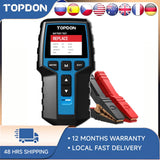 TOPDON BT200 Battery Tester
$103.99Low system voltage can upset sensor reference voltages — test the battery.
TOPDON BT200 Battery Tester
$103.99Low system voltage can upset sensor reference voltages — test the battery.


Pedal Sensors, Not Throttle Body Sensors
This distinction saves people from replacing the wrong part, and the two codes involved look almost identical in a symptom list.
| Accelerator pedal sensors | Throttle body sensors | |
|---|---|---|
| What they report | Where your foot is | Where the throttle plate is |
| Where they live | In the accelerator pedal assembly, in the footwell | On the throttle body, on the engine |
| Correlation code | P1271, and its relatives P1272 and P1273. Also P2138 on many applications | P2135 |
| What you replace | The pedal assembly | The throttle body |
Both produce Reduced Engine Power. Both feel identical from the driver's seat. But one is a part in the footwell and the other is a part on the engine, and they cost different amounts.
Our P2135 guide covers the throttle body side of this in detail, including a GM special coverage programme that applied to that code specifically. Read your code number carefully before anyone orders anything — the difference between the pedal and the throttle body is the difference between two different repairs.
The related codes are worth knowing too. On three-sensor pedal assemblies, P1272 covers the 2-3 correlation and P1273 covers 1-3. Which pair disagrees can help identify which sensor is the odd one out — if sensor 1 disagrees with both 2 and 3, sensor 1 is the likely culprit.
Reduced Engine Power — and Why It Matters for Safety
This code has real safety implications and we are not going to be vague about them.
When the module cannot trust the pedal, it enters Reduced Engine Power — sometimes called limp mode. Power is severely limited, and on some vehicles the engine will barely respond to the pedal at all.
The problem is when that happens. A correlation fault can be intermittent, which means the vehicle may enter reduced power:
- While merging onto a highway
- While overtaking
- Pulling out across traffic
- On a grade with a load or trailer
Losing the ability to accelerate in any of those situations is dangerous, and it happens without warning.
So the honest guidance:
- If your vehicle has entered reduced power even once, treat this as urgent. An intermittent correlation fault does not stay intermittent, and it chooses its own moment.
- Avoid highway driving, overtaking and towing until it is resolved.
- If it is currently in reduced power, get it recovered rather than driving any distance.
This is not a code to carry while you decide what to do about it.
You Usually Buy the Whole Pedal
A practical point that catches people at the parts counter.
On most GM applications the position sensors are integral to the accelerator pedal assembly. There is no separate "APP sensor 1" to order — the sensors, the pedal arm and the mounting bracket are one serviceable unit.
That has a few consequences:
- If a sensor has genuinely failed, you are buying the pedal assembly. Budget accordingly.
- Which makes the wiring and connector inspection genuinely worth doing properly, because that is the outcome that costs almost nothing.
- The job itself is usually straightforward — the pedal assembly bolts into the footwell and the labour is modest compared with engine-bay work.
Some applications require a relearn or idle learn procedure after replacement. Ask about that before the job is considered finished — skipping a required relearn is a documented way to have a driveability complaint return, as our P0506 and P0507 guide covers.
The Shared Reference and the Wiring
Before the pedal assembly, there is a circuit to rule out — and it is where a meaningful share of these faults actually live.
These sensors run on reference voltage supplied by the module, and they need clean grounds. A problem in either affects what the sensors report without either sensor being faulty.
What to check:
- The pedal connector for corrosion, moisture, and backed-out or spread terminals. Check terminal grip rather than appearance — a backed-out terminal looks perfectly seated.
- The harness in the footwell, which is more exposed than most people realise. Feet, cargo, cleaning and floor mats all interact with it.
- Reference voltage and ground at the connector, with voltage drop testing under load rather than a static check.
- Whether other sensor codes are stored — several unrelated sensors misbehaving together points at a shared reference rather than multiple failures. Our P1106 guide covers that same reasoning on the MAP circuit.
And because a correlation fault is often intermittent, the wiggle test earns its place here. With live data showing both pedal sensor readings, move the connector and flex the harness while watching. A reading that jumps has just identified the fault location — something a static resistance check will never do.
One more: if any aftermarket electronics have been wired into or near the pedal harness — throttle response controllers being the obvious example — disconnect them, clear the codes and see whether the fault returns. That is a free test, and a device that taps into a safety-redundant circuit is a legitimate suspect.
Check Under the Pedal First
The cheapest check available on this code, and it takes ten seconds.
Anything physically interfering with the pedal can produce a correlation fault — because the sensors are reading a pedal that is not moving through its normal range.
Look for:
- A floor mat riding up under or over the pedal, or an unsecured aftermarket mat stacked on the original
- Objects lodged under the pedal — bottles, tools, ice scrapers, anything that has rolled forward
- Debris or carpet bunching restricting travel
- Physical damage to the pedal arm or bracket
Floor mat interference is a well-recognised safety issue in its own right, quite apart from this code. Mats should be the correct type for the vehicle, secured by their retaining hooks, and never stacked on top of one another. If yours is not, fix that regardless of what the diagnosis turns up.
A Warning About GM P1xxx Codes
GM reused P1xxx code numbers across model years and platforms for different faults, and published GM code lists carry an explicit caution about it. P1xxx codes are manufacturer-specific by definition, so other makes use these numbers for entirely unrelated problems.
The definition used here — accelerator pedal position sensor 1-2 correlation, also expressed as APP sensor 1-2 performance — is the one that appears consistently across GM code references.
If your scan tool shows something different for P1271 on your vehicle, trust the tool and your service information over any article.
A Note on Sourcing for This Code
We cite documents we have read and label the rest.
We could not verify a GM service bulletin naming P1271 on a specific GM platform. The definition is consistent across GM code references, and the material here — the redundancy design, the pedal-versus-throttle-body distinction, the circuit checks — reflects standard practice rather than a GM document we opened and read.
Note carefully: the GM special coverage programme discussed in our P2135 guide named that code and its companions. We are not claiming it applies to P1271, and you should not assume it does. What is worth doing is asking a dealer to check your VIN against current bulletins and coverage — that is free, and coverage programmes exist that no article can tell you about.
Symptoms of P1271
- Reduced Engine Power message and severely limited power
- Check engine light on
- Poor or absent response to the accelerator pedal
- The engine returning to idle regardless of pedal input
- Hesitation, surging or erratic acceleration
- Rough idle in some cases
- Symptoms that come and go — a correlation fault is frequently intermittent
- Companion codes such as P1272, P1273 or other throttle system codes
On urgency: high, because of when it can happen. An intermittent loss of acceleration while merging or overtaking is a genuine hazard, and the vehicle gives no warning before it enters reduced power. Get this diagnosed promptly and avoid highway driving and towing until it is resolved.
Causes and How to Confirm Each
| Cause | How to confirm it | Notes |
|---|---|---|
| Physical obstruction at the pedal | Look under and around the pedal. Check the floor mat is correct, secured and not stacked | Free, and takes seconds. Check first |
| Corroded or backed-out connector terminal | Inspect the pedal connector; check terminal grip rather than appearance | A backed-out terminal looks perfectly seated |
| Damaged footwell wiring | Inspect the harness. Wiggle test with live data on both sensor readings | Footwell harnesses see feet, cargo and cleaning |
| Reference voltage or ground fault | Check reference and ground at the connector; voltage drop test under load | Other unrelated sensor codes alongside point here |
| Failed sensor within the pedal assembly | Compare both sensors' live data through full pedal travel against specification | Means buying the pedal assembly on most applications |
| Aftermarket throttle controller or wiring tap | Disconnect, clear the codes, and see whether the fault returns | Free test. Declare any such device when diagnosing |
| Moisture in the footwell | Check for wet carpet, a leaking seal or a blocked drain | Explains corrosion, and needs fixing or it recurs |
| Low system voltage | Test the battery and charging system | Free, and marginal voltage makes references unstable |
| Software calibration | Ask the dealer to check for updates against your VIN | Worth asking before condemning hardware |
| ECM fault | Last, after pedal, wiring, reference and grounds are excluded | Rare; requires programming |
Pedal and throttle parts
 GM Genuine 25832864 Accelerator Pedal (2007–2011 trucks)
$99.06GM Genuine accelerator pedal with sensor for 2007–2011 Silverado, Sierra and Yukon. Confirm fitment by VIN before ordering.
GM Genuine 25832864 Accelerator Pedal (2007–2011 trucks)
$99.06GM Genuine accelerator pedal with sensor for 2007–2011 Silverado, Sierra and Yukon. Confirm fitment by VIN before ordering.
 ACDelco Accelerator Pedal 25832864
$141.99ACDelco version of the 25832864 pedal assembly. Confirm fitment by VIN before ordering.
ACDelco Accelerator Pedal 25832864
$141.99ACDelco version of the 25832864 pedal assembly. Confirm fitment by VIN before ordering.
 ACDelco Throttle Body 12679524
$343.99ACDelco throttle body, for when the pedal checks good but throttle codes follow. Confirm fitment by VIN before ordering.
ACDelco Throttle Body 12679524
$343.99ACDelco throttle body, for when the pedal checks good but throttle codes follow. Confirm fitment by VIN before ordering.


How Is P1271 Diagnosed?
- Look under the pedal. Floor mat, objects, obstruction. Free and immediate.
- Record all codes and freeze frame data before clearing. On an intermittent fault that snapshot may be the best evidence available.
- Confirm it is a pedal code, not a throttle body code. P1271 is the pedal; P2135 is the throttle body. Different parts entirely.
- Note whether P1272 or P1273 are also stored. Which pairs disagree helps identify the odd sensor out.
- Test the battery and charging system. Free, and low voltage destabilises reference circuits.
- Disconnect any aftermarket throttle controller, clear the codes and retest.
- Inspect the pedal connector and footwell harness for corrosion, damage and terminal problems.
- Check reference voltage and ground at the connector, with voltage drop testing under load.
- Watch both sensors in live data through full pedal travel — each should track smoothly with no dropouts, according to its own specification.
- Wiggle test the connector and harness while watching that live data.
- Replace the pedal assembly only once the circuit is proven, and ask whether a relearn is required afterwards.
Parts and Cost
| Repair | What it involves | Cost picture |
|---|---|---|
| Clearing a pedal obstruction | Removing whatever is interfering; securing the floor mat properly | Free. And worth doing on safety grounds regardless |
| Connector or terminal repair | Where corrosion or a backed-out terminal is found | The cheapest real fix |
| Footwell wiring repair | Where damage is found in the harness | Modest |
| Ground or reference circuit repair | Where testing finds the fault upstream of the pedal | Modest |
| Battery or charging repair | Where marginal voltage is destabilising the circuit | Moderate |
| Accelerator pedal assembly | Sensors are integral on most applications. Bolts into the footwell | Moderate part; labour is usually modest |
| Relearn after replacement | Required on some applications | Ask before the job is called finished |
| Pedal replaced while a bad connector remains | What happens when the circuit is not tested first | Part and labour spent, fault still present |
Order against your VIN. Pedal assemblies differ between platforms and model years and are not interchangeable — and on a safety-redundant circuit, a quality part matters more than usual.
For the repair
 ACDelco 2-Pin Replacement Connector PT3739
$90.99Two-pin replacement connector for repairing a corroded harness connector. Confirm fitment by VIN before ordering.
ACDelco 2-Pin Replacement Connector PT3739
$90.99Two-pin replacement connector for repairing a corroded harness connector. Confirm fitment by VIN before ordering.
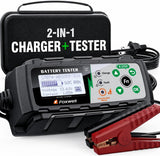 FOXWELL BC521 Battery Charger & Tester
$162.35Keep battery voltage steady while relearning the throttle.
FOXWELL BC521 Battery Charger & Tester
$162.35Keep battery voltage steady while relearning the throttle.
 FOXWELL NT301 Code Reader
$68.82Budget code reader with live data.
FOXWELL NT301 Code Reader
$68.82Budget code reader with live data.


What Other P1271 Pages Get Wrong
- Confusing pedal sensors with throttle body sensors. P1271 is the accelerator pedal in the footwell. P2135 is the throttle body on the engine. Both produce Reduced Engine Power and feel identical, but they are different parts and different repairs.
- Not explaining why redundancy exists. Two sensors that must agree is a deliberate safeguard against unrequested acceleration. Understanding that explains why the module's response is so aggressive — it is the system working, not overreacting.
- Understating the safety issue. An intermittent correlation fault can drop the vehicle into reduced power while merging or overtaking, without warning. That is worth stating plainly rather than filing under "drivability."
- Skipping the floor mat check. A mat riding up under the pedal is free to find, is a recognised safety hazard in its own right, and can produce exactly this code.
- Recommending static circuit checks. Correlation faults are frequently intermittent. A wiggle test with live data on both sensors finds what a resistance check passes.
- Not saying the sensor is part of the pedal. On most GM applications there is no separate sensor to buy, which changes the economics of testing the wiring properly first.
- Ignoring aftermarket throttle controllers. A device spliced into a safety-redundant circuit is a legitimate suspect, and disconnecting it is free.
Frequently Asked Questions
Why is my vehicle in Reduced Engine Power?
Because the module cannot tell which pedal sensor to believe. Two sensors that are supposed to agree are disagreeing, and there is no way to know which one is wrong — so rather than risk acting on a bad signal, the module stops trusting the pedal and limits power. It is the safeguard working as designed.
Is this the same as P2135?
No, and the distinction matters financially. P1271 concerns the sensors in the accelerator pedal assembly in your footwell. P2135 concerns the sensors on the throttle body on the engine. Both produce Reduced Engine Power and feel identical from the driver's seat, but they are different parts.
Can I drive with P1271?
We would not recommend it, and the reason is timing rather than damage. A correlation fault is frequently intermittent, so the vehicle can drop into reduced power without warning — including while merging or overtaking. Avoid highway driving and towing until it is resolved, and if it is currently in reduced power, have it recovered rather than driven any distance.
What's the cheapest thing to check?
Look under the pedal. A floor mat riding up, or an object that has rolled forward and lodged there, prevents the pedal moving through its normal range and can produce exactly this code. It takes seconds, and a badly fitted mat is worth correcting on safety grounds anyway.
Do I need a new pedal assembly?
Only once the circuit is ruled out. The connector, the footwell harness, the reference voltage and the grounds all affect what the sensors report without either sensor being faulty. On most GM applications the sensors are integral to the pedal, so if one has genuinely failed you are buying the assembly — which is exactly why testing the wiring first is worth the time.
Could my throttle response controller be causing this?
It is worth ruling out, and the test costs nothing. Disconnect it, clear the codes and drive. A device wired into a circuit specifically designed with redundancy to prevent unrequested acceleration is a reasonable suspect, and you should declare it when the vehicle is diagnosed.
I also have P1272 or P1273. What does that tell me?
That your pedal has three sensors and you now know which pairs disagree. If sensor 1 conflicts with both 2 and 3, sensor 1 is the likely odd one out. That is more information than a single correlation code gives you.
Why does it only happen sometimes?
That pattern fits a marginal connection rather than a failed sensor — a corroded or partly backed-out terminal that loses contact with movement, temperature or vibration and then recovers. It is also why a wiggle test with live data is the right technique, and why recording freeze frame data before clearing the code matters.
Shop Related Parts & Tools
Check under the pedal, then test the connector and reference circuit before ordering a pedal assembly. Match any part to your VIN.
-
 MOTOPOWER MP69033 OBD2 Scanner — essential here: it shows both pedal sensor readings live through full travel, which is how you tell a genuinely failed sensor from a wiring fault, and it captures the freeze frame on an intermittent before it is cleared.
-
 VDIAGTOOL BT500 Battery Tester — rules out marginal system voltage, which destabilises the reference circuits these sensors depend on. Free to eliminate before buying anything.
-
 95-Piece Mechanics Tool Set (Metric & SAE) — for pedal assembly and footwell trim access, which is where both the inspection and the repair happen.
Related Guides
- P2135 Code: Throttle/Pedal Position Sensor A/B Correlation — the throttle body side, and the code this is most confused with
- Chevy Code P1516: Meaning, Causes & How to Fix It — another throttle actuator code, and the relearn it needs
- P1106 Code: MAP Sensor Circuit Intermittent High Voltage — shared reference faults and the wiggle test
- P0506 & P0507 Codes: Idle Speed Lower or Higher Than Expected — why relearns matter after throttle work