
The 1.3L turbocharged three-cylinder in the Buick Encore GX and Chevrolet Trailblazer uses the ACDelco 41-106IP iridium plug (GM part number 12688094), and it needs three of them, not four. GM's published maintenance schedule for the Encore GX calls for spark plug replacement at 60,000 miles. The Buick Envista is a different engine entirely and takes a different plug.
That last point is where most orders go wrong. The Envista has never been offered with the 1.3L. It uses the 1.2L turbo three-cylinder, which takes the ACDelco 41-156 (GM 12683541). Same engine family, different heat range, different part. If you are shopping ignition parts for your Buick or Chevrolet three-cylinder, sort out which engine you actually have before you click anything.
Parts and tools you'll need
- Spark plugs and ignition coils for your GM turbo three-cylinder — the plug part number depends on whether you have the 1.2L or the 1.3L
- Buick maintenance parts for your Encore GX or Envista — engine air filter and cabin filter, since you're already in there
- A 5/8 in (16 mm) spark plug socket with a rubber retainer, a 3/8 in drive extension, and a torque wrench that reads accurately in the 10–20 lb-ft range
- Dielectric grease for the coil boots and a small amount of anti-seize used sparingly, if at all — read the section below before you reach for it
Spark plugs
 ACDelco 41-162 Iridium Spark Plug 19417055 (Pack of 2)
$14.99ACDelco iridium spark plugs — confirm the plug for your engine. Confirm fitment by VIN before ordering.
ACDelco 41-162 Iridium Spark Plug 19417055 (Pack of 2)
$14.99ACDelco iridium spark plugs — confirm the plug for your engine. Confirm fitment by VIN before ordering.
 ACDelco 41-114 Iridium Spark Plugs 12622441, GM OE, Qty 8
$109.99ACDelco iridium spark plugs — confirm the plug for your engine. Confirm fitment by VIN before ordering.
ACDelco 41-114 Iridium Spark Plugs 12622441, GM OE, Qty 8
$109.99ACDelco iridium spark plugs — confirm the plug for your engine. Confirm fitment by VIN before ordering.
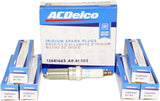 ACDelco 41-103 Professional Iridium Spark Plug 12681663
$63.89ACDelco iridium spark plugs — confirm the plug for your engine. Confirm fitment by VIN before ordering.
ACDelco 41-103 Professional Iridium Spark Plug 12681663
$63.89ACDelco iridium spark plugs — confirm the plug for your engine. Confirm fitment by VIN before ordering.
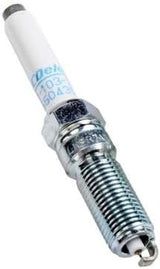 ACDelco 41-103IP Improved Performance Iridium Spark Plug
$13.99ACDelco iridium spark plugs — confirm the plug for your engine. Confirm fitment by VIN before ordering.
ACDelco 41-103IP Improved Performance Iridium Spark Plug
$13.99ACDelco iridium spark plugs — confirm the plug for your engine. Confirm fitment by VIN before ordering.


Which spark plug fits the Buick 1.3L turbo?
The 1.3L turbo (GM engine code L3T) in the 2020-and-newer Encore GX and 2021-and-newer Trailblazer uses ACDelco 41-106IP, GM part number 12688094. It is an iridium-center, platinum-ground-electrode plug with a 14 mm hex, a tapered seat, 25 mm reach, and a factory gap of 0.030 in (0.75 mm). Heat range 9.
The same 41-106IP is also the factory plug for GM's 2.7L turbo four-cylinder in the Sierra 1500 and Canyon, which is a useful sanity check when you are staring at a listing and wondering whether the site has the right part filed under the right vehicle. GM's own parts catalog lists 12688094 under both the 2.7L turbo and the 1.3L turbo.
Two plugs, two engines that look nearly identical on a spec sheet, and they are not interchangeable:
| Engine | GM code | Plugs needed | ACDelco number | GM number | Factory gap | Heat range |
|---|---|---|---|---|---|---|
| 1.2L turbo I-3 | LIH | 3 | 41-156 | 12683541 | 0.030 in (0.7 mm) | 8 |
| 1.3L turbo I-3 | L3T | 3 | 41-106IP | 12688094 | 0.030 in (0.75 mm) | 9 |
Both plugs share the 14 mm hex, 25 mm reach and tapered seat, so they physically thread into similar heads. That is exactly why the wrong one gets installed. The difference is in the heat range and the electrode package, and running the wrong heat range in a small-displacement turbo engine is not a cosmetic problem.
Which vehicles get which engine?
The Envista is 1.2L turbo only. The Encore GX and Trailblazer are offered with both the 1.2L and the 1.3L depending on trim and model year, and the Trax is 1.2L. Trim is the fastest way to guess, but the only reliable answer is the RPO code on your glovebox or door-jamb label, or the eighth digit of your VIN.
| Vehicle | Model years | Engines offered | Notes |
|---|---|---|---|
| Buick Encore GX | 2020 and newer | 1.2L turbo (LIH) and 1.3L turbo (L3T) | Base trims typically 1.2L; higher trims typically 1.3L. Verify by RPO. |
| Buick Envista | 2024 and newer | 1.2L turbo (LIH) only | No 1.3L has been offered. The 41-106IP is not your plug. |
| Chevrolet Trailblazer | 2021 and newer | 1.2L turbo (LIH) and 1.3L turbo (L3T) | GM's catalog lists the 1.2L plug under L, LS and LT trims. |
| Chevrolet Trax | 2024 and newer | 1.2L turbo (LIH) | Shares the 41-156 with Trailblazer 1.2L, Equinox 1.5L and Malibu 1.5L. |
Note the earlier Trax, sold through 2022, is a different vehicle on a different platform with a 1.4L turbo four and a different plug again. If you own a 2022-or-older Trax, none of the numbers above apply to you.
How many spark plugs does the 1.3L turbo need?
Three. Both the 1.2L and the 1.3L are inline three-cylinder engines, so you need three plugs and three coils, not four. Most retail listings for 41-106IP and 41-156 sell in packs of four because these plugs are shared with four-cylinder engines. Buy the pack, use three, keep the spare.
This trips up more people than it should. A parts counter search for an Encore GX tune-up kit will often return a four-plug set with four coil boots, and someone opens the hood expecting a fourth cylinder that does not exist. There is nothing wrong with the kit — you just have one plug left over.
How often should you replace the plugs?
GM's published maintenance schedule for the Encore GX lists spark plug replacement, along with an inspection of the plug wires and boots, at the 60,000-mile service. Treat that as the planning number. Your specific model year's owner's manual is the authority, and severe-service driving can shorten it.
A few things worth knowing about that interval. It is a small-displacement, direct-injected, turbocharged engine, which means high cylinder pressures and a small plug working hard. Short-trip city driving, heavy idling, towing a small trailer, or a tune are all reasons to inspect at 45,000–50,000 miles rather than waiting for the number on the schedule.
Iridium plugs also fail gradually rather than suddenly. The engine does not stop running at 60,001 miles. What you get instead is a slow decline: slightly worse fuel economy, a rougher cold start, a hesitation under boost that you talk yourself into ignoring. By the time a misfire code lands, the plugs have usually been marginal for a while.
What are the symptoms of worn plugs on a 1.3L turbo?
Misfire under load is the classic one. On a three-cylinder turbo you will usually feel a stumble when the turbo comes on boost — merging, climbing a grade, passing — before you feel anything at idle. Rough cold starts, a flashing check engine light, and a drop in fuel economy round out the list.
Because there are only three cylinders, losing one is a third of the engine. The shake is much more obvious than a single dead cylinder on a V6. If a 1.2L or 1.3L is misfiring badly enough that the check engine light is flashing, stop driving it. A flashing light means raw fuel is going into the catalytic converter, and a converter costs far more than a set of plugs.
Plugs are not always the culprit. A failed coil, a leaking injector, a carbon-fouled intake valve, or a boost leak will all produce similar complaints. Direct-injected engines are particularly prone to intake valve deposits, which our guide to carbon buildup on GM direct-injection engines covers. If you want to work through it methodically rather than throwing parts at it, our walkthrough on reading plug condition across the GM engine range covers what the electrodes and insulator are telling you when you pull them.
Can you regap an iridium plug?
No. ACDelco states plainly that its GM OE iridium plugs are pre-gapped at the factory and should never be gapped by hand — the iridium center electrode is fine enough that a gapping tool can chip or snap it. Install them exactly as they come out of the box.
This is a genuine change in practice from older engines. If you learned to check every plug with a wire gauge on the bench before installing, that habit is now actively harmful. The most you should do is a visual once-over for shipping damage: a bent ground strap or a cracked insulator means that plug goes in the bin, not in the head.
Same reasoning applies to dropping one. A plug that hits a concrete floor tip-first is a plug you throw away, even if it looks fine. The ceramic insulator can crack internally and you will not see it.
Should you use anti-seize on these plugs?
Generally no. Modern OE plugs ship with a plating on the threads that serves the same purpose, and anti-seize acts as a lubricant that causes you to over-torque the plug while the wrench still reads correctly. If you use it anyway, use the smallest possible amount and keep it off the electrode end.
Aluminum heads are unforgiving about this. Over-torquing into aluminum strips threads, and a stripped plug hole on a three-cylinder turbo turns a 45-minute maintenance job into a cylinder head repair. If you are unsure, install dry and torque to spec.
What's the torque spec?
Spark plug torque varies by engine, seat type and whether the threads are dry or lubricated, and GM does not publish a single figure that covers every application. Look up the spec for your exact engine in the factory service information or your owner's manual before you tighten anything. Do not use a generic number from a forum.
What is safe to say generally: these are tapered-seat plugs, which crush differently than gasketed plugs and typically call for less torque than the gasket-seat plugs you may be used to on an older LS engine. Use a torque wrench, not the snug-plus-a-quarter-turn method. On a tapered seat that method has no calibration point.
Ignition coils
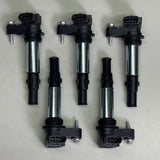 WALKER ThunderSpark Ignition Coil Chevrolet Buick SAAB Saturn
$35.00Ignition coils to replace at the same time if worn. Confirm fitment by VIN before ordering.
WALKER ThunderSpark Ignition Coil Chevrolet Buick SAAB Saturn
$35.00Ignition coils to replace at the same time if worn. Confirm fitment by VIN before ordering.
 IWOKPHD Ignition Coil 12654078 for Buick
$43.58Ignition coils to replace at the same time if worn. Confirm fitment by VIN before ordering.
IWOKPHD Ignition Coil 12654078 for Buick
$43.58Ignition coils to replace at the same time if worn. Confirm fitment by VIN before ordering.
 ACDelco Ignition Coil, GM OE, Coil Pack
$104.99Ignition coils to replace at the same time if worn. Confirm fitment by VIN before ordering.
ACDelco Ignition Coil, GM OE, Coil Pack
$104.99Ignition coils to replace at the same time if worn. Confirm fitment by VIN before ordering.
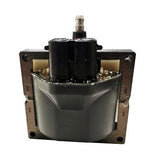 ACDelco Ignition Coil, Remote Mount Style
$92.99Ignition coils to replace at the same time if worn. Confirm fitment by VIN before ordering.
ACDelco Ignition Coil, Remote Mount Style
$92.99Ignition coils to replace at the same time if worn. Confirm fitment by VIN before ordering.

How do you change the plugs on a 1.2L or 1.3L turbo?
The job is straightforward on both engines. The three coils sit on top of the engine under a plastic cover. Budget an hour if it is your first time, and do it on a cold engine — pulling plugs from a hot aluminum head is how threads get damaged.
- Let the engine cool completely. Not warm. Cold.
- Disconnect the negative battery terminal.
- Remove the engine cover and any intake ducting or wiring harness routed over the coil pack area.
- Blow or vacuum debris out of the plug wells before you open anything. Grit that falls into a cylinder is a real problem.
- Unplug each ignition coil connector, remove the coil hold-down fastener, and pull the coil straight up with a twist to break the boot seal.
- Extract the old plug with a 5/8 in spark plug socket and an extension. Keep them in cylinder order so you can read them.
- Inspect each old plug. Uneven wear, oil fouling or a white-blistered insulator on one cylinder points at a problem the plugs are not going to fix.
- Thread each new plug in by hand until it seats. If it does not turn freely by hand, back it out and start over — do not force it with the wrench.
- Torque each plug to the manufacturer's published spec for your engine.
- Apply a light film of dielectric grease inside each coil boot, reinstall the coils, and torque the hold-down fasteners to spec.
- Reconnect the connectors, reinstall the ducting and cover, reconnect the battery.
- Start the engine and let it idle for a minute. Expect a slightly rough idle for a few seconds while the ECM re-learns.
What else is worth replacing at the same time?
The engine air filter, if it has been in there a while, and the coils if any of them are cracked, oil-soaked or already suspect. Coils are not on a replacement interval, but a coil that has been firing through a worn plug for 20,000 miles has been working harder than it should.
The cabin air filter is unrelated to the ignition system but it lives behind the glovebox and takes five minutes, so most people knock it out on the same afternoon. You can find both filters and the rest of the routine service items in the Buick parts and accessories range for your Encore GX or Envista.
What is not worth bothering with: performance plugs for these engines. There is no meaningful power to be had from a hotter plug in a stock, direct-injected turbo triple, and a heat range that does not match the calibration is a genuine detonation risk. The OE part is the right part here.
What to check before you order
- Engine, not trim. Confirm 1.2L or 1.3L from the RPO label or your VIN. Trim level is a decent guess and a bad basis for an order.
- Envista owners: you want 41-156 / 12683541, not 41-106IP. There is no 1.3L Envista.
- Quantity three. Packs of four are normal for these part numbers. You are not missing a cylinder.
- Do not gap them. Install as-supplied.
- Look up your torque spec for your specific engine before the wrench comes out, and use a torque wrench on aluminum heads.
- Older Trax and older Encore (through 2022) are different vehicles with different plugs. None of the numbers on this page apply.
Tools and filters
 ACDelco Tools Torque Wrenches, Digital LCD Display, 3/8 in.
$126.99Torque, scan and filter items for the tune-up.
ACDelco Tools Torque Wrenches, Digital LCD Display, 3/8 in.
$126.99Torque, scan and filter items for the tune-up.
 APOLLO TOOLS - DT0004-50 Piece ¼” Drive Socket Set
$54.99Torque, scan and filter items for the tune-up.
APOLLO TOOLS - DT0004-50 Piece ¼” Drive Socket Set
$54.99Torque, scan and filter items for the tune-up.
 FOXWELL NT614 Elite OBD2 Scanner
$233.69Torque, scan and filter items for the tune-up.
FOXWELL NT614 Elite OBD2 Scanner
$233.69Torque, scan and filter items for the tune-up.
 ACDelco A3140C Air Filter
$107.99Torque, scan and filter items for the tune-up. Confirm fitment by VIN before ordering.
ACDelco A3140C Air Filter
$107.99Torque, scan and filter items for the tune-up. Confirm fitment by VIN before ordering.


Frequently Asked Questions
Which spark plug does the Buick 1.3L turbo use?
ACDelco 41-106IP, GM part number 12688094 — an iridium-centre, platinum-ground plug with a 14 mm hex, tapered seat, 25 mm reach, 0.030 in gap and heat range 9. It is also the factory plug for GM's 2.7L turbo four, which is a useful check that a listing has the part filed correctly.
Does the Buick Envista use the same plug as the Encore GX?
Not necessarily, and this is where most orders go wrong. The Envista has only ever been offered with the 1.2L turbo, which takes ACDelco 41-156 (GM 12683541). The Encore GX is offered with both the 1.2L and the 1.3L depending on trim.
How many spark plugs does an Encore GX need?
Three. Both the 1.2L and 1.3L are inline three-cylinders. Most listings sell these part numbers in packs of four because the same plugs are used in four-cylinder engines — buy the pack, use three, keep the spare.
Are the 1.2L and 1.3L plugs interchangeable?
No. They share the 14 mm hex, 25 mm reach and tapered seat, so they physically thread into similar heads — which is exactly why the wrong one gets installed. The difference is heat range (8 versus 9) and the electrode package, and the wrong heat range in a small turbo engine is not a cosmetic problem.
How often should 1.3L turbo spark plugs be replaced?
GM's published maintenance schedule for the Encore GX lists plug replacement at the 60,000-mile service. Short-trip city driving, heavy idling, towing or a tune are all reasons to inspect at 45,000–50,000 instead. Your model year's owner's manual is the authority.
Can I gap an iridium spark plug?
No. ACDelco states its GM OE iridium plugs are pre-gapped at the factory and should never be gapped by hand — the fine iridium centre electrode can chip or snap. If you learned to check every plug with a wire gauge, that habit is now actively harmful. Install them straight from the box.
Should I use anti-seize on spark plugs?
Generally no. OE plugs ship with thread plating that serves the same purpose, and anti-seize acts as a lubricant that causes over-torquing while the wrench still reads correctly. On aluminium heads that strips threads, turning a 45-minute job into a cylinder head repair.
What are the symptoms of worn plugs on a three-cylinder turbo?
Misfire under load first — a stumble when the turbo comes on boost while merging or climbing. Then rough cold starts and worse fuel economy. Because there are only three cylinders, losing one is a third of the engine, so the shake is far more obvious than on a V6.
My check engine light is flashing. Can I keep driving?
No. Stop driving it. A flashing light means raw fuel is going into the catalytic converter, and a converter costs far more than a set of plugs.
Are performance spark plugs worth it on these engines?
No. There is no meaningful power in a hotter plug in a stock direct-injected turbo triple, and a heat range that does not match the calibration is a genuine detonation risk. The OE part is the right part here.
A Note on Sourcing
Part numbers, gaps, heat ranges, thread specifications and the 60,000-mile replacement interval come from ACDelco and GM published catalogue and maintenance-schedule information. The instruction never to hand-gap OE iridium plugs is ACDelco's own.
Engine availability by model and trim is from GM product information, but trim is a guess rather than a fitment method. The RPO label or the eighth digit of your VIN is what settles which engine you have, and this page says so rather than publishing a trim-to-engine chart that would go stale.
Torque figures are deliberately omitted. Spark plug torque varies by engine, seat type and whether threads are dry or lubricated, and GM publishes no single covering figure. On an aluminium head the cost of a wrong number is a cylinder head repair.
The recommendation against performance plugs is our own. We sell ignition parts, and the position stated here is that the OE plug is the correct purchase for these engines and a mismatched heat range is a detonation risk rather than an upgrade.
For more service walkthroughs across the Chevrolet, GMC, Buick and Cadillac range, browse more GM maintenance guides.
Get the whole ignition job in one order
A tune-up on a 1.2L or 1.3L turbo triple is a short parts list. Put it together in one pass rather than ordering twice:
- Spark plugs — 41-106IP (12688094) for the 1.3L, 41-156 (12683541) for the 1.2L, three per vehicle
- Ignition coils — three, if any are cracked, oil-contaminated or already throwing a cylinder-specific misfire
- Engine air filter — cheap, and it is right there
- Dielectric grease for the coil boots
Start with the GM ignition and electrical parts collection and filter to your engine, then add the filters from the Buick range before you check out. Confirm your engine displacement first — the 1.2L and the 1.3L do not share a plug.