
On a Chevy Express or GMC Savana, the parts that come due first are steering linkage and front suspension: idler arm, pitman arm, tie rod ends, ball joints and control arm bushings, usually between 80,000 and 150,000 miles. Front wheel hub bearings, blower motor resistors, brake rotors and fuel pumps follow. The van's weight and its recirculating-ball steering are why.
These are not trucks with a box removed. The Express and Savana ride on the GMT610 platform, they carry a lot of weight over the front axle, and most of them do stop-and-go work with a full load. That combination wears steering and suspension parts faster than anything else on the vehicle, and it is where a fleet's parts budget actually goes. You can see the whole category in the GM van and commercial vehicle parts collection.
Parts and tools you'll need
- Express and Savana wear parts by model and GVWR — the GVWR matters more on these vans than on any GM truck
- Steering linkage and front suspension components — idler arm, pitman arm, tie rod ends, control arms
- A pickle fork or tie rod separator, and a ball joint press if you are servicing joints rather than whole arms
- Jack stands rated for the van's actual corner weight — a loaded 3500 is heavier than most stands people own
Express and Savana parts
 2013-2017 Chevy Express GMC Savana LED 3rd Brake Light
$89.99Parts listed for Chevy Express and GMC Savana. Confirm fitment by VIN before ordering.
2013-2017 Chevy Express GMC Savana LED 3rd Brake Light
$89.99Parts listed for Chevy Express and GMC Savana. Confirm fitment by VIN before ordering.
 Chevrolet Express GMC Savana 2007-2026 OEM 4 Button Remote
$37.99Parts listed for Chevy Express and GMC Savana. Confirm fitment by VIN before ordering.
Chevrolet Express GMC Savana 2007-2026 OEM 4 Button Remote
$37.99Parts listed for Chevy Express and GMC Savana. Confirm fitment by VIN before ordering.
 MAHLE Oil Filter OC715
$14.00Parts listed for Chevy Express and GMC Savana. Confirm fitment by VIN before ordering.
MAHLE Oil Filter OC715
$14.00Parts listed for Chevy Express and GMC Savana. Confirm fitment by VIN before ordering.
 MAHLE Air Filter LX5244
$52.00Parts listed for Chevy Express and GMC Savana. Confirm fitment by VIN before ordering.
MAHLE Air Filter LX5244
$52.00Parts listed for Chevy Express and GMC Savana. Confirm fitment by VIN before ordering.


What actually wears out on an Express or Savana, and when?
Steering and front suspension first, brakes and hubs second, then the accessory and comfort items. The list below is a planning guide based on how these vans are typically used, not a manufacturer specification — a lightly loaded passenger van will go far past these numbers and a loaded delivery van in a salt state will not reach them.
| # | Part | Typical planning window | What you notice first |
|---|---|---|---|
| 1 | Idler arm | 80k–130k | Steering wander; van drifts in its lane and needs constant small corrections |
| 2 | Pitman arm | 90k–150k | On-center dead spot; play at the center link connection |
| 3 | Outer and inner tie rod ends | 80k–140k | Uneven inner-edge tire wear; torn boots on inspection |
| 4 | Front wheel hub and bearing assembly | 90k–150k | Growl that changes with steering input; ABS light on the same corner |
| 5 | Upper and lower ball joints / control arm bushings | 100k–160k | Clunk over bumps, vague steering, alignment that will not hold |
| 6 | Brake rotors and pads | 40k–80k per set | Pulsation under braking, or thickness below the minimum stamped on the rotor |
| 7 | Blower motor resistor (then the blower motor) | 80k–150k | Fan works only on high — that is the resistor, almost every time |
| 8 | Intermediate steering shaft | 90k–160k | Clunk felt through the wheel on turn-in, usually at low speed |
| 9 | Fuel pump / sending unit | 120k–200k | Long crank when hot, then intermittent no-start |
| 10 | Steering gear (recirculating ball box) | 120k–200k | Reddish fluid at the input or sector shaft seal; whine that changes pitch |
Note the pattern. Seven of the ten are steering, suspension or braking — the systems that carry load. That is the honest answer to what you should stock for a fleet of these.
Note also what is not on the list. The 4.3L V6 and the 6.0L and 6.6L V8s in these vans are long-lived, conservatively tuned engines. Powertrain is rarely the reason an Express comes off the road. Chassis is.
Why does the steering feel loose at 100,000 miles?
Because these vans use a hydraulic recirculating-ball steering gear with a separate linkage — pitman arm, center link, idler arm and tie rods — instead of a rack and pinion. That is more joints in series, and every joint's wear adds up at the steering wheel. It is a design chosen for durability under load, and the tradeoff is more wear points.
The gear itself converts steering wheel rotation through a worm gear to a piston, which rotates a sector shaft that drives the pitman arm. The pitman arm moves the center link, the idler arm supports the other end of the center link, and the tie rods take it to the wheels. Play anywhere in that chain becomes play everywhere.
Diagnose it in this order, because replacing the gear when the idler arm is worn is a common and expensive mistake:
- With the van on the ground and the engine running, have someone rock the steering wheel a few degrees each way while you watch the linkage from underneath.
- Watch the idler arm first. Vertical movement at the idler arm where the center link attaches is the single most common source of wander on this platform.
- Watch the pitman arm at its center link connection for the same kind of play.
- Grab each tie rod end and check for looseness and torn boots.
- Watch the intermediate steering shaft between the column and the gear. A clunk you feel in the wheel on turn-in is usually the ISS U-joints, not the gear.
- Only after all of that, look at the gear itself — and look for leaks at the input shaft and sector shaft seals as separate evidence.
Do the whole linkage at once if you are past 100,000 miles and more than one component shows play. Replacing one worn joint in a chain of worn joints gets you a van that still wanders, and you pay for the alignment twice.
Any steering or suspension work that changes toe requires an alignment afterward. That is not optional on a van that eats front tires when it is out of spec.
Steering parts
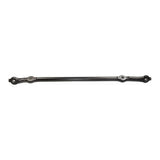 Moog Center Link DS1407 for 1990-2000 Chevy, GMC & Cadillac
$123.99Steering linkage parts for full-size vans. Confirm fitment by VIN before ordering.
Moog Center Link DS1407 for 1990-2000 Chevy, GMC & Cadillac
$123.99Steering linkage parts for full-size vans. Confirm fitment by VIN before ordering.
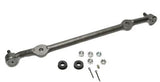 ACDelco Center Link, Steering
$108.99Steering linkage parts for full-size vans. Confirm fitment by VIN before ordering.
ACDelco Center Link, Steering
$108.99Steering linkage parts for full-size vans. Confirm fitment by VIN before ordering.
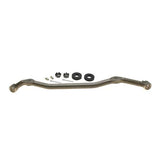 ACDelco Center Link, Steering
$106.99Steering linkage parts for full-size vans. Confirm fitment by VIN before ordering.
ACDelco Center Link, Steering
$106.99Steering linkage parts for full-size vans. Confirm fitment by VIN before ordering.
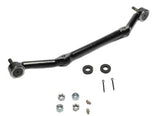 ACDelco Drag Links, ACDelco Silver Drag Links, Greasable
$105.99Steering linkage parts for full-size vans. Confirm fitment by VIN before ordering.
ACDelco Drag Links, ACDelco Silver Drag Links, Greasable
$105.99Steering linkage parts for full-size vans. Confirm fitment by VIN before ordering.
Why do front wheel hubs fail on these vans?
Front axle load. The engine, transmission, steering gear and driver all sit ahead of or over the front axle on a cab-forward van, and the hub bearing carries that continuously. Add the fact that most Express and Savana vans work loaded, and the front hub is doing more than the same part would on a pickup.
The symptom sequence is consistent. A low growl or hum appears first, usually speed-dependent. It changes character when you sway the van left and right at speed, because that shifts load between the two front hubs. Later the ABS light comes on, because the wheel speed sensor is integrated into the hub assembly and a failing bearing disturbs its signal.
Practical notes on ordering hubs for these vans:
- The 2500 and 3500 series are not the same part. Confirm which you have from the door jamb sticker, not from the badge.
- Confirm whether your assembly includes the wheel speed sensor. Some do and some do not, and a hub without the sensor when you needed one is a wasted afternoon.
- Check the stud count and stud pattern before ordering, particularly on 3500 duallys.
- Replace the hub as an assembly. These are sealed units and there is no serviceable bearing inside.
- Do them in pairs if the second one has similar mileage. The labor overlaps and the second one is coming.
Hub part numbers are deliberately not listed here. The catalog numbers that come up in searches for these vans frequently belong to other GM vehicles entirely, and a hub is not a part worth guessing at. Look yours up by VIN, or by year, model, series and GVWR through the fitment filter, and confirm the sensor question before you check out.
What changes between model years and series?
A lot, and this is where van parts ordering goes wrong. The Express and Savana ran on the GMT600 platform from 1996 to 2002 and the GMT610 from 2003 onward, and the engine and transmission lineup changed repeatedly inside that span. The series designation — 1500, 2500 or 3500 — changes suspension, brakes and hubs.
| Item | What to know |
|---|---|
| Platform | GMT600 1996–2002; GMT610 2003 onward. Parts rarely cross the 2002/2003 break. |
| Series | 1500 (light duty) was discontinued after 2014. 2500 and 3500 continue. |
| Front suspension | Short-long arm (SLA) double wishbone with coil springs on RWD; torsion bars on the AWD models offered 2003–2014. |
| Brakes | Four-wheel disc with ABS standardized from 2003 forward. |
| Wheelbase | 135 in short wheelbase; 155 in long wheelbase, offered on 2500 and 3500 only. |
| Gasoline engines, current | 4.3L LV1 EcoTec3 V6 at 276 hp and 298 lb-ft; 6.6L L8T V8 at 401 hp and 464 lb-ft. |
| Gasoline engines, earlier | 4.8L, 5.3L and 6.0L V8s across the 2003–2020 span; the 6.0L was replaced by the 6.6L L8T for 2021. |
| Diesels | 6.6L Duramax added 2006, discontinued after 2016. 2.8L LWN Duramax four-cylinder 2017–2022, discontinued for 2023. |
| Transmissions | 4L60-E on light-duty applications; 4L80-E on heavy-duty; 6L90 six-speed on 2500 and 3500 from 2010; an eight-speed added for 2024. |
The trap that catches people most often is GVWR within a single series. On 2003–2005 2500-series vans, front control arms differ between the roughly 7,300 lb GVWR build and the 8,500 or 8,600 lb builds — same model, same year, different part. The 3500 does not have that particular split.
Your GVWR is printed on the certification label in the driver's door jamb. Read it before you order any front suspension part for a 2500, every time. It takes ten seconds and it is the difference between a part that bolts on and a return.
What about the blower motor and the HVAC side?
If the fan only works on the highest setting, the blower motor resistor has failed and the motor is almost certainly fine. That is the single most common HVAC complaint on these vans, and it is a cheap part. If the fan is dead at every speed, or noisy, then look at the motor itself.
The two failures are related in an unhelpful way. A blower motor that is drawing high current as its bearings wear will cook the resistor and can damage the connector. Replace the resistor alone and you will be replacing it again in a few months, because the underlying cause is still bolted in.
The practical approach on a high-mileage van: if the resistor has failed once, replace the resistor, the motor and the pigtail connector together. If it has failed twice, do it without thinking about it. A melted connector is the tell.
What should a fleet keep on the shelf?
Steering linkage and front-end parts, because those come due predictably and take a van out of service when they fail an inspection. Brake pads and rotors, because they are consumed on a schedule. Blower motor resistors, because they are cheap and they annoy drivers.
For a fleet running several of these, the shelf list that pays for itself:
- One idler arm and one pitman arm per five vans past 80,000 miles.
- A set of front brake pads and rotors per van per year, adjusted to route severity.
- Two front hub assemblies, matched to your series and GVWR.
- Blower motor resistors, two per fleet minimum.
- Serpentine belt and tensioner per van past 100,000 miles.
- Engine and cabin air filters in quantity, since these are the fastest items to fall behind on.
What not to stock: engine and transmission components. These powertrains are durable and the failures are not predictable enough to inventory against. Buy those when you need them.
If you are building a service schedule from scratch rather than reacting to failures, the full GM maintenance checklist covers the interval-based items that apply to the van as well as the rest of the lineup.
Safety notes worth reading twice
A loaded Express 3500 is a heavy vehicle and the front end is the heavy end. Use jack stands rated well above the corner weight you are actually lifting, place them on frame rails at the manufacturer's support points, chock the rear wheels, and never work under a vehicle supported only by a jack.
Steering linkage is a safety system. If you find play in a tie rod end or an idler arm during an inspection, that is not a next-month item — a separated joint at highway speed removes your ability to steer. Same for ball joints on a vehicle this heavy.
Torque specifications for steering and suspension fasteners on these vans vary by year, series and GVWR, and several of them are torque-to-yield or use pre-applied thread locker. Look up the values for your exact van in a factory or subscription service manual before you tighten anything, and replace any fastener the manual calls single-use. Do not use a generic figure from a forum for a steering component.
What to check before you order
- The GVWR on your door jamb label, not just the 2500 or 3500 badge.
- Your exact model year, and whether it falls before or after the 2003 platform change.
- RWD or AWD on 2003–2014 light-duty vans, since the front suspension design differs.
- Single or dual rear wheel on 3500 vans, which affects brake, hub and wheel parts.
- Whether a hub assembly includes the wheel speed sensor for your application.
- Whether you need an alignment afterward — assume yes for anything that touches steering geometry.
- Your engine, which changes filters, belts, cooling parts and sensors even when the chassis parts are identical.
Hubs and tools
 ACDelco Wheel Bearing and Hub Assembly, Gold
$317.99Front hubs and torque tools. Confirm fitment by VIN before ordering.
ACDelco Wheel Bearing and Hub Assembly, Gold
$317.99Front hubs and torque tools. Confirm fitment by VIN before ordering.
 ACDelco Wheel Bearing and Hub Assembly, GM Genuine Part
$177.99Front hubs and torque tools. Confirm fitment by VIN before ordering.
ACDelco Wheel Bearing and Hub Assembly, GM Genuine Part
$177.99Front hubs and torque tools. Confirm fitment by VIN before ordering.
 ACDelco Wheel Bearing and Hub Assemblies
$237.99Front hubs and torque tools. Confirm fitment by VIN before ordering.
ACDelco Wheel Bearing and Hub Assemblies
$237.99Front hubs and torque tools. Confirm fitment by VIN before ordering.
 ACDelco Wheel Bearing and Hub Assemblies
$277.99Front hubs and torque tools. Confirm fitment by VIN before ordering.
ACDelco Wheel Bearing and Hub Assemblies
$277.99Front hubs and torque tools. Confirm fitment by VIN before ordering.


Frequently Asked Questions
What wears out first on a Chevy Express or GMC Savana?
Steering linkage and front suspension — idler arm, pitman arm, tie rod ends, ball joints and control arm bushings, typically between 80,000 and 150,000 miles. Seven of the ten most common wear items on these vans are steering, suspension or braking parts, because those are the systems carrying the load.
Why does my Express wander at highway speed?
Usually the idler arm. These vans use a recirculating-ball steering gear with a separate linkage rather than a rack and pinion, so there are more joints in series and every joint's wear adds up at the wheel. Vertical play at the idler arm where the center link attaches is the single most common source of wander on this platform.
Should I replace the steering gear if the steering is loose?
Not before checking the linkage. Replacing the gear when the idler arm is worn is a common and expensive mistake. Work through the idler arm, pitman arm, tie rod ends and intermediate shaft first, and look for leaks at the gear's input and sector shaft seals as separate evidence before condemning it.
Why do front wheel hubs fail on these vans?
Front axle load. The engine, transmission, steering gear and driver all sit ahead of or over the front axle on a cab-forward van, and most of these vans work loaded. The symptom sequence is a speed-dependent growl that changes when you sway the van left and right, then an ABS light — the wheel speed sensor is built into the hub.
Does GVWR change which parts fit my van?
Yes, and it catches people constantly. On 2003–2005 2500-series vans, front control arms differ between the roughly 7,300 lb GVWR build and the 8,500 or 8,600 lb builds — same model, same year, different part. Read the certification label in your driver's door jamb before ordering any front suspension part for a 2500.
My van's fan only works on high. What is wrong?
The blower motor resistor, almost every time, and it is a cheap part. But if it has failed once, replace the resistor, the motor and the pigtail connector together — a motor drawing high current as its bearings wear is what cooked the resistor, and it is still bolted in. A melted connector is the tell.
Do Express parts cross between model years?
Rarely across the 2002/2003 break, which is where the platform changed from GMT600 to GMT610. Engine and transmission lineups also changed repeatedly inside the GMT610 run, and the 1500 series was discontinued after 2014.
Do I need an alignment after steering work?
Yes, for anything that changes toe. It is not optional on a van that eats front tires when it is out of spec. That is also the argument for doing the whole linkage at once past 100,000 miles — replacing one worn joint in a chain of worn joints means paying for the alignment twice.
What should a fleet keep on the shelf?
Steering and front-end parts, brake pads and rotors, blower motor resistors, belts and tensioners, and filters in quantity. What not to stock is engine and transmission components — these powertrains are durable and the failures are not predictable enough to inventory against.
Is a worn tie rod end safe to drive on for a while?
No. Steering linkage is a safety system, and a separated joint at highway speed removes your ability to steer. If an inspection finds play in a tie rod end, idler arm or ball joint on a vehicle this heavy, it is not a next-month item.
A Note on Sourcing
Platform history, series designations, engine and transmission lineups, wheelbases and suspension architecture come from GM published product information. The GVWR-dependent front control arm split on 2003–2005 2500-series vans is a documented fitment distinction, and it is the single most useful thing on this page for anyone ordering front suspension parts.
The mileage windows in the wear table are planning guidance, not a manufacturer specification. They reflect how these vans are typically used. A lightly loaded passenger van will go well past them; a loaded delivery van in a salt state will not reach them.
Hub part numbers are deliberately omitted. Catalogue numbers surfacing in searches for these vans frequently belong to other GM vehicles, and whether a hub assembly includes the wheel speed sensor varies by application. Look yours up by VIN.
Torque figures are also omitted. Steering and suspension fastener specifications vary by year, series and GVWR on these vans, and several fasteners are torque-to-yield or carry pre-applied thread locker. A generic forum figure on a steering component is not acceptable.
The fleet stocking list is our own recommendation, based on which failures are predictable enough to inventory against. We sell these parts, and the position stated here is that powertrain components are not worth stocking for this platform.
Do the front end in one order
The steering and front suspension jobs on these vans overlap almost completely — the same lift, the same wheels off, the same alignment afterward. Doing them one at a time means paying for that setup three times. If your van is past 100,000 miles and showing wander, order the whole front end together:
- Idler arm and pitman arm
- Inner and outer tie rod ends, both sides
- Upper and lower control arms, or ball joints and bushings if you are pressing them
- Front wheel hub and bearing assemblies, matched to series and GVWR
- Front brake pads and rotors, since the wheels are already off
- Intermediate steering shaft, if you have a clunk through the wheel
Everything on that list is in the Express and Savana van parts collection and the wider GM suspension and steering range — filter by your year, series and engine, and confirm GVWR before you check out. For the interval-based side of ownership rather than the wear-part side, there are more GM maintenance guides.