
Not all gasoline is created equal, and if you drive a Chevy, GMC, Buick, or Cadillac, that difference matters more than you think. General Motors is one of the automakers that sponsor the TOP TIER detergent gasoline standard — a voluntary, above-EPA-minimum additive requirement designed to keep injectors, intake valves, and combustion chambers clean over the life of your engine.
Here's exactly what TOP TIER means, which brands currently qualify, and why it's worth changing where you fill up.
What Does TOP TIER Actually Mean?
Every gallon of gasoline sold in the U.S. must meet a minimum detergent additive level set by the EPA. The problem is that minimum is low enough that, over tens of thousands of miles, carbon and varnish deposits can still build up on intake valves and fuel injectors — robbing your engine of power, smoothness, and fuel economy.
TOP TIER is a stricter, voluntary standard created by a group of automakers that requires substantially more detergent additive than the EPA minimum. Retailers that meet the standard are independently licensed and can display the TOP TIER logo at the pump.
Brands That Currently Meet the TOP TIER Standard
Well over a hundred retail fuel brands in the U.S. and Canada are TOP TIER licensed. Some of the most common you'll find on a road trip include Chevron, Texaco, Shell, ExxonMobil, Mobil, BP, Phillips 66, Conoco, 76, Marathon, Sunoco, Costco, Sam's Club, Kwik Trip, QuikTrip, Meijer, CITGO, Casey's, Cenex, Sinclair, and Holiday.
Treat that list as a starting point, not an authority. The licensed roster changes as retailers join and leave, and not every location under a parent brand is automatically certified. Confirm your local station on the official TOP TIER station finder — that list is maintained by the programme itself and is the only current source.
Why Your GM Engine Specifically Cares
Modern GM engines — especially direct-injection V6 and V8s in the Silverado, Sierra, Tahoe, Suburban, and Camaro — are more sensitive to intake valve deposits than older port-injected engines, because fuel no longer washes over the back of the intake valve on its way into the cylinder. That means the only real defense against carbon buildup is what's already in the tank.
It is worth being precise about what fuel choice can and cannot do, though. Detergent additive works on the fuel path — injectors, combustion chamber, and the valve face on a port-injected engine. On a direct-injection engine the fuel never touches the back of the intake valve, so no gasoline, TOP TIER or otherwise, cleans deposits that have already formed there. Good fuel reduces what accumulates elsewhere in the system; it is not a cure for intake valve carbon. Our guide to carbon buildup on GM direct-injection engines covers what actually removes it.
Fuel system cleaners
 BG 44K Fuel System Cleaner, 3-Pack
$69.99BG 44K fuel system cleaner.
BG 44K Fuel System Cleaner, 3-Pack
$69.99BG 44K fuel system cleaner.
 BG 44K Fuel System Cleaner Power Enhancer 11oz.
$24.95BG 44K fuel system cleaner.
BG 44K Fuel System Cleaner Power Enhancer 11oz.
$24.95BG 44K fuel system cleaner.
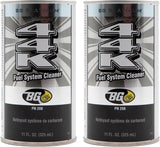 BG Platinum 44K B08LBV86N4 Fuel System Cleaner, 2-Pack
$46.95BG 44K fuel system cleaner.
BG Platinum 44K B08LBV86N4 Fuel System Cleaner, 2-Pack
$46.95BG 44K fuel system cleaner.
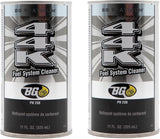 BG 44K B00K0T94LC Fuel System Cleaner, 2-Pack (11oz Cans)
$53.99BG 44K fuel system cleaner.
BG 44K B00K0T94LC Fuel System Cleaner, 2-Pack (11oz Cans)
$53.99BG 44K fuel system cleaner.


What You Risk With Bargain, Non-Certified Gas
Occasional fill-ups at a budget station won't hurt anything. The risk comes from making it a habit. Over tens of thousands of miles, under-additized fuel can contribute to reduced throttle response, lower fuel economy, and harder cold starts — and in the worst cases, injector cleaning or walnut-blasting the intake valves, which is a job you pay real money for.
Keep Your Fuel System in Check Between Fill-Ups
Switching to TOP TIER gas is step one. Step two is periodic inspection — fuel lines, filters, and the connections you can actually see — which usually means getting the truck safely in the air:


Fuel system parts
 ACDelco Fuel Injector, GM OE
$104.99Injectors and fuel parts if deposits have already built up. Confirm fitment by VIN before ordering.
ACDelco Fuel Injector, GM OE
$104.99Injectors and fuel parts if deposits have already built up. Confirm fitment by VIN before ordering.
 ACDelco Fuel Injector O-Rings, ACDelco GM Genuine Parts Fuel
$120.99Injectors and fuel parts if deposits have already built up. Confirm fitment by VIN before ordering.
ACDelco Fuel Injector O-Rings, ACDelco GM Genuine Parts Fuel
$120.99Injectors and fuel parts if deposits have already built up. Confirm fitment by VIN before ordering.
 ACDelco Fuel Pressure Sensors, GM Genuine Parts
$138.99Injectors and fuel parts if deposits have already built up. Confirm fitment by VIN before ordering.
ACDelco Fuel Pressure Sensors, GM Genuine Parts
$138.99Injectors and fuel parts if deposits have already built up. Confirm fitment by VIN before ordering.
 ACDelco Fuel Pump
$276.99Injectors and fuel parts if deposits have already built up. Confirm fitment by VIN before ordering.
ACDelco Fuel Pump
$276.99Injectors and fuel parts if deposits have already built up. Confirm fitment by VIN before ordering.


The Bottom Line
Choosing a TOP TIER station is one of the easiest, cheapest things you can do to protect your GM engine — it costs nothing extra at most pumps and pays you back in a cleaner fuel system over the long run. Just check the official station finder rather than assuming a brand qualifies at every location, and do not expect any fuel to undo intake valve deposits on a direct-injection engine.
Tools
 FOXWELL NT614 Elite OBD2 Scanner
$233.69Check fuel trims and pressure.
FOXWELL NT614 Elite OBD2 Scanner
$233.69Check fuel trims and pressure.
 AUTOWN 45-Piece Pro Fuel Pressure Tester Kit, 0-140 PSI
$44.99Check fuel trims and pressure.
AUTOWN 45-Piece Pro Fuel Pressure Tester Kit, 0-140 PSI
$44.99Check fuel trims and pressure.
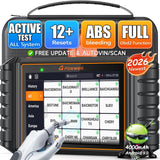 FOXWELL NT726 Bidirectional OBD2 Scanner
$368.99Check fuel trims and pressure.
FOXWELL NT726 Bidirectional OBD2 Scanner
$368.99Check fuel trims and pressure.
 FOXWELL NT301 OBD2 Scanner Live Data Professional Mechanic
$68.82Check fuel trims and pressure.
FOXWELL NT301 OBD2 Scanner Live Data Professional Mechanic
$68.82Check fuel trims and pressure.


