
The single most useful fact about Camaro engines is not a power figure. It is that GM changed engine families between the fifth and sixth generations, and LS-family and LT-family parts are not interchangeable. That split lines up exactly with the generation change and the platform change — which means one question answers three: which generation is it?
Jump to a section: A correction to this page · The split that decides everything · Fifth-generation engines · Sixth-generation engines · V6 or V8? · What does and does not swap · LS-family parts · LT-family parts · Chassis parts are narrower still · Classic Camaros · Identify yours · What other pages get wrong · FAQ
A Correction to This Page
An earlier version of this article recommended a shorty header built for LS1 through LS7 engines and described it as improving exhaust flow on "LT1 and LS-based V8s." That was wrong, and it contradicted our own guidance elsewhere on this site.
An LS-family header does not fit an LT1. The two engine families have different exhaust port and mounting architecture, and headers are among the least interchangeable parts between them. If you own a sixth-generation SS, that part is not for your car.
The rest of this page has been rebuilt around getting that distinction right, because it is the thing most likely to cost you real money.
The Split That Decides Everything
Generation, platform and engine family all change at the same point. That is genuinely convenient — it means you only have to know one thing.
| Fifth generation | Sixth generation | |
|---|---|---|
| Model years | 2010–2015 | 2016–2024 |
| Platform | Zeta | Alpha (shared with Cadillac ATS/CTS) |
| Engine family | LS | LT |
| SS V8 | LS3 (L99 in automatics) | LT1 |
| ZL1 V8 | LSA, supercharged | LT4, supercharged |
| Base engines | V6 | 2.0L LTG turbo four, 3.6L LGX V6 |
The Alpha platform is meaningfully lighter than Zeta, which is why the sixth-generation car handles differently rather than just looking different. The trade-off owners actually notice is visibility and cargo space — the tighter, more driver-focused cabin came at their expense. Worth sitting in both before deciding, because that is a preference question rather than a better-or-worse one.
Fifth-Generation Engines (2010–2015)
LS3. The naturally aspirated V8 in the fifth-gen SS, and one of the most respected small blocks GM has built — simple, strong and exceptionally well supported by the aftermarket. Automatic-equipped cars used the L99, a close relative with cylinder deactivation.
LSA. The supercharged V8 in the fifth-gen ZL1, adding forced induction to the LS architecture and establishing the ZL1 as that generation's halo car.
The practical upside of owning one: the LS aftermarket is enormous and mature. Parts are plentiful and generally cheaper than the equivalent LT items.
Sixth-Generation Engines (2016–2024)
2.0L LTG turbo four. The base engine, and genuinely quick by ordinary standards. Best economy in the range, and the sensible pick if the car is a daily driver and you want Camaro styling without a V8 fuel and insurance bill.
3.6L LGX V6. More power and a six-cylinder character over the turbo four, without the running costs of a V8.
6.2L LT1. The naturally aspirated V8 in the SS, and the engine most people mean when they talk about a Camaro. GM's next-generation small block rather than a warmed-over LS3.
6.2L LT4, supercharged. ZL1 only. Does for the sixth generation what the LSA did for the fifth — the highest factory output in the modern lineup.
V6 or V8: The Honest Answer
Four things actually separate them, and only two are about speed.
Power. No contest. The V8 is meaningfully quicker in a straight line.
Sound. For many buyers this is the whole argument. The V6 note is pleasant; it is not the same experience.
Running costs. The V6 wins on fuel, and usually on insurance too, since horsepower and performance classification drive premiums. Over several years of commuting that gap is real money.
Balance. The lighter V6 nose gives a slightly different, often more nimble feel through corners. Some drivers genuinely prefer it on a technical road.
One thing to settle before buying: you cannot realistically convert a V6 car to V8 power later. Swapping engine families is a major project, not a bolt-on. Buy the engine you want.
What Does and Does Not Swap
| Part type | Crosses LS to LT? | Why |
|---|---|---|
| Headers and exhaust manifolds | No | Different port and mounting architecture |
| Intake components | No | Engine-family specific |
| Fuel pressure regulators | No | LT engines use direct injection; regulators are family-specific |
| In-tank fuel pumps and tanks | Sometimes | Catalogued by chassis year, not engine family |
| Suspension and sway bars | No | Zeta and Alpha are different platforms entirely |
| Interior and trim | No | Different cabin architecture |
The general rule: if it bolts to the engine, the family decides. If it bolts to the car, the platform decides. Both change at the same year, so the answer is nearly always "check your generation first."
LS-Family Parts (Fifth Generation and Earlier)
-
 Stainless Steel Shorty Header — LS1, LS2, LS3, LS6, LS7
From $331.03. Read the engine codes in that title: they are all LS family. This fits an LS3 fifth-generation SS. It does not fit an LT1 sixth-generation SS.
LT-Family Parts (Sixth Generation)
-
 Aeromotive GM LT-1 Fuel Pressure Regulator
From $322.80. Built specifically for the LT family. The LT-1 in the name is the fitment condition, not a style choice. -
 Aeromotive A1000 Camaro Stealth Kit
From $1,233.60. A complete fuel system for high-output builds. Fuel system hardware is catalogued by chassis year rather than engine family, so confirm the application against your exact car.
LT parts
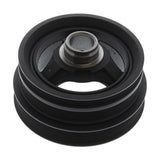 ACDelco LT4 Harmonic Balancer 12713718
$521.99LT4 harmonic balancer. Confirm engine. Confirm fitment by VIN before ordering.
ACDelco LT4 Harmonic Balancer 12713718
$521.99LT4 harmonic balancer. Confirm engine. Confirm fitment by VIN before ordering.
Chassis Parts Are Narrower Still
This is where the earlier version of this page went most wrong, and it is worth being explicit. Suspension parts are not merely generation-specific — several are catalogued for a two-year window inside the fifth generation.
-
 Whiteline 27mm Front Sway Bar — Camaro 10–11 only
From $352.80. Two model years. Not 2012–2015, and certainly not sixth generation. -
 Whiteline 27mm Rear Sway Bar — Camaro 10–11
From $352.80. The matching rear bar, same narrow window. Bars are usually specified as a pair for balanced results. -
 Megan Racing Lowering Springs — 2010–2011 Camaro Coupe
From $228.00. Published drop figures of 27.94 mm front and 47.72 mm rear, and coupe-specific. Note the convertible exclusion, which recurs across Camaro parts. -
 Trunk Lift Support Struts — 2010–2015 Camaro
From $58.39. A genuine wear item across the whole fifth generation — gas struts weaken with age and a trunk lid that will not stay up is the symptom.
Classic Camaros Have Their Own Ecosystem
Worth knowing that support runs much further back than the fifth generation, and that these parts are frequently shared with the Pontiac Firebird because of the common F-body platform.
-
 Belltech Muscle Car Spring Set — 67–69 Camaro / Firebird
From $213.00. -
 Belltech Muscle Car Spring Set — 70–81 Camaro / Firebird
From $229.00. Note the split at 1969/1970 — the same break that appears in the fuel tank listings. -
 Belltech Front Anti-Sway Bar — 93–02 Camaro / Firebird
From $315.00. Covers the fourth generation, which is otherwise poorly served.
Prices are starting prices at time of writing and vary by variant and availability. Confirm fitment against your exact year, engine and body style before ordering.
How to Identify Yours Before Ordering
- Model year first. 2010–2015 is fifth generation, Zeta platform, LS family. 2016–2024 is sixth generation, Alpha platform, LT family.
- Then the engine. LS3 or LSA means LS family. LT1 or LT4 means LT family. LTG and LGX are the sixth-generation four and six.
- Then the exact year for chassis parts. Several suspension items are 2010–2011 only, so generation is not precise enough.
- Then coupe or convertible. Springs, liners and other parts carry coupe-only exclusions.
- Read the engine codes in the product title. A header listing LS1 through LS7 is telling you its family in plain text.
Camaro intakes
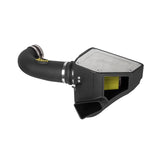 Airaid Intake Kit for Camaro SS 6.2L
$444.99Intake for the 6.2L Camaro SS. Confirm year. Confirm fitment by VIN before ordering.
Airaid Intake Kit for Camaro SS 6.2L
$444.99Intake for the 6.2L Camaro SS. Confirm year. Confirm fitment by VIN before ordering.
What Other Camaro Engine Pages Get Wrong
Recommending LS parts for LT engines. This page did it, and it is the most common and most expensive error in Camaro content. A header is a several-hundred-dollar part that simply will not bolt on.
Calling the LT1 an updated LS3. They share a naturally aspirated, big-power philosophy and small-block heritage, but the LT1 is a different engine generation with different architecture. The philosophy carried over; the parts did not.
Listing suspension parts under a generation heading. Several Camaro sway bars and springs are catalogued for 2010–2011 alone. "Fits fifth gen" is not precise enough to order from.
Ignoring coupe-only exclusions. The lowering springs here are coupe-specific, and the sixth-generation floor liners exclude convertibles. This recurs often enough on Camaro parts to be worth a habit: read the title to the end.
Treating the generation change as styling. Zeta to Alpha was a platform change that reduced weight and altered handling, and it came with a real cost in visibility and cargo space. That is a trade-off to test drive, not a spec sheet win.
Frequently Asked Questions
Will LS3 parts fit my LT1?
Generally no. Headers, intake components and most engine bolt-ons are family-specific, and the LS and LT families use different architecture. Confirm which family your engine belongs to before ordering anything that bolts to it.
How do I know which engine family I have?
Model year is the quickest route. Fifth-generation cars from 2010–2015 use LS-family V8s such as the LS3 and LSA. Sixth-generation cars from 2016–2024 use LT-family V8s such as the LT1 and LT4.
Is the LT1 basically an updated LS3?
No. They share a naturally aspirated small-block philosophy, but the LT1 is a genuinely different engine generation rather than a revised LS3, and its parts are not interchangeable.
What's the difference between the LSA and the LT4?
They fill the same role in different generations. The LSA is the supercharged LS-family V8 in the fifth-gen ZL1; the LT4 is the supercharged LT-family V8 in the sixth-gen ZL1.
Is the turbo four Camaro actually quick?
Yes, by ordinary standards, though clearly outpaced by the V8 cars. It is the right choice if fuel economy and daily practicality matter more to you than outright acceleration.
Can I convert a V6 Camaro to V8 power?
Not practically. Swapping engine families is a major, expensive project rather than a bolt-on upgrade. Buy the engine you actually want from the start.
Are fifth-gen and sixth-gen parts interchangeable at all?
Very little crosses over. The platform, engine family and cabin architecture all changed, so engine, suspension, interior and body parts are effectively generation-specific. Some fuel system hardware is catalogued by chassis year, so check those individually.
Is a used fifth-gen a smart buy today?
It can be. You get a roomier cabin, better visibility and a mature, well-supported LS aftermarket that is often cheaper than LT equivalents. The sixth-gen gives sharper handling and newer engine technology. Neither is objectively better.