
Which NACS adapter your GM EV needs depends on one thing: whether the car has a CCS1 charge port or a native NACS port. CCS1 cars — most 2024–2026 Chevrolet, GMC and Cadillac EVs — need the GM NACS DC adapter, part 85836744, to use a Tesla Supercharger. Native-NACS cars need the opposite adapter to use CCS stations. There are four GM adapters and they are not interchangeable.
That distinction is where almost every wrong purchase happens. Below is a model-by-model breakdown, the four GM part numbers and what each one actually does, why the DC adapter will not work on a Tesla Destination charger, and what to check before you order. Start with charging accessories for your Chevrolet EV if you already know which side of the split you are on.
Parts and tools you'll need
- Charging adapters and cables for your Bolt, Equinox EV or Silverado EV
- Charging accessories for your Sierra EV or Hummer EV
- Your vehicle's brand app — myChevrolet, myGMC or myCadillac — with your account already logged in and a payment method saved
- A storage bag or console pocket for the adapter. These are heavy metal objects and they will destroy an interior panel rolling around loose.
12-volt and charging care
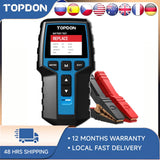 TOPDON BT200 12V Car Battery Tester Digital Automotive
$103.99Keep the 12-volt system healthy — a weak 12V battery stops charging sessions.
TOPDON BT200 12V Car Battery Tester Digital Automotive
$103.99Keep the 12-volt system healthy — a weak 12V battery stops charging sessions.
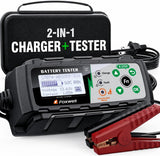 FOXWELL BC521 2-in-1 Battery Charger & Tester, Test Before
$162.35Keep the 12-volt system healthy — a weak 12V battery stops charging sessions.
FOXWELL BC521 2-in-1 Battery Charger & Tester, Test Before
$162.35Keep the 12-volt system healthy — a weak 12V battery stops charging sessions.
 FOXWELL BT705 Car Battery Tester 24V 12V, Alternator and Load
$159.89Keep the 12-volt system healthy — a weak 12V battery stops charging sessions.
FOXWELL BT705 Car Battery Tester 24V 12V, Alternator and Load
$159.89Keep the 12-volt system healthy — a weak 12V battery stops charging sessions.
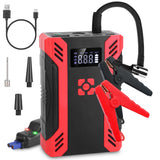 Car Jump Starter with Air Compressor Portable Car Battery
$177.99Keep the 12-volt system healthy — a weak 12V battery stops charging sessions.
Car Jump Starter with Air Compressor Portable Car Battery
$177.99Keep the 12-volt system healthy — a weak 12V battery stops charging sessions.

Which NACS adapter does my GM EV need?
GM sells four adapters. Two of them let a CCS1-port vehicle plug into NACS equipment, and two of them let a native-NACS vehicle plug into CCS1 and J1772 equipment. Each one handles either DC or AC, never both. Match the adapter to your port type first, then to the charger type you are trying to use.
| GM adapter | Part number | Your car's port | Charger it lets you use | DC or AC |
|---|---|---|---|---|
| GM NACS DC Adapter | 85836744 | CCS1 | NACS DC fast chargers, including Tesla Superchargers | DC only |
| GM NACS Level 2 Adapter | 86380864 | CCS1 | NACS Level 2 / home chargers | AC only |
| GM CCS1 DC Adapter | 86276618 | Native NACS | Public CCS1 DC fast chargers | DC only |
| GM J1772 AC Adapter | 86286534 | Native NACS | J1772 Level 2 chargers | AC only |
Read that table twice before you buy anything. The most common mistake is a CCS1 owner buying the NACS DC adapter, driving to a hotel with Tesla Destination chargers, and finding out in the parking lot that it does not work there. That is not a defect. It is the design.
You may also see part numbers 85090442 and 85778137 in circulation. Those are related GM adapter listings, and like 85836744, none of them carry AC. If a listing does not clearly state which direction it converts and whether it is AC or DC, do not buy it until it does.
Which GM EVs have a CCS1 port and which have native NACS?
Through the 2026 model year, most GM EVs still use a CCS1 inlet and need the DC adapter for Supercharger access. In August 2026 GM confirmed that all of its EVs across Cadillac, Chevrolet and GMC will carry a native GM NACS port as standard from the 2027 model year, which removes the adapter requirement at NACS chargers entirely.
Two vehicles got there early. The 2026 Cadillac Optiq and Optiq-V were GM's first EVs with a native NACS inlet, and the returning Chevrolet Bolt — on sale in 2026 but sold as a 2027 model year vehicle — also ships with a NACS port from the factory.
| Model | 2026 model year | 2027 model year | What you need for a Supercharger |
|---|---|---|---|
| Chevrolet Equinox EV | CCS1 port | Native NACS | 2026: NACS DC adapter. 2027: nothing. |
| Chevrolet Blazer EV | CCS1 port | Native NACS | 2026: NACS DC adapter. 2027: nothing. |
| Chevrolet Silverado EV | CCS1 port | Native NACS | 2026: NACS DC adapter. 2027: nothing. |
| Chevrolet Bolt | — (sold as a 2027 MY vehicle) | Native NACS | Nothing — bring the CCS1 adapter instead |
| GMC Sierra EV | CCS1 port | Native NACS | 2026: NACS DC adapter. 2027: nothing. |
| GMC Hummer EV Pickup / SUV | CCS1 port | Native NACS | 2026: NACS DC adapter. 2027: nothing. |
| Cadillac Lyriq | CCS1 port | Native NACS | 2026: NACS DC adapter. 2027: nothing. |
| Cadillac Optiq / Optiq-V | Native NACS | Native NACS | Nothing — bring the CCS1 adapter instead |
| Cadillac Vistiq | CCS1 port | Native NACS | 2026: NACS DC adapter. 2027: nothing. |
| Cadillac Escalade IQ / IQL | CCS1 port | Native NACS | 2026: NACS DC adapter. 2027: nothing. |
Two practical consequences follow from that flip. First, if you buy a 2027 GM EV, the adapter you want in the frunk is the CCS1 DC adapter, part 86276618 — because the network you will occasionally struggle to use is the CCS one, not the NACS one. Second, if you own a 2024–2026 GM EV, your adapter is not obsolete. CCS stations are not disappearing, and neither is your port.
Model years are the boundary here, not calendar years — and the Bolt is the clearest example, since it arrives in 2026 carrying 2027 model year hardware. Look at the port itself before you order: a CCS1 inlet has a round two-pin AC section on top with a large two-pin DC section below it, while NACS is a single compact five-pin oval.
Why won't the DC adapter work on a Tesla Destination charger?
Because CCS1 and NACS handle AC and DC differently at the pin level. A CCS1 port uses separate pins for AC and DC. NACS uses the same two pins for both. GM's NACS DC adapter only routes the DC pins, so there is physically no path for AC current to reach your car's onboard charger.
This catches people constantly, and the confusion is understandable — the plug fits. Tesla Destination chargers at hotels, restaurants and workplaces use the same connector shape as a Supercharger, but they deliver AC at Level 2 rates. Your adapter will click on and nothing will happen.
GM's own product documentation is blunt about it: the NACS DC adapter is not compatible with Level 2 charging and will not work with Level 2 Tesla Destination chargers. If you want to use those, you need the separate GM NACS Level 2 adapter, part 86380864.
The mirror image applies to native-NACS vehicles. The CCS1 DC adapter, 86276618, is for DC fast charging only; GM specifically notes it does not enable charging your EV at home. For an ordinary J1772 wall box you want the J1772 AC adapter, 86286534, which is a much simpler piece of hardware.
If you road trip regularly, the honest answer is that you end up owning two adapters — one DC, one AC — and keeping both in the vehicle. There is no single adapter that covers every station type.
What is the GM NACS DC adapter actually rated for?
GM lists the NACS DC adapter, part 85836744, at up to 500 amps and 1,000 volts, with a stated operating temperature range of −22°F to 104°F. GM also states it opens access to more than 27,500 Tesla Superchargers and, combined with existing networks, over 250,000 charging stations across the US and Canada. Station counts grow continuously, so treat those as a snapshot rather than a fixed figure.
The current and voltage rating matters more than it looks. 500 A / 1,000 V is above what any current Supercharger will ask of it, which means the adapter is not the bottleneck in your charging session — the station and your vehicle's own charging curve are.
The temperature range is worth noting if you live somewhere genuinely cold. Below −22°F, GM is no longer specifying behavior. In deep cold your bigger problem is battery preconditioning anyway: arriving at a fast charger with a cold pack will cost you far more time than the adapter ever will.
The adapter is also physically substantial. It hangs off the charge port with the Supercharger cable's weight behind it, and at some older stall layouts you will be backing in or parking across two spaces to make the cable reach. That is a Supercharger cable-length issue, not an adapter issue, and it affects every non-Tesla vehicle.
How do you start a Supercharger session in a GM EV?
Charging is initiated through your vehicle's brand app, not the Tesla app. Set the account up at home before your first trip, not standing in a parking lot at 8 percent state of charge. The sequence is short.
- Add a payment method in the myChevrolet, myGMC or myCadillac app and confirm the account is active.
- Find a Supercharger site in the app's charging map and check that it is listed as available to your vehicle.
- Precondition the battery on the way there if your vehicle supports it — route planning through the app usually triggers this automatically.
- Park so the cable reaches your charge port. On GM EVs the port is generally on a front corner, so nose-in to the stall on the correct side or back in.
- Fit the adapter to the Supercharger connector first, then plug the assembly into the car.
- Select the stall number in the app and start the session.
- When you are done, stop the session in the app, remove the plug from the car, then separate the adapter from the cable and put it away.
Do not leave the adapter dangling on the Supercharger cable when you drive off. It is the single most common way owners lose the accessory entirely, and Tesla stalls are not staffed lost-and-found counters.
Safety note: keep the adapter and connector dry and free of grit, and do not force a connection that does not seat. High-current DC connectors depend on clean contact surfaces. If a connector is visibly damaged, corroded, or has been dropped hard onto pavement, retire it.
What about the Bolt EV, Volt and Spark EV?
GM's fitment listing for the NACS DC adapter covers a wider set than the current lineup, including Bolt EV 2017–2023, Bolt EUV 2022–2023, Spark EV 2016 and Volt 2016–2019, plus BrightDrop 400 and 600 vans. But listed fitment is not the same as useful function on every one of those vehicles.
The practical filter is simple: the adapter is for DC fast charging, so it only does anything on a vehicle that can DC fast charge in the first place. A Bolt EV without the DC fast charging option, or a Volt, is not going to gain a Supercharger session from an adapter. Check whether your specific car has DC fast charge capability before you spend the money.
Older Bolts that do have DC capability are also limited by their own hardware. That generation's peak DC rate is far below what a modern GM EV pulls, so a Supercharger stop will not feel like a Supercharger stop. The adapter buys you access and route flexibility, not speed.
If you are shopping for a used Bolt or Volt specifically to road trip on the Tesla network, be realistic about that. The adapter genuinely expands where you can stop. It does not change the vehicle's charging curve. For a deeper look at how this plays out on a current model, read our breakdown of whether a Chevy Equinox EV can use a Tesla Supercharger.
Bolt EV parts and accessories
 Chevrolet Bolt EV Windshield Wiper Blades
$39.99Accessories for the Bolt EV and EUV. Confirm fitment by VIN before ordering.
Chevrolet Bolt EV Windshield Wiper Blades
$39.99Accessories for the Bolt EV and EUV. Confirm fitment by VIN before ordering.
 2017-2023 Chevrolet Bolt EV Roof Rack Cross Bars Black
$198.99Accessories for the Bolt EV and EUV. Confirm fitment by VIN before ordering.
2017-2023 Chevrolet Bolt EV Roof Rack Cross Bars Black
$198.99Accessories for the Bolt EV and EUV. Confirm fitment by VIN before ordering.
 2017-2023 Chevrolet Bolt EV Roof Rack Cross Bars Silver
$198.99Accessories for the Bolt EV and EUV. Confirm fitment by VIN before ordering.
2017-2023 Chevrolet Bolt EV Roof Rack Cross Bars Silver
$198.99Accessories for the Bolt EV and EUV. Confirm fitment by VIN before ordering.
 2017-2023 Chevrolet Bolt EV Universal Floor Mats & Cargo Liner
$98.99Accessories for the Bolt EV and EUV. Confirm fitment by VIN before ordering.
2017-2023 Chevrolet Bolt EV Universal Floor Mats & Cargo Liner
$98.99Accessories for the Bolt EV and EUV. Confirm fitment by VIN before ordering.


Are third-party NACS adapters safe to use?
Third-party adapters exist and many owners use them without incident, but GM explicitly cautions that using non-GM-approved adapters may void warranty coverage and can damage the vehicle's charging system. That is a real consideration on a component that carries hundreds of amps through a hand-held connector.
If you do look at aftermarket options, the things worth checking are the stated current and voltage rating, whether it is certified by a recognized safety lab, whether the manufacturer names GM vehicles specifically rather than most EVs, and whether there is a warranty you could actually claim against. Price alone tells you nothing here.
The failure mode people worry about is heat. A high-resistance connection at any point in a DC fast charging circuit turns into heat, and heat at a plastic connector housing is how melted charge ports happen. Both Tesla stations and GM vehicles monitor for this and will derate or stop a session, which is protective — but it is also why a marginal adapter shows up as unexplained slow charging before it shows up as damage.
Our position is unglamorous: on a component this close to your vehicle's high-voltage system, the GM part is the one to buy. This is not a category where the cheap option is usually fine.
Why is my charging slower than I expected?
Charging speed is set by your vehicle's battery temperature and state of charge, the station's power capability, and how many cars are sharing that cabinet. The adapter is rarely the limit. A pack that is cold or already above roughly 80 percent will taper hard regardless of what you plug into.
Supercharger sites also vary considerably by generation of hardware, and stalls in a bank often share power. Arriving at a busy site behind three other vehicles will cost you more time than any hardware choice you made.
GM's own figure for the DC adapter is up to 100 miles of range in 10 minutes of public charging, which is a best-case number on a capable vehicle at a capable station with a warm pack. Treat it as a ceiling, not a plan.
If you consistently see poor rates across multiple sites, check the adapter and port contacts for debris, then check whether your app is showing any charging fault. Persistent, repeatable slow charging at healthy stations is worth a dealer conversation rather than a new adapter — our guide to DC fast charging failures works through the diagnosis.
What to check before you order
- Look at your actual charge port. CCS1 has a two-part inlet; NACS is a single compact oval. This determines everything else.
- Confirm your model year, not the year you bought the car. The CCS1-to-NACS switchover happens at 2027 for most GM EVs.
- Decide DC or AC. DC adapters do fast charging only; AC adapters do Level 2 only. Neither does both.
- Check the part number against the table above — 85836744, 86380864, 86276618 and 86286534 do four different jobs.
- Verify your vehicle can DC fast charge at all if it is an older Bolt, Volt or Spark EV.
- Set up the brand app before your first trip, including payment. Sessions start there.
EV diagnostics
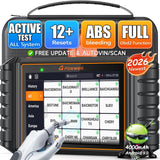 FOXWELL NT726 Bidirectional OBD2 Scanner
$368.99Scanners that read EV and body module codes.
FOXWELL NT726 Bidirectional OBD2 Scanner
$368.99Scanners that read EV and body module codes.
 FOXWELL NT624 Elite OBD2 Scanner, All-System Scan Tool
$332.09Scanners that read EV and body module codes.
FOXWELL NT624 Elite OBD2 Scanner, All-System Scan Tool
$332.09Scanners that read EV and body module codes.
 Launch CRE 2.0 for Buick/Chevrolet/Cadillac All System
$159.00Scanners that read EV and body module codes.
Launch CRE 2.0 for Buick/Chevrolet/Cadillac All System
$159.00Scanners that read EV and body module codes.


Frequently Asked Questions
Which NACS adapter does my GM EV need?
It depends on your charge port. CCS1 cars — most 2024–2026 GM EVs — need the NACS DC adapter, part 85836744, for Superchargers. Native-NACS cars need the opposite: the CCS1 DC adapter, 86276618, for CCS stations. There are four GM adapters and they are not interchangeable.
Why doesn't my NACS adapter work at a Tesla Destination charger?
Because it is a DC-only adapter and Destination chargers deliver AC. A CCS1 port uses separate pins for AC and DC while NACS uses the same two pins for both, so the DC adapter routes no AC path at all. The plug fits and nothing happens. You need the separate NACS Level 2 adapter, part 86380864.
When do GM EVs get native NACS ports?
GM confirmed in August 2026 that all its EVs across Cadillac, Chevrolet and GMC carry a native NACS port as standard from the 2027 model year. Two got there early: the 2026 Cadillac Optiq and Optiq-V, and the returning Chevrolet Bolt, which is on sale in 2026 but sold as a 2027 model year vehicle.
Is my 2026 GM EV adapter obsolete once 2027 models arrive?
No. CCS stations are not disappearing and neither is your port. If anything the reverse is true — buyers of 2027 native-NACS vehicles will want the CCS1 DC adapter in the frunk, because the network they will occasionally struggle to use is the CCS one.
What is the GM NACS DC adapter rated for?
Up to 500 amps and 1,000 volts, with an operating range of −22°F to 104°F. That rating is above what any current Supercharger will ask of it, so the adapter is not your bottleneck — the station and your vehicle's charging curve are.
Can my older Bolt or Volt use a Supercharger with an adapter?
Only if it can DC fast charge in the first place. The adapter is DC-only, so a Bolt without the fast charging option, or a Volt, gains nothing. Older Bolts that do have it are limited by their own peak rate, so the adapter buys route flexibility rather than speed.
Are third-party NACS adapters safe?
GM cautions that non-approved adapters may void warranty coverage and can damage the charging system. The failure mode is heat: a high-resistance connection in a DC circuit becomes heat at a plastic housing, which is how melted charge ports happen. On a component this close to the high-voltage system, buy the GM part.
How do I start a Supercharger session in a GM EV?
Through your vehicle's brand app — myChevrolet, myGMC or myCadillac — not the Tesla app. Set up payment at home before your first trip. Fit the adapter to the Supercharger connector first, then plug the assembly into the car, then select the stall number in the app.
Why is my Supercharger session slower than expected?
Battery temperature, state of charge, station capability and how many cars share that cabinet — the adapter is rarely the limit. A cold pack or one already above roughly 80 percent will taper hard regardless. GM's up-to-100-miles-in-10-minutes figure is a best case, not a plan.
How do I tell a CCS1 port from a NACS port?
Look at the inlet. CCS1 has a round two-pin AC section on top with a large two-pin DC section below it. NACS is a single compact five-pin oval. Check the car in your driveway rather than going by model name, since the same nameplate can be either depending on model year.
A Note on Sourcing
The 2027 native-NACS transition comes from GM's own announcement of August 2026, which states that all GM EVs across Cadillac, Chevrolet and GMC will carry a native NACS port as standard from the 2027 model year, and identifies the 2026 Cadillac Optiq and the returning Bolt as already NACS-native.
Part numbers, ratings and compatibility statements are from GM published product information, including the 500 A / 1,000 V rating, the −22°F to 104°F operating range, and GM's explicit statement that the NACS DC adapter does not work with Level 2 Tesla Destination chargers.
Charging station counts change continuously. The figures GM publishes are a snapshot at the time of writing rather than a fixed specification, and the network is growing in both directions.
Model years, not calendar years, determine which port a vehicle has — the Bolt is the clearest illustration, arriving in 2026 with 2027 model year hardware. Look at the inlet on the vehicle itself before ordering.
The recommendation to buy the GM adapter rather than a third-party one is our own assessment, informed by GM's warranty caution and by the heat failure mode inherent to high-current DC connections.
For more on living with a GM EV day to day, browse more GM owner guides.
Will this adapter fit your GM EV?
Check your year, model and charge port type before you order — a CCS1 car and a native-NACS car need opposite adapters, and the same vehicle nameplate can be either one depending on model year. Confirm the port on the car in your driveway, then match it to the part numbers above.
Filter by your vehicle in Chevrolet EV charging accessories, or for GMC trucks start with Sierra EV and Hummer EV accessories.