
You have three real options when a Magnetic Ride Control damper fails: GM OEM replacement, a remanufactured or aftermarket MRC unit, or a passive conversion kit that deletes the system. OEM keeps every function and costs the most. Conversion is the cheapest long-term path but permanently gives up adaptive damping and needs a bypass module to stop the dash warning.
Before you pick, do one thing: confirm the shock is actually the failed part. GM has a published bulletin covering a loose damper connector that throws the same warning and the same trouble codes as a dead shock, and people replace suspension parts for their Escalade, Tahoe or Yukon over it every day. That check takes ten minutes.
A note on cost: this guide does not quote prices. They move, they vary by vehicle, and you can see current pricing yourself on the collection pages. What this guide does is lay out what each option actually costs you in capability, in repeat work, and in resale — which is the part nobody tells you.
Parts and tools you'll need
- MRC dampers, passive conversion struts or shocks for your GM model — decide which after reading the comparison below
- A scan tool that reads chassis (C-series) codes, not just powertrain codes. A basic OBD-II reader will not show you MRC faults.
- Spring compressor, if your application uses a strut rather than a bare shock
- Model-specific hardware and mounts for Cadillac applications, since top mounts are often single-use
Magnetic Ride shocks
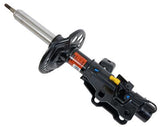 ACDelco Shocks and Struts, GM Genuine Parts, Stock Ride
$608.99ACDelco Magnetic Ride shocks and struts. Confirm fitment by VIN before ordering.
ACDelco Shocks and Struts, GM Genuine Parts, Stock Ride
$608.99ACDelco Magnetic Ride shocks and struts. Confirm fitment by VIN before ordering.
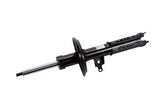 ACDelco Shocks and Struts, OE, Stock Ride Height
$119.99ACDelco Magnetic Ride shocks and struts. Confirm fitment by VIN before ordering.
ACDelco Shocks and Struts, OE, Stock Ride Height
$119.99ACDelco Magnetic Ride shocks and struts. Confirm fitment by VIN before ordering.
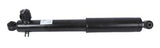 ACDelco Shocks and Struts, OE, Stock Ride Height
$438.99ACDelco Magnetic Ride shocks and struts. Confirm fitment by VIN before ordering.
ACDelco Shocks and Struts, OE, Stock Ride Height
$438.99ACDelco Magnetic Ride shocks and struts. Confirm fitment by VIN before ordering.
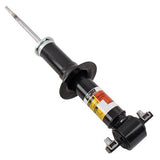 ACDelco Shocks and Struts, GM Genuine Parts, Stock Ride
$443.99ACDelco Magnetic Ride shocks and struts. Confirm fitment by VIN before ordering.
ACDelco Shocks and Struts, GM Genuine Parts, Stock Ride
$443.99ACDelco Magnetic Ride shocks and struts. Confirm fitment by VIN before ordering.
What is Magnetic Ride Control, and why does it fail?
MRC replaces the fixed valving in a conventional damper with magnetorheological fluid — a synthetic hydrocarbon oil carrying magnetic particles in the 3 to 10 micron range. Energize a coil in the piston and those particles chain together, the fluid stiffens, and damping rises. Cut the current and it flows freely again.
There are no valves to move, which is why the system is fast. GM's fourth-generation MagneRide reads the road roughly a thousand times a second and adjusts damping in about three milliseconds, roughly 45 percent quicker than the previous generation's five. It first appeared on a mid-year 2002 Cadillac Seville STS and has been through four generations since.
Third-generation and later dampers use two electromagnetic coils wound in opposite directions with two fluid passages, which removed the eddy-current lag that limited the original single-coil design. The fourth generation added wheel-hub accelerometers so the controller sees unsprung mass motion directly.
What fails is boring by comparison. The damper is still a hydraulic unit with a rod seal, and rod seals leak. The electrical side fails at the connector, in the wiring at the strut tower, or internally in the coil. And the MR fluid itself degrades with heat and shear over many years, so a damper can be technically working and still not control the vehicle the way it did.
How do you know an MRC shock is actually bad?
The vehicle will usually tell you: a Service Suspension System message, chassis codes in the C0575 through C0590 range for the individual damper circuits, and often a ride that is either harsh in every mode or floaty in every mode because the controller has defaulted to a fixed damping state.
Work through this before you order anything:
- Read chassis codes with a scan tool that supports C-codes. Note which corner the code points to.
- Inspect the 90-degree electrical connector at the top of each damper. GM bulletin PI0430C describes exactly this connector coming partially unseated or developing an internal contact fault, producing the same message and codes as a failed shock. Look at the green insulator and the center post.
- Reseat the connector, clear the code, and drive it. If the code stays gone, you are done.
- If it returns, swap the connectors between the left and right dampers on the same axle and see whether the fault follows the connector or stays with the corner. That single test separates a wiring fault from a dead shock.
- Look for oil film on the damper body below the rod seal. A wet shock is a leaking shock, code or no code.
- Check ride height and the rear leveling system separately. On trucks and SUVs with air-assisted rear leveling, a compressor or height sensor fault throws its own messages that get confused with MRC faults.
That last point matters more than people expect. On Tahoe, Suburban and Yukon, the rear air leveling system and the magnetic dampers are separate systems that share a warning message, and the air ride compressor failure symptoms on these SUVs look a lot like a suspension fault to the dash. Diagnosing one while the other is broken wastes real money.
For Corvette and Camaro owners, the failure pattern skews differently — more leaks, fewer connector faults, and a much more noticeable change in body control when one corner goes. The MRC problems specific to Corvette and Camaro are worth reading if that is your vehicle.
OEM, remanufactured or conversion: how do the three compare?
OEM keeps every function and carries GM's validation. Remanufactured and quality aftermarket MRC units keep the function at lower cost with more variance in service life. Conversion kits are the cheapest to maintain long-term but delete adaptive damping permanently and require a bypass module. There is no universally correct answer — it depends on the vehicle and how long you are keeping it.
| Factor | GM OEM MRC damper | Reman / aftermarket MRC | Passive conversion kit |
|---|---|---|---|
| Adaptive damping retained | Yes, full function | Yes, if the unit is a true MR damper | No — fixed damping only |
| Drive mode selection (Tour/Sport/Track) | Works normally | Works normally | Damping no longer changes with mode |
| Dash warning after install | None | None if the coil resistance matches | Requires a bypass or resistor module |
| Relative up-front cost | Highest | Middle | Lowest per corner |
| Cost of the next replacement | High again | Moderate again | Low — conventional shock pricing from then on |
| Ride quality | As designed | Close to as designed, brand-dependent | A firm compromise; no soft setting and no firm setting |
| Effect on resale | Neutral | Neutral | Negative on vehicles where MRC was an option package |
| Reversibility | n/a | n/a | Reversible in theory, expensive in practice |
| Best fit for | Newer vehicles, performance cars, keepers | Mid-life vehicles where function matters | High-mileage trucks and SUVs you plan to drive into the ground |
Shocks and struts
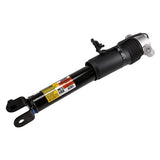 ACDelco Shocks and Struts, OE, Stock Ride Height
$638.99GM replacement shocks and struts. Confirm fitment by VIN before ordering.
ACDelco Shocks and Struts, OE, Stock Ride Height
$638.99GM replacement shocks and struts. Confirm fitment by VIN before ordering.
 ACDelco Shocks and Struts, OE, Stock Ride Height
$102.99GM replacement shocks and struts. Confirm fitment by VIN before ordering.
ACDelco Shocks and Struts, OE, Stock Ride Height
$102.99GM replacement shocks and struts. Confirm fitment by VIN before ordering.
 ACDelco Shocks and Struts, OE, Stock Ride Height
$169.99GM replacement shocks and struts. Confirm fitment by VIN before ordering.
ACDelco Shocks and Struts, OE, Stock Ride Height
$169.99GM replacement shocks and struts. Confirm fitment by VIN before ordering.
 ACDelco Shocks and Struts, OE, Stock Ride Height
$121.99GM replacement shocks and struts. Confirm fitment by VIN before ordering.
ACDelco Shocks and Struts, OE, Stock Ride Height
$121.99GM replacement shocks and struts. Confirm fitment by VIN before ordering.
When is a conversion kit the right call?
A conversion makes sense on a high-mileage full-size truck or SUV where the system has already failed once, you are not attached to the adaptive ride, and you plan to keep the vehicle for years rather than sell it. It is the wrong call on a performance car and on anything still worth serious money.
The honest case for converting: MRC dampers are a wear item with a finite life, and on a vehicle with 150,000 miles you are looking at doing this again. Passive shocks cost a fraction to replace next time and there is no electrical side to fail. For a work truck, that math is defensible.
The honest case against: you are removing a system the vehicle was engineered around. On a Corvette, Camaro, CT4-V, CT5-V or Escalade, the spring rates, bushing rates and stability control calibration all assume a damper that can change rate in milliseconds. A passive shock has one rate. You get a ride that is worse than the soft setting over broken pavement and worse than the firm setting in a corner, at the same time.
Three practical things people underestimate:
- You need the bypass module. Removing an MR damper leaves an open circuit, and the controller reports it. Bypass or resistor modules present the expected load so the message clears. A conversion without one leaves a permanent warning on the dash.
- Convert in axle pairs, minimum. Mixing a passive shock with an MR damper on the same axle produces genuinely bad handling. Most people convert all four corners at once for this reason.
- The rear leveling system is separate. On trucks and SUVs with air-assisted rear leveling, a magnetic damper delete does not remove the air system, and vice versa. Know which system you are working on.
Which GM vehicles have Magnetic Ride Control?
MRC was optional on most vehicles that offered it, not standard, which is why you cannot assume by model. Cadillac has offered it across the sedan and Escalade lines since 2002; Chevrolet on Corvette and Camaro; and it appears on full-size GM trucks and SUVs on specific trims and packages.
The only reliable way to know whether your vehicle has it is to look. Check for an electrical connector at the top of the damper — a conventional shock has no wiring at all. You can also check your build sheet or the RPO codes on the label in the glovebox or spare tire well; the magnetic damping option carries its own RPO.
On part numbers: GM 84176631 is widely cross-referenced as a front magnetic damper for 2015–2021 full-size GM trucks and SUVs, with 84977478 appearing alongside it in the same listings. We could not confirm those against a manufacturer or OEM catalog page directly, so treat them as a starting point for a search, not as an order. Look your vehicle up by VIN, and confirm front versus rear and left versus right before you buy anything.
Do you have to replace MRC shocks in pairs?
Replace them in axle pairs. Damping is a paired function — a new damper on one side and a 120,000-mile damper on the other produces asymmetric body control that you will feel in every corner and over every expansion joint. This is more pronounced with magnetic dampers than with conventional ones.
Whether you do all four at once is a judgment call. If one front damper has failed at 90,000 miles, the other three are the same age with the same fluid and the same seals. Doing the front pair now and the rear pair later is a reasonable budget compromise. Doing one corner and hoping is not.
If you are converting rather than replacing in kind, do all four. A mixed magnetic-and-passive vehicle is the worst of both approaches, and the controller will not know what to make of it.
What about ride height, alignment and calibration?
Replacing dampers in kind does not change ride height and does not normally require an alignment, because a shock does not locate the wheel. Replacing a full strut assembly does affect alignment, because the strut is a locating member — plan on an alignment afterward on any strut-type application.
Some conversion kits change effective ride height slightly, particularly complete strut assemblies with their own springs. If the kit includes springs, assume ride height changes and assume an alignment is required.
On vehicles with adaptive systems, there may be a ride height calibration or sensor learn procedure after suspension work. That is a scan tool function, not something you can do by driving the vehicle. Check whether your specific model and year requires one before you start, rather than after you have the wheels off.
Safety note before you start
Two things on this job will hurt you. Coil spring energy is the first — a compressed spring stores enough energy to be lethal, and it must be fully released before you separate a strut assembly, using a proper spring compressor rated for the application. Loaded strut assemblies exist specifically so you do not have to do this; on many applications they are worth the extra cost purely for that reason.
The second is vehicle support. Full-size GM SUVs are heavy, and the suspension is unloaded during this job, which changes how the vehicle sits on stands. Use jack stands rated well above the corner weight, on a hard level surface, with the wheels chocked.
Also disconnect the battery before you unplug damper connectors on any vehicle with active suspension, and let the system bleed down if it has a pressurized rear leveling circuit.
What to check before you order
- Whether your vehicle actually has MRC — look for wiring at the top of the damper.
- Chassis codes read with a scan tool that supports C-codes, not just an OBD-II reader.
- The 90-degree connector at each damper, before you conclude the shock is dead.
- Front versus rear and left versus right. Magnetic dampers are frequently side-specific.
- Whether you are buying a bare damper or a loaded strut assembly, and whether springs and mounts are included.
- Whether a conversion kit includes the bypass module, or whether that is a separate purchase.
- Whether an alignment or a scan-tool calibration is required for your model after the job.
Tools
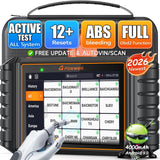 FOXWELL NT726 Bidirectional OBD2 Scanner
$368.99Scan and torque tools for the job.
FOXWELL NT726 Bidirectional OBD2 Scanner
$368.99Scan and torque tools for the job.
 FOXWELL NT624 Elite OBD2 Scanner, All-System Scan Tool
$332.09Scan and torque tools for the job.
FOXWELL NT624 Elite OBD2 Scanner, All-System Scan Tool
$332.09Scan and torque tools for the job.
 ACDelco Tools Torque Wrenches, Digital LCD Display, 1/2 in.
$162.99Scan and torque tools for the job.
ACDelco Tools Torque Wrenches, Digital LCD Display, 1/2 in.
$162.99Scan and torque tools for the job.
 ACDelco Tools Torque Wrenches, Digital LCD Display, 3/8 in.
$249.99Scan and torque tools for the job.
ACDelco Tools Torque Wrenches, Digital LCD Display, 3/8 in.
$249.99Scan and torque tools for the job.


Frequently Asked Questions
How do I know if my Magnetic Ride shock is bad?
A Service Suspension System message plus chassis codes in the C0575–C0590 range, and a ride that is stuck harsh or stuck floaty in every mode because the controller defaulted to fixed damping. But read the codes with a scan tool that supports C-codes — a basic OBD-II reader will not show MRC faults at all.
Can a loose connector cause the same warning as a failed shock?
Yes, and this is the check to do first. GM bulletin PI0430C describes the 90-degree damper connector coming partially unseated or developing an internal contact fault, producing the same message and the same codes as a dead damper. Reseating it takes ten minutes; four dampers do not.
How do I tell a wiring fault from a dead damper?
Swap the connectors between the left and right dampers on the same axle and see whether the fault follows the connector or stays with the corner. That single test separates the two. Also look for oil film below the rod seal — a wet shock is a leaking shock, code or no code.
Is a passive conversion kit worth it?
On a high-mileage truck or SUV that has already eaten one set of dampers and that you plan to keep for years, yes — passive shocks cost a fraction to replace next time and have no electrical side to fail. On a Corvette, Camaro, CT4-V, CT5-V or Escalade, no: the spring rates, bushings and stability control calibration were all engineered around a damper that changes rate in milliseconds.
Will converting to passive shocks leave a warning light on?
Yes, unless you fit a bypass or resistor module. Removing an MR damper leaves an open circuit and the controller reports it. The module presents the expected load so the message clears — check whether the kit includes one or whether it is a separate purchase.
Do MRC shocks have to be replaced in pairs?
In axle pairs, minimum. A new damper on one side and a 120,000-mile damper on the other gives asymmetric body control you will feel in every corner, and it is more pronounced with magnetic dampers than conventional ones. If you are converting rather than replacing in kind, do all four.
What actually fails inside a magnetic damper?
Mostly ordinary things. It is still a hydraulic unit with a rod seal, and rod seals leak. The electrical side fails at the connector, in the wiring at the strut tower, or internally in the coil. The magnetorheological fluid also degrades with heat and shear over many years, so a damper can be technically working and still not control the vehicle properly.
Does my vehicle have Magnetic Ride Control?
Look for an electrical connector at the top of the damper — a conventional shock has no wiring at all. You can also check the RPO codes on the label in the glovebox or spare tire well. MRC was optional on most vehicles that offered it, so you cannot assume by model.
Do I need an alignment after replacing MRC shocks?
Not for a bare damper replaced in kind, since a shock does not locate the wheel. Yes for any strut-type application, because the strut is a locating member. If a conversion kit includes springs, assume ride height changes and assume an alignment is needed.
Could my problem be the air suspension instead?
On Tahoe, Suburban and Yukon, quite possibly. The rear air leveling system and the magnetic dampers are separate systems that share a warning message, so a compressor or height sensor fault looks like a suspension fault to the dash. Diagnosing one while the other is broken wastes real money.
A Note on Sourcing
GM bulletin PI0430C is the source for the damper connector fault that produces the same message and trouble codes as a failed shock. That bulletin is the reason this page opens by telling you to check a connector before buying four dampers.
MagneRide generational details — the 3 to 10 micron particle size, the roughly three-millisecond response of the fourth generation against five for the third, the twin-coil piston design, and the 2002 Seville STS introduction — come from published GM and supplier technical material.
Part numbers 84176631 and 84977478 are deliberately flagged as unconfirmed. They are widely cross-referenced as front magnetic dampers for 2015–2021 full-size GM trucks and SUVs, but we could not verify them against a manufacturer or OEM catalogue page. Treat them as a search starting point and look your own vehicle up by VIN.
Prices are deliberately omitted. They move constantly and vary by vehicle; the collection pages carry current pricing. What this page compares instead is capability, repeat-work cost and resale effect.
The recommendation framework is our own. We sell both MR dampers and conversion parts, and the position stated here is that a conversion is defensible on a high-mileage truck and a mistake on a performance car — and that the most expensive version of this job is buying four dampers to fix a connector fault.
Still deciding?
Here is the short version. If your vehicle is newer, is a performance model, or is one you intend to keep and care about how it drives, replace in kind — OEM or a quality MR damper — and keep the system intact. If it is a high-mileage truck or SUV that has already eaten one set of dampers and you are keeping it until the wheels fall off, a passive conversion with a proper bypass module is a rational choice you will not regret.
What you should not do is decide before you have read the codes and checked the connector.
Compare the options on your own vehicle: browse GM suspension and steering parts, filter by your year, model and engine, and check whether your vehicle came with magnetic damping before you order either type. For Escalade, CT4-V, CT5-V and other Cadillac applications, the Cadillac parts and accessories range covers the model-specific mounts and hardware that go with the job. And for more on the systems around it, there are more GM parts and accessories guides covering suspension, steering and the rest.