
Buy a leveling kit if you want the nose up and slightly larger tires. Buy a full lift kit if you want a lot more tire and real off-road clearance, and you accept new driveline angles. A strut spacer is not a third category — it is the cheapest way to build a leveling kit, and on a Silverado or Sierra 1500 it is often the right one.
The confusion in this category is mostly marketing. Three product names, two actual outcomes, and a wide gap in what you are getting for your money. This guide separates what each one physically does to your truck, what it costs you in wear and ride, and how to decide before you start filtering suspension and steering parts for your Silverado or Sierra.
Corrections — the factory kit section has been checked against Chevrolet and GMC's own product listings.
- The front half-shafts are included on the 4WD kit only. An earlier version listed them without that qualifier.
- Composite rear leaf springs are not an outright exclusion. Those trucks need an additional steel leaf spring kit, sold separately — it is an extra part, not a refusal to fit.
- Sierra has different exclusions from Silverado. This page covers both trucks but listed only Chevrolet's. The GMC kit excludes the AT4 and Denali rather than the Trail Boss trims.
Parts and tools you'll need
- Suspension and steering components for your 1500 — struts, control arms, sway bar links and bushings
- Wheels, tires and related accessories if the whole point of the lift is a bigger tire
- A spring compressor, or a plan to buy pre-assembled strut assemblies instead
- An alignment booked for the same week — not "sometime later"
Leveling kits
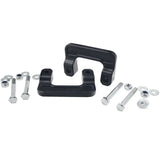 2" Front End Leveling Lift Kit Compatible Chevrolet Avalanche
$39.99Leveling kits for GM trucks — confirm generation and trim. Confirm fitment by VIN before ordering.
2" Front End Leveling Lift Kit Compatible Chevrolet Avalanche
$39.99Leveling kits for GM trucks — confirm generation and trim. Confirm fitment by VIN before ordering.
 Bilstein Front Suspension Leveling Kit for 2014-2019 Chevy
$1,121.99Leveling kits for GM trucks — confirm generation and trim. Confirm fitment by VIN before ordering.
Bilstein Front Suspension Leveling Kit for 2014-2019 Chevy
$1,121.99Leveling kits for GM trucks — confirm generation and trim. Confirm fitment by VIN before ordering.
 ReadyLift 3 in. Front Leveling Kit 663050 for 2001-2012
$304.99Leveling kits for GM trucks — confirm generation and trim. Confirm fitment by VIN before ordering.
ReadyLift 3 in. Front Leveling Kit 663050 for 2001-2012
$304.99Leveling kits for GM trucks — confirm generation and trim. Confirm fitment by VIN before ordering.
 ACDelco Suspension Self-Leveling Pump, Automatic Level
$351.99Leveling kits for GM trucks — confirm generation and trim. Confirm fitment by VIN before ordering.
ACDelco Suspension Self-Leveling Pump, Automatic Level
$351.99Leveling kits for GM trucks — confirm generation and trim. Confirm fitment by VIN before ordering.


What is the actual difference between a leveling kit, a lift kit and a strut spacer?
A leveling kit raises only the front of the truck, typically by a couple of inches, to remove the factory rake. A lift kit raises both ends by a larger amount and replaces or relocates the components that cannot handle that much change. A strut spacer is a specific hardware approach — a machined puck — used inside many leveling kits.
So the honest taxonomy is two outcomes and several ways to get there. Manufacturers reinforce this themselves. ReadyLIFT, for example, sells separate product lines for leveling kits, SST lift kits, big lift kits, rear lift, upper control arms and shocks, which tells you that above a certain height the control arms and dampers stop being optional extras.
The reason leveling kits exist at all is that GM builds full-size trucks with the front sitting lower than the rear. That rake is deliberate: it puts the truck closer to level when the bed is loaded or a trailer is on the hitch. How much rake your specific truck has depends on cab, bed length, engine and suspension package, so measure it yourself — park on level ground and measure from the ground to the center of each fender lip — rather than trusting a number from a forum thread about a different configuration.
What does a strut spacer actually do?
A top-mount strut spacer bolts between the strut assembly's upper mount and the frame tower. It makes the whole strut assembly effectively longer, which pushes the lower control arm and knuckle downward and raises the truck. It does not compress the spring and it does not change spring rate.
That last point matters, because the internet will tell you strut spacers "preload the spring" and ruin the ride. Top-mount spacers do not. What they do is consume down-travel: with the body sitting higher, the suspension has less room to droop before the strut tops out, and the front bump stops sit closer to the lower control arm than they did from the factory.
A coil spring spacer is a different part with a different effect. It sits on the spring seat inside the assembly and does add preload, which raises ride height and reduces available compression travel. Kits built this way are more likely to feel harsher over sharp impacts.
Older GM trucks with front torsion bars had a third option — cranking the torsion keys or fitting taller replacement keys. That approach does not apply to the coil-over strut front suspension used on modern 1500s. If someone advises you to just crank the keys, they are describing a different truck.
What is a leveling kit and who should buy one?
A leveling kit is a front-only lift, usually sold in the one-to-two-and-a-half-inch range, made up of strut spacers or coil spacers plus whatever brackets and extended hardware the specific truck needs. Some kits add a small rear spacer or block to preserve a slight rake.
Buy one if your goals are: the truck looks nose-high or at least level, you want to fit a modestly larger tire, and you want to spend a weekend rather than a paycheck. That is the majority of buyers, and for that use case a leveling kit is genuinely the correct product rather than a compromise.
Do not buy one if you tow near your rating regularly and the truck already squats. Raising the front while the rear stays where it is makes a loaded truck sit more nose-high unloaded and does nothing for the rear sag that is actually bothering you. That is a job for rear springs, air helper bags or a weight-distributing hitch.
Also worth knowing: on some kits the front sway bar end links and the ABS or brake lines end up at the edge of their range once the suspension droops. Good kits include extended links or brackets. Cheap kits do not mention it, and you find out when a line pulls tight on full droop.
What is a full lift kit and when do you actually need one?
A full lift kit raises both ends, usually four inches or more, and replaces the parts that cannot be stretched. Depending on height and platform, that can mean a subframe or crossmember drop, new steering knuckles, longer brake lines, new upper control arms, driveshaft changes and new shocks at all four corners.
You need one if you want a genuinely larger tire — the kind that requires more room than trimming a fender liner will provide — or if you actually take the truck off pavement in terrain where the difference between a leveled truck and a lifted one is a broken part.
What you get is real clearance and geometry that has been engineered back toward correct, rather than stretched. What you pay is money, installation time, a permanent hit to fuel economy, and a truck that is measurably harder to load and taller to climb into. Those trade-offs are fine if you wanted them. They are miserable if you bought the kit because it looked good online.
The middle option people forget is a bracket or knuckle lift in the three-to-four-inch range, which relocates the whole front suspension geometry down rather than just spacing the strut. It rides better than a big spacer lift and costs less than a full six-inch system, and it is worth pricing before you commit to either extreme.
Lift kits and components
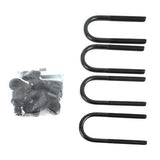 BDS Lift Kit Component Box, Bushings, U-Bolts
$96.99Lift kits and component boxes for Silverado, Sierra, Colorado and Canyon. Confirm fitment by VIN before ordering.
BDS Lift Kit Component Box, Bushings, U-Bolts
$96.99Lift kits and component boxes for Silverado, Sierra, Colorado and Canyon. Confirm fitment by VIN before ordering.
 BDS Lift Kit Component Box, Bushings, U-Bolts
$126.99Lift kits and component boxes for Silverado, Sierra, Colorado and Canyon. Confirm fitment by VIN before ordering.
BDS Lift Kit Component Box, Bushings, U-Bolts
$126.99Lift kits and component boxes for Silverado, Sierra, Colorado and Canyon. Confirm fitment by VIN before ordering.
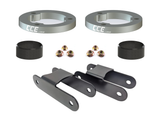 CCE 2" Front / 1" Rear Lift Kit
$204.95Lift kits and component boxes for Silverado, Sierra, Colorado and Canyon. Confirm fitment by VIN before ordering.
CCE 2" Front / 1" Rear Lift Kit
$204.95Lift kits and component boxes for Silverado, Sierra, Colorado and Canyon. Confirm fitment by VIN before ordering.
 CCE 2" Front / 1" Rear AAL Lift Kit
$319.98Lift kits and component boxes for Silverado, Sierra, Colorado and Canyon. Confirm fitment by VIN before ordering.
CCE 2" Front / 1" Rear AAL Lift Kit
$319.98Lift kits and component boxes for Silverado, Sierra, Colorado and Canyon. Confirm fitment by VIN before ordering.


Leveling kit vs lift kit vs strut spacer: side by side
Heights and part content vary by manufacturer and by truck, so treat the ranges below as how these products are typically sold, not as a specification for your vehicle. Every kit ships with its own fitment sheet, and that sheet is the authority.
| Strut / coil spacer leveling kit | Replacement strut leveling kit | Bracket or knuckle lift | Full lift kit | |
|---|---|---|---|---|
| What it raises | Front only | Front only | Front, often with rear blocks | Front and rear |
| Typical height sold | About 1 to 2.5 in | About 1 to 2.5 in | About 3 to 4 in | 4 in and up |
| Main components | Machined pucks, longer hardware, sometimes extended sway bar links | Complete pre-assembled struts at a taller ride height | Relocation brackets or new knuckles, longer shocks, brake line brackets | Crossmember or subframe drop, knuckles, control arms, driveshaft and shock changes |
| Install difficulty | Moderate; spring compressor may be needed | Easiest of the four; no spring work | High | High; frame work and driveline |
| Effect on ride | Top-mount spacers: little change. Coil spacers: firmer over sharp hits | Depends entirely on the strut's valving and spring rate | Closest to stock geometry of the lifted options | Changes ride substantially; new dampers are doing the work |
| Alignment required | Yes | Yes | Yes | Yes |
| Upper control arms | Usually not, at the low end of the range | Usually not, at the low end of the range | Often included or recommended | Typically required |
What does GM's own factory lift kit include?
Worth knowing before you shop aftermarket, because it shows what a manufacturer thinks a two-inch lift actually requires. Chevrolet and GMC both sell a factory two-inch suspension lift for the 2019 and newer Silverado and Sierra 1500, and the parts list is longer than most people expect.
What is in it: front and rear passive monotube dampers tuned specifically to the chassis, rear leaf spring spacers, front compatibility brackets, jounce bumpers and the associated hardware. On the 4WD kit it also includes front half-shafts designed for the increased flex angle.
Two separate part numbers. The 2WD system is 84993583; the 4WD system is 86306435. They are not interchangeable, and the price difference reflects real hardware rather than packaging.
The kit also includes a front camera reconfiguration and an electronic power steering calibration, so the driver-assist systems keep working at the new ride height — and GM states it will not void the New Vehicle Limited Warranty.
Note what GM chose to replace, and where. The dampers on both, and the half-shafts on 4WD. That is a manufacturer telling you that damper valving and CV joint angle are the two things a front lift genuinely disturbs — and that the CV angle problem is a four-wheel-drive problem, because a 2WD truck has no front half-shafts to worry about. It does not mean a spacer kit will destroy your truck. It does tell you where to look when something starts clicking on full lock.
The fitment restrictions are the instructive part
They differ between the two brands, which matters if you own a Sierra and have been reading Silverado advice:
| Excluded | Chevrolet Silverado 1500 | GMC Sierra 1500 |
|---|---|---|
| Cab | All regular cab | All regular cab |
| Trims | Custom Trail Boss, LT Trail Boss | AT4, Denali |
| Packages | Max Trailering (NHT), Snow Plow Prep (VYU) | Max Trailering (NHT), Snow Plow Prep (VYU) |
Composite rear leaf springs are a different case. Trucks fitted with them are not excluded — they require an additional steel leaf spring kit, part 84768245, sold separately. That applies to LT trim trucks with the 5.3L L84, and short-bed LT trucks with the 3.0L LM2 diesel. Budget for it rather than being surprised at the counter.
If a factory kit carries this many conditions, an aftermarket listing claiming to fit every 1500 from 2019 onward deserves a second look.
Does a leveling kit hurt ride quality?
Usually less than people claim, and the answer depends on which type you bought. A top-mount strut spacer does not change spring rate or damper valving, so on smooth pavement most owners report no difference. What changes is behavior at the extremes.
With the body sitting higher, the front suspension has less droop travel before the strut reaches full extension, and the bump stops engage earlier relative to ride height. On washboard or a hard dip you can feel that as a sharper top-out or a firmer bottom-out than the truck used to have.
Coil spacer kits add preload, which raises the effective spring force at ride height and can make small, sharp impacts feel busier. Replacement strut kits vary the most: a well-valved strut at the taller height can ride better than stock, and a cheap one can ride worse than a spacer.
The other thing that changes ride quality after a lift is tire choice, and people consistently blame the kit for it. Going from a highway tire to a heavier, stiffer-sidewall all-terrain in a taller size changes ride and noise more than two inches of spacer does. Change one variable at a time if you actually want to know what did what.
Will a leveling kit let you run bigger tires?
Somewhat. A two-inch front lift buys clearance at the top of the wheel well, which is where a taller tire hits at full compression, and it does nothing about width. Rubbing on a lifted truck usually happens at the front of the wheel well liner or the lower control arm at full lock, not at the top.
Before you buy tires, get the exact clearance figures from the tire and kit manufacturer for your cab, bed and wheel offset. Wheel offset changes the answer as much as the lift does — a more aggressive negative offset pushes the tire outward into the fender liner and the plastic flare. There is no universal "you can run this size with a two-inch level" answer, and any listing that gives you one has not accounted for your wheels.
Two consequences to plan for. First, a taller tire changes your effective final drive and your indicated speed; on GM trucks the tire size can be recalibrated with the correct tool, and until it is, your speedometer and odometer will read low. Second, if you change wheels, confirm your TPMS sensors transfer or are replaced, and confirm the center bore and lug seat type match. Our guide to tracing clunks and knocks in the front suspension is worth reading before you assume a new noise is the kit.
What wears faster after you lift a Silverado or Sierra?
On a 4WD truck, front CV axle boots and joints, because the half-shaft now runs at a steeper angle at ride height and a steeper one still at full droop. This is the failure people actually see, and it is why GM includes revised half-shafts in the 4WD version of even a two-inch factory kit.
After that, and on both drivetrains: upper and lower ball joints, which now operate further from the center of their range; front wheel bearings, if the alignment is left with excessive camber; and the front dampers, which are working with less travel on either side of ride height. Tie rod ends and the outer boots are on the list too.
None of this is a reason not to lift a truck. It is a reason to inspect the front end at every oil change afterward, and to treat a new click, clunk or vibration as information rather than something to turn the stereo up over.
Shocks and front-end parts
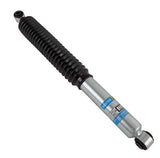 Bilstein B8 5100 Shock for 2023-2025 Chevy
$161.99Parts that wear faster after a lift. Confirm fitment by VIN before ordering.
Bilstein B8 5100 Shock for 2023-2025 Chevy
$161.99Parts that wear faster after a lift. Confirm fitment by VIN before ordering.
 Bilstein B8 5100 Shock for 2019-2025 Chevy & GMC
$155.99Parts that wear faster after a lift. Confirm fitment by VIN before ordering.
Bilstein B8 5100 Shock for 2019-2025 Chevy & GMC
$155.99Parts that wear faster after a lift. Confirm fitment by VIN before ordering.
 Bilstein B8 5100 Shock 24253260 for 2015-2020 Chevy & GMC
$161.99Parts that wear faster after a lift. Confirm fitment by VIN before ordering.
Bilstein B8 5100 Shock 24253260 for 2015-2020 Chevy & GMC
$161.99Parts that wear faster after a lift. Confirm fitment by VIN before ordering.
 Bilstein B8 5100 Shock 24267021 for 2002-2009 Chevy
$161.99Parts that wear faster after a lift. Confirm fitment by VIN before ordering.
Bilstein B8 5100 Shock 24267021 for 2002-2009 Chevy
$161.99Parts that wear faster after a lift. Confirm fitment by VIN before ordering.


Do you need an alignment and new upper control arms?
Alignment, always, without exception, on every option in this guide. Raising the front changes camber and caster immediately, and driving on it will scrub the inner shoulders off a new set of tires in a few thousand miles. Book it for the same week you install the kit.
Aftermarket upper control arms are a different question. At the low end of the leveling range most trucks can be aligned back into specification with the factory arms. As lift height increases, the arm angle and the ball joint's range of motion become the limiting factors, which is why lift kit manufacturers sell upper control arms as their own product line and include or require them on taller kits.
The practical test: have the shop align it first. If the alignment comes back in specification and the ball joints are not binding at full droop, you do not need arms. If camber cannot be brought into range, or the technician reports the arm contacting the coil, you do. Buy based on the alignment sheet, not on a forum consensus.
If you are working on a mid-size truck rather than a 1500, the same logic applies but the parts are different — our walkthrough of a one-inch leveling kit install on the Colorado and Canyon covers that platform step by step, and there are more GM performance and suspension guides in the same series.
So which one should you buy?
- You want the rake gone and a slightly bigger tire. Leveling kit, spacer type. This is most people, and it is not a compromise.
- Your front struts are worn out anyway. Replacement strut leveling kit. You were buying struts regardless, so the lift is nearly free labor.
- You want a noticeably larger tire and you drive off pavement. Bracket or knuckle lift in the three-to-four-inch range, with upper control arms.
- You want maximum tire and clearance and you have the budget. Full lift kit, professionally installed, with new dampers at all four corners.
- Your problem is the rear sagging under load. None of the above. Look at rear springs, helper springs or a weight-distributing hitch.
- You want to keep the factory warranty untouched and do not care about cost. The dealer-installed factory kit, subject to its cab, trim and package restrictions — which differ between Silverado and Sierra.
What to check before you order
A short safety note first: a truck on jack stands with the front suspension disassembled has a lot of stored energy in the coil spring. Use a proper spring compressor or buy pre-assembled strut units, support the lower control arm before you separate anything, and never put a body part where a released spring would go.
- Cab and bed configuration. Regular cab, double cab and crew cab are frequently different part numbers, and factory kits exclude regular cab entirely.
- Suspension and trailering packages. Max Trailering (NHT), Snow Plow Prep (VYU) and composite rear springs all appear in fitment conditions. Read your RPO label in the glovebox.
- Drivetrain. 2WD and 4WD kits are different part numbers with different contents — the 4WD version includes half-shafts.
- Trim. Trail Boss on Chevrolet, AT4 and Denali on GMC, are excluded from the factory kit.
- What the kit includes for the sway bar links and brake lines. If the instructions do not mention them, check clearance at full droop before you drive it.
- Whether you are also changing wheels. Offset and backspacing determine rub as much as lift height does. Decide both together.
- Torque specifications. Suspension fasteners on these trucks have specific values, and several are torque-to-yield single-use bolts. Use the values in the kit instructions and your service manual for your exact year.
Frequently Asked Questions
What is the difference between a leveling kit and a lift kit?
A leveling kit raises only the front, usually one to two and a half inches, to remove the factory rake. A lift kit raises both ends by four inches or more and replaces the components that cannot absorb that much change — knuckles, control arms, brake lines, sometimes driveshafts. Two outcomes, not three: a strut spacer is a way of building a leveling kit, not a separate category.
Do strut spacers ruin the ride?
Top-mount strut spacers generally do not. They sit between the strut's upper mount and the frame tower, so they change nothing about spring rate or damper valving. What they consume is droop travel, which you feel as a sharper top-out over dips rather than a harsher ride generally. Coil spring spacers are different — those add preload and can make sharp impacts feel busier.
Why does my truck sit lower at the front from the factory?
Deliberate rake. GM builds full-size trucks nose-down so they sit closer to level with a loaded bed or a trailer on the hitch. How much rake yours has depends on cab, bed, engine and suspension package, so measure from the ground to the center of each fender lip on level ground rather than trusting a figure from a forum.
What does GM's factory two-inch lift kit include?
Front and rear passive monotube dampers tuned to the chassis, rear leaf spring spacers, front compatibility brackets, jounce bumpers and hardware. The 4WD version also includes front half-shafts for the increased flex angle. It comes with a front camera reconfiguration and an electronic power steering calibration, and GM states it does not void the New Vehicle Limited Warranty. The 2WD part number is 84993583 and the 4WD is 86306435.
Which trucks can't have the factory lift kit fitted?
All regular cabs, any truck with the Max Trailering Package (NHT) or Snow Plow Prep (VYU), and certain trims — Custom Trail Boss and LT Trail Boss on the Silverado, AT4 and Denali on the Sierra. Trucks with composite rear leaf springs are not excluded but need an additional steel leaf spring kit, part 84768245, sold separately.
Will a leveling kit let me fit bigger tires?
Somewhat, and less than people expect. A front lift buys clearance at the top of the wheel well, but rubbing usually happens at the front of the liner or against the lower control arm at full lock. Wheel offset changes the answer as much as lift height does, so get clearance figures for your specific cab, bed and wheel combination rather than trusting a generic size claim.
Do I need an alignment after a leveling kit?
Always, on every option covered here, without exception. Raising the front changes camber and caster immediately, and driving on it will scrub the inner shoulders off a new set of tires within a few thousand miles. Book the alignment for the same week you install the kit, not for whenever you get round to it.
Do I need aftermarket upper control arms?
At the low end of the leveling range, usually not. Let the alignment decide: if the truck comes back in specification and the ball joints are not binding at full droop, the factory arms are fine. If camber cannot be brought into range, or the technician reports the arm contacting the coil, you need them. Buy from the alignment sheet, not from forum consensus.
What wears out faster after a lift?
On 4WD trucks, front CV axle boots and joints first, because the half-shaft runs at a steeper angle — which is exactly why GM includes revised half-shafts in the 4WD factory kit. After that, ball joints, front wheel bearings if the alignment is left out of specification, and the front dampers. Inspect the front end at every oil change afterward.
My truck sags at the rear when I tow. Will a leveling kit fix that?
No, and it makes the look worse. Raising the front while the rear stays put means a loaded truck sits more nose-high and the rear sag is untouched. That is a job for rear springs, air helper bags or a weight-distributing hitch — a different problem with a different solution.
A Note on Sourcing
The factory lift kit details — contents, the 2WD and 4WD part numbers, the camera and steering calibration, the warranty statement and the fitment exclusions — come from Chevrolet Accessories' and GMC Accessories' own product listings for the two-inch Lift Suspension Upgrade System. Three points were corrected against them in this revision: front half-shafts are included on the 4WD kit only; trucks with composite rear leaf springs need an additional steel leaf spring kit rather than being excluded; and the Sierra's excluded trims are AT4 and Denali rather than the Silverado's Trail Boss variants.
Everything else on this page — the taxonomy, the ride quality discussion, the wear list and the buying recommendations — is our own assessment based on how these products are built and sold, not manufacturer guidance.
Kit contents and fitment change. The fitment sheet supplied with your specific kit, and your truck's RPO label, are authoritative in a way that any guide cannot be.
Still deciding?
If you are choosing between a spacer level, a strut level and a full lift, decide by outcome first: how much tire do you actually want, and do you go off pavement or not. Everything else follows from that answer, and it will keep you from buying a six-inch kit for a truck that never leaves the highway.
Compare the options side by side in suspension and steering parts for your Silverado or Sierra, and if the tires are the real goal, work backwards from wheels and tire accessories before you commit to a lift height.