
Safety Recall N262562600 (NHTSA campaign 26V494) covers a high-voltage battery defect with a fire risk on the 2026 Chevrolet Silverado EV, GMC Sierra EV, Cadillac Escalade IQ and Escalade IQL. The remedy is as serious as it gets — dealers replace the entire high-voltage battery. But the number that matters most is this: the recall covers ten vehicles. Not ten thousand. Ten. Which makes the VIN check the single most important thing on this page, because the overwhelming likelihood is that yours is not one of them.
Read the primary document yourself: Part 573 Safety Recall Report for NHTSA campaign 26V494 (PDF), submitted by General Motors on 30 July 2026.
Jump to a section: What to do right now · Ten vehicles — why that matters · What the defect is · How GM found it · You cannot inspect for this yourself · The remedy: a whole new battery · Is it safe to drive? · The other recall filed the same day · A note on sourcing · What other pages get wrong · FAQ
What to Do Right Now
Run your VIN. That is the whole action, and it takes about a minute.
- NHTSA.gov/recalls — VINs for this campaign became searchable on 30 July 2026
- Or use the Chevrolet, GMC or Cadillac owner app or website
- Our GM recall VIN check guide walks through it
Dealers were notified on 30 July 2026, and owner notification was estimated to start mailing 14 September 2026.
Customer service, referencing recall N262562600 or NHTSA campaign 26V494:
- Chevrolet: 1-800-222-1020
- GMC: 1-800-462-8782
- Cadillac: 1-800-333-4223
- NHTSA Vehicle Safety Hotline: 1-888-327-4236
If your VIN comes back clear, you are done. Given the size of this campaign, that is what almost every reader of this page will see.
Ten Vehicles — Why That Matters
This is the context most coverage buries, and it changes how you should read everything else.
The recall population is ten vehicles in the United States. GM's filing breaks them down:
| Vehicle | Production dates | Units |
|---|---|---|
| 2026 Chevrolet Silverado EV | 4–15 May 2026 | 4 |
| 2026 Cadillac Escalade IQL | 8–12 May 2026 | 3 |
| 2026 Cadillac Escalade IQ | 12–18 May 2026 | 2 |
| 2026 GMC Sierra EV | 7 May 2026 | 1 |
| Total | 10 |
Look at those production windows. Every affected vehicle was built inside a two-week stretch in May 2026, and the single Sierra EV was built on one specific day. GM has built tens of thousands of vehicles on these platforms. So the probability that any given Silverado EV, Sierra EV or Escalade IQ is affected is very small.
There is a further number in the filing worth reporting carefully. GM's stated estimated percentage of the population with the defect is 0.8%. Against a ten-vehicle population that figure is difficult to interpret literally, and GM does not explain how it was derived — so we are reporting it as filed rather than drawing a conclusion from it. What can be said is that GM is not asserting that all ten trucks have a loose component. The recall captures every vehicle that could have been built with one.
That is not a reason to skip the VIN check — it is the reason to do it. With a population this narrow, model year and model name tell you nothing at all. There is no option code to look for and no symptom to watch. Either your VIN is on the list or it is not, and the list is the only way to know.
It is also worth reading this as a system working rather than a system failing. GM narrowed a suspect production window down to fourteen vehicles worldwide, ten of them in the United States, by reviewing photographic manufacturing records of the modules themselves. GM states it is not aware of any field incidents associated with this condition. Nothing has caught fire. This was caught in records, not in a parking lot.
What the Defect Is
The description is short, and each clause does work.
The high-voltage batteries in these vehicles may have an internal module component that is not fully secured in place. Battery module components that are not properly secured may move and cause internal damage to the battery.
High-voltage batteries with this type of internal damage have increased risk of a fire.
The filing names the component more precisely than the summaries do. What was found unsecured were sense line assembly fingers — part of the wiring that monitors individual cell voltages inside the module. The involved component is listed as the high-voltage battery assembly, part numbers 24071569, 24071572 and 24071574.
Follow the chain, because it explains why the remedy is so drastic.
- Something inside the battery module was not fastened correctly during assembly. This is a manufacturing escape, not a design fault — GM traced it to a press machine that had been misadjusted during scheduled downtime, not to the design of the part.
- A loose component inside a pack does not stay put. The vehicle drives, vibrates, heats and cools. Over time that component can shift.
- A shifting component inside a high-voltage battery can damage what it moves against. Cells, busbars, insulation, cooling components — none of which tolerate mechanical damage.
- Damaged internals are what raise the fire risk.
Note the word "increased." GM is not saying these packs will catch fire. It is saying the condition raises the risk above where it should be — and for a high-voltage battery, that is a sufficient reason to act.
This is also a progressive defect rather than a fixed one. The risk is not the same on day one as it is after a year of movement, which is why replacement rather than monitoring is the answer.
How GM Found It
The chronology is worth reading, because the recall exists due to someone questioning whether an earlier fix had actually worked.
- 17 May 2026 — two high-voltage battery modules at GM's Ramos assembly plant were observed to have sense line assembly fingers not fully secured in place.
- The problem was traced upstream to a different plant. The module component is assembled at GM's Factory Zero, where it was determined that the press machine used for that operation had been misadjusted during prior scheduled downtime.
- 19 May 2026 — containment actions and preventive measures were initiated.
- 20 May 2026 — and this is the part that matters. A GM quality manager submitted a report through GM's Speak Up for Safety programme after learning that vehicles with suspect modules might not have been fully contained. The containment had already been actioned the day before; someone escalated anyway because they were not confident it had caught everything.
- 5 June 2026 — GM opened a product investigation.
- Visual review of photographic manufacturing records was used to verify the condition of most modules in the suspect window, which allowed GM to exclude all but 14 vehicles — ten of them in the United States.
- 23 July 2026 — GM's Safety Field Action Decision Authority decided to conduct a safety recall.
- 30 July 2026 — report filed, dealers notified, VINs searchable.
Two things are worth drawing out.
First, the escalation came after the fix. Containment was initiated on 19 May. The Speak Up for Safety report came on 20 May, from someone who suspected the containment was incomplete. That report is why this recall exists.
Second, GM photographs modules during assembly. That is why a suspect window could be narrowed to fourteen specific vehicles rather than recalling every truck built in that period — the records showed which individual modules were correctly assembled and which could not be confirmed.
You Cannot Inspect for This Yourself
Worth stating plainly, because owners naturally want to look.
The defect is inside a sealed high-voltage battery assembly. There is nothing visible from outside, no noise to listen for, no warning message, and no symptom to watch for. GM's filing leaves the field for any warning that can occur entirely blank — the manufacturer identifies no warning at all, which confirms rather than merely suggests that owners are unlikely to detect this before damage develops.
So do not attempt to inspect it. Beyond being futile, opening a high-voltage battery pack is genuinely dangerous work restricted to trained technicians with the right equipment, and on these vehicles that means an authorised EV dealer.
The VIN lookup is your inspection. That is not a consolation — it is genuinely how this particular defect is found, because GM identified the affected packs from manufacturing records rather than from field symptoms.
One practical note: if your vehicle is in the population and you notice anything unusual — a burning or chemical smell, unexpected high-voltage warnings, or visible damage underneath — treat that as urgent and stop using the vehicle. That advice applies to any EV regardless of recall status, and it is our own guidance rather than GM's.
Tools for 12-volt checks
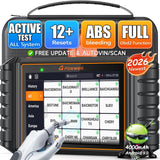 FOXWELL NT726 Bidirectional Scanner
$368.99Reads body and battery module codes on supported vehicles.
FOXWELL NT726 Bidirectional Scanner
$368.99Reads body and battery module codes on supported vehicles.
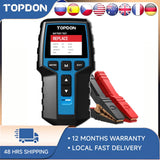 TOPDON BT200 Battery Tester
$103.99Tests the 12-volt accessory battery.
TOPDON BT200 Battery Tester
$103.99Tests the 12-volt accessory battery.
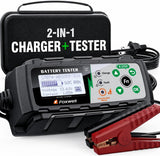 FOXWELL BC521 Battery Charger & Tester
$162.35Charger and tester for the 12-volt battery.
FOXWELL BC521 Battery Charger & Tester
$162.35Charger and tester for the 12-volt battery.
 FOXWELL NT301 Code Reader
$68.82Budget code reader with live data.
FOXWELL NT301 Code Reader
$68.82Budget code reader with live data.
 Nomex Split Loom, 1 in. x 10 ft
$105.66Split loom to protect repaired wiring.
Nomex Split Loom, 1 in. x 10 ft
$105.66Split loom to protect repaired wiring.


The Remedy: A Whole New Battery
Dealers will replace the high-voltage batteries in these vehicles, free of charge.
That is an unusually complete remedy, and it tells you how GM is treating the defect. There is no inspection-and-repair path, no attempt to re-secure the component, no software mitigation. The pack comes out and a new one goes in. GM states that replacement batteries have modules produced from outside of the suspect window.
Why it works that way:
- The suspect component is inside the module. Reaching it means substantially disassembling the pack.
- Damage may already have started. Re-securing a component that has been moving for months does not undo what it moved against.
- With ten vehicles involved, replacement is straightforward to resource. A remedy that would be impractical across a large population is entirely practical across ten.
Practical expectations if you are one of the ten:
- This is an EV-certified dealer job. GM restricts high-voltage battery work to authorised EV dealers with trained technicians.
- Expect the vehicle to be there a while. A full HV pack replacement is a major operation, not an afternoon.
- Ask about transportation. Courtesy transportation is commonly available for extended recall work — worth raising when you book.
- It costs you nothing. Under 49 C.F.R. § 573.13(d)(1), all covered vehicles are under warranty, so GM offers no separate reimbursement plan — parts and labour are simply covered.
12-volt battery care
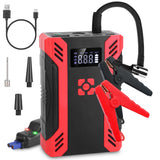 Jump Starter with Air Compressor
$177.99Jump starter with built-in air compressor.
Jump Starter with Air Compressor
$177.99Jump starter with built-in air compressor.
 FOXWELL BT705 Battery & Alternator Tester
$159.89Battery and charging system tester.
FOXWELL BT705 Battery & Alternator Tester
$159.89Battery and charging system tester.
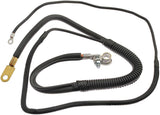 ACDelco Gold 2LF32XE Negative Battery Cable
$45.24ACDelco negative battery cable. Confirm fitment by VIN before ordering.
ACDelco Gold 2LF32XE Negative Battery Cable
$45.24ACDelco negative battery cable. Confirm fitment by VIN before ordering.

Is It Safe to Drive?
The question that matters on any fire-risk recall, and the answer here is more reassuring than the word "fire" suggests.
GM has not issued a "do not drive" or "park outside" advisory for this recall. NHTSA's own record for campaign 26V494 carries neither flag.
That is a meaningful distinction, not a technicality. When a manufacturer believes a battery defect presents an immediate fire hazard, those advisories are exactly the tool used — owners get told to park away from structures and stop driving. It is what happened on the Bolt EV battery recall. GM applied neither here.
Combined with no reported field incidents, the reasonable reading is that this is a defect identified through manufacturing records and addressed pre-emptively, rather than a pattern of failures being chased after the fact.
So: check your VIN, and if you are affected, book the repair without panic but without delay either. A progressive defect gets worse with time, which argues for promptness rather than alarm.
If a do-not-drive or park-outside advisory is later attached to your specific VIN, follow it over anything on this page. Recalls are revised, and the VIN lookup is always more current than an article.
The Other Recall Filed the Same Day
Worth knowing about, because it hits the same trucks and many owners will be eligible for both.
GM filed two separate safety recalls on 30 July 2026, both landing on its electric trucks.
| This recall | The companion | |
|---|---|---|
| GM number | N262562600 | N262556920 |
| NHTSA campaign | 26V494 | 26V496 |
| Issue | High-voltage battery, unsecured internal module component | Steel wheels cracking at the disc vent holes |
| Vehicles | 10 | 952 |
| Models | Silverado EV, Sierra EV, Escalade IQ, Escalade IQL | Silverado EV, Sierra EV |
| Remedy | Replace the high-voltage battery | Inspect and replace wheels as necessary |
| Filing | Part 573 report (PDF) | Part 573 report (PDF) |
The wheel recall is the one more owners should actually act on, simply because it covers 952 vehicles rather than ten. A cracked wheel can lead to disc separation and loss of control.
If your Silverado EV wears steel wheels, or either truck carries a steel spare, run the VIN for both campaigns. One lookup at NHTSA.gov returns every open recall on your vehicle, so you are not doing extra work — just do not assume a clear result on one means a clear result on the other.
A Note on Sourcing
We cite documents we have read and label the rest.
This page is built from the Part 573 Safety Recall Report for NHTSA campaign 26V494, submitted by General Motors on 30 July 2026, which we have opened and read in full. That covers the ten-vehicle population and its model-by-model breakdown, the production date ranges, the 0.8% defect estimate, the defect and safety risk language, the sense line assembly fingers, the misadjusted press machine at Factory Zero, the battery part numbers, the full chronology including the Speak Up for Safety escalation, the absence of field incidents, the remedy, the reimbursement position and the schedule.
An earlier version of this page stated that we had not opened the Part 573 report and therefore lacked the chronology and component part number. That was accurate when written. We have since read the filing and this page carries those details; nothing in the earlier version turned out to be wrong, so there is no correction to record — only additions.
The absence of a do-not-drive or park-outside advisory is confirmed against NHTSA's own record for the campaign, not inferred from the filing's remedy section.
The 0.8% defect estimate is reported exactly as GM filed it. We have not tried to reconcile it with a ten-vehicle population, because the document does not explain how it was calculated and we would be guessing.
The advice about acting on a burning smell or unexpected high-voltage warnings is our own general EV guidance, not part of GM's filing.
Recalls develop. Populations get expanded, remedies get revised and advisories get added. Your VIN lookup at NHTSA.gov and your dealer are current in a way this page cannot be.
General tools
 Trim Removal Tool Kit
$9.99Trim removal tool kit.
Trim Removal Tool Kit
$9.99Trim removal tool kit.
 95-Piece Mechanics Tool Set (Metric & SAE)
$99.99Mechanic tool set.
95-Piece Mechanics Tool Set (Metric & SAE)
$99.99Mechanic tool set.
 50-Piece 1/4 in. Drive Socket Set
$54.99Quarter-inch drive socket set.
50-Piece 1/4 in. Drive Socket Set
$54.99Quarter-inch drive socket set.
 ACDelco Digital Torque Wrench, 1/2 in. (14.8–147.5 ft-lb)
$162.99Half-inch digital torque wrench.
ACDelco Digital Torque Wrench, 1/2 in. (14.8–147.5 ft-lb)
$162.99Half-inch digital torque wrench.


What Other Pages on This Recall Get Wrong
- Leading with "fire risk" and burying the population. Ten vehicles is the most important fact for a reader deciding whether to worry, and it belongs near the top rather than in the last paragraph.
- Implying owners should watch for symptoms. GM's filing leaves the warning field blank — the manufacturer identifies no warning at all. There is nothing to see, hear or smell before damage develops, which is precisely why the VIN check is the only meaningful action.
- Not saying there is no do-not-drive advisory. On a battery fire recall that omission causes real alarm. GM applied neither a do-not-drive nor a park-outside advisory, and reports no field incidents.
- Missing the two-week production window. Every affected vehicle was built between 4 and 18 May 2026, and the one Sierra EV on a single day. That is far more informative than a model year.
- Missing the companion wheel recall. N262556920 was filed the same day, covers 952 vehicles rather than ten, and involves loss of control. For most Silverado EV and Sierra EV owners it is the more relevant of the two.
- Treating the battery replacement as evidence of severity. The remedy is complete because the suspect part is inside a sealed module and the population is tiny — not because GM considers every affected truck to be on the verge of burning.
- Suggesting owners inspect the pack. High-voltage battery work is restricted to trained technicians at authorised EV dealers, for good reason.
- Citing the filing without linking it. The report is a public PDF and it is linked here.
Frequently Asked Questions
Is my truck affected?
Almost certainly not — the recall covers ten vehicles in total across four models, all built between 4 and 18 May 2026. But model year tells you nothing with a population that small, so run your VIN at NHTSA.gov, where these became searchable on 30 July 2026, or use your brand's owner app. That lookup is the only way to know.
What is actually wrong with the battery?
Sense line assembly fingers inside a battery module may not have been fully secured during assembly. If loose they can move, and movement inside a high-voltage battery can damage internal components — which is what raises the fire risk. GM traced it to a press machine at its Factory Zero plant that had been misadjusted during scheduled downtime, so it is a manufacturing escape rather than a problem with the design.
Can I keep driving it?
GM has not issued a do-not-drive or park-outside advisory, and reports no field incidents. If your VIN is affected, book the repair promptly rather than urgently — the defect is progressive, so time works against you, but there is no indication of immediate hazard.
Is there anything I can look for?
No. GM's filing leaves the warning field blank, meaning the manufacturer identifies no warning that can occur. The defect sits inside a sealed high-voltage battery assembly with no external symptom and nothing audible. That is why GM identified affected vehicles from manufacturing records rather than from field reports. Do not attempt to inspect the pack yourself — that work is restricted to trained technicians for safety reasons.
Why replace the whole battery for one loose part?
Because reaching the component means substantially disassembling the module, and because damage may already have begun — re-securing something that has been moving for months does not undo what it moved against. Replacement batteries use modules produced outside the suspect window. With only ten vehicles involved, full replacement is also entirely practical to resource.
How did GM narrow it down to ten vehicles?
By reviewing photographic manufacturing records of the modules themselves. That visual review confirmed the condition of most modules built in the suspect window, letting GM exclude everything except fourteen vehicles worldwide, ten of which are in the United States.
What will it cost me?
Nothing. Parts and labour are covered. Expect the vehicle to be at the dealer for a while, since a high-voltage battery replacement is a major job, and ask about courtesy transportation when you book.
Can any dealer do the work?
No — high-voltage battery work on these vehicles is restricted to authorised EV dealers with technicians who have completed the required training. If your usual dealer is not EV-certified, they will direct you to one that is.
I have a Silverado EV. Is there anything else I should check?
Yes. GM filed a second recall the same day, N262556920 (NHTSA 26V496), covering steel wheels that can crack at the disc vent holes on the 2026 Silverado EV and Sierra EV. It affects 952 vehicles rather than ten, and a cracked wheel can cause loss of control. One VIN lookup returns both, and its Part 573 report is public too.
Where can I read the actual recall document?
It is public. The Part 573 Safety Recall Report for campaign 26V494 is hosted by NHTSA as a PDF and contains the defect description, the cause, the chronology, the population table and the remedy in GM's own words.
Related Guides
Sources
- Part 573 Safety Recall Report, NHTSA campaign 26V494 (PDF) — General Motors, LLC, submitted 30 July 2026. GM recall number N262562600. Primary source for every fact on this page; opened and read in full.
- Part 573 Safety Recall Report, NHTSA campaign 26V496 (PDF) — the companion wheel recall, GM number N262556920, 952 vehicles.
- NHTSA recall lookup — search your VIN for current recall status. Campaign numbers 26V494 and 26V496.
Owner questions: Chevrolet 1-800-222-1020, GMC 1-800-462-8782, Cadillac 1-800-333-4223. NHTSA Vehicle Safety Hotline 1-888-327-4236.