
You have three real options when Escalade air suspension fails: replace with OEM or OE-equivalent parts, install remanufactured air struts, or convert to conventional coil springs with a delete module. Conversion is cheapest and permanent. OEM keeps the ride quality and the resale value. Remanufactured sits in between. Which one is right depends on how long you plan to keep the truck.
That is the honest summary, and it is more than most of the pages ranking for this question will give you, because most of them sell exactly one of the three. Below is what actually breaks, how to identify which system your Escalade has before you spend a dollar, and a straight cost and consequence comparison. Start by identifying your system, then browse suspension and steering parts for your Escalade filtered to your model year.
If your truck is a 2021 or newer and the dash says "Service Leveling System," check one hose before you price a compressor. GM has published a diagnostic bulletin identifying a pinched or twisted air inlet hose as a cause of exactly that message and code C1197. It is a free inspection that can save a four-figure repair. Details in the diagnosis section below.
Parts and tools you'll need
- Air struts, shocks, compressors and height sensors for 2015–2026 Escalade — filter by year first, because the 2021 platform change matters
- Cadillac Escalade parts and accessories for the related hardware you will find worn out while you are under there
- A bidirectional scan tool that reads chassis modules — a $30 code reader will not see the suspension control module
- Soapy water in a spray bottle, a set of jack stands rated for a 6,000 lb vehicle, and metric sockets through 21 mm
Air springs and compressors
 Front Air Suspension Shock Absorber for 2007–2014 Cadillac
$381.58Air suspension parts for Escalade and GM SUVs. Confirm fitment by VIN before ordering.
Front Air Suspension Shock Absorber for 2007–2014 Cadillac
$381.58Air suspension parts for Escalade and GM SUVs. Confirm fitment by VIN before ordering.
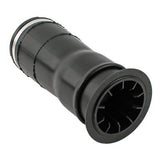 ACDelco Air Suspension Springs, Replacement
$245.99Air suspension parts for Escalade and GM SUVs. Confirm fitment by VIN before ordering.
ACDelco Air Suspension Springs, Replacement
$245.99Air suspension parts for Escalade and GM SUVs. Confirm fitment by VIN before ordering.
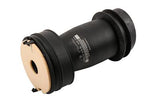 ACDelco Air Suspension Springs, ACDelco Air Springs
$178.99Air suspension parts for Escalade and GM SUVs. Confirm fitment by VIN before ordering.
ACDelco Air Suspension Springs, ACDelco Air Springs
$178.99Air suspension parts for Escalade and GM SUVs. Confirm fitment by VIN before ordering.
 ACDelco Air Suspension Controller Replacement Part, Leveling
$143.99Air suspension parts for Escalade and GM SUVs. Confirm fitment by VIN before ordering.
ACDelco Air Suspension Controller Replacement Part, Leveling
$143.99Air suspension parts for Escalade and GM SUVs. Confirm fitment by VIN before ordering.

What actually fails on an Escalade air suspension?
Air springs and air strut bags fail first, from rubber fatigue and road salt. The compressor fails second, usually because it has been running constantly to feed a leak it cannot keep up with. After that come ride height sensors, the air line fittings, and on 2021+ trucks the reservoir tank and its inlet hose. The control module itself rarely fails.
The sequence matters because it tells you where to look. A dead compressor is almost never the root cause — it is the symptom of a leak somewhere upstream that ran the pump to death. Replacing the compressor without finding the leak buys you a few months and then you are back where you started, minus the cost of a compressor.
Reported failure onset on these systems clusters between roughly 40,000 and 100,000 miles, which is a very wide band because it depends heavily on climate. Trucks in the salt belt fail early. Trucks in dry states routinely go past 120,000 miles on original bags.
Which suspension does my Escalade actually have?
Check the RPO sticker in your glovebox or center console lid. Z55 is Autoride automatic load leveling. Z95 is Magnetic Ride Control. F47 is Air Ride Adaptive Suspension. ZW7 is Premium Smooth Ride with Nivomat rear shocks. Most Escalades have Z95, and 2021 and newer trucks may have Z95 and F47 together.
| Model years | Platform | Damping | Air components | What that means for repair |
|---|---|---|---|---|
| 2015–2020 Escalade / Escalade ESV | K2XX | Magnetic Ride Control (Z95) | Rear air-assisted leveling shocks, compressor, height sensors | Rear-only air. Front struts are MagneRide but not air. |
| 2021–2026 Escalade / Escalade ESV | T1XX | Magnetic Ride Control 4.0 (Z95) | Optional four-corner Air Ride Adaptive Suspension (F47): air springs, compressor, reservoir tank, height sensors | If equipped with F47, the air system is structural — it is not just leveling. |
| Any year without Z95 or F47 | — | Conventional or Autoride (Z55) | Rear leveling only, or none | Straightforward shock replacement. Skip most of this article. |
The distinction between the 2015–2020 and 2021+ trucks is the single most important thing on this page. On a 2015–2020 Escalade, the air system does rear leveling. If it dies, the truck sits a bit low in the back and rides worse, but it is still a normal spring-and-shock vehicle. On a 2021+ truck with F47, the air springs are the springs. Losing pressure is not an inconvenience.
That difference changes what "convert to coils" even means. On the older truck it is a modest job. On the newer truck it is a full spring replacement plus module emulation, and it is significantly more involved.
What are the symptoms of a failing air suspension?
The truck sags on one corner or the whole rear axle after sitting overnight. You get a "Service Suspension System" or "Service Leveling System" message in the cluster. The compressor runs longer than it used to, or runs constantly. On MagneRide failures you may also get an 80 mph speed limiter and a ride that has turned harsh and choppy.
Sagging overnight is the definitive one. Park the truck level, note the gap between tire and fender at all four corners with a tape measure, and check the same four measurements in the morning. A corner that dropped more than the others has a leak, and now you know which one to chase.
Harshness without sagging usually points at the dampers rather than the air system. MagneRide struts lose their magnetorheological fluid slowly, and the ride goes from "surprisingly good for a big SUV" to "wooden" over a couple of years. You will often see oily residue on the shock body when that happens. That is a damper problem, not an air problem, and the fixes are different.
If your complaint is a clunk rather than a sag, do not start here. Work through the strut mount and sway bar link noise diagnosis first — those parts are a fraction of the cost of anything in this article and they cause most of the clunking complaints on these trucks.
Check the free thing first: GM's own diagnostic tip for C1197
This is the most valuable paragraph on the page if your truck is a 2021 or newer, so it gets its own section.
GM preliminary information document PIT6144G, published 17 April 2025, addresses vehicles with RPO F47 Air Ride Adaptive Suspension presenting with:
- Air leveling suspension inoperative
- A "Service Leveling System" message in the driver information centre
- DTC C1197 SYM 92
GM's stated cause: a plugged or pinched air inlet hose to the air suspension compressor assembly — or, on certain models, the K5 automatic level control module software.
GM's stated correction: inspect the compressor air inlet hose for being pinched or twisted and preventing air from entering the compressor, and repair as needed. The bulletin includes photographed examples, including a pinched hose on a 2023 Escalade and twisted hoses on a 2024 Hummer EV SUV. On the 2024 Hummer EV pickup it documents a kinked hose caused by an inlet hose fastener sitting in the wrong mounting hole.
Covered models: 2021–2025 Escalade and Escalade ESV, Tahoe, Suburban, Yukon and Yukon XL, plus 2022–2025 Hummer EV and 2024–2025 Hummer EV SUV.
The practical consequence is straightforward. A compressor on these trucks is an expensive part, and the symptom that most often gets it condemned — a leveling system that will not work and a message on the dash — has a documented cause that costs nothing to check. Inspect the hose, and ask whether a module software update applies to your VIN, before anyone orders a compressor.
How do I find the leak before I buy anything?
Spray soapy water on every air spring, fitting and line with the system pressurized, and look for bubbles. Most leaks are at the bag itself or at a crimped fitting. Give it several minutes — a leak slow enough to drop the truck overnight will not produce dramatic bubbling.
- Park on level, dry ground and let the system fully inflate. On 2021+ trucks with a height selector, raise the vehicle to its highest setting to load the bags.
- Mix dish soap and water roughly one to eight in a spray bottle. Commercial leak detector fluid works too and is not required.
- Soak each air spring, top and bottom, and every fitting where a line enters a component. Rotate the wheel if you need access.
- Watch for a growing dome of foam rather than instant fizzing. Slow leaks build slowly.
- Check the compressor's air inlet hose for pinching or twisting, per GM's PIT6144G above. This is the free fix and it is genuinely common.
- Check the compressor's dryer, and the reservoir tank and its lines on F47 trucks. That tank stores compressed air so the compressor does not have to run for every adjustment, and a leak there mimics a failing pump.
- Scan for chassis codes with a tool that reads suspension modules and write the codes down before you clear anything. A C1197 SYM 92 sends you straight back to step five.
Step five is worth taking seriously. Finding a pinched hose instead of buying a compressor is the difference between an afternoon and a four-figure repair. Check the free thing first.
Option 1: replace with OEM or OE-equivalent parts
Full OEM replacement restores the truck exactly as designed — no warning lights, no ride compromise, no effect on resale. It is the most expensive path. Published GM list pricing for a complete four-corner MagneRide set on these SUVs has run in the high three thousands, with dealer-network online pricing at roughly half that, before labor.
OE-equivalent parts from established suspension brands close most of that gap. The functional requirement is that the replacement communicates correctly with the control module — a MagneRide strut has a solenoid the module drives, and a passive strut in that position sets a code immediately. There are good aftermarket units that do this properly and cheap ones that do not.
Take OEM seriously if the truck is newer than about six years old, if it is a lease or a vehicle you plan to sell within two years, or if you actually value the ride. The MagneRide system on these trucks is genuinely good, and a coil conversion is a real downgrade in ride quality no matter what the conversion kit vendors write.
Air suspension shocks
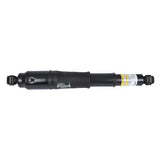 ACDelco Shock Absorber, Driver/Passenger Side
$254.99Air suspension shocks and replacement struts. Confirm fitment by VIN before ordering.
ACDelco Shock Absorber, Driver/Passenger Side
$254.99Air suspension shocks and replacement struts. Confirm fitment by VIN before ordering.
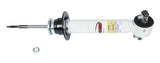 ACDelco Shock Absorber, Driver/Passenger Side
$145.99Air suspension shocks and replacement struts. Confirm fitment by VIN before ordering.
ACDelco Shock Absorber, Driver/Passenger Side
$145.99Air suspension shocks and replacement struts. Confirm fitment by VIN before ordering.
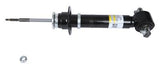 ACDelco Shock Absorber, Driver/Passenger Side
$298.99Air suspension shocks and replacement struts. Confirm fitment by VIN before ordering.
ACDelco Shock Absorber, Driver/Passenger Side
$298.99Air suspension shocks and replacement struts. Confirm fitment by VIN before ordering.
 ACDelco Shock Absorber, Driver/Passenger Side
$395.99Air suspension shocks and replacement struts. Confirm fitment by VIN before ordering.
ACDelco Shock Absorber, Driver/Passenger Side
$395.99Air suspension shocks and replacement struts. Confirm fitment by VIN before ordering.

Option 2: remanufactured and rebuilt air struts
Remanufactured units take the original strut body, replace the air bag and seals, and return it to spec. They cost meaningfully less than new OEM and keep every electronic function. The risk is variability in who did the rebuild. This is a good middle path when the rebuilder is established and the warranty is written down.
The economics work best on the rear air shocks for 2015–2020 trucks. Those are a single part shared across Escalade, Escalade ESV, Suburban, Tahoe and Yukon XL of the same era — GM has carried them under 84176675, superseding earlier numbers — so there is real volume in the rebuild market and rebuilders have the process figured out.
What you should not do is rebuild one side. Air bags are a wear item that ages by time and mileage, not by luck. If the left rear failed at 90,000 miles, the right rear is at 90,000 miles too. Do them in pairs, per axle, always.
Option 3: convert to conventional coil springs
A conversion kit replaces air struts with passive coil-over shocks and adds an electronic module so the suspension control module stops setting codes. It is the cheapest permanent fix and it ends the failure cycle for good. You lose automatic leveling, adaptive damping, and some ride quality, and you should expect it to affect resale.
The kits are model-specific. For 2015–2020 Escalade, Strutmasters lists a four-wheel conversion as GC44F, a version with a light-out module as GC44FM, and a front-only magnetic strut delete as GC8FB. Other vendors sell OBD-port modules that suppress MagneRide codes; for 2021–2024 trucks that also have F47, you need a module that emulates the air level control module, not just the damper module.
Two honest cautions. First, the dash message suppression is a module doing emulation, not a repair — if a future problem occurs in that system you have removed your own diagnostics. Second, on a 2021+ F47 truck the air springs carry load, so a conversion changes the spring rate and ride height of the vehicle. Buy that kit from someone who publishes the spring rates.
A third caution worth adding: GM has separately warned that aftermarket lowering and leveling kits can cause premature wear to air suspension components and trigger system warnings, because they move the system outside its intended operating geometry. If you already have a leveling kit on the truck and the air system is failing early, those two facts may be related.
Three-way comparison
| OEM / OE-equivalent | Remanufactured | Coil conversion | |
|---|---|---|---|
| Relative parts cost | Highest | Moderate | Lowest |
| Ride quality after | As designed | As designed | Firmer, less controlled |
| Automatic leveling retained | Yes | Yes | No |
| Adaptive damping retained | Yes | Yes | No |
| Dash warnings | None | None | Suppressed by module |
| Will it fail again the same way | Eventually, yes | Eventually, yes | No |
| Effect on resale | Neutral to positive | Neutral | Negative, sometimes sharply |
| Reversible later | — | — | Yes, at full cost |
| Best for | Newer truck, keeping it, or selling soon | Older truck, want the function back | High-mileage truck you will drive into the ground |
Which option should you actually pick?
Match the fix to how long you are keeping the truck. Under five years old or selling within two: OEM or OE-equivalent. Six to ten years old and you want it working properly: remanufactured, done in axle pairs. Over 150,000 miles and you plan to keep it until it dies: conversion, and stop thinking about it.
There is a fourth scenario that people talk themselves out of. If the truck is a 2015–2020 Escalade and only the rear leveling has failed, you can replace just the rear air shocks and leave everything else alone. The rear system on those trucks is self-contained. You do not have to make a whole-vehicle decision to fix a rear-axle problem.
The scenario where conversion is clearly wrong is a 2021+ F47 truck that is still in the first half of its life. You are removing an expensive standard system from a vehicle whose buyers specifically look for it, to save money on a truck that has plenty of value left. That is a bad trade — and on those trucks especially, rule out the pinched inlet hose before you conclude the system is beyond saving.
Can I just replace the compressor?
Only if you have proven the compressor is the failure and not the casualty. A compressor that burned out feeding a leaking bag will burn out again on a new pump. Find and fix the leak first — and on 2021+ trucks, rule out the pinched inlet hose GM documents — then decide whether the compressor also needs replacing.
The tell is duty cycle. A healthy system runs the compressor briefly on startup and after load changes. If yours cycles every few minutes at rest, air is escaping somewhere. If it does not run at all and the truck is down, check the relay and fuse before you condemn the pump.
The same failure pattern shows up across the whole GM full-size SUV family, and the diagnostic sequence is identical on a Tahoe or a Yukon — GM's own bulletin covers all of them together. If you want the step-by-step version of the compressor diagnosis, the Tahoe, Suburban and Yukon air ride compressor walkthrough covers it in more depth than we can here.
A safety note before you start
An air suspension is a pressurized system holding a three-ton vehicle. Depressurize it before disconnecting anything — many of these systems will fully deflate through a service procedure in a scan tool, and doing it that way is far better than cracking a fitting and finding out. Support the vehicle on rated jack stands at the frame, never on the suspension, and never rely on the air springs to hold it up. Coil springs in a conversion kit are pre-loaded energy; use a proper spring compressor if the kit requires assembly.
If the truck is sagging badly and you must drive it to get it repaired, drive it slowly and empty. A collapsed rear air spring can let the axle contact the bump stop, which changes how the vehicle behaves in an emergency maneuver.
What about ride height sensors and calibration?
Height sensors are cheap relative to everything else and they are a common failure point, particularly the linkage that connects them to the control arm. After any suspension work on these trucks, the sensors need calibration with a scan tool. Skipping calibration is why some jobs end with the truck sitting wrong.
Sensor linkages are plastic and they live directly in the spray from the front tires. Inspect them any time you have the wheels off. A sensor arm that has snapped will report a fixed height and the module will happily inflate or deflate that corner to chase a number that is not real.
What to check before you order
- Read your RPO sticker. Z95, F47, Z55, or none. Everything else follows from this.
- Confirm your platform year. 2015–2020 and 2021–2026 Escalades are different vehicles under the sheet metal.
- On 2021+ trucks, inspect the compressor air inlet hose for pinching or twisting before anything else. GM documents it as a cause of C1197.
- Find the leak before buying a compressor. Soapy water, ten minutes, no cost.
- Pull chassis codes with a tool that can see the suspension module, and check whether a documented service bulletin already covers your code.
- Decide your ownership horizon first, then choose the repair. Not the other way around.
- Buy in axle pairs. Never one bag, never one strut.
- If converting, confirm the kit includes the correct module for your exact year — a MagneRide-only module will not handle an F47 truck.
- Plan for height sensor calibration as part of the job, not as a surprise afterward.
Tools
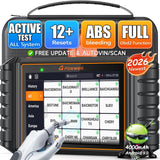 FOXWELL NT726 Bidirectional OBD2 Scanner
$368.99Scan tools for leveling and ride-height codes.
FOXWELL NT726 Bidirectional OBD2 Scanner
$368.99Scan tools for leveling and ride-height codes.
 FOXWELL NT624 Elite OBD2 Scanner, All-System Scan Tool
$332.09Scan tools for leveling and ride-height codes.
FOXWELL NT624 Elite OBD2 Scanner, All-System Scan Tool
$332.09Scan tools for leveling and ride-height codes.
 Launch CRE 2.0 for Buick/Chevrolet/Cadillac All System
$159.00Scan tools for leveling and ride-height codes.
Launch CRE 2.0 for Buick/Chevrolet/Cadillac All System
$159.00Scan tools for leveling and ride-height codes.
 ACDelco Tools Torque Wrenches, Digital LCD Display, 1/2 in.
$162.99Scan tools for leveling and ride-height codes.
ACDelco Tools Torque Wrenches, Digital LCD Display, 1/2 in.
$162.99Scan tools for leveling and ride-height codes.


Frequently Asked Questions
What does "Service Leveling System" mean on an Escalade?
It means the air leveling system has faulted, commonly with DTC C1197. On 2021–2025 trucks GM documents a specific cause in bulletin PIT6144G: a plugged or pinched air inlet hose to the compressor, or on certain models the K5 level control module software. Inspect that hose before authorising any expensive parts.
Do I need a new air compressor if the leveling system fails?
Usually not as the first step. A dead compressor is more often the casualty of a leak it could not keep up with, and replacing it without finding the leak just burns out the new one. On 2021+ trucks, also rule out the pinched inlet hose GM documents, which starves the compressor and sets the same code.
Which air suspension does my Escalade have?
Check the RPO sticker in the glovebox or console lid. Z95 is Magnetic Ride Control, F47 is Air Ride Adaptive Suspension, Z55 is Autoride leveling. On 2015–2020 trucks the air system does rear leveling only. On 2021+ trucks with F47, the air springs carry the vehicle's weight — a very different repair.
Should I convert my Escalade to coil springs?
It depends entirely on how long you are keeping it. Over 150,000 miles and driving it into the ground: conversion ends the failure cycle permanently. Newer than about six years, or selling soon: don't — you lose leveling, adaptive damping and ride quality, and buyers of these trucks look for those systems.
How do I find an air suspension leak myself?
Spray soapy water on every air spring and fitting with the system inflated, and watch for a slowly growing dome of foam rather than instant fizzing. Measure fender-to-tire gaps at all four corners at night and again in the morning — the corner that dropped is the one leaking.
Can I replace just one air strut?
You can, but don't. Air bags age by time and mileage, so if one failed at 90,000 miles its partner is also at 90,000 miles. Replace in axle pairs, always. The exception worth knowing is that on 2015–2020 Escalades the rear leveling system is self-contained, so a rear-only repair is legitimate.
Does a coil conversion hurt resale value?
Generally yes, sometimes sharply. Buyers shopping a Cadillac specifically expect the adaptive suspension, and a conversion module suppressing dash messages also removes your diagnostics for that system. It is reversible, but only at the full cost of putting the original system back.
Why does my Escalade ride harshly but sit level?
That points at the dampers rather than the air system. MagneRide struts lose their magnetorheological fluid gradually, and the ride degrades from composed to wooden over a couple of years, often with oily residue visible on the shock body. Different problem, different fix.
Can a leveling kit damage the air suspension?
GM has warned that aftermarket lowering and leveling kits can cause premature wear to air suspension components and trigger system warnings, because they operate the system outside its intended geometry. If your truck has a leveling kit and the air system failed early, those two facts may well be connected.
Do height sensors need calibrating after suspension work?
Yes, with a scan tool, and skipping it is why some jobs finish with the truck sitting wrong. Also inspect the plastic sensor linkages while the wheels are off — they sit in the tyre spray, and a snapped arm makes the module chase a height that is not real.
A Note on Sourcing
The C1197 diagnostic section — the covered models, the symptom list, GM's stated cause and the inlet hose inspection — comes from GM preliminary information document PIT6144G, 17 April 2025 (PDF), published by NHTSA as a manufacturer communication and read directly. Earlier revisions of the same bulletin exist; the version cited is the one read for this page.
RPO codes, platform boundaries and part number references come from GM parts catalogue and option code data. Conversion kit part numbers are the vendor's own published designations, not GM numbers, and we have no commercial relationship with that vendor.
The failure-onset mileage range is drawn from reported owner experience, not a GM figure, and it varies enormously by climate — treat it as context, not a service interval. Pricing is indicative and moves constantly.
The three-way recommendation is our own judgement. We sell suspension parts, and the honest answer to this question is sometimes "convert and stop buying them" — which is what the comparison table says where that is true.
There are more GM repair guides covering the systems that tend to fail alongside this one. Wheel bearings, control arm bushings and sway bar end links all age on the same schedule as air springs, and you will already have the wheels off.
Still deciding?
The three paths do not compete on price alone — they compete on how long you want to keep the truck and how much the ride matters to you. Work out which of the three fits your situation, then compare Escalade air struts, shocks, compressors and height sensors side by side and filter to your exact year. Everything else for the truck is in Cadillac parts and accessories.