
Pro Air Tools
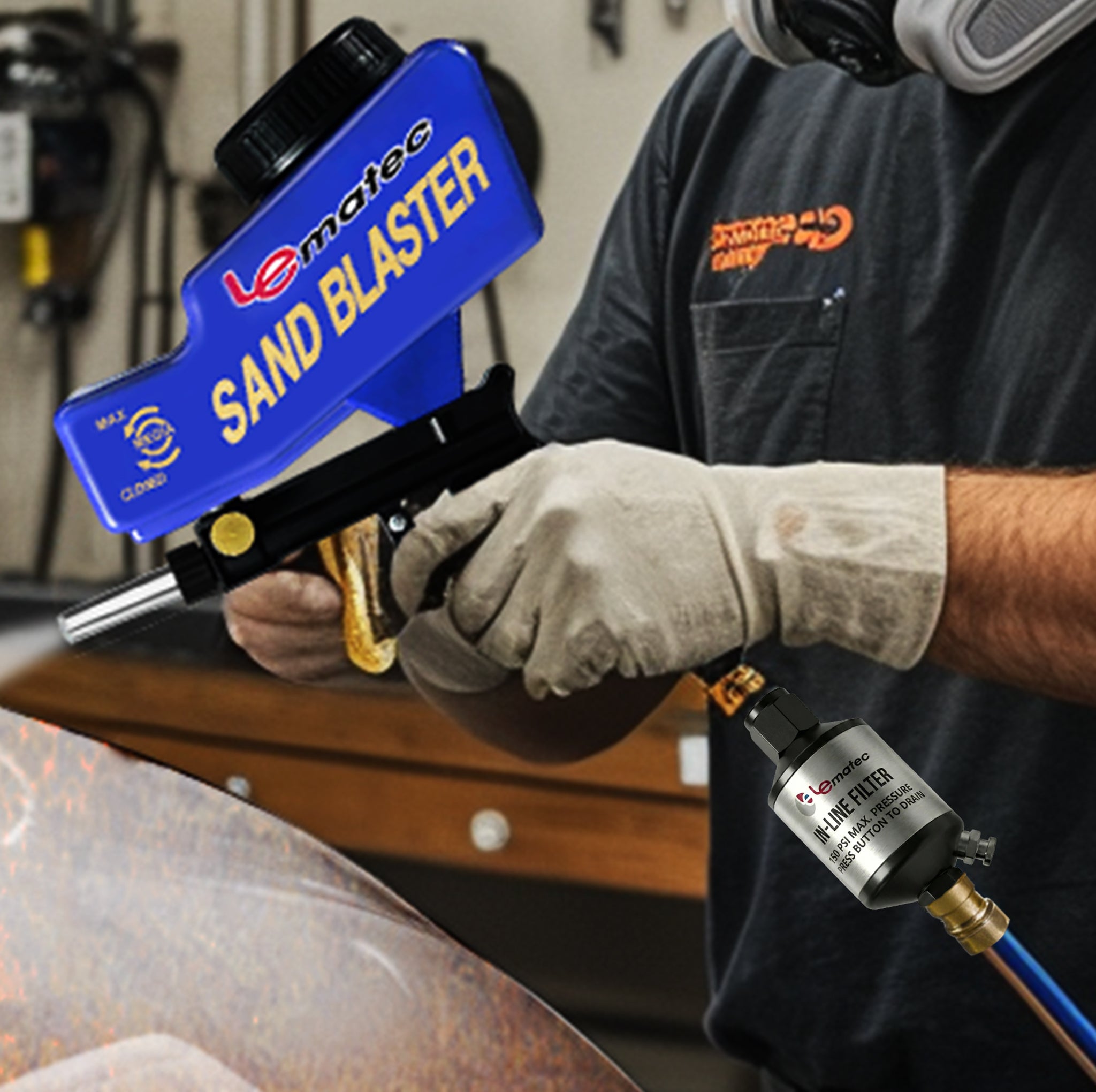
Professional Soda Blaster Kit - 150 PSI Multi-Media with Steel Nozzle (AS118)
Professional Soda Blaster Kit - 150 PSI Multi-Media with Steel Nozzle (AS118)
Out of stock
-
All orders are dispatched the next business day!
-
We will beat any price. We back all products with a 1 year guarantee.
Order in the next 0 hours 0 minutes to get it by /07/2026
Couldn't load pickup availability
Guaranteed Safe Checkout
Product Summary
The Le Lematec AS118 Soda Blaster is a 150 PSI multi-media sandblasting gun with a steel nozzle, designed specifically for baking soda blasting. Non-destructive cleaning for automotive paint removal, kitchen degreasing, and delicate surface restoration. Factory direct from Le Lematec.
Best for: Automotive paint removal without damaging metal, cleaning engine parts, and food-safe surface prep.
Soda Blaster Gun — Professional Surface Cleaning & Stripping
What is a soda blaster, and when should you use one instead of a regular sandblaster? A soda blaster shoots sodium bicarbonate (blasting-grade baking soda) at low pressure to clean a surface without etching, pitting, or removing the underlying material. That's the difference that matters: you can strip paint off an aluminum fender, degrease an engine block, clean a chrome bumper, or scrub a fiberglass boat hull without damaging what's underneath. Traditional sandblasting with aluminum oxide or silicon carbide would profile or cut into all of those surfaces. The LE LEMATEC AS118 Soda Blaster is the gun built specifically for that job — 150 PSI capable, steel-nozzle, multi-media compatible, and priced as the entry point into soda blasting (~$37).
The real-world jobs people use this for
- Automotive paint removal without metal damage. Strip layers of old paint off aluminum body panels, classic-car chrome, or motorcycle tanks without removing base material or warping thin sheet metal. The most common reason restorers reach for a soda blaster instead of an abrasive setup.
- Engine bay degreasing. Soda dissolves in water, so you can soda-blast caked-on grease and carbon off a valve cover or intake manifold, then rinse the part clean. No abrasive residue to chase down.
- Boat hull and marine cleanup. Algae, salt deposits, old bottom paint — all come off fiberglass without etching the gelcoat.
- Food-contact equipment. Sodium bicarbonate is non-toxic and food-safe. Commercial kitchens use soda blasting to clean grills, ovens, and stainless surfaces that can't tolerate harsh chemicals.
- Graffiti removal from brick and stone. Strong enough to remove paint, gentle enough not to pit the substrate.
- Soft-substrate restoration: chrome, glass, anodized aluminum, decorative metalwork — anywhere a hard profile would ruin the part.
Should you buy a soda blaster, a sandblaster, or both?
Most restoration shops eventually buy both. Here's the split:
Buy a soda blaster if: you work on aluminum, chrome, fiberglass, classic-car parts, or anything where preserving the base material matters. Buy soda first.
Buy a sandblaster if: you work on steel structural rust, heavy mill scale, weld prep, or anywhere you need to create a paint-ready profile. The LE LEMATEC handheld sandblaster is the typical first sandblaster.
Buy both if: you do restoration end-to-end. The workflow is: sandblaster knocks down rust and creates profile, then soda cleans the part before primer. They're not competing tools — they're sequential.
Key Features & Benefits:
- Eco-Friendly: Uses sodium bicarbonate for safe cleaning
- Power Control: Adjustable valve for 90-150 PSI operation
- Versatile Use: Works with multiple blast media types
- Premium Build: Stainless steel nozzle included
- Complete Kit: Mesh filter and quick-release coupling
- American Quality: Not made in China
- Large Capacity: Enhanced suction hopper design
Technical Specifications:
- Operating Pressure: 90-150 PSI
- Connection: ¼" NPT
- Media Range: 46-100 grit
- Features: Control valve, steel nozzle
- Package Includes: Blaster, nozzle, mesh, coupling
Perfect for automotive restoration, grill cleaning, and surface preparation. Experience efficient, eco-friendly cleaning power - Add to Cart now to tackle your toughest projects.
Professional Performance Guarantee: Workshop-tested for consistent results.
Frequently Asked Questions
Q: What is the difference between soda blasting and sandblasting?
A: Soda blasting uses baking soda (sodium bicarbonate) as the media, which is much softer than sand or aluminum oxide. This makes soda blasting ideal for cleaning delicate surfaces — fiberglass, chrome, aluminum, and thin sheet metal — without etching, warping, or removing base material. Traditional sandblasting is more aggressive for heavy rust and scale removal.
Q: Can I use regular baking soda from the store?
A: While technically possible, commercial blasting-grade soda is recommended. Blasting soda has a consistent, larger particle size optimized for air tool performance. Grocery-store baking soda is too fine and can clog the nozzle. Blasting soda is available at most auto parts and industrial supply stores.
Q: Is soda blasting safe for automotive paint removal?
A: Yes, soda blasting is one of the safest methods for removing paint from vehicles. It strips paint and clear coat without damaging the underlying metal, fiberglass, or body filler. It is also non-sparking and non-toxic, making it safe for use around fuel systems and in enclosed spaces with proper ventilation.
What you get for $37
- Designed for soda first. Most cheap sandblasting guns choke on soda media because the particle isn't sharp like sand and the feed valve clogs. The AS118 feed system is sized for soda's flow characteristics.
- Multi-media if you need it. Drop aluminum oxide or glass beads into the hopper for jobs that need more aggression. One gun, multiple workflows.
- Pressure range that matches the job. 90 PSI for gentle work (chrome, fiberglass, food equipment), up to 150 PSI when you need to strip paint or remove carbon deposits aggressively.
- Standard 1/4" NPT fitting. Connects to any shop compressor with no adapter.
What's in the Box
- AS118 soda blaster gun
- Steel nozzle
- Gravity hopper
- Air connector (1/4" NPT)
- User manual
Compatible With
| Air Compressors | 4-6 CFM at 90-150 PSI |
| Blast Media | Baking soda (primary), plus aluminum oxide, glass bead, and other standard media. Blasting-grade sodium bicarbonate is the recommended primary media — cooking-grade baking soda has inconsistent particle size and will produce uneven results; suppliers sell 50-lb bags of blasting-grade soda for this purpose. |
| Applications | Non-damaging cleaning, grease removal, paint stripping on delicate surfaces |
Ideal Applications: gentle surface cleaning, grease removal, carbon deposit removal, food equipment cleaning, fiberglass stripping, chrome cleaning, delicate paint removal
What is soda blasting vs sandblasting?
Soda blasting uses baking soda (sodium bicarbonate) as the media — it is softer than sand and dissolves in water. It cleans surfaces without creating a surface profile or removing base metal. Sandblasting uses harder media (aluminum oxide, etc.) that cuts into the surface. Use soda blasting when you want to clean WITHOUT damaging the underlying material.
Can I use regular baking soda from the grocery store?
Technically yes, but industrial blasting-grade baking soda is preferred — it has a more consistent particle size for even blasting. Grocery store baking soda works in a pinch for small jobs but may clog the nozzle more frequently due to clumping.
Can a soda blaster strip automotive paint without warping the panel?
Yes — that's its core advantage. Soda media at 90–110 PSI removes paint by media impact, not by friction or heat. Because soda is softer than the underlying metal and disintegrates on impact, it can't warp thin sheet metal the way silicon-carbide blasting can. Most restorers strip aluminum and steel body panels at around 100 PSI with a 4–6 inch standoff distance. Run the gun in steady overlapping passes; don't dwell on one spot. Rinse the part with water after blasting to clear any residual soda before painting.
Related Guides & Resources
Related Resources
- Soda Blasting vs Sandblasting: Which Method Is Right?
- What CFM Do Sandblasters Need?
- Best Sandblasting Media by Application
- Shop Blasting Media & Abrasives
- Long Nozzle Attachment for Precision Blasting
- AS118-2C Replacement Parts Kit
Quick Setup Guide
Fill the gravity hopper with sodium bicarbonate (baking soda) blasting media — do not use cooking-grade baking soda as the particle size is inconsistent. Connect to your compressor at 90 PSI minimum with 7+ CFM airflow. Adjust the media flow control to achieve a steady, visible media stream. Soda blasting is non-destructive: it removes paint, grease, and carbon deposits without etching the underlying metal surface. For automotive paint stripping, work in overlapping passes at 4-6 inch distance. Clean the surface with water after blasting to remove residual soda.
Description
Description
Product Summary
The Le Lematec AS118 Soda Blaster is a 150 PSI multi-media sandblasting gun with a steel nozzle, designed specifically for baking soda blasting. Non-destructive cleaning for automotive paint removal, kitchen degreasing, and delicate surface restoration. Factory direct from Le Lematec.
Best for: Automotive paint removal without damaging metal, cleaning engine parts, and food-safe surface prep.
Soda Blaster Gun — Professional Surface Cleaning & Stripping
What is a soda blaster, and when should you use one instead of a regular sandblaster? A soda blaster shoots sodium bicarbonate (blasting-grade baking soda) at low pressure to clean a surface without etching, pitting, or removing the underlying material. That's the difference that matters: you can strip paint off an aluminum fender, degrease an engine block, clean a chrome bumper, or scrub a fiberglass boat hull without damaging what's underneath. Traditional sandblasting with aluminum oxide or silicon carbide would profile or cut into all of those surfaces. The LE LEMATEC AS118 Soda Blaster is the gun built specifically for that job — 150 PSI capable, steel-nozzle, multi-media compatible, and priced as the entry point into soda blasting (~$37).
The real-world jobs people use this for
- Automotive paint removal without metal damage. Strip layers of old paint off aluminum body panels, classic-car chrome, or motorcycle tanks without removing base material or warping thin sheet metal. The most common reason restorers reach for a soda blaster instead of an abrasive setup.
- Engine bay degreasing. Soda dissolves in water, so you can soda-blast caked-on grease and carbon off a valve cover or intake manifold, then rinse the part clean. No abrasive residue to chase down.
- Boat hull and marine cleanup. Algae, salt deposits, old bottom paint — all come off fiberglass without etching the gelcoat.
- Food-contact equipment. Sodium bicarbonate is non-toxic and food-safe. Commercial kitchens use soda blasting to clean grills, ovens, and stainless surfaces that can't tolerate harsh chemicals.
- Graffiti removal from brick and stone. Strong enough to remove paint, gentle enough not to pit the substrate.
- Soft-substrate restoration: chrome, glass, anodized aluminum, decorative metalwork — anywhere a hard profile would ruin the part.
Should you buy a soda blaster, a sandblaster, or both?
Most restoration shops eventually buy both. Here's the split:
Buy a soda blaster if: you work on aluminum, chrome, fiberglass, classic-car parts, or anything where preserving the base material matters. Buy soda first.
Buy a sandblaster if: you work on steel structural rust, heavy mill scale, weld prep, or anywhere you need to create a paint-ready profile. The LE LEMATEC handheld sandblaster is the typical first sandblaster.
Buy both if: you do restoration end-to-end. The workflow is: sandblaster knocks down rust and creates profile, then soda cleans the part before primer. They're not competing tools — they're sequential.
Key Features & Benefits:
- Eco-Friendly: Uses sodium bicarbonate for safe cleaning
- Power Control: Adjustable valve for 90-150 PSI operation
- Versatile Use: Works with multiple blast media types
- Premium Build: Stainless steel nozzle included
- Complete Kit: Mesh filter and quick-release coupling
- American Quality: Not made in China
- Large Capacity: Enhanced suction hopper design
Technical Specifications:
- Operating Pressure: 90-150 PSI
- Connection: ¼" NPT
- Media Range: 46-100 grit
- Features: Control valve, steel nozzle
- Package Includes: Blaster, nozzle, mesh, coupling
Perfect for automotive restoration, grill cleaning, and surface preparation. Experience efficient, eco-friendly cleaning power - Add to Cart now to tackle your toughest projects.
Professional Performance Guarantee: Workshop-tested for consistent results.
Frequently Asked Questions
Q: What is the difference between soda blasting and sandblasting?
A: Soda blasting uses baking soda (sodium bicarbonate) as the media, which is much softer than sand or aluminum oxide. This makes soda blasting ideal for cleaning delicate surfaces — fiberglass, chrome, aluminum, and thin sheet metal — without etching, warping, or removing base material. Traditional sandblasting is more aggressive for heavy rust and scale removal.
Q: Can I use regular baking soda from the store?
A: While technically possible, commercial blasting-grade soda is recommended. Blasting soda has a consistent, larger particle size optimized for air tool performance. Grocery-store baking soda is too fine and can clog the nozzle. Blasting soda is available at most auto parts and industrial supply stores.
Q: Is soda blasting safe for automotive paint removal?
A: Yes, soda blasting is one of the safest methods for removing paint from vehicles. It strips paint and clear coat without damaging the underlying metal, fiberglass, or body filler. It is also non-sparking and non-toxic, making it safe for use around fuel systems and in enclosed spaces with proper ventilation.
What you get for $37
- Designed for soda first. Most cheap sandblasting guns choke on soda media because the particle isn't sharp like sand and the feed valve clogs. The AS118 feed system is sized for soda's flow characteristics.
- Multi-media if you need it. Drop aluminum oxide or glass beads into the hopper for jobs that need more aggression. One gun, multiple workflows.
- Pressure range that matches the job. 90 PSI for gentle work (chrome, fiberglass, food equipment), up to 150 PSI when you need to strip paint or remove carbon deposits aggressively.
- Standard 1/4" NPT fitting. Connects to any shop compressor with no adapter.
What's in the Box
- AS118 soda blaster gun
- Steel nozzle
- Gravity hopper
- Air connector (1/4" NPT)
- User manual
Compatible With
| Air Compressors | 4-6 CFM at 90-150 PSI |
| Blast Media | Baking soda (primary), plus aluminum oxide, glass bead, and other standard media. Blasting-grade sodium bicarbonate is the recommended primary media — cooking-grade baking soda has inconsistent particle size and will produce uneven results; suppliers sell 50-lb bags of blasting-grade soda for this purpose. |
| Applications | Non-damaging cleaning, grease removal, paint stripping on delicate surfaces |
Ideal Applications: gentle surface cleaning, grease removal, carbon deposit removal, food equipment cleaning, fiberglass stripping, chrome cleaning, delicate paint removal
What is soda blasting vs sandblasting?
Soda blasting uses baking soda (sodium bicarbonate) as the media — it is softer than sand and dissolves in water. It cleans surfaces without creating a surface profile or removing base metal. Sandblasting uses harder media (aluminum oxide, etc.) that cuts into the surface. Use soda blasting when you want to clean WITHOUT damaging the underlying material.
Can I use regular baking soda from the grocery store?
Technically yes, but industrial blasting-grade baking soda is preferred — it has a more consistent particle size for even blasting. Grocery store baking soda works in a pinch for small jobs but may clog the nozzle more frequently due to clumping.
Can a soda blaster strip automotive paint without warping the panel?
Yes — that's its core advantage. Soda media at 90–110 PSI removes paint by media impact, not by friction or heat. Because soda is softer than the underlying metal and disintegrates on impact, it can't warp thin sheet metal the way silicon-carbide blasting can. Most restorers strip aluminum and steel body panels at around 100 PSI with a 4–6 inch standoff distance. Run the gun in steady overlapping passes; don't dwell on one spot. Rinse the part with water after blasting to clear any residual soda before painting.
Related Guides & Resources
Related Resources
- Soda Blasting vs Sandblasting: Which Method Is Right?
- What CFM Do Sandblasters Need?
- Best Sandblasting Media by Application
- Shop Blasting Media & Abrasives
- Long Nozzle Attachment for Precision Blasting
- AS118-2C Replacement Parts Kit
Quick Setup Guide
Fill the gravity hopper with sodium bicarbonate (baking soda) blasting media — do not use cooking-grade baking soda as the particle size is inconsistent. Connect to your compressor at 90 PSI minimum with 7+ CFM airflow. Adjust the media flow control to achieve a steady, visible media stream. Soda blasting is non-destructive: it removes paint, grease, and carbon deposits without etching the underlying metal surface. For automotive paint stripping, work in overlapping passes at 4-6 inch distance. Clean the surface with water after blasting to remove residual soda.
Item Specifics
Item Specifics


Have a question?
Crafting the Perfect Product Description: A Guide for Retailers
In the competitive landscape of retail, effectively describing your products is crucial for attracting customers and driving sales.
Powering Your Potential: Where Innovation Meets Convenience!
-
Focus on Benefits:
A well-crafted product description not only informs potential buyers about the features and benefits of your offering but also captivates their interest and compels them to make a purchase.
-
Know Your Audience:
Testimonials
Great Selection and Fast Shipping!I recently purchased a new laptop from this online electronics store, and I couldn't be happier with my experience. The website had a wide selection of products to choose from, and the ordering process was seamless. My laptop arrived earlier than expected, and it was well-packaged to ensure its safety during transit. I highly recommend this store to anyone in need of quality electronics.
- Sarah Johnson
I recently purchased a new laptop from this online electronics store, and I couldn't be happier with my experience. The website had a wide selection of products to choose from, and the ordering process was seamless. My laptop arrived earlier than expected, and it was well-packaged to ensure its safety during transit. I highly recommend this store to anyone in need of quality electronics.
- Sarah Johnson
Excellent Customer Service!I had an issue with my order, and I contacted the customer service team for assistance. I was pleasantly surprised by their prompt response and willingness to help resolve my issue. They were courteous and professional throughout the entire process, and they went above and beyond to ensure my satisfaction. Kudos to the customer service team for their exceptional service!
- David Smith
I had an issue with my order, and I contacted the customer service team for assistance. I was pleasantly surprised by their prompt response and willingness to help resolve my issue. They were courteous and professional throughout the entire process, and they went above and beyond to ensure my satisfaction. Kudos to the customer service team for their exceptional service!
- David Smith
Best Prices Around!"I've been shopping for a new smartphone, and I found the best deal on this online electronics store. Not only did they offer competitive prices, but they also had discounts and promotions that made my purchase even more affordable. The checkout process was straightforward, and my order arrived on time as promised. I'll definitely be coming back for my future tech needs.
- Emily Brown
"I've been shopping for a new smartphone, and I found the best deal on this online electronics store. Not only did they offer competitive prices, but they also had discounts and promotions that made my purchase even more affordable. The checkout process was straightforward, and my order arrived on time as promised. I'll definitely be coming back for my future tech needs.
- Emily Brown
Impressive Product QualityI recently purchased a camera from this online store, and I'm blown away by the quality of the product. It exceeded my expectations in terms of performance and durability. The website provided detailed product descriptions and reviews, which helped me make an informed decision. Overall, I'm extremely satisfied with my purchase and would highly recommend this store to others.
- Michael Anderson
I recently purchased a camera from this online store, and I'm blown away by the quality of the product. It exceeded my expectations in terms of performance and durability. The website provided detailed product descriptions and reviews, which helped me make an informed decision. Overall, I'm extremely satisfied with my purchase and would highly recommend this store to others.
- Michael Anderson