
C0240 does not mean your ABS module has failed. GM's wording on most platforms is "Powertrain Control Module (PCM) Traction Control Not Allowed" — the brake module is reporting that the engine computer told it that it can no longer reduce engine torque. The brake module is the messenger. GM's own diagnostic chart puts brake module replacement at the very last step, after four circuit tests.
Jump to a section: What C0240 means · Two GM descriptors — and the misleading one · The two-part code form · Symptoms · Causes and how to confirm each · Affected vehicles · How it's diagnosed · Parts and labor · Service bulletins · FAQ
What C0240 Means
Traction control works by asking the engine to reduce torque when a wheel starts spinning. That means the brake module depends on the powertrain module being able to comply. GM's circuit description puts it plainly:
"The powertrain control module (PCM) and the electronic brake control module (EBCM) communicate on the serial data link, whenever the ignition is ON."
Conditions for setting: "The EBCM receives a serial data message stating that the PCM has lost the ability to reduce engine torque."
So C0240 is the brake module recording that traction control has been switched off for it, by the engine module, for reasons that live in the engine module. Nothing in the brake system has failed.
Two GM Descriptors — and Why One Is Misleading
GM has used different wording for this code depending on platform, and both are genuine:
| Platform | GM descriptor |
|---|---|
| Generic, and GMC Canyon / Chevrolet Colorado | "PCM Traction Control Not Allowed" |
| GMC Envoy | "EBCM Malfunction" |
The Envoy wording is misleading even in GM's own service information, because the body of that same page describes a powertrain torque-reduction loss, not a brake module hardware fault. A shop reading only that descriptor will replace a brake module for a powertrain problem. If you have an Envoy, read past the title.
Scanners
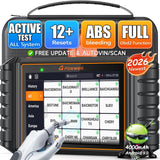 FOXWELL NT726 Bidirectional OBD2 Scanner
$368.99Read ABS/ESC codes and data.
FOXWELL NT726 Bidirectional OBD2 Scanner
$368.99Read ABS/ESC codes and data.
 FOXWELL NT614 Elite OBD2 Scanner
$233.69Read ABS/ESC codes and data.
FOXWELL NT614 Elite OBD2 Scanner
$233.69Read ABS/ESC codes and data.

The Two-Part Code Form: C0240-XX
No documented sub-types exist for C0240. This code predates GM's two-part symptom-byte scheme, and every GM service information page for it shows a bare C0240 with no sub-type list. Do not diagnose from a "C0240-00" style variant — the 32-row tables published on some sites are auto-generated site-wide filler, not GM data.
Symptoms of C0240
GM's own "action taken when the DTC sets" text:
- Traction control stops working for the rest of the drive — "The EBCM disables the traction control system (TCS)/vehicle stability enhancement system (VSES)"
- The Stability Off indicator turns on
- On the Envoy: "Engine torque reduction is disabled", "The traction off indicator turns ON", and the message centre displays a service stability system or stability system disabled message
- On the Colorado and Canyon: "The traction fault message is displayed"
Commonly published symptoms we could not source to GM: ABS light on, hard brake pedal, reduced engine power message. The last one is plausible — C0240's usual cause is a powertrain fault that could produce it — but no GM document ties the message to this code.
Causes of C0240 — and How to Confirm Each One
GM's own diagnostic aid is the ranking, and it is worth quoting in full:
"A requested torque signal malfunction is only one possible cause for the PCM to lose the ability to perform traction control. DTC C0240 may set due to engine overheating, throttle actuator control failure, loss of ignition timing control by the PCM, etc. If DTC P0856 has not set, refer to Diagnostic System Check - Vehicle to identify other possible causes of DTC C0240."
| # | Cause | How to confirm it |
|---|---|---|
| 1 | An unrelated powertrain fault that costs the engine module torque authority — overheating, throttle actuator control failure, loss of ignition timing control | Read powertrain codes. C0240 is a consequence, not a cause. Fix what you find there |
| 2 | P0856 Traction Control Torque Request Circuit — open, short, or short to voltage on the requested-torque line between the engine and brake modules | Ignition on, brake module connector disconnected, measure the requested-torque circuit to ground: should read above 4.75 V. Then bridge a test lamp in parallel with the meter: should drop below 0.15 V. Fails high means short to voltage; fails low means open or short to ground |
| 3 | Poor connections at the engine or brake module connector | Terminal drag and pin-fit test. GM's standing instruction is to do this before replacing any component |
| 4 | Powertrain control module | Only after steps 2 and 3 pass |
| 5 | Electronic brake control module | Last. GM's chart puts this at step 11, the final box |
Where this code is misdiagnosed: as an ABS or brake module failure. GM's chart step 2 asks "Are any other DTCs set?" and sends you to the vehicle code list if so — fix those first. Step 5 is "Perform the Powertrain OBD System Check." Selling a brake module against a bare C0240 is the classic error here.
Wheel speed sensors
 ACDelco Rear ABS Wheel Speed Sensor 15813556
$89.99Sensors behind traction control faults. Confirm fitment by VIN before ordering.
ACDelco Rear ABS Wheel Speed Sensor 15813556
$89.99Sensors behind traction control faults. Confirm fitment by VIN before ordering.
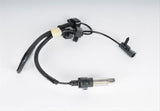 ACDelco ABS Wheel Speed Sensor 22827364
$93.99Sensors behind traction control faults. Confirm fitment by VIN before ordering.
ACDelco ABS Wheel Speed Sensor 22827364
$93.99Sensors behind traction control faults. Confirm fitment by VIN before ordering.

Vehicles Documented for C0240
| Vehicle | Years confirmed |
|---|---|
| GMC Canyon | 2005, 2008 (4WD) |
| GMC Envoy | 2005, 2007 (4WD) |
| Siblings with identical charts | Chevrolet Colorado, Hummer H3, Saturn Ion, Pontiac Grand Prix |
A negative finding worth stating: C0240 does not appear in the master code list for the 2008 GMC Yukon XL. This is not a Sierra, Yukon or Acadia code, and pages framing it that way are extrapolating.
How C0240 Is Diagnosed
A generic OBD-II reader cannot see C-codes at all. You need a tool with GM enhanced chassis and brake module access that can also read powertrain codes in the same session — because the whole diagnosis is about the relationship between the two.
- Diagnostic System Check — Vehicle first. This is the mandatory entry point.
- Ignition in run, engine off: read the ABS and traction codes. If any other code is set, go and diagnose that list first.
- If C0240 is not current, clear it and drive above 12 km/h (8 mph) for several minutes, then recheck.
- Check whether P0856 is set. If it is, run the requested-torque circuit voltage and test-lamp sequence above. If it is not, perform the Powertrain OBD System Check.
- Terminal pin-fit and tension test before any replacement.
- Only then the powertrain module, and only after that the brake module.
History codes clear after 100 drive cycles without the fault recurring.
Parts and Labor
No GM part number applies to C0240. No GM bulletin names this code, so there is no GM-sourced part for it, and GM's own procedure reaches module replacement only after four circuit tests. We are not listing a brake module or powertrain module part number here, because doing so would imply a repair GM's diagnostic path does not support.
No GM labor operation code or time was located for this code either.
What that means practically: if you have been quoted a module against a bare C0240, the questions to ask are which other codes were present, whether P0856 was checked, and whether the requested-torque circuit was measured.
Brake and battery
 ACDelco Front Brake Pads, OE Replacement 1711203
$157.99Front brake pads. Confirm fitment by VIN before ordering.
ACDelco Front Brake Pads, OE Replacement 1711203
$157.99Front brake pads. Confirm fitment by VIN before ordering.
 ACDelco Front Brake Pads, OE Replacement 1711040
$411.99Front brake pads. Confirm fitment by VIN before ordering.
ACDelco Front Brake Pads, OE Replacement 1711040
$411.99Front brake pads. Confirm fitment by VIN before ordering.
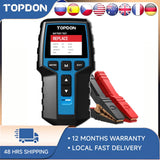 TOPDON BT200 12V Car Battery Tester Digital Automotive
$103.99Low voltage can set traction control codes.
TOPDON BT200 12V Car Battery Tester Digital Automotive
$103.99Low voltage can set traction control codes.


Service Bulletins
No GM bulletin names C0240. We searched NHTSA's bulletin archive and found none. That is a real finding rather than a gap — it means there is no known pattern failure behind this code, and it has to be diagnosed from first principles each time.
One document is relevant as general practice rather than as a C0240 bulletin: PIP5094, "Prior To Any Circuit Testing," which mandates terminal pin-fit and tension testing before replacing any component on 2014-and-prior GM cars and light trucks. It does not list C0240 specifically.
No recall and no special coverage names C0240.
Frequently Asked Questions
Does C0240 mean my ABS module is bad?
Almost certainly not. GM's descriptor on most platforms is "PCM Traction Control Not Allowed" — the brake module is reporting that the engine module told it that it can no longer reduce engine torque. GM's diagnostic chart puts brake module replacement at step 11, the very last box, after four circuit tests.
What actually causes C0240?
GM's diagnostic aid names three examples directly: engine overheating, throttle actuator control failure, and loss of ignition timing control by the powertrain module. Any powertrain fault that costs the engine module its torque authority can set this code. It is a consequence, not a cause.
Should I be looking for P0856?
Yes, that is GM's explicit branch point. If P0856 is set, the requested-torque circuit between the engine and brake modules is faulty, and GM gives a specific test: with the brake module connector disconnected and ignition on, the circuit should measure above 4.75 V to ground, and drop below 0.15 V with a test lamp bridged in parallel. If P0856 is not set, GM directs you to the vehicle diagnostic system check instead.
Can I drive with C0240?
The vehicle will drive, but traction control and stability enhancement are disabled for the rest of that ignition cycle. On a wet or icy road that is a genuine loss of safety margin. More importantly, the underlying powertrain fault that triggered it may be something that needs attention on its own.
What does the -00 mean in C0240-00?
Nothing. C0240 predates GM's two-part code scheme and no GM service information page for it shows sub-types at all. The 32-row tables published on some sites are auto-generated boilerplate.
Does C0240 apply to a GMC Sierra or Yukon?
Not on the evidence we could find. C0240 does not appear in the master diagnostic code list for the 2008 GMC Yukon XL, and the GM service information pages that document it cover the Canyon, Envoy and their siblings. Pages presenting it as a full-size truck code are extrapolating.
Is there a service bulletin for C0240?
No. We searched NHTSA's archive and found no GM bulletin naming this code, and no recall or special coverage. That means there is no known pattern failure — each case has to be diagnosed on its own merits.
Why did C0240 come back after I cleared it?
Because clearing a code does not repair whatever cost the powertrain module its torque authority. GM's verification step is to clear the code and drive above 8 mph for several minutes before rechecking; if it returns, the underlying fault is still present. History codes clear after 100 fault-free drive cycles.
Shop the Parts Mentioned
-
 MOTOPOWER MP69033 OBD2 Scanner — $49, reads and clears engine-side (P) codes with live data and freeze-frame. A chassis code like this one needs a scanner that covers chassis systems.
-
 VDIAGTOOL BT500 Battery Tester — $57.53, tests battery health, cranking and charging on 6V/12V/24V systems with ripple analysis and a voltage waveform — confirms the battery and charging system are healthy before you chase a sensor or circuit fault.
-
 95-Piece Mechanics Tool Set (Metric & SAE) — for sensor and wiring access.
-
 3-In-1 Cordless Impact Wrench & Screwdriver Kit — for wheel speed sensor removal and reinstallation.
-
 ACDelco Gold Negative Battery Cable — ensures stable module voltage during diagnosis.