
P0011 is "Camshaft Position A — Timing Over-Advanced or System Performance, Bank 1." The intake camshaft is not where the engine control module wants it, and the ECM cannot command it back into range. On the 2.4L Equinox this is usually one of three things, and GM has a bulletin naming the most common one by part number: 17-NA-098, which tells technicians to replace both camshaft position actuator solenoid valves rather than just the one that set the code.
Jump to a section: What P0011 means · The GM bulletin and its part numbers · The free test that settles it · Why oil is the cause behind the cause · When P0011 is really the timing chain · Symptoms · Causes and how to confirm each · How it's diagnosed · Parts and cost · GM documents · What other pages get wrong · FAQ
What Does P0011 Mean on a Chevy Equinox?
Variable valve timing works by rotating the camshaft slightly relative to its sprocket. A camshaft position actuator — the phaser — does the rotating, and it is moved by engine oil directed through a solenoid valve that the ECM controls. The camshaft position sensor reports where the cam actually ended up.
P0011 sets when the intake camshaft's actual position sits further advanced than commanded, or when the system will not respond to commands the way the ECM expects. The "A" in the descriptor means the intake camshaft; the exhaust equivalent is P0014.
Note what the system depends on: clean oil, at adequate pressure, flowing through a small solenoid with a fine screen on it. That is why the first three suspects on this engine are oil, oil and the solenoid — in that order. It is also why a code that sounds mechanical is often neither expensive nor difficult to fix.
The important distinction from P0016: P0011 is a position and performance code about the VVT system. P0016 is a correlation code about the physical crank-to-cam relationship. They overlap in causes but they are not the same severity, and the difference matters for what you spend.
GM's Bulletin — and the Part Numbers In It
GM issued bulletin 17-NA-098, revised September 2019, covering 2010–2012 Chevrolet Equinox and GMC Terrain with the 2.4L engine (RPO LAF or LEA).
The condition GM describes is a customer comment that the engine runs rough, hesitates, is hard to start, and/or stalls, with a technician finding P0010, P0013, P0011 or P0014 set or stored. GM's stated cause is camshaft position actuator solenoid valve failure.
The correction is the part worth knowing, because it differs from what most shops do: replace both camshaft position actuator solenoid valves, and verify the ECM has the most up-to-date software and calibrations installed.
| Part | GM part number | Qty |
|---|---|---|
| Camshaft position actuator intake solenoid valve | 12679099 | 1 |
| Camshaft position actuator exhaust solenoid valve | 12679100 | 1 |
The labor operation is 4020140, Camshaft Position Actuator Solenoid Valve Replacement, at published SI time.
The logic behind replacing both is sound even though only one code set. Both solenoids live in the same engine, see the same oil, and have accumulated the same mileage. Replacing one and leaving its twin in place is a common way to be back at the same repair a few months later — and the parts are inexpensive relative to the access.
Note the software step too. GM does not mention the calibration check as an afterthought; it is part of the correction.
The Free Test That Settles Intake vs Exhaust
Before buying anything, there is a diagnostic that costs nothing and gives a definitive answer.
The intake and exhaust camshaft position actuator solenoids on the 2.4L are physically identical and sit next to each other on top of the engine, each held by a single bolt. Swap them. Clear the codes and drive the vehicle.
- If the code follows the solenoid — you had P0011 on the intake side and now have P0014 on the exhaust side — the solenoid is confirmed faulty.
- If the code stays on the intake side, the solenoid is not your problem, and you have just saved yourself the cost of replacing it. Look at oil condition, the actuator itself, or the chain.
You can also check the solenoid electrically. Resistance across the coil is commonly cited in the region of 8–13 ohms, and a reading that jumps around while you wiggle the connector points at the connector rather than the coil. We would treat the swap test as the more conclusive of the two, because it tests the whole component in its real operating conditions rather than just the winding.
Either way, GM's guidance is still to fit both solenoids once one is confirmed bad.
Tools for cam timing data
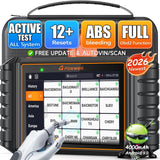 FOXWELL NT726 Bidirectional OBD2 Scanner
$368.99Compare desired vs actual cam position.
FOXWELL NT726 Bidirectional OBD2 Scanner
$368.99Compare desired vs actual cam position.
 FOXWELL NT614 Elite OBD2 Scanner
$233.69Compare desired vs actual cam position.
FOXWELL NT614 Elite OBD2 Scanner
$233.69Compare desired vs actual cam position.

Why Oil Is the Cause Behind the Cause
The VVT system is hydraulic. It moves the camshaft using oil pressure, and it meters that oil through a solenoid with a fine screen. Two things follow.
First, low oil means low oil pressure means an actuator that cannot move the cam as commanded — which is exactly the condition P0011 describes. Second, dirty or degraded oil clogs the solenoid screens, which produces the same result even when the level is correct.
That matters enormously on this engine, because GM documented excessive oil consumption across four consecutive model years of the 2.4L — 2010 through 2013 — defining the condition as burning a quart in under 2,000 miles, caused by piston ring wear. The full coverage picture is in our P0016 guide, along with the honest note that all of those programs have now expired on the calendar.
The practical consequence: on a 2.4L Equinox, checking the dipstick is not a formality before the real diagnosis. It frequently is the diagnosis. And if the engine is consuming oil at that rate, replacing a solenoid without addressing consumption puts a new solenoid into the same dirty, under-pressure environment.
One further path GM's own documentation supports indirectly: a plugged PCV system raises crankcase pressure and pushes oil where it should not go, and owner reports tie plugged PCV to P0011 and P0014 appearing alongside oil seal failures. If you have VVT codes together with a fresh oil leak, treat those as one problem rather than two.
When P0011 Is Really the Timing Chain
Here is the counterintuitive part that catches people out.
P0011 nominally means the intake cam is over-advanced. But when a timing chain stretches, cam timing is effectively retarded — the cam falls behind where the crank says it should be. The ECM, seeing timing it cannot correct, can still log P0011. So a code whose name says "too advanced" is a recognised signature of a chain that has gone slack.
The way to tell is what else is stored. P0011 with a persistent P0016 is the pairing widely treated as a chain-stretch indicator rather than a solenoid fault, and it is the point at which the repair changes from a $40 part to a chain job. That pairing is frequently attributed to GM preliminary information PIP5092F; we could not open that document ourselves, so we are presenting it as strong field consensus rather than as verified GM wording.
Two supporting signals worth weighing alongside it: a rattle from the front of the engine for a second or two at cold start, and P0017 stored with P0016. Both point the same direction.
And if you find plastic debris in the solenoid screens when you pull them, that debris came from somewhere — usually a chain guide that is breaking up.
What Are the Symptoms of P0011 on an Equinox?
- Check engine light on
- Rough idle, and stalling — particularly when coming to a stop, which GM names in the bulletin condition
- Hesitation on acceleration
- Hard starting
- Reduced fuel economy
- Rough running generally, sometimes with misfire codes on top
- An engine rattle at cold start, if the underlying cause is chain wear
- Low oil on the dipstick, or oil that is dark and thin well before its change interval
- Companion codes: P0010 (intake actuator circuit), P0013 (exhaust actuator circuit), P0014, P0016, P0017, and P0300 misfires
The stalling-at-a-stop symptom is worth taking seriously as a safety matter rather than an inconvenience, and it is the one GM lists first.
What Causes P0011 — and How Do You Confirm Each One?
| Cause | How to confirm it | Source |
|---|---|---|
| Intake camshaft position actuator solenoid valve failure | Swap the intake and exhaust solenoids and see whether the code moves to P0014. Or check coil resistance and connector integrity | 17-NA-098 |
| Low engine oil level | Check the dipstick. The VVT actuator cannot move the cam without pressure | Oil consumption coverages 14159 / 15285 / 16118 / N192291100 |
| Dirty or degraded oil clogging the solenoid screen | Remove the solenoid and inspect its screen for sludge or debris. Note whether any debris is plastic | — |
| Oil seepage or damage at the solenoid sealing lands or connector | Inspect the solenoid's sealing lands and the connector for oil intrusion — a documented probable cause, and easy to miss | GM diagnostic probable causes |
| Stretched timing chain, worn guides or tensioner | P0011 with a persistent P0016, cold-start rattle, plastic debris in the solenoid screens | See our P0016 guide |
| Plugged PCV system | Look for VVT codes together with a fresh oil leak at a crankshaft seal. Raised crankcase pressure is one condition producing both | Owner-reported pattern |
| Camshaft position actuator (phaser) itself | Considered after the solenoid, oil and chain have been ruled out | — |
| Camshaft position sensor or wiring | Possible but less common than the solenoid. Inspect connectors first | — |
| Outdated ECM calibration | GM's correction step includes verifying the ECM has the latest software and calibrations | 17-NA-098 |
Timing parts
 Timing Set for 2010–2017 Equinox 2.0L/2.4L
$129.99Timing set and sensors — confirm engine. Confirm fitment by VIN before ordering.
Timing Set for 2010–2017 Equinox 2.0L/2.4L
$129.99Timing set and sensors — confirm engine. Confirm fitment by VIN before ordering.
 DD for 12636947 Buick Chevrolet Crankshaft Position Sensor
$15.78Timing set and sensors — confirm engine. Confirm fitment by VIN before ordering.
DD for 12636947 Buick Chevrolet Crankshaft Position Sensor
$15.78Timing set and sensors — confirm engine. Confirm fitment by VIN before ordering.


How Is P0011 Diagnosed?
- Check the oil level and condition. Free, thirty seconds, and the single most likely finding on this engine.
- Establish the consumption rate if the level is low. Under a quart per 2,000 miles is GM's own threshold for the documented condition.
- Record every stored code. P0010 or P0013 point at solenoid circuits. P0016 or P0017 change the diagnosis entirely.
- Listen at a cold start for a front-of-engine rattle.
- Swap the intake and exhaust solenoids, clear the codes and drive. If the fault follows the part, you have your answer for free.
- Pull the solenoids and inspect the screens for sludge, and check the sealing lands and connectors for oil seepage. Note any plastic debris.
- Check the ECM calibration level — GM includes this in the correction, not as an optional extra.
- If P0016 is present or the rattle is there, stop treating this as a solenoid job and move to the chain. Scoping the crank and cam signals together is the definitive test.
- Fit both solenoids if one is confirmed faulty, per GM's own instruction.
- Clear codes and verify with a drive cycle rather than assuming the repair took.
Parts and Cost
| Scenario | What it involves | Cost picture |
|---|---|---|
| Oil and filter change corrects low or dirty oil | dexos1 5W-30 and a filter, then rescan | The cheapest outcome, and a genuinely common one here |
| Solenoid swap test | One 10mm bolt each, both accessible on top of the engine | $0 — and it either confirms or eliminates the leading suspect |
| Replace both actuator solenoid valves | Intake 12679099 and exhaust 12679100, labor operation 4020140 at published time | Two inexpensive parts; a realistic DIY job on this engine |
| ECM software and calibration update | Dealer-level programming | Part of GM's stated correction |
| Camshaft position actuator (phaser) | Deeper into the engine than the solenoid | Considerably more than a solenoid; confirm before committing |
| Timing chain kit — chain, guides, tensioner, plus solenoids | Labour-intensive access; replace as a complete kit | The big one. This is why the P0016 question gets answered first |
| Piston and ring work for oil consumption | Four piston assemblies per GM's coverage procedure | Major engine work — but it is what stops the cycle repeating |
The shape of this code is unusually favourable to the owner: the most likely cause is among the cheapest fixes available, and the free swap test tells you whether you are in that territory before you spend anything. The job is to rule out the chain, not to assume it.
Oil and service parts
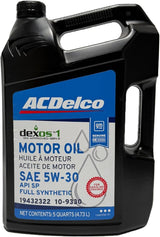 ACDelco 10-9330 dexos1 Gen 3 Full Synthetic 5W-30 Oil
$58.95Correct oil level and grade come first. Confirm fitment by VIN before ordering.
ACDelco 10-9330 dexos1 Gen 3 Full Synthetic 5W-30 Oil
$58.95Correct oil level and grade come first. Confirm fitment by VIN before ordering.
 ACDelco dexos1 Gen 3 0W-20 Full Synthetic Oil 10-9322
$79.99Correct oil level and grade come first. Confirm fitment by VIN before ordering.
ACDelco dexos1 Gen 3 0W-20 Full Synthetic Oil 10-9322
$79.99Correct oil level and grade come first. Confirm fitment by VIN before ordering.
 ACDelco GM Original Equipment PF64 (25206966) Oil Filter
$13.89Correct oil level and grade come first. Confirm fitment by VIN before ordering.
ACDelco GM Original Equipment PF64 (25206966) Oil Filter
$13.89Correct oil level and grade come first. Confirm fitment by VIN before ordering.


GM Documents Behind P0011 on the Equinox
| Document | Date | Subject | Equinox coverage |
|---|---|---|---|
| 17-NA-098 | Sep 2019 (v2) | Engine runs rough, hesitates, hard to start, stalls and/or P0010, P0013, P0011, P0014 set — camshaft position actuator solenoid valve failure. Replace both solenoids; verify ECM software | Equinox 2010–2012, 2.4L LAF / LEA |
| N192291100 — Special Coverage | Jan 2020 | Excessive oil consumption from piston ring wear, under 2,000 miles per quart. 7 yrs 6 mo / 120,000 mi | Equinox 2013, 2.4L LEA |
| 14159 — Special Coverage | Aug 2014 | Same oil consumption condition. 10 yrs / 120,000 mi | Equinox 2010, 2.4L LAF |
| 12313A — Special Coverage | Jul 2013 | Balance chain pin wear allowing chain stretch, plus the fuel pump seal. 10 yrs / 120,000 mi | Equinox 2010–2011, 2.4L LAF |
What Other P0011 Pages Get Wrong
- "Replace the intake solenoid." Incomplete. GM's own correction in 17-NA-098 is to replace both camshaft position actuator solenoid valves, because both have lived the same life in the same oil. Doing one is how people end up back at the same job.
- Skipping the ECM software step. GM lists verifying the latest software and calibrations as part of the correction, not as a suggestion. Pages that quote the bulletin's part numbers routinely omit this.
- Not mentioning the swap test. The two solenoids are identical and adjacent. Swapping them and seeing whether the code becomes P0014 is a free, definitive test, and it is the first thing anyone should do before buying a part.
- Treating "over-advanced" literally. A stretched chain retards cam timing, yet P0011 can still set. Reading the code name as a description of the mechanical state sends people looking in the wrong direction.
- "An oil change usually fixes it." Often true, and worth doing first — but on an engine GM covered for burning a quart per 2,000 miles, fresh oil that drains away again is a temporary result, not a repair. Establish the consumption rate.
- Ignoring what the screen debris is made of. Sludge means dirty oil. Plastic fragments mean a chain guide is coming apart, which is a completely different conversation.
We publish part numbers, labor operations and coverage terms only where we could read them in GM's own documentation, and we say so where we could not — as with PIP5092F above.
Frequently Asked Questions
Is P0011 the intake or exhaust camshaft?
Intake. The "A" camshaft in the descriptor is the intake cam on Bank 1. P0014 is the exhaust-side equivalent, and P0010 and P0013 are the corresponding circuit codes for the intake and exhaust actuator solenoids.
Can I drive with P0011 active?
Short trips, but not indefinitely — and with one caveat. GM's bulletin lists stalling among the symptoms, and stalling as you come to a stop is a genuine safety issue in traffic. If P0016 is stored alongside, treat the vehicle far more cautiously, because that combination points at the timing chain on an interference engine.
Does a simple oil change usually fix this?
It resolves a meaningful share of cases on this engine, because the VVT system runs on oil pressure and meters oil through a fine screen. It is the correct first step. What it will not do is fix a stretched chain, and it will not hold if the engine is consuming a quart every 2,000 miles.
How do I know if it's the solenoid and not the timing chain?
Swap the intake and exhaust solenoids and drive it. If the code moves to P0014, it is the solenoid. If P0011 stays put — especially with a persistent P0016 or a cold-start rattle — you are looking at the chain rather than the solenoid.
Do I really need to replace both solenoids?
GM's correction says both, and the reasoning holds up: they are the same part in the same engine with the same oil and mileage. The parts are inexpensive, most of the effort is access, and the intake solenoid failing shortly after the exhaust one is a well-worn pattern.
What are the GM part numbers?
From 17-NA-098: intake camshaft position actuator solenoid valve 12679099, exhaust 12679100, one of each. The labor operation is 4020140 at published time.
I found gritty debris in the solenoid screen. What does that mean?
Depends what it is. Sludge and carbon mean oil condition and change intervals. Hard plastic fragments mean a timing chain guide is breaking up, and the debris is a symptom of a much larger repair rather than the fault itself. Look closely before you reassemble.
Why do I have P0011 and a misfire code?
Valve timing that is not where the ECM believes it is upsets combustion, so P0300 alongside P0011 is common and usually secondary. Fix the timing fault and the misfire often resolves with it — but if the misfire persists afterwards, diagnose it on its own merits.
Shop the Parts Mentioned
-
 MOTOPOWER MP69033 OBD2 Scanner — $49, reads and clears P0011 and checks for companion codes.
-
 ACDelco GM OE dexos1 GEN 2 Full Synthetic 5W-30 Motor Oil (1 qt) — the recommended oil and first step in diagnosis.
-
 VDIAGTOOL BT500 Battery Tester — $57.53, tests battery health, cranking and charging on 6V/12V/24V systems with ripple analysis and a voltage waveform — confirms the battery and charging system are healthy before you chase a sensor or circuit fault.
-
 95-Piece Mechanics Tool Set (Metric & SAE) — covers the fasteners for actuator solenoid replacement.
-
 ACDelco Gold Negative Battery Cable — for replacing a corroded or damaged negative cable, a common source of intermittent electrical faults.