
P0016 is "Crankshaft Position — Camshaft Position Correlation, Bank 1 Sensor A." The engine control module compares where the crankshaft says the engine is against where the intake camshaft says it is, and those two answers no longer agree. On a Chevrolet Equinox with the 2.4L Ecotec this is usually mechanical rather than electrical, and it usually has a cause behind the cause: GM issued special coverage on four consecutive model years for oil consumption that starves the hydraulic chain tensioner, which is what lets the chain stretch in the first place.
Jump to a section: What P0016 means · How it differs from P0011 and P0014 · The oil consumption chain reaction · The special coverage ladder · Should you keep driving? · Symptoms · Causes and how to confirm each · The fuel codes that come with it · How it's diagnosed · Parts and cost · GM documents · What other pages get wrong · FAQ
What Does P0016 Mean on a Chevy Equinox?
The crankshaft position sensor reads a reluctor wheel on the crank. The camshaft position sensor reads a target on the intake cam. Because the camshaft is driven from the crankshaft by the timing chain, the ECM knows exactly what relationship those two signals should have at any moment. P0016 sets when the measured relationship falls outside the window GM allows.
The key word is correlation. This code is not saying a sensor has failed, and it is not saying the variable valve timing system is misbehaving. It is saying the physical relationship between two rotating assemblies has changed. On an engine where those assemblies are connected by a chain, that is a statement about the chain far more often than about anything electronic.
P0017 is the same code for the exhaust camshaft. Since one chain drives both cams, seeing P0016 and P0017 together is a stronger indication still.
How P0016 Differs From P0011 and P0014
These codes get grouped together, and they do share causes, but they are not measuring the same thing — and confusing them leads people to replace the wrong parts.
| Code | What it measures | What it tends to mean |
|---|---|---|
| P0016 | Crank-to-cam correlation — the physical relationship between crankshaft and intake camshaft | Something structural has moved. Chain stretch, a jumped tooth, a failed tensioner or guide |
| P0011 | Intake camshaft position — timing over-advanced or system performance | Often a VVT actuator solenoid or oil-related. But on GM engines a stretched chain can also produce it, because the ECM sees cam timing it cannot command back into range |
| P0013 | Exhaust camshaft actuator circuit | Electrical — the solenoid, its connector or its wiring |
| P0014 | Exhaust camshaft position — timing over-advanced | Exhaust-side equivalent of P0011 |
The practical rule: P0013 is a circuit code and points at wiring or a solenoid. P0011 and P0014 are position codes and often resolve with oil or an actuator. P0016 is a correlation code, and correlation codes are about hardware that has physically moved. That is why it sits at the serious end of this group.
One counterintuitive detail worth knowing: P0011 nominally means intake timing over-advanced, but on these engines a stretched chain retards cam timing, and the ECM commanding correction against it can still trip P0011. So P0011 appearing with P0016 is not two separate problems — it is one chain telling you about itself twice.
The Oil Consumption Chain Reaction
This is the part that explains why the 2.4L Ecotec produces this code so reliably, and it is a sequence rather than a single fault:
- Piston ring wear causes oil consumption. GM's own definition, repeated across four special coverage bulletins, is burning less than 2,000 miles per quart.
- The oil level drops between changes. The engine gives you no running total of how much it has used, so unless you check the dipstick, you find out when a warning appears.
- The hydraulic chain tensioner loses the oil pressure it depends on. It is not a spring holding the chain taut on its own — it needs pressurised oil to do its job properly.
- Chain, guides and tensioner wear accelerate. A slack chain slaps against its guides, and the plastic guides wear or break.
- The chain stretches, cam timing drifts, and P0016 sets.
GM's coverage bulletins describe the first stage plainly: excessive oil consumption due to piston ring wear, with an audible rattle or knock from the engine, and the oil pressure telltale illuminating or the Driver Information Center displaying "Oil Pressure Low – Stop Engine."
The reason this matters for diagnosis is that fixing a chain without addressing the oil consumption underneath it puts a new chain into the same conditions that destroyed the last one. If your Equinox uses a quart in under 2,000 miles, that is a finding, not a footnote.
Tools for cam/crank correlation
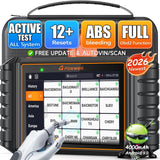 FOXWELL NT726 Bidirectional OBD2 Scanner
$368.99Read cam/crank correlation data.
FOXWELL NT726 Bidirectional OBD2 Scanner
$368.99Read cam/crank correlation data.
 FOXWELL NT614 Elite OBD2 Scanner
$233.69Read cam/crank correlation data.
FOXWELL NT614 Elite OBD2 Scanner
$233.69Read cam/crank correlation data.

The Special Coverage Ladder — and Where It Stands Now
GM covered the oil consumption condition on four consecutive model years, each under its own bulletin. This is the clearest picture of how seriously GM treated it:
| Bulletin | Released | Model year | Coverage term |
|---|---|---|---|
| 14159 | Aug 2014 | 2010 Equinox / Terrain, 2.4L LAF | 10 years or 120,000 miles |
| 15285 | Jul 2015 | 2011 Equinox / Terrain, 2.4L | 7 years 6 months or 120,000 miles — dealers to replace the 4 piston assemblies |
| 16118 | — | 2012 Equinox / Terrain, 2.4L | 7 years 6 months or 120,000 miles |
| N192291100 | Jan 2020 | 2013 Equinox / Terrain, 2.4L LEA | 7 years 6 months or 120,000 miles |
The scale of the 2013 program is worth stating: GM's dealer release put the total number of involved U.S. vehicles at approximately 270,000. This was not a boutique problem.
There is a fifth document most owners never hear about. N192287100, released October 2020, addresses emissions parts damaged by that oil consumption on 2012–2013 Equinox and Terrain 2.4L vehicles. Its instruction is direct: if the pistons and rings were replaced for excess oil consumption — under either special coverage or customer pay — replace the front and rear oxygen sensors and both catalytic converters as well. If you paid for a piston job on one of these and the converters were never addressed, that is worth raising.
Now the honest part. All of these coverages run from the date the vehicle was originally placed in service. A 2013 vehicle at 7 years 6 months reaches the end of that window around 2020 or 2021. On the calendar, every one of these programs has expired for essentially every affected vehicle. Run your VIN through GM's owner site or the NHTSA lookup — involvement is decided by VIN, not by an article — but go in expecting time and mileage to have run out. Pages still telling 2.4L owners to "ask about the oil consumption special coverage" as though it were live are setting up a disappointing phone call.
Should You Keep Driving With P0016?
Our answer is no, and the reasoning is specific rather than generic caution.
The 2.4L Ecotec is an interference engine. That means the pistons and valves occupy the same space at different points in the cycle, and they rely entirely on correct timing to stay out of each other's way. If a stretched chain jumps a tooth — or if a worn guide finally lets go and the chain skips several — the valves and pistons collide. That converts a chain-and-guides job into bent valves, damaged pistons, and potentially a cylinder head or a long block.
P0016 is the warning that the timing relationship has already drifted. Driving on it is a bet that it will not drift further while you are merging onto a freeway. If you also have a rattle on startup, a rough idle, or a misfire, treat the vehicle as needing recovery rather than a drive to the shop.
What Are the Symptoms of P0016 on an Equinox?
- Check engine light on
- A rattle from the front of the engine on startup, often lasting a second or two before oil pressure builds — the classic slack-chain signature
- Rough or shaky idle, particularly at stoplights
- Misfire under light throttle
- Noticeably worse fuel economy with no other explanation
- Sluggish acceleration, as though the engine hesitates before pulling
- Hard starting, or in advanced cases a no-start
- An engine rattle or knock plus an oil pressure warning — GM's described symptoms of the underlying oil consumption condition
- Companion codes: P0017 (exhaust correlation), P0011, P0014, P0300 misfires, and the fuel pressure group below
What Causes P0016 — and How Do You Confirm Each One?
| Cause | How to confirm it | Notes |
|---|---|---|
| Stretched timing chain, worn guides or a failed tensioner | Startup rattle, P0016 with P0017 or P0011, and physical inspection with the cover off. The definitive electrical test is scoping the crankshaft and camshaft signals together to see whether they align when they should | The leading cause on the 2.4L. An oscilloscope makes this a measurement rather than a guess |
| Low or degraded engine oil starving the hydraulic tensioner | Check level and condition on the dipstick. Establish consumption rate — under 2,000 miles per quart is GM's threshold for the documented condition | The cause behind the cause. Fix this or the new chain wears the same way |
| Clogged camshaft actuator solenoid or oil control valve | Remove and inspect the solenoid screens for debris — including plastic debris from a disintegrating chain guide | Debris from a failing guide clogs solenoids, which then sets P0011 or P0014 on top |
| Camshaft or crankshaft position sensor fault, or wiring | Inspect connectors and check signal quality. Worth ruling out, but a genuine sensor failure more often produces a circuit code than a correlation code | Do not stop here on a 2.4L with a startup rattle |
| Reluctor wheel or cam target position | Verify the reluctor is correctly positioned, particularly on an engine that has had recent work | Rare, but it has been reported after chain replacements |
| Chain installed incorrectly during a previous repair | Verify the timing marks and count the links between them at TDC against the service procedure | P0016 persisting after a fresh chain points here rather than at a new failure |
Timing parts
 Timing Set for 2010–2017 Equinox 2.0L/2.4L
$129.99Timing set and sensors — a stretched chain sets P0016. Confirm fitment by VIN before ordering.
Timing Set for 2010–2017 Equinox 2.0L/2.4L
$129.99Timing set and sensors — a stretched chain sets P0016. Confirm fitment by VIN before ordering.
 DD for 12636947 Buick Chevrolet Crankshaft Position Sensor
$15.78Timing set and sensors — a stretched chain sets P0016. Confirm fitment by VIN before ordering.
DD for 12636947 Buick Chevrolet Crankshaft Position Sensor
$15.78Timing set and sensors — a stretched chain sets P0016. Confirm fitment by VIN before ordering.


Why Fuel Pressure Codes Show Up With P0016
If your scan shows P0016 alongside P0089 or P228D, do not treat those as a separate fuel system problem to be diagnosed on its own.
The high-pressure fuel pump on the 2.4L is mechanically driven by a three-lobe cam on the intake camshaft, and the ECM synchronises the pump's actuator to camshaft position. When the chain has stretched, the pump delivers at a slightly different point than the ECM's model expects, so the actuator command needed to hold rail pressure moves outside its allowed window. The pump is fine. The timing is not.
This is one of the more expensive misdiagnoses available on this engine, because a fuel pump quote is easier to accept than a chain quote — and it does not fix anything. Resolve the timing first and see which codes survive.
How Is P0016 Diagnosed?
- Check the oil level and condition first. Free, and it is the documented root of the whole sequence on this engine.
- Establish the oil consumption rate if the level is low. Under a quart per 2,000 miles is GM's own threshold for the covered condition.
- Listen at a cold start. A rattle from the front of the engine for a second or two is the slack-chain signature.
- Record every stored code. P0017 with P0016 means both cams are out. P0089 or P228D alongside means the fuel pump is being driven off-schedule.
- Check the VIN for coverage. Expect the oil consumption programs to have expired, but confirm rather than assume.
- Inspect the camshaft actuator solenoid screens for debris, especially plastic fragments from a guide.
- Scope the crankshaft and camshaft signals together. This is what turns a guess into a diagnosis — you are looking at whether the signals align where they should, which is precisely what the code is complaining about.
- Inspect the chain, guides and tensioner once the cover is off, and verify the timing marks and link count against the service procedure.
- If a chain was recently fitted, verify the installation and reluctor position before condemning anything else.
Parts and Cost
| Scenario | What it involves | Cost picture |
|---|---|---|
| Oil and filter change, low oil corrected | Fresh dexos1 5W-30 and a filter, then rescan | The cheapest outcome — but only a fix if the chain has not already worn |
| Camshaft actuator solenoid | Solenoid plus modest labour | Moderate. Check the screens for guide debris while you are there |
| Camshaft or crankshaft position sensor | Sensor plus labour | Moderate — and rarely the answer on a rattling 2.4L |
| Timing chain kit — chain, tensioner, guides | Labour-intensive access; the parts are not the expensive part, the hours are. Replace as a complete kit, not piecemeal | The big one. Worth doing the VVT solenoids and, where chain-driven, the water pump at the same time |
| Balance shaft chain, 2010–2011 | Chain 12635427, tensioner 12649233; GM's combined balance chain and fuel pump operation is 5.2 hrs | Separate from the timing chain, and covered under 12313A when that was live |
| Piston and ring replacement for oil consumption | Four piston assemblies per GM's coverage procedure | Major engine work. Add oxygen sensors and both catalytic converters per N192287100 |
| Chain failure on an interference engine | Bent valves, damaged pistons, possibly a head or long block | The outcome the code exists to help you avoid |
The economics here are unusual. The cheap fix and the catastrophic outcome are separated by how quickly you act, not by which parts you buy. That is the strongest argument for not driving on this code.
Oil and service parts
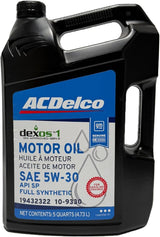 ACDelco 10-9330 dexos1 Gen 3 Full Synthetic 5W-30 Oil
$58.95Oil level and grade matter on the 2.4L. Confirm fitment by VIN before ordering.
ACDelco 10-9330 dexos1 Gen 3 Full Synthetic 5W-30 Oil
$58.95Oil level and grade matter on the 2.4L. Confirm fitment by VIN before ordering.
 ACDelco dexos1 Gen 3 0W-20 Full Synthetic Oil 10-9322
$79.99Oil level and grade matter on the 2.4L. Confirm fitment by VIN before ordering.
ACDelco dexos1 Gen 3 0W-20 Full Synthetic Oil 10-9322
$79.99Oil level and grade matter on the 2.4L. Confirm fitment by VIN before ordering.
 ACDelco GM Original Equipment PF64 (25206966) Oil Filter
$13.89Oil level and grade matter on the 2.4L. Confirm fitment by VIN before ordering.
ACDelco GM Original Equipment PF64 (25206966) Oil Filter
$13.89Oil level and grade matter on the 2.4L. Confirm fitment by VIN before ordering.


GM Documents Behind P0016 on the Equinox
| Document | Date | Subject | Equinox coverage |
|---|---|---|---|
| N192291100 — Special Coverage | Jan 2020 | Excessive engine oil consumption from piston ring wear, under 2,000 miles per quart. 7 yrs 6 mo / 120,000 mi. Approximately 270,000 U.S. vehicles | Equinox 2013, 2.4L LEA |
| N192287100 — Special Coverage | Oct 2020 | Emissions parts damaged by oil consumption — replace both oxygen sensors and both catalytic converters where pistons and rings were replaced | Equinox 2012–2013, 2.4L |
| 14159 — Special Coverage | Aug 2014 | Excessive engine oil consumption from piston ring wear. 10 yrs / 120,000 mi | Equinox 2010, 2.4L LAF |
| 15285 / 16118 — Special Coverage | 2015 / — | Same condition, 2011 and 2012 model years. 7 yrs 6 mo / 120,000 mi; four piston assemblies replaced | Equinox 2011–2012, 2.4L |
| 12313A — Special Coverage | Jul 2013 | Balance chain pin wear allowing chain stretch, plus the fuel pump seal. 10 yrs / 120,000 mi | Equinox 2010–2011, 2.4L LAF |
A note on sourcing: the pairing of P0016 with P0011 as a chain-stretch indicator is widely attributed to GM preliminary information PIP5092F. We could not open that document to read it ourselves, so we are citing the pairing as the strong field consensus it is rather than presenting it as verified GM wording. The bulletins in the table above we did open and read.
What Other P0016 Pages Get Wrong
- "Change the oil and rescan — it often resolves the code." Half right in a way that misleads. Low oil is genuinely the root of the sequence, and topping up matters. But once the chain has stretched, no oil change un-stretches it. Fresh oil that clears P0011 is good news; fresh oil is not a treatment for a correlation code.
- "Ask your dealer about the oil consumption special coverage." Four programs existed, and all of them ran from the in-service date on 2010–2013 vehicles. They have expired on the calendar. Check the VIN, but do not plan around it.
- Treating the fuel pressure codes as a separate problem. The high-pressure pump is driven by the intake camshaft. P0089 or P228D alongside P0016 is usually the chain talking, not the pump.
- Replacing the camshaft position sensor first. A correlation code says the physical relationship moved. Sensor faults more typically throw circuit codes. On a 2.4L with a startup rattle, the sensor is not where the odds are.
- "P0016 is drivable." This is an interference engine. A chain that jumps teeth puts valves into pistons. The code is the warning, and the window it gives you is not guaranteed to be long.
- Replacing the chain alone. Guides and tensioner wear with it, and debris from a failing guide clogs the VVT solenoids. A complete kit, plus the solenoids, is the repair that lasts.
We publish coverage terms, thresholds and part numbers only where we could read them in GM's own documentation, and we say so when we could not — as with PIP5092F above.
Frequently Asked Questions
Is P0016 more serious than P0011 or P0014?
Generally yes. P0011 and P0014 are position codes that often resolve with oil or an actuator solenoid. P0016 is a correlation code, which says the physical relationship between crankshaft and camshaft has changed — and on a chain-driven engine that points at hardware. P0016 with P0011, or with P0017, strengthens that reading considerably.
Should I stop driving immediately?
We would. The 2.4L is an interference engine, so a chain that jumps or breaks drives valves into pistons and turns a chain job into an engine job. If there is a startup rattle, rough running or a misfire alongside the code, have the vehicle transported rather than driven.
Can a single oil change really fix P0016?
It can clear a code caused purely by oil starvation of the actuators before any chain wear has occurred, and it is a reasonable first step because it costs little. But if the chain has already stretched, the code returns. The honest framing is that an oil change is a test, not a repair.
Why does my Equinox rattle for a second when I start it?
That is the sound most associated with a slack timing chain. The hydraulic tensioner bleeds down when the engine sits, so at startup there is a moment before oil pressure takes up the slack — and a worn chain slaps its guides during that moment. On this engine it deserves investigation rather than tolerance.
Why do I have fuel pressure codes with a timing code?
Because the high-pressure fuel pump is driven by a three-lobe cam on the intake camshaft and synchronised to camshaft position. Stretched chain, shifted pump timing, fuel pressure codes. Fix the timing before you buy a pump.
How much does a timing chain replacement cost?
It is among the more involved engine repairs, and the cost is dominated by the hours required to access the components rather than by the parts. Get the diagnosis confirmed — ideally with the crank and cam signals scoped — before committing, and have the chain, guides, tensioner and VVT solenoids quoted together rather than piecemeal.
My Equinox burns oil. Is that related?
Directly. GM documented excessive oil consumption from piston ring wear across 2010–2013 Equinox and Terrain 2.4L vehicles, defining it as under 2,000 miles per quart. Low oil starves the hydraulic chain tensioner, which accelerates chain wear, which produces P0016. Fitting a chain without addressing consumption puts the new chain in the same conditions.
I already replaced the chain and P0016 came back. What now?
Verify the installation before replacing anything else — timing marks and link count at TDC against the service procedure, and the reluctor wheel position. Scope the crankshaft and camshaft signals together to see where the misalignment actually is. Persisting P0016 on a fresh chain points at how it went in, or at a signal problem, rather than at a chain that stretched in a few hundred miles.
Shop the Parts Mentioned
-
 MOTOPOWER MP69033 OBD2 Scanner — $49, reads and clears P0016 and checks for companion codes like P0011.
-
 ACDelco GM OE dexos1 GEN 2 Full Synthetic 5W-30 Motor Oil (1 qt) — addresses the oil-related contributing factor first.
-
 VDIAGTOOL BT500 Battery Tester — $57.53, tests battery health, cranking and charging on 6V/12V/24V systems with ripple analysis and a voltage waveform — confirms the battery and charging system are healthy before you chase a sensor or circuit fault.
-
 95-Piece Mechanics Tool Set (Metric & SAE) — useful for sensor-level repairs.
-
 ACDelco Gold Negative Battery Cable — for replacing a corroded or damaged negative cable, a common source of intermittent electrical faults.