
P0700 is not a fault. It is a message. The transmission control module found something wrong, and asked the engine control module to switch on the check engine light on its behalf. The code that actually tells you what broke is stored in the transmission module, not the engine module — and a basic code reader usually cannot see it. That single fact is why so many people are quoted a rebuild for what turns out to be a solenoid, a sensor, or a software update.
Jump to a section: What P0700 means · Why your code reader shows nothing else · Do not accept a rebuild quote on P0700 alone · The TEHCM — and an expensive wrong part · Sometimes the fix is a reprogram · Companion codes and what they mean · Symptoms · Causes and how to confirm each · How it's diagnosed · Parts and cost · GM documents · What other pages get wrong · FAQ
What Does P0700 Actually Mean?
On a modern GM vehicle the transmission has its own control module. It monitors its sensors, solenoids, pressures and shift quality, and when it finds a fault it stores a code of its own.
But the transmission module does not control the check engine light. The engine module does. So the transmission module sends a request across the network: turn the light on, I have a problem. The engine module obliges and records that request as P0700 — Transmission Control System (MIL Request).
That is the whole meaning of the code. It tells you where to look, not what is wrong.
The useful analogy is a fire alarm panel. P0700 is the light on the panel saying a zone has triggered. Reading it tells you the transmission is the zone. It tells you nothing about whether it is a wisp of smoke or a genuine fire — for that you have to go and read the zone itself.
Which leads directly to the practical problem most owners hit.
Why Your Code Reader Shows Nothing Else
Inexpensive OBD-II readers are built to read generic emissions codes from the engine module. That is what the OBD-II standard requires manufacturers to make available, and it is all most basic tools ask for.
The transmission module's codes are manufacturer-specific and stored in a different module. A tool that only queries the engine module will show you P0700, correctly, and then nothing else — leaving you with a code that says "there is a transmission problem" and no way to find out which one.
This is not a fault with your vehicle and it does not mean the code is a mystery. It means you need a scan tool capable of addressing the transmission control module, or a shop with one.
What to ask for: a scan of the TCM specifically, and a printout of every code stored there with freeze frame data. If a shop tells you "it's just a P0700, it's a transmission problem" without producing the module codes, they have not finished the diagnosis — they have read the fire alarm panel and stopped.
Record the freeze frame data before anything is cleared. It captures road speed, temperature and load at the moment the fault set, and on an intermittent transmission fault that context is often the most valuable thing you have.
Scan tools that read the transmission module
 FOXWELL NT604 ABS/SRS/Transmission Scanner
$209.09Reads transmission codes behind P0700 — a generic reader cannot.
FOXWELL NT604 ABS/SRS/Transmission Scanner
$209.09Reads transmission codes behind P0700 — a generic reader cannot.
 FOXWELL NT614 Elite Scanner
$233.69Four-system scanner including transmission, with live data.
FOXWELL NT614 Elite Scanner
$233.69Four-system scanner including transmission, with live data.
 FOXWELL NT624 Elite All-System Scanner
$332.09All-system scanner for reading the TCM and every other module.
FOXWELL NT624 Elite All-System Scanner
$332.09All-system scanner for reading the TCM and every other module.


Do Not Accept a Rebuild Quote on P0700 Alone
This is the part of this code that costs people the most money.
Because P0700 is described as a "transmission control system" fault, it gets treated as evidence of transmission failure. It is not. It is evidence that the transmission module logged something — and the range of things it logs runs from a loose connector to a genuinely failed gearset.
If you have been quoted a rebuild or a replacement transmission on the strength of P0700, stop and ask one question: what is the companion code?
The honest answers a shop can give are:
- A specific code they have diagnosed — reasonable, and now you can research that code on its own terms.
- "We haven't scanned the TCM yet" — then the diagnosis is incomplete and the quote is premature.
- "It doesn't matter, it's internal" — worth a second opinion. Plenty of internal-sounding codes resolve to a solenoid or a wiring fault.
A great many P0700s resolve to a solenoid, a speed sensor, a connector, low or degraded fluid, or a software calibration. Those are ordinary repairs. Paying four figures without establishing which one you have is the mistake this page exists to prevent.
The TEHCM — and an Expensive Wrong Part
There is a GM-specific detail here worth knowing before you order anything.
On GM's 6L80, 6L90 and 8L90 automatics, the transmission control electronics are not a separate box under the dash. They are the TEHCM — Transmission Electro-Hydraulic Control Module — an assembly that combines the control module, the solenoids and the pressure switches, bolted to the valve body inside the transmission.
Two consequences follow:
- Accessing it means dropping the pan and going into the transmission. It is not a plug-in module swap.
- A replacement TEHCM generally needs to be programmed and configured to the vehicle. Fitting one is not a parts-cannon repair.
And the specific trap: someone who buys a "PCM" hoping to fix a 6L80 P0700 has bought the wrong part entirely. The engine control module is the thing that merely reported the request. The transmission electronics are inside the transmission. Those are different components at very different prices.
Before ordering any module, confirm which transmission you have and which module the diagnosed code actually implicates.
Sometimes the Fix Is a Reprogram
It is worth knowing that some transmission codes GM has documented turn out to be software, not hardware — because that changes the conversation about cost.
GM bulletin 16-NA-182 (June 2016) is a clean example. It covers 2016 Silverado and Sierra 2500/3500 with the 6.0L L96 and the 6L90 automatic (RPO MYD), and 2016 Express and Savana. The condition:
Some customers may comment on an illuminated MIL. Technicians may find DTC P0777 as an active or a history DTC. This concern will typically occur in cold ambient temperatures of -5 to +5°C (23 to 41°F).
Silverado and Sierra drivers may also report a firm 3-2 downshift below about 25°C transmission temperature — a symptom GM notes does not affect the Express and Savana.
GM's stated cause: "This condition may be due to a software anomaly."
And the correction is not a part. GM developed a revised calibration, and directs technicians to update the transmission control module using the Service Programming System with the latest software.
Note what that vehicle would present as. The TCM sets P0777, requests the light, and the engine module logs P0700. An owner reads P0700, hears "transmission," and starts pricing rebuilds — when the documented repair is a software update.
GM attaches a firm warning to this work that is worth repeating: do not program a control module unless directed to by a service procedure or bulletin, and stable battery voltage is critical during programming — GM specifies using its programming support tool or a fully charged jumper pack, and explicitly says do not connect a battery charger. An interrupted programming session can damage the module. This is not a driveway job.
Being precise: 16-NA-182 names P0777, not P0700, and covers a specific set of 2016 vehicles. We include it because it illustrates the pattern behind this code exactly — the companion code is the real code, and the real code was fixable with software. Have a dealer check your VIN for bulletins against whatever companion code you actually have.
Companion Codes and What They Tell You
The companion code is the diagnosis. Broadly, they group like this:
| Code group | What it points at | Cost implication |
|---|---|---|
| Solenoid codes (P0751, P0752, P0776, P0777, P0973 and similar) | A shift or pressure control solenoid, or its circuit | Often moderate. Some are accessible with the pan down |
| Speed sensor codes (P0715, P0716, P0717, P0722 and similar) | Input or output speed sensors and their wiring | Frequently one of the cheaper outcomes |
| Torque converter clutch codes (P0741, P0742) | TCC circuit or the converter itself. See our P0741 guide | Varies widely — diagnose before assuming the converter |
| Ratio and slip codes (P0729–P0736, P0776 and similar) | The transmission is not achieving a commanded ratio | The group most likely to be genuinely mechanical |
| Communication codes (U0101 and related) | The module is not talking — wiring, connector, or module power | Often a connector or harness repair |
| Internal module codes (P0613 and similar) | The control module itself | On GM automatics, usually means the TEHCM |
Notice how few of those groups mean "rebuild." That is the point. Most P0700s have a companion code pointing at a component, not at the gearsets.
Symptoms of P0700
- Check engine light on
- Limp mode — the transmission locked into a single gear, commonly second or third, to protect itself
- Harsh, delayed or erratic shifting
- Slipping, or the engine revving without matching acceleration
- Failure to shift out of a gear
- Shuddering, particularly at light throttle around lock-up speeds
- Reduced fuel economy
- Sometimes no symptom at all beyond the light, where the stored fault is intermittent or in a circuit
On urgency: this depends entirely on what the companion code says, which is exactly why finding it matters. A stored circuit fault with normal shifting is not an emergency. Limp mode, slipping or shuddering is different — a slipping transmission generates heat, and heat is what destroys automatics. If the vehicle is not shifting properly, keep the driving short and get it scanned promptly rather than commuting on it for weeks.
Causes and How to Confirm Each
| Cause | How to confirm it | Notes |
|---|---|---|
| A fault stored in the TCM — always the real answer | Scan the transmission module specifically and record every code with freeze frame data | This is step one and there is no substitute for it |
| Low, degraded or wrong transmission fluid | Check level and condition per the procedure for your transmission. Dark fluid with a burnt smell is a finding | Cheap to check. Many GM automatics have no dipstick and need a specific procedure |
| Shift or pressure control solenoid fault | The companion code usually names it. Bidirectional testing where the tool allows | A common and non-catastrophic outcome |
| Speed sensor or its circuit | Companion code plus live data — implausible or dropping-out readings | Often among the cheapest repairs |
| Wiring, connector or ground fault | Inspect the transmission connector and harness for corrosion, chafing and moisture | Communication codes point here strongly |
| Software calibration | Have the dealer check for updates against your VIN and the companion code | Documented for some codes — 16-NA-182 is one |
| TEHCM or control module fault | After circuits, fluid and sensors are excluded | Inside the transmission on 6L80/6L90/8L90; needs programming |
| Torque converter or lock-up fault | Companion TCC code, shudder at lock-up speeds | See our P0741 guide |
| Genuine internal mechanical wear | Ratio and slip codes, confirmed pressure testing, debris in the pan | Real, but the conclusion — not the opening assumption |
Fluid and service parts
 ACDelco Dexron VI Full Synthetic ATF, 1 Gal
$49.99Dexron VI full synthetic ATF, 1 gallon — check level and condition first.
ACDelco Dexron VI Full Synthetic ATF, 1 Gal
$49.99Dexron VI full synthetic ATF, 1 gallon — check level and condition first.
 ACDelco Dexron VI Full Synthetic ATF, 1 Qt
$16.99Dexron VI full synthetic ATF, 1 quart, for topping off.
ACDelco Dexron VI Full Synthetic ATF, 1 Qt
$16.99Dexron VI full synthetic ATF, 1 quart, for topping off.
 ACDelco Gold TF337 Transmission Filter Kit
$33.74ACDelco Gold transmission filter kit. Confirm fitment by VIN before ordering.
ACDelco Gold TF337 Transmission Filter Kit
$33.74ACDelco Gold transmission filter kit. Confirm fitment by VIN before ordering.


How Is P0700 Diagnosed?
- Scan the transmission control module and write down every code stored there. Nothing else on this list matters until this is done.
- Record freeze frame data before clearing anything. On an intermittent fault it may be the only context you get.
- Check the transmission fluid level and condition using the correct procedure for your transmission — many GM units have no dipstick and require a specific method and temperature.
- Inspect the transmission connector and harness for corrosion, chafing and moisture, particularly where communication codes are stored.
- Research the companion code specifically, not P0700. That is the code with a real diagnostic procedure behind it.
- Ask the dealer to check for calibration updates against your VIN and that companion code. Some documented conditions are software.
- Review live data — commanded versus actual gear, slip, temperatures and pressures — before any disassembly.
- Repair what the companion code identifies, and confirm which module it implicates before ordering parts.
- Clear the codes and road test through the conditions in the freeze frame data, since a fault that set cold may not return warm.
Parts and Cost
| Outcome | What it involves | Cost picture |
|---|---|---|
| TCM calibration update | Dealer reprogramming where a bulletin covers your companion code | No parts at all. Ask before anything else |
| Connector or harness repair | Where corrosion or chafing is the fault | Among the cheapest outcomes |
| Speed sensor | Sensor plus access, which varies by transmission | Modest |
| Fluid and filter service | Correct specification fluid and the proper fill procedure | Modest — and a genuine cause when fluid is degraded |
| Shift or pressure control solenoid | Often accessible with the pan down | Moderate; the part is usually not the expensive bit |
| TEHCM | Inside the transmission on 6L80/6L90/8L90. Requires programming and configuration | Significant, and not a DIY swap |
| Torque converter | Where a TCC fault is confirmed as mechanical | Large — the transmission comes out |
| Rebuild or replacement | Where internal mechanical failure is genuinely confirmed | The largest, and the one to make people prove. Ask for the companion code first |
Always confirm parts against your VIN and your specific transmission RPO. GM used several automatics across the same model years, and a part number from a forum post about a different transmission is not a safe basis for ordering.
Common transmission repair parts
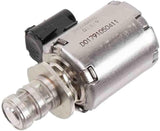 GM Genuine 24248893 Pressure Control Solenoid
$55.34GM Genuine pressure control solenoid. Confirm fitment by VIN before ordering.
GM Genuine 24248893 Pressure Control Solenoid
$55.34GM Genuine pressure control solenoid. Confirm fitment by VIN before ordering.
 GM Genuine 24230298 1-2/3-4 Shift Solenoid
$17.21GM Genuine 1-2/3-4 shift solenoid. Confirm fitment by VIN before ordering.
GM Genuine 24230298 1-2/3-4 Shift Solenoid
$17.21GM Genuine 1-2/3-4 shift solenoid. Confirm fitment by VIN before ordering.
 GM Genuine 24297922 Transmission Pan Gasket
$46.81GM Genuine transmission pan gasket. Confirm fitment by VIN before ordering.
GM Genuine 24297922 Transmission Pan Gasket
$46.81GM Genuine transmission pan gasket. Confirm fitment by VIN before ordering.


GM Documents Relevant to This Pattern
| Document | Subject | Status |
|---|---|---|
| 16-NA-182 (Jun 2016) | "DTC P0777, Firm 3-2 Downshifts (Reprogram TCM)." MIL with P0777 active or in history, typically in cold ambient temperatures of −5 to +5°C. Firm 3-2 downshift below about 25°C transmission temperature on trucks. Cause: a software anomaly. Correction: a revised calibration — update the TCM via SPS. GM warns that stable battery voltage is critical and that a battery charger must not be connected | 2016 Silverado and Sierra 2500/3500 (6.0L L96, 6L90 RPO MYD), Express and Savana — verified. Names P0777, not P0700 |
On sourcing: P0700 itself is a generic OBD-II code that GM does not write bulletins about, because it is a request rather than a fault. Bulletins are written against the companion codes. That is why the single most useful thing you can do is find your companion code and search on that instead — and why we have not padded this table with documents that do not name your code.
What Other P0700 Pages Get Wrong
- Treating P0700 as a diagnosis. It is a request from one module to another to turn a light on. Publishing a causes-and-fixes list for P0700 as though it were a specific fault misleads people about what they are dealing with.
- Not explaining why the code reader shows nothing else. The companion code lives in a different module and is manufacturer-specific. Owners conclude their tool is broken or the code is unknowable, when they simply need a tool that addresses the TCM.
- Publishing repair cost ranges. A page that says P0700 costs a given range is inventing a number, because the cost is entirely determined by a companion code that page has not seen. It can be a software update or a transmission.
- Letting rebuild quotes go unchallenged. This code gets used to justify large estimates. The right response is a single question about the companion code, and it should be asked before any money changes hands.
- Missing the TEHCM. On GM's 6L80, 6L90 and 8L90 the control module lives inside the transmission with the solenoids and pressure switches. Buying a PCM to fix one of these is buying the wrong part.
- Never mentioning software. GM has documented transmission codes whose correction is a revised calibration and no parts. Anyone facing a large quote should establish whether a bulletin covers their companion code first.
- Giving a blanket safe-to-drive answer. Whether this code is urgent depends on the companion code and the symptoms. A stored circuit fault is not a slipping transmission, and pretending both are the same serves nobody.
Frequently Asked Questions
What exactly is P0700 telling me?
That the transmission control module found a problem and asked the engine control module to turn on the check engine light. The engine module logged that request as P0700. The code describing the actual fault is stored in the transmission module, and that is the one you need.
Why doesn't my scanner show any other codes?
Most inexpensive readers only query the engine module for generic emissions codes. The transmission module's codes are manufacturer-specific and stored elsewhere. You need a scan tool capable of addressing the TCM, or a shop with one. Your vehicle is not hiding anything — the tool simply is not asking the right module.
A shop quoted me thousands for a rebuild. Should I get a second opinion?
Ask one question first: what is the companion code stored in the TCM? If they cannot give you a specific code they have diagnosed, the diagnosis is not finished. Many P0700s resolve to a solenoid, a speed sensor, a connector or a calibration update. Establish which one you have before authorising a rebuild.
Can I drive with P0700?
It depends on the companion code and the symptoms. If it shifts normally and the light is the only sign, it is not an emergency — but get it scanned. If it is in limp mode, slipping or shuddering, keep driving to a minimum. A slipping automatic generates heat, and heat is what destroys them.
Will a fluid change fix it?
Sometimes, if low or degraded fluid is the cause — and it is always worth checking the level and condition early because it is cheap. But fluid will not repair a failed solenoid, a damaged connector or a software fault. Check it, do not count on it, and use the correct procedure for your transmission since many GM units have no dipstick.
What is a TEHCM?
The Transmission Electro-Hydraulic Control Module — on GM's 6L80, 6L90 and 8L90 it combines the transmission control module, the solenoids and the pressure switches into one assembly bolted to the valve body inside the transmission. Replacing it means going into the transmission, and it needs programming afterwards.
Could this just be software?
It can be. GM bulletin 16-NA-182 covers a 2016 truck and van application where the cause of a stored transmission code was a software anomaly and the correction was a revised TCM calibration with no parts. That bulletin names P0777, so ask your dealer to check bulletins against your specific companion code and VIN.
Should I clear the code to see if it comes back?
Record the freeze frame data first. It captures the speed, temperature and load when the fault set, and on an intermittent transmission problem that context is often more valuable than the code itself. Once you clear it, that information is gone.
Is P0700 the same on every make?
The meaning is the same — it is a generic OBD-II code — but what sits behind it is entirely manufacturer-specific. The companion codes, the module architecture and the repairs differ. This page covers the GM picture; guidance written for another manufacturer's transmission will not map cleanly onto yours.
Shop Related Parts & Tools
The single most useful thing on this code is a tool that can read the transmission module, since that is where the real code lives. Confirm all parts against your VIN and transmission RPO.
-
 MOTOPOWER MP69033 OBD2 Scanner — confirms P0700 and captures the freeze frame data you should record before clearing anything. Note that reading the transmission module's own codes needs a tool with TCM access, which this one does not provide.
-
 95-Piece Mechanics Tool Set (Metric & SAE) — for transmission pan, connector and harness access when the companion code points at something reachable.
-
 3-In-1 Cordless Impact Wrench & Screwdriver Kit — speeds up pan removal where a solenoid or filter is the diagnosed repair.