
A high-pitched whine from your turbocharged or Duramax diesel GM engine can range from completely normal turbo spool sound to an early warning sign of a failing component. Knowing the difference can save you from an expensive repair down the road.
How a Turbocharger Normally Sounds
Turbochargers spin at extremely high speeds — often well over 100,000 RPM — using exhaust gas energy to force more air into the engine. That spinning naturally produces some whine under acceleration, and on factory-tuned GM diesel and turbo gas engines, a mild, consistent whine that rises and falls with throttle input is completely normal and expected. The key is distinguishing that normal spool sound from a whine that's louder, more constant, or paired with other symptoms like reduced power or visible oil.
Common Causes of Turbo/Duramax Whine
- Normal turbo spool whine — a mild whine under acceleration is often just the turbo doing its job, especially on factory-tuned setups.
- Failing turbo bearings — a louder, more constant whine that gets worse over time usually means the bearings are wearing out.
- Boost leak — a whistling or hissing sound (different from a whine) points to a leak in the intake or intercooler piping.
- Clogged or restricted air filter — forces the turbo to work harder and can produce extra noise under load.
- Failing wastegate or actuator — can cause fluctuating boost and unusual noise patterns.
Turbo and intercooler parts
 ACDelco Turbocharger 25201063
$702.99Turbocharger and intercooler. Confirm engine. Confirm fitment by VIN before ordering.
 ACDelco Air-to-Air Intercooler
$290.99Turbocharger and intercooler. Confirm engine. Confirm fitment by VIN before ordering.


Whine vs. Whistle vs. Hiss: Telling Them Apart
A true whine is a smooth, rising-and-falling pitch tied directly to engine RPM — that's the turbo itself. A whistle or hiss, by contrast, tends to be more constant regardless of RPM and often points to air escaping somewhere it shouldn't, like a loose intercooler clamp or a cracked boost hose. Getting this distinction right before you start diagnosing saves time, since a boost leak repair is far cheaper and simpler than a turbo bearing replacement.
Belt-drive parts
 ACDelco Serpentine Belt Tensioner, 6-Rib
$195.99Belts and tensioners can also whine. Confirm engine. Confirm fitment by VIN before ordering.
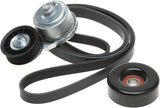 ACDelco Gold ACK060960 Serpentine Drive Belt Tensioner Kit
$88.02Belts and tensioners can also whine. Confirm engine. Confirm fitment by VIN before ordering.
 DAYCO 5040425 Poly-V Serpentine Belt
$12.00Belts and tensioners can also whine. Confirm engine. Confirm fitment by VIN before ordering.


What You Can Do
A consistent, worsening whine that's accompanied by reduced power or visible oil in the intercooler piping is a strong sign of turbo bearing wear and should be inspected before it fails completely. If the noise is more of a whistle than a whine, check your intake and intercooler connections for a boost leak first — it's a much cheaper fix.
Oil and filters
 ACDelco dexosD 0W-20 Diesel Oil Change Kit
$125.46Clean oil protects turbo bearings. Confirm spec. Confirm fitment by VIN before ordering.
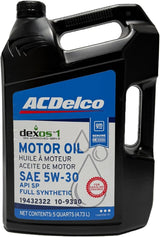 ACDelco 10-9330 dexos1 Gen 3 Full Synthetic 5W-30 Oil
$58.95Clean oil protects turbo bearings. Confirm spec. Confirm fitment by VIN before ordering.
 ACDelco GM Original Equipment PF64 (25206966) Oil Filter
$13.89Clean oil protects turbo bearings. Confirm spec. Confirm fitment by VIN before ordering.


Step-by-Step Diagnosis
- Note whether the sound is a smooth whine tied to RPM (likely the turbo) or a more constant whistle/hiss (likely a leak).
- Check the air filter for restriction — a clogged filter makes the turbo work harder and can add to the noise.
- Inspect intercooler piping, clamps, and hoses for looseness, cracks, or visible oil residue, which points to a boost leak or bearing seal issue.
- Watch for accompanying symptoms: reduced power, increased oil consumption, or blue-tinted exhaust smoke all point toward turbo bearing wear rather than a simple leak.
- If a boost leak is suspected, a shop can pressure test the intake system to pinpoint the exact leak location.
- If bearing wear is suspected, have the turbo inspected for shaft play before it fails completely and potentially damages the engine.
Scan tools
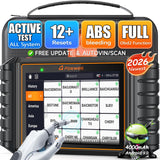 FOXWELL NT726 Bidirectional OBD2 Scanner
$368.99Read boost and turbo codes.
 FOXWELL NT614 Elite OBD2 Scanner
$233.69Read boost and turbo codes.

Frequently Asked Questions
Is any turbo whine normal, or should I always be concerned?
A mild, consistent whine that rises and falls with throttle input is normal on most factory-tuned turbo and Duramax engines. It's when the whine becomes louder, more constant, or is paired with other symptoms like power loss that it's worth investigating.
How do I know if it's a boost leak instead of turbo wear?
A boost leak typically sounds more like a whistle or hiss that stays fairly constant, rather than a smooth whine that changes with RPM. Boost leaks are also usually cheaper and easier to fix, so it's worth ruling out first.
What does oil in the intercooler piping tell me?
Visible oil in the piping, combined with a worsening whine, is a strong indicator that the turbo's bearing seals are wearing out and allowing oil to migrate into the intake system — a sign the turbo needs inspection soon.
Can a dirty air filter really cause turbo whine?
Yes. A clogged or restricted air filter forces the turbo to work harder to pull in enough air, which can produce extra noise under load even when the turbo itself is perfectly healthy. It's an easy, cheap thing to rule out first.
Recommended Products from The GM Service Guy Shop
-
 SPDZ1 L5P Duramax Downpipe Exhaust (2017-2025)
-
 Green Filter Diesel Panel Filter (GMC Sierra 2500 HD 6.6L)
-
 Edge Evolution CTS3 Tuner (Silverado, Sierra, Duramax)
-
 Pulsar LT + Trinity 2 Monitor Kit
-
 GM Pulsar V3 L5P Insight CTS3 Kit (17-19)