
One part number covers most of the modern GM lineup: GM 13508023, ACDelco CF185. It is the cataloged cabin air filter for the 2019+ Silverado and Sierra, the 2021+ Tahoe, Suburban, Yukon and Yukon XL, Equinox, Terrain, Traverse, Acadia, Blazer, Colorado, Canyon, Camaro, Corvette, Enclave, Envision, and most of the current EVs. Older platforms use different numbers.
If that covers your vehicle, you are done — grab it from the GM filters and maintenance parts collection and skip to the installation section. If your truck is a 2014–2018 or your SUV is a 2015–2020, the number is different and the chart below tells you where the generation break falls.
Parts and tools you'll need
- A cabin air filter that matches your year and model — check the chart before you add to cart
- Your VIN or exact year, model and trim
- A shop vacuum with a crevice tool, for the leaves sitting in the housing
- A marker to date the new filter and, on some models, a stubby Phillips or a T20 driver
ACDelco cabin air filters
 ACDelco CF185 Cabin Air Filter
$28.49ACDelco cabin air filters. Confirm fitment by VIN before ordering.
ACDelco CF185 Cabin Air Filter
$28.49ACDelco cabin air filters. Confirm fitment by VIN before ordering.
 ACDelco Gold CF1184C Cabin Air Filter
$27.99ACDelco cabin air filters. Confirm fitment by VIN before ordering.
ACDelco Gold CF1184C Cabin Air Filter
$27.99ACDelco cabin air filters. Confirm fitment by VIN before ordering.
 ACDelco CF197 Cabin Air Filter 13503677
$27.99ACDelco cabin air filters. Confirm fitment by VIN before ordering.
ACDelco CF197 Cabin Air Filter 13503677
$27.99ACDelco cabin air filters. Confirm fitment by VIN before ordering.
 ACDelco CF184 Cabin Air Filter 13356914
$27.99ACDelco cabin air filters. Confirm fitment by VIN before ordering.
ACDelco CF184 Cabin Air Filter 13356914
$27.99ACDelco cabin air filters. Confirm fitment by VIN before ordering.


Which cabin air filter fits my GM vehicle?
GM consolidated the cabin filter element across almost the entire current lineup. GM 13508023 / ACDelco CF185 is the published number for the vast majority of Chevrolet, GMC, Buick and Cadillac vehicles built in the last several years, across cars, trucks, crossovers and EVs alike.
That consolidation is genuinely unusual. It means a household with a Silverado, an Equinox and an Enclave in the driveway buys one part number three times. Here is the published fitment, by brand:
| Brand | Model | Model years | GM number | ACDelco |
|---|---|---|---|---|
| Chevrolet | Silverado 1500 | 2019–2026 | 13508023 | CF185 |
| Chevrolet | Silverado 2500 HD / 3500 HD | 2020–2026 | 13508023 | CF185 |
| Chevrolet | Silverado EV | 2024–2026 | 13508023 | CF185 |
| Chevrolet | Tahoe / Suburban | 2021–2026 | 13508023 | CF185 |
| Chevrolet | Colorado | 2017–2026 | 13508023 | CF185 |
| Chevrolet | Equinox | 2018–2027 | 13508023 | CF185 |
| Chevrolet | Traverse | 2018–2025 | 13508023 | CF185 |
| Chevrolet | Blazer / Blazer EV | 2019–2026 / 2024–2026 | 13508023 | CF185 |
| Chevrolet | Trailblazer | 2021–2026 | 13508023 | CF185 |
| Chevrolet | Trax | 2024–2026 | 13508023 | CF185 |
| Chevrolet | Malibu | 2016–2025 | 13508023 | CF185 |
| Chevrolet | Cruze (hatch and sedan) | 2016–2019 | 13508023 | CF185 |
| Chevrolet | Impala | 2014–2020 | 13508023 | CF185 |
| Chevrolet | Camaro | 2016–2024 | 13508023 | CF185 |
| Chevrolet | Corvette | 2020–2027 | 13508023 | CF185 |
| Chevrolet | Bolt EV / Bolt EUV | 2017–2023 / 2022–2023 | 13508023 | CF185 |
| Chevrolet | Volt | 2016–2019 | 13508023 | CF185 |
| GMC | Sierra 1500 | 2019–2026 | 13508023 | CF185 |
| GMC | Sierra 2500 HD / 3500 HD | 2020–2026 | 13508023 | CF185 |
| GMC | Yukon / Yukon XL | 2021–2026 | 13508023 | CF185 |
| GMC | Acadia | 2017–2027 | 13508023 | CF185 |
| GMC | Terrain | 2018–2027 | 13508023 | CF185 |
| GMC | Canyon | 2017–2026 | 13508023 | CF185 |
| GMC | Hummer EV Pickup / SUV | 2022–2026 / 2024–2026 | 13508023 | CF185 |
| Buick | Enclave | 2018–2026 | 13508023 | CF185 |
| Buick | Envision | 2016–2026 | 13508023 | CF185 |
| Buick | Encore GX | 2020–2026 | 13508023 | CF185 |
| Buick | Envista | 2024–2026 | 13508023 | CF185 |
| Buick | LaCrosse | 2017–2019 | 13508023 | CF185 |
| Buick | Regal Sportback / TourX | 2018–2020 | 13508023 | CF185 |
| Cadillac | Escalade / Escalade ESV | 2021–2026 | 13508023 | CF185 |
| Cadillac | XT4 / XT5 / XT6 | 2019–2025 / 2017–2026 / 2020–2025 | 13508023 | CF185 |
| Cadillac | CT4 / CT5 | 2020–2026 | 13508023 | CF185 |
| Cadillac | CT6 | 2016–2020 | 13508023 | CF185 |
| Cadillac | ATS / CTS / XTS | 2013–2019 / 2014–2019 / 2017–2019 | 13508023 | CF185 |
| Cadillac | LYRIQ / OPTIQ / VISTIQ | 2023–2026 / 2025–2026 / 2026 | 13508023 | CF185 |
Use that chart to narrow, not to finalize. The GM catalog itself carries a warning worth repeating: not every vehicle came from the factory with a cabin air filter installed. Some trims and some earlier build dates have the housing and the slot but no element. Check your owner's manual or look in the housing before you assume you have one to replace.
Where does the part number change?
At generation breaks, almost always. The single most common ordering mistake on GM trucks and SUVs is buying the current-generation filter for a previous-generation vehicle because the model name did not change. The name stayed the same; the HVAC box did not.
The breaks that catch the most people:
| Vehicle | Generation break | What it means for filters |
|---|---|---|
| Silverado 1500 / Sierra 1500 | 2018 to 2019 (K2XX to T1XX) | 2019+ uses CF185. The 2014–2019 trucks are commonly listed with ACDelco CF188 (GM 23281440) — confirm yours by VIN before ordering, since the 2019 model year overlaps both generations. |
| Tahoe / Suburban / Yukon | 2020 to 2021 | 2021+ uses CF185. The 2015–2020 SUVs use a different element — look it up rather than assuming. |
| Silverado 2500/3500 HD | 2019 to 2020 | HD coverage for CF185 starts a year later than the half-ton. A 2019 HD is not automatically the same as a 2019 1500. |
| Equinox / Terrain | 2017 to 2018 | The 2018 redesign is where CF185 coverage begins for both. |
| Traverse | 2017 to 2018 | Same break as Equinox — the 2009–2017 Traverse is a different part. |
The 2019 model year is the one to be careful with, and for the same reason it causes trouble everywhere else on these trucks: GM sold two different Silverado and Sierra generations side by side that year. The carryover old-body truck was badged Silverado 1500 LD and Sierra 1500 Limited. If yours has the older dashboard, it takes the previous-generation filter regardless of what the model year says.
There is also a second cataloged number, GM 13540923 / ACDelco CF209, listed for an overlapping subset — Blazer, Blazer EV, Corvette, Equinox, Suburban and Tahoe in specific years. Where both numbers appear for your vehicle, that is a media or construction difference rather than a fitment difference, but confirm which one your vehicle takes rather than picking by price.
How do you find the right filter if your vehicle is not on the chart?
Use the fitment filter on the collection page with your exact year, model and trim, or pull the old filter out and read the part number printed on its frame. Every OEM element has the number on it. That physical check beats any chart, including this one, because it reflects what is actually in your car.
Three ways to get the answer yourself, in order of reliability:
- Pull the existing filter and read the frame. Numbers are usually molded or printed on the long edge.
- Look up your VIN in an OEM parts catalog. VIN-level lookups resolve trim and build-date splits that a year-model chart cannot.
- Use the year/model/trim filter on the retailer collection page, then cross-check the result against the frame number when the part arrives, before you install it.
If the old filter has no number and the housing is empty, measure the slot. Cabin filter elements are dimensionally specific and a filter that is close but not exact will bypass air around the edges, which defeats the entire point.
How often should you replace a GM cabin air filter?
GM's maintenance schedules on recent models call for cabin filter replacement around every 22,500 miles, and again at 45,000. Your owner's manual governs — the interval varies by model — and severe-service conditions cut it roughly in half. Dust, pollen, gravel roads and heavy city driving all count as severe.
The mileage rule is a floor, not a diagnosis. A truck that spends its life on a paved commute in a wet climate will pass 30,000 miles with a serviceable filter. A truck that runs gravel roads in summer can be restricted at 10,000.
Symptoms that it is due regardless of the odometer:
- Reduced airflow at the highest blower setting compared to a year ago.
- The windshield defroster taking longer to clear than it used to.
- A musty smell in the first minute after startup that fades once the system is running.
- Whistling or a change in blower noise, which can indicate the element is collapsing or bypassing.
- Visible leaf litter or seed pods in the housing when you open the door.
The blower motor itself is the reason to stay ahead of this. A heavily restricted filter makes the blower work against higher static pressure, and blower motor resistors and modules on GM vehicles do not appreciate that. A filter is cheap; a blower assembly is not — and if your fan already only works on certain speeds, read our guide to blower motor resistor failure before you assume the filter is the whole story.
More cabin filters
 ACDelco CF196 Cabin Air Filter 23135671
$29.99Additional ACDelco cabin air filter part numbers. Confirm fitment by VIN before ordering.
ACDelco CF196 Cabin Air Filter 23135671
$29.99Additional ACDelco cabin air filter part numbers. Confirm fitment by VIN before ordering.
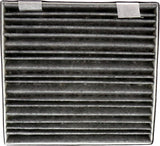 ACDelco CF193C Cabin Air Filter 23101674
$45.99Additional ACDelco cabin air filter part numbers. Confirm fitment by VIN before ordering.
ACDelco CF193C Cabin Air Filter 23101674
$45.99Additional ACDelco cabin air filter part numbers. Confirm fitment by VIN before ordering.
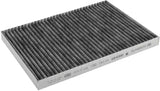 ACDelco CF179C Cabin Air Filter 20958479
$29.99Additional ACDelco cabin air filter part numbers. Confirm fitment by VIN before ordering.
ACDelco CF179C Cabin Air Filter 20958479
$29.99Additional ACDelco cabin air filter part numbers. Confirm fitment by VIN before ordering.
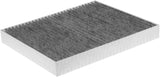 ACDelco Gold CF1184C Professional Cabin Air Filter
$27.99Additional ACDelco cabin air filter part numbers. Confirm fitment by VIN before ordering.
ACDelco Gold CF1184C Professional Cabin Air Filter
$27.99Additional ACDelco cabin air filter part numbers. Confirm fitment by VIN before ordering.
How do you replace a GM cabin air filter?
On nearly all of these vehicles the filter is behind the glovebox, and the job takes about ten minutes with no tools or a single screwdriver. The steps below are the general pattern; the exact release mechanism varies by model.
- Turn the vehicle off and empty the glovebox.
- Open the glovebox and release the damper arm or check cord on the side, if your model has one.
- Squeeze the glovebox sides inward past the stops and rotate it down to expose the HVAC housing.
- On some trucks, there is a separate access panel with tabs or one screw instead of a glovebox drop. Look for a rectangular door about the size of the filter.
- Release the filter door tabs and slide the old element out slowly, keeping it level so debris does not dump into the housing.
- Note the airflow direction arrow on the old filter frame before it is fully out. Photograph it.
- Vacuum the housing. There is almost always more in there than you expect.
- Slide the new element in with the arrow oriented the same way — on most GM applications this is downward.
- Snap the door closed, lift the glovebox back over its stops, and reconnect the damper arm.
- Write the date and mileage on the exposed edge of the frame with a marker.
- Run the blower on high for a minute and confirm the airflow is stronger than it was.
Two notes on the ones that are harder than average. Some models use two half-size elements stacked in one slot rather than a single filter — if you pull one and the housing still looks occupied, there is a second one behind it, and buying only one filter means doing the job twice. And on a few applications the element has to be folded slightly to clear the opening; that is normal, and it is why some filters have a flexible frame.
For the model-by-model detail on access and the variations across the brands, the full GM cabin air filter walkthrough covers what changes between a Silverado, an Equinox and an Enclave. Cadillac owners should start with the Cadillac cabin and engine air filter fitment guide, and EV owners with the maintenance parts that still wear out on a GM EV.
Particulate or carbon: which should you buy?
Buy the standard particulate filter unless odor is a problem you actually have. A particulate element traps dust, pollen, soot and road grit — that is what causes reduced airflow and most of what people notice. Activated carbon adds odor and gas adsorption, at slightly more cost and slightly more restriction.
Carbon earns its money in three situations: long commutes in dense traffic behind diesels, driving through agricultural areas, and living where wildfire smoke is a seasonal fact. If none of those describe you, the plain filter does the job and the money is better spent elsewhere.
What you should not do is buy on price alone from an unknown brand. The failure mode of a bad cabin filter is not that it filters poorly — it is that the frame is dimensionally off, air bypasses around the edge, and you get neither filtration nor the airflow you paid for. Frame accuracy is the whole product.
What to check before you order
- Your exact model year, and whether it falls before or after your vehicle's generation break.
- Whether your vehicle even has one. Not every GM vehicle shipped with a cabin filter element installed.
- Single or dual element. Confirm before ordering one when you need two.
- The number on your old filter frame, if you can get to it before you order. This is the most reliable input available.
- Particulate or carbon, based on where you actually drive.
- Whether the engine air filter is due too. They rarely come due at the same interval, but they are usually accessible on the same afternoon — see the engine air filter guide.
One habit worth adopting: keep a spare on the shelf. These filters are small, they do not expire in any practical sense, and the reason most people drive around on a loaded filter for a year is that replacing it requires remembering to order one. Having the next one already in the garage removes the only real barrier.
Engine air filters
 ACDelco Air Filter, Professional, Replacement
$106.99Engine air filters to replace at the same service. Confirm fitment by VIN before ordering.
ACDelco Air Filter, Professional, Replacement
$106.99Engine air filters to replace at the same service. Confirm fitment by VIN before ordering.
 ACDelco Air Filter Elements, Gold, Dry Type
$100.99Engine air filters to replace at the same service. Confirm fitment by VIN before ordering.
ACDelco Air Filter Elements, Gold, Dry Type
$100.99Engine air filters to replace at the same service. Confirm fitment by VIN before ordering.
 ACDelco A3240C Air Filter 84390002
$43.98Engine air filters to replace at the same service. Confirm fitment by VIN before ordering.
ACDelco A3240C Air Filter 84390002
$43.98Engine air filters to replace at the same service. Confirm fitment by VIN before ordering.
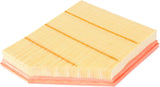 ACDelco A3223C Air Filter 23323508
$42.49Engine air filters to replace at the same service. Confirm fitment by VIN before ordering.
ACDelco A3223C Air Filter 23323508
$42.49Engine air filters to replace at the same service. Confirm fitment by VIN before ordering.


Frequently Asked Questions
What cabin air filter fits my GM vehicle?
For most of the modern lineup, GM 13508023 / ACDelco CF185 — it covers the 2019+ Silverado and Sierra, 2021+ full-size SUVs, Equinox, Terrain, Traverse, Acadia, Blazer, Colorado, Canyon, Camaro, Corvette, Enclave, Envision and most current EVs. Older platforms use different numbers, so check the generation break for your vehicle.
Does my 2019 Silverado use the new filter or the old one?
Depends which 2019 you have. GM sold two generations side by side that year — the carryover Silverado 1500 LD and Sierra 1500 Limited take the previous-generation part, commonly listed as ACDelco CF188 (GM 23281440). If yours has the older dashboard, it is the old-body truck. Confirm by VIN.
Why does one part number cover so many different vehicles?
GM consolidated the cabin filter element across almost the whole current lineup, so cars, trucks, crossovers and EVs share it. It is genuinely unusual — a household with a Silverado, an Equinox and an Enclave buys the same part number three times.
Does every GM vehicle have a cabin air filter?
No, and GM's own catalogue warns about this. Some trims and earlier build dates have the housing and the slot but no element fitted from the factory. Check your owner's manual or look in the housing before assuming you have one to replace.
How often should I change the cabin air filter?
Recent GM schedules call for replacement around every 22,500 miles and again at 45,000, but your owner's manual governs and severe service roughly halves it. Dust, pollen, gravel roads and heavy city driving all count as severe. Treat the mileage as a floor, not a diagnosis.
What are the signs the cabin filter needs replacing?
Reduced airflow on the highest blower setting compared with a year ago, the defroster taking longer to clear, a musty smell in the first minute after startup, a change in blower noise, or visible leaf litter in the housing when you open the door.
Can a dirty cabin filter damage anything?
It can shorten blower motor life. A heavily restricted filter makes the blower work against higher static pressure, and GM blower motor resistors and modules do not tolerate that well. A filter is cheap and a blower assembly is not.
Should I buy a carbon or a particulate filter?
Particulate unless odour is a problem you actually have. Carbon adds odour and gas adsorption at slightly more cost and slightly more restriction — worth it for long commutes in dense traffic, agricultural areas, or where wildfire smoke is seasonal. Otherwise the plain filter does the job.
My vehicle takes two filters. How do I know?
Some models use two half-size elements stacked in one slot. If you pull one out and the housing still looks occupied, there is a second behind it — and ordering only one means doing the job twice. Confirm single or dual before ordering.
Does a cheap cabin filter actually matter?
Yes, but not for the reason people assume. The failure mode is not poor filtration — it is a frame that is dimensionally off, so air bypasses around the edge and you get neither filtration nor the airflow you paid for. Frame accuracy is the whole product.
A Note on Sourcing
Part numbers and application ranges come from GM and ACDelco catalogue listings. The chart is a starting point rather than a final answer, and the page says so — the number printed on the frame of the filter currently in your vehicle is more reliable than any published table, because it reflects what is actually fitted.
GM's own catalogue carries the warning that not every vehicle shipped with a cabin filter element installed, which is why this page tells you to look in the housing before ordering.
The 22,500 and 45,000 mile figures are from recent GM maintenance schedules and vary by model. Your owner's manual governs, and severe-service conditions roughly halve the interval.
Where two part numbers are listed for the same vehicle — CF185 and CF209 overlap on several applications — that reflects a media or construction difference rather than a fitment difference. Confirm which your vehicle takes rather than choosing on price.
The particulate-versus-carbon recommendation and the point about frame accuracy are our own assessment, based on how these filters fail in service. We sell filters, and the recommendation here is the cheaper one for most drivers.
For the rest of the routine list — oil, fluids, engine air, wipers, and the intervals they come due at — there are more GM maintenance guides covering the same vehicles.
Do the whole HVAC service in one order
If you are opening the glovebox anyway, this is the short list worth ordering together:
- Cabin air filter matched to your year and model — two, if your vehicle takes a dual element
- A spare cabin filter for the next interval
- Engine air filter, if it is anywhere near due
- An HVAC evaporator cleaner or deodorizer, if the musty smell is the reason you started this
Everything on that list lives in the GM filters, fluids and maintenance parts collection — filter by your year, model and engine, and confirm the frame number when the part arrives. For the tools, cleaners and shop supplies that go with it, the wider automotive parts and accessories range covers the rest.