
An electric Chevrolet still consumes parts: tires, wiper blades, cabin air filters, brake fluid, coolant, brake hardware, and a 12-volt battery that fails more often than anything on the high-voltage side. What disappears is oil, oil filters, spark plugs, engine air filters and exhaust work. Everything else on a Bolt, Equinox EV or Silverado EV wears on a normal schedule.
That is the whole answer, and it is worth internalizing before you accept the "EVs need no maintenance" line. Fewer parts is not zero parts. If you own one, the useful move is knowing which short list still applies so you can keep maintenance parts for your Chevrolet EV on the shelf instead of discovering the gap in a rainstorm.
Parts and tools you'll need
- Volt, Bolt, Equinox EV and Silverado EV parts — filter by your model and year
- Cabin filters, fluids and maintenance parts that carry over from GM's gas lineup
- Wiper blades in the correct lengths, plus washer fluid rated for your winter
- A torque wrench, a tire gauge, and a trim tool for the glove box hinges
Cabin air filters
 ACDelco CF185 Cabin Air Filter
$28.49ACDelco cabin air filters — confirm your EV model. Confirm fitment by VIN before ordering.
ACDelco CF185 Cabin Air Filter
$28.49ACDelco cabin air filters — confirm your EV model. Confirm fitment by VIN before ordering.
 ACDelco Gold CF1184C Cabin Air Filter
$27.99ACDelco cabin air filters — confirm your EV model. Confirm fitment by VIN before ordering.
ACDelco Gold CF1184C Cabin Air Filter
$27.99ACDelco cabin air filters — confirm your EV model. Confirm fitment by VIN before ordering.
 ACDelco CF197 Cabin Air Filter 13503677
$27.99ACDelco cabin air filters — confirm your EV model. Confirm fitment by VIN before ordering.
ACDelco CF197 Cabin Air Filter 13503677
$27.99ACDelco cabin air filters — confirm your EV model. Confirm fitment by VIN before ordering.
 ACDelco CF184 Cabin Air Filter 13356914
$27.99ACDelco cabin air filters — confirm your EV model. Confirm fitment by VIN before ordering.
ACDelco CF184 Cabin Air Filter 13356914
$27.99ACDelco cabin air filters — confirm your EV model. Confirm fitment by VIN before ordering.


What maintenance do GM EVs actually still need?
Tires, brake fluid, cabin air filter, wiper blades, coolant and the 12-volt battery. Add tire rotation on a fixed mileage and a periodic brake caliper inspection. That is close to the complete list, and most of it is DIY-friendly because nothing on it requires touching a high-voltage component.
| Item | Still applies on a GM EV? | Why it matters | Notes |
|---|---|---|---|
| Engine oil and oil filter | No | No internal combustion engine | Volt owners: your 2011–2019 Volt has a gas engine and still needs oil |
| Engine air filter | No | Nothing draws intake air | Again, Volt is the exception |
| Spark plugs, exhaust, fuel filter | No | Systems do not exist | — |
| Cabin air filter | Yes | HVAC airflow, odor, defrost performance | Behind the glove box on the Bolt EV and EUV |
| Wiper blades | Yes | Rubber ages on a calendar, not on mileage | Replace roughly annually regardless of miles |
| Tires | Yes, and faster | Instant torque plus battery weight | Rotate on schedule; EV-rated tires cost more |
| Brake fluid | Yes | Hygroscopic; degrades on time, not use | Follow the interval in your maintenance schedule |
| Brake pads and rotors | Yes, but far less often | Regen does most of the slowing | Corrosion, not wear, is the usual failure |
| Coolant | Yes, multiple loops | Battery, power electronics and cabin heat | Long interval, but not lifetime |
| 12-volt battery | Yes | Wakes the car and closes the HV contactors | Most common no-start cause on any EV |
| Washer fluid, bulbs, hardware | Yes | Identical to any other GM vehicle | — |
Notice how much of the right-hand column is time-based rather than mileage-based. That is the core difference in EV ownership. A commuter who drives 6,000 miles a year in a Bolt will still be replacing wipers, brake fluid and a cabin filter on the same calendar as a Tahoe owner who drives 20,000.
Do EVs need brake service?
Yes, though for the opposite reason you would expect. Regenerative braking does most of the deceleration, so friction pads on a Bolt or Equinox EV can last well past 100,000 miles. The problem is that lightly used rotors rust, slide pins seize and caliper hardware corrodes in place. EV brake work is usually cleaning and freeing, not replacing.
If you drive with one-pedal mode enabled and rarely touch the brake pedal, the friction surfaces may go weeks without meaningful contact. Surface rust forms, then gets scraped unevenly the next time you brake hard. The symptom is a grinding or scraping noise from a car with 12,000 miles on it and pads that measure nearly new.
The habits that prevent it are simple. Once a week, make a few firm stops from moderate speed using the brake pedal rather than regen, on a dry road with nobody behind you. That scrubs the rotor face clean. In salt-belt winters, rinse the wheel wells when you wash the car.
The parts that actually get replaced are the caliper hardware kits and slide pins. When a slide pin seizes, one pad rides the rotor constantly and the other never touches it, which is how you end up with a rough pedal on a car that has barely used its brakes. Pull the calipers at least every couple of years, clean and re-grease the pins, and replace the abutment clips if they are flaking.
One step to carry over from GM's gas-vehicle guidance when you do that work: GM specifies copper paste on the pad backing plate abutments — the ends of the pad that contact the caliper bracket — whenever pads are removed or replaced, and warns that a power washer aimed directly at the caliper can wash it off. On a vehicle whose pads barely wear but whose hardware corrodes, that treatment matters more than usual. The detail is in our guide to brake hardware kits, shims and slide pins.
Brake fluid is the one brake item that runs on a strict clock. It absorbs moisture out of the air whether you drive or not, and moisture in the lines corrodes the ABS unit from the inside. GM publishes a fluid interval for its EVs the same way it does for gas vehicles — check the maintenance schedule for the number that applies to your model and year, and do not assume a low odometer reading gets you out of it.
Which cabin air filter does a Bolt EV use, and where is it?
Behind the glove box, in a housing you reach by emptying the glove box and releasing it so it swings down past its stops. ACDelco catalogs cabin filters for the Bolt EV and EUV — the CF185 family shows up as the common application — but confirm the exact number against your model year in the catalog before you order.
The Bolt is one of the easier cabin filters in the GM range. There is no cowl panel to remove and no cutting, which is a real complaint on some other manufacturers' EVs. Budget twenty minutes the first time and ten thereafter.
- Empty the glove box completely, including the contents of the small upper tray.
- Open the glove box and locate the damper strut or check cord on one side. Unclip it.
- Squeeze the sides of the glove box inward to clear the stops so the door rotates fully down.
- Locate the rectangular filter cover on the HVAC housing behind it and release the retaining tabs.
- Slide the old filter out. It will flex slightly to clear the opening — that is normal.
- Note the airflow arrow printed on the frame of the old filter before it goes in the trash.
- Slide the new filter in with the arrow pointing the same direction, usually downward.
- Reinstall the cover, refit the glove box stops and the strut, and reload your registration and tire gauge.
If the old filter is grey and full of pine needles, you have found your weak defroster and your musty smell. Airflow through a modern HVAC box drops noticeably before the filter looks dramatically dirty. The full walkthrough for other GM models is in our cabin air filter guide for GM vehicles, and the access method on gas Chevrolets is nearly identical.
Carbon-impregnated versus plain paper is a real choice. Carbon media absorbs odors and helps with exhaust smell in traffic, which is worth the small premium if you commute in a city. Plain particulate media flows slightly better and costs less. Pick on price and smell, not on marketing tiers.
What wiper blades fit a Bolt EV or EUV?
Published fitment for the 2017–2024 Bolt EV and Bolt EUV is a 26-inch blade on both the driver and passenger side, with a 12-inch rear blade on the hatch. That symmetrical front pair is unusual — most vehicles use two different lengths — so double-check by measuring the blade you pull off before buying a pair.
Measure from tip to tip along the rubber, not including the arm. If you get 26 inches on both sides, buy two of the same and keep a spare. If you get something else, trust the tape over any online chart, including this one.
Wiper rubber is a calendar item. UV, ozone and heat cycling harden the edge whether the blades ever sweep or not, and an EV that spends its life parked outdoors ages blades faster than a garage-kept truck. Once a year is a reasonable default; twice a year if you park outside in a hot climate.
The rear blade on the Bolt matters more than owners expect because of the vehicle's shape. Hatchback aerodynamics pull road spray straight onto the rear glass, and the backup camera view degrades with it. If your rear camera image has looked hazy, clean the lens and replace the rear blade before you assume the camera has failed.
Wiper blades
 Chevrolet Bolt EV Windshield Wiper Blades
$39.99Wiper blades for GM EVs and other models. Confirm fitment by VIN before ordering.
Chevrolet Bolt EV Windshield Wiper Blades
$39.99Wiper blades for GM EVs and other models. Confirm fitment by VIN before ordering.
 Chevrolet Volt Windshield Wiper Blades
$39.99Wiper blades for GM EVs and other models. Confirm fitment by VIN before ordering.
Chevrolet Volt Windshield Wiper Blades
$39.99Wiper blades for GM EVs and other models. Confirm fitment by VIN before ordering.
 GMC Jimmy Windshield Wiper Blades
$39.99Wiper blades for GM EVs and other models. Confirm fitment by VIN before ordering.
GMC Jimmy Windshield Wiper Blades
$39.99Wiper blades for GM EVs and other models. Confirm fitment by VIN before ordering.
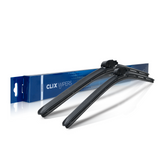 GMC Envoy Windshield Wiper Blades
$39.99Wiper blades for GM EVs and other models. Confirm fitment by VIN before ordering.
GMC Envoy Windshield Wiper Blades
$39.99Wiper blades for GM EVs and other models. Confirm fitment by VIN before ordering.


Do GM EVs use coolant, and does it ever get changed?
Yes. GM EVs run multiple coolant loops — one for the battery pack, one for the power electronics and drive unit, and a circuit that supports cabin heating. The fluid is a long-life formulation with a long service interval, but "long" is not "lifetime." Your maintenance schedule lists the interval and the exact coolant specification for your model.
This is the one system on the list where you should be conservative. Battery thermal management is what protects pack life and enables fast charging, and using the wrong coolant chemistry in that loop is not a mistake you can flush your way out of cheaply. If you are going to buy one thing from the dealer parts counter for an EV, make it coolant.
What you can and should do yourself is check levels. Find the reservoirs during a quiet weekend, learn which one is which, and glance at them when you check tire pressures. A slow loss in a battery loop is a problem you want to catch as a level change, not as a thermal warning message on the way to work.
Do not open, probe or disconnect anything with orange cabling or a high-voltage warning label. The coolant reservoirs and caps are ordinary service points; the pack and inverter connections are not. If a job requires you to move an orange cable, it is not a driveway job.
Thermal management is also part of why charging behaviour changes with temperature and pack condition. If your complaint is slow or failed DC fast charging rather than a maintenance question, start with the Bolt EV and Silverado EV fast charging troubleshooting guide instead.
Why is the 12-volt battery the most common EV failure?
Because it is a conventional battery doing an unconventional job. It powers the computers that wake the vehicle and close the high-voltage contactors. If it drops below the threshold, a car with a 90 percent full traction battery will sit there completely dead, and no amount of charge in the pack helps.
Owners get caught by this more often than gas-car owners because there is no engine cranking to warn you. On a gas vehicle, a weak battery announces itself with slow cranking for weeks before it strands you. An EV gives you nothing, then gives you nothing at all.
Treat the 12-volt as a scheduled replacement item based on age, not on symptoms. Have it load-tested annually once it passes three years old, and replace it on schedule rather than waiting. Keep a jump pack in the vehicle; jump-starting the 12-volt side of an EV is done at the designated jump terminals, which are documented in your owner's manual.
If yours is going flat repeatedly rather than simply aging out, that is a different problem with different causes — our guide to why the 12-volt drains on a GM EV even with a full high-voltage battery covers the diagnosis.
12-volt battery care
 TOPDON BT200 12V Car Battery Tester Digital Automotive
$103.99The 12-volt battery is the most common EV maintenance item.
TOPDON BT200 12V Car Battery Tester Digital Automotive
$103.99The 12-volt battery is the most common EV maintenance item.
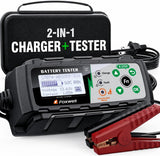 FOXWELL BC521 2-in-1 Battery Charger & Tester, Test Before
$162.35The 12-volt battery is the most common EV maintenance item.
FOXWELL BC521 2-in-1 Battery Charger & Tester, Test Before
$162.35The 12-volt battery is the most common EV maintenance item.
 FOXWELL BT705 Car Battery Tester 24V 12V, Alternator and Load
$159.89The 12-volt battery is the most common EV maintenance item.
FOXWELL BT705 Car Battery Tester 24V 12V, Alternator and Load
$159.89The 12-volt battery is the most common EV maintenance item.
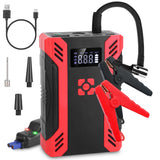 Car Jump Starter with Air Compressor Portable Car Battery
$177.99The 12-volt battery is the most common EV maintenance item.
Car Jump Starter with Air Compressor Portable Car Battery
$177.99The 12-volt battery is the most common EV maintenance item.

Do tires really wear faster on an EV?
Generally yes, for two reasons. EVs are heavier than equivalent gas vehicles because of the battery pack, and electric motors deliver full torque from zero, which loads the contact patch harder from a standing start. Expect shorter tread life and higher replacement cost, since many EV-specific tires use reinforced construction and low-rolling-resistance compounds.
Rotation is where you get most of that money back. Front tires on a front-drive Bolt take the brunt of both acceleration and steering, and skipping rotations turns a four-tire purchase into a two-tire purchase twice as often. Follow the rotation interval in your maintenance schedule and torque the lug nuts to the value in your owner's manual rather than leaning on an impact gun.
Pressure discipline matters more on an EV than on a gas vehicle because underinflation costs you range in a way you can watch in real time. Check pressures cold, monthly, against the placard on your driver's door jamb — not against the number molded into the tire sidewall, which is a maximum, not a recommendation.
When you do replace, think carefully before switching away from the original equipment tire on a range-sensitive vehicle. A conventional all-season in the same size will usually ride better and cost less, and will also cost you measurable range. That trade may be worth it to you. Just make it deliberately.
What about the Volt, and what about the Silverado EV?
The 2011–2019 Chevrolet Volt is a plug-in hybrid, not a pure EV. It has a gasoline engine, engine oil, an oil filter, an engine air filter and spark plugs. Because the engine runs infrequently, oil life is tracked by the oil life monitor rather than by mileage alone. Volt owners should treat their car as a gas vehicle that occasionally skips maintenance triggers, not as an EV.
At the other end of the range, the Silverado EV is a full-size electric truck, and its consumable list skews toward the truck side: heavier tires, larger wipers, a full-size 12-volt system and brake components sized for the weight. The categories are the same as the Bolt's, but nothing is interchangeable.
The Equinox EV sits between them and is the most likely GM EV in a typical driveway going forward. Its service items follow the same pattern — cabin filter, wipers, tires, brake fluid, coolant, 12-volt — with model-specific part numbers and intervals. Look yours up in the maintenance schedule rather than assuming Bolt parts carry over; they do not.
Across all of them, the parts that do carry over from GM's gas lineup are the ordinary ones. Washer fluid, exterior bulbs, wiper blades and many filter media are shared with the wider catalog, which is why the GM filters and maintenance fluids collection is worth browsing even if you never buy a quart of oil again.
One thing that is not maintenance: the Bolt battery recall
Worth separating out, because it comes up whenever Bolt servicing is discussed and it is not a wear item. Certain Bolt EV and EUV vehicles were subject to a high-voltage battery recall, and the remedy was a manufacturer repair rather than anything an owner schedules or performs.
If you own a Bolt and are unsure whether that work was completed on your specific vehicle, check the VIN rather than assuming a previous owner handled it. We cover the background in the Bolt EV and EUV battery recall explainer, and the lookup process in how to check GM recalls by VIN. Nothing in this maintenance guide substitutes for that check.
What does an EV actually save you?
Real money, but less than the headlines claim. You delete oil changes, engine air filters, spark plugs, coolant hoses feeding a hot engine, exhaust repairs, fuel pumps and injectors. On a ten-year ownership horizon that is a meaningful number.
What you add back is tires, an occasional 12-volt battery, brake service that is cheap in parts and annoying in labor, and eventually a set of suspension components that have been carrying extra weight. Net, maintenance is lower. It is not zero, and budgeting as if it were is how people end up surprised.
What to check before you order
- Confirm your exact model and year — Bolt EV, Bolt EUV, Volt, Equinox EV and Silverado EV do not share parts.
- Pull the old cabin filter first and read the airflow arrow and dimensions off the frame.
- Measure your wiper blades tip to tip rather than trusting a chart, and do not forget the rear blade.
- Look up your model's brake fluid, coolant and rotation intervals in the maintenance schedule in your owner's manual.
- Note the age of your 12-volt battery and have it load-tested if it is over three years old.
- Order caliper hardware, slide pin grease and copper paste if it has been more than two years since anyone cleaned the calipers.
- Never open, cut or disconnect anything orange.
Frequently Asked Questions
What maintenance does a Chevrolet EV still need?
Tires, brake fluid, cabin air filter, wiper blades, coolant and the 12-volt battery, plus tire rotation and a periodic brake caliper inspection. What disappears is engine oil, oil filters, engine air filters, spark plugs, fuel system and exhaust work. Most of the remaining list is time-based rather than mileage-based.
Do electric cars need brake service?
Yes, but for the opposite reason to a gas car. Regenerative braking means friction pads can last well past 100,000 miles, so the failure is corrosion rather than wear — rusting rotors, seizing slide pins and flaking abutment clips. EV brake work is usually cleaning and freeing hardware, not replacing pads.
Why do my EV brakes grind with almost no miles on them?
Because one-pedal driving means the friction surfaces may go weeks without real contact, so surface rust forms and gets scraped unevenly the next time you brake hard. Making a few firm stops on the brake pedal weekly, on a dry road with nobody behind you, scrubs the rotor faces clean.
Where is the cabin air filter on a Bolt EV?
Behind the glove box. Empty it, unclip the damper strut, then squeeze the sides inward to clear the stops so the door swings fully down, exposing the filter cover on the HVAC housing. No cowl panel and no cutting — about twenty minutes the first time. Note the airflow arrow on the old filter before discarding it.
What size wiper blades does a Bolt EV take?
Published fitment for the 2017–2024 Bolt EV and EUV is 26 inches on both front sides, with a 12-inch rear blade. That symmetrical front pair is unusual, so measure tip to tip along the rubber before buying. Don't overlook the rear blade — a worn one is a common reason the backup camera image looks hazy.
Do GM EVs need coolant changes?
Yes. They run multiple loops for the battery pack, power electronics and cabin heat, with a long-life fluid on a long interval — but long is not lifetime. Use the exact specification in your maintenance schedule; wrong chemistry in a battery thermal loop is not something you flush your way out of cheaply.
Why did my EV go dead with a full battery?
Almost certainly the 12-volt battery. It powers the computers that wake the vehicle and close the high-voltage contactors, so if it drops below threshold the car is dead regardless of pack charge. Unlike a gas car there is no slow cranking to warn you — replace it on age, and have it load-tested annually past three years.
Do tires wear faster on an EV?
Generally yes. The pack makes the vehicle heavier and electric motors deliver full torque from zero, loading the contact patch hard from a standstill. Rotation on schedule is where you recover most of that cost. Check pressures cold and monthly against the door jamb placard, not the tire sidewall maximum.
Does a Chevrolet Volt need oil changes?
Yes. The 2011–2019 Volt is a plug-in hybrid with a gasoline engine, oil filter, engine air filter and spark plugs. Because the engine runs infrequently, oil life is tracked by the oil life monitor rather than mileage alone. Treat it as a gas vehicle, not an EV.
Do Bolt parts fit an Equinox EV or Silverado EV?
No. The service categories are the same across GM's electric lineup, but the part numbers and intervals are model-specific. The Silverado EV in particular skews to truck-sized consumables. Look yours up in the maintenance schedule rather than assuming anything carries over.
A Note on Sourcing
Service intervals are deliberately not given as numbers on this page. Brake fluid, coolant and tire rotation intervals differ by model and model year across GM's electric lineup, and the maintenance schedule in your own owner's manual is the authority. A generic figure here would be worse than no figure.
Cabin filter and wiper fitment come from published catalogue data for the 2017–2024 Bolt EV and EUV. This page tells you to measure and to read the old part rather than to trust the chart, including ours, because fitment data is revised.
The copper paste guidance carried over from GM's gas-vehicle bulletin is documented in our brake hardware guide, which cites the bulletin directly.
The maintenance-versus-savings assessment is our own judgement. We sell maintenance parts, and the honest position stated here is that EV ownership deletes a real list of consumables — just not all of them.
More model-specific service walkthroughs are collected in our GM maintenance guides.
Everything in this guide, in one place
Filters, wipers, brake hardware and fluids for Chevrolet's electric lineup are grouped together so you can build one order instead of chasing four part numbers across four sites. Filter by your model and year, and check the fitment note on each item before you check out.