
For a Bolt, Equinox EV or Blazer EV you need three things at home: a 240-volt circuit sized for the charger you pick, a Level 2 charger rated at or above your car's onboard limit, and a licensed electrician to connect it. All three of those cars accept 11.5 kW of AC charging, which means a 48-amp charger on a 60-amp circuit is the sensible ceiling. Anything faster is wasted money.
That is the short version. The longer version matters because the wrong circuit is expensive to redo, and because a 19.2 kW charger means nothing if your car's onboard charge module tops out at 11.5. Before you start shopping charging equipment for your Bolt, Equinox EV or Blazer EV, work out what your specific vehicle can actually take.
Parts and tools you'll need
- Charging cords, adapters and accessories for your Chevrolet EV — start with the vehicle, not the charger
- GM electrical parts and connectors for the odds and ends around a garage install
- A licensed electrician for the circuit itself. This is not a DIY item unless you are a qualified electrician — a 60- or 100-amp branch circuit is a house fire when it is done wrong
- The right adapter if you plan to use non-GM equipment: GM sells separate NACS DC, NACS Level 2, CCS1 DC and J1772 AC adapters, and they are not interchangeable
12-volt battery tools
 TOPDON BT200 12V Car Battery Tester Digital Automotive
$103.99Test and maintain the 12-volt battery that wakes the charging system.
TOPDON BT200 12V Car Battery Tester Digital Automotive
$103.99Test and maintain the 12-volt battery that wakes the charging system.
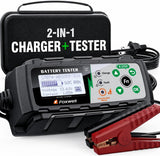 FOXWELL BC521 2-in-1 Battery Charger & Tester, Test Before
$162.35Test and maintain the 12-volt battery that wakes the charging system.
FOXWELL BC521 2-in-1 Battery Charger & Tester, Test Before
$162.35Test and maintain the 12-volt battery that wakes the charging system.
 FOXWELL BT705 Car Battery Tester 24V 12V, Alternator and Load
$159.89Test and maintain the 12-volt battery that wakes the charging system.
FOXWELL BT705 Car Battery Tester 24V 12V, Alternator and Load
$159.89Test and maintain the 12-volt battery that wakes the charging system.
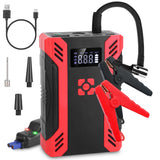 Car Jump Starter with Air Compressor Portable Car Battery
$177.99Test and maintain the 12-volt battery that wakes the charging system.
Car Jump Starter with Air Compressor Portable Car Battery
$177.99Test and maintain the 12-volt battery that wakes the charging system.

How fast can your GM EV actually charge at home?
Home charging speed is capped by the onboard charge module in the car, not by the wall unit. Every current Bolt, Equinox EV and Blazer EV accepts 11.5 kW on AC. Only the Silverado EV goes higher, with 19.2 kW standard on Maximum Range trims and optional on Extended Range. Buy for the car you have.
| Vehicle | Onboard AC (Level 2) rate | Practical charger size | Max DC fast charge |
|---|---|---|---|
| Bolt EV / Bolt EUV (2022 and newer) | 11.5 kW | 48 A | About 55 kW |
| Equinox EV | 11.5 kW standard | 48 A | Up to 150 kW |
| Blazer EV | 11.5 kW | 48 A | Up to 195 kW |
| Silverado EV 2WT | 11.5 kW standard | 48 A | Up to 220 kW (400 V pack) |
| Silverado EV 5WT | 11.5 kW standard, 19.2 kW optional | 48 A or 80 A | Up to 300 kW (800 V pack) |
| Silverado EV 8WT | 19.2 kW standard | 80 A | Up to 350 kW (800 V pack) |
Note the DC numbers are there for context only. Nothing you install in a residential garage does DC fast charging — that is public-infrastructure equipment. Home charging is AC, and the onboard module is the bottleneck.
Older Bolts matter here. The 2017–2021 cars used a lower-rated onboard charger than the 2022-and-newer cars. If you have an early Bolt, confirm the rate in your owner's manual before you size a circuit around 48 amps, because you may not be able to use it.
Do you actually need a Level 2 charger?
Not always. Chevrolet rates Level 1 charging on a standard 120-volt outlet at up to about 1.4 kW, which adds roughly 1 to 4 miles of range per hour. If you drive 30 miles a day and the car sits overnight for 12 hours, Level 1 keeps up. If you drive 60-plus, it does not.
Do the arithmetic on your own commute rather than following the default advice. Twelve hours of Level 1 at the top of that range is around 45 miles put back. Twelve hours at the bottom of the range — cold garage, older cord, power diverted to battery conditioning — is closer to 15 miles.
Level 2 covers the other cases. Chevrolet's published range for Level 2 is 3.8 to 19.2 kW, adding roughly 7 to 40 miles of range per hour depending on the equipment and the vehicle. For an 11.5 kW car you are at the upper-middle of that band: Chevrolet quotes the Equinox EV at up to 34 to 36 miles of range per hour on its standard 11.5 kW AC charging.
The honest recommendation: if you have a garage with a panel nearby and you drive a normal amount, install Level 2 once and stop thinking about it. If you are renting, or the panel is on the far side of the house, run Level 1 for a few months and see whether it actually bothers you. Plenty of Bolt owners never install anything.
What size circuit does a home charger need?
Continuous loads are sized at 80 percent of the breaker rating, so a 48-amp charger needs a 60-amp circuit and an 80-amp charger needs a 100-amp circuit. GM's own PowerShift installation manual lists exactly this mapping for its selectable output settings. Undersizing the breaker means nuisance trips at best.
| Charger output | Power at 240 V | Breaker required | Typical use |
|---|---|---|---|
| 16 A | 3.8 kW | 20 A | Constrained panels, trickle-plus |
| 32 A | 7.7 kW | 40 A | GM Dual Level Charger on 240 V |
| 40 A | 9.6 kW | 50 A | Common NEMA 14-50 outlet install |
| 48 A | 11.5 kW | 60 A | Full speed for Bolt, Equinox EV, Blazer EV |
| 64 A | 15.4 kW | 80 A | Intermediate setting, rarely used |
| 80 A | 19.2 kW | 100 A | Silverado EV with the 19.2 kW module |
Two things fall out of that table. First, a 50-amp circuit — the one most people already have or can get cheaply — caps you at 40 amps and 9.6 kW. That is about 83 percent of what an 11.5 kW car can take, and it is a perfectly reasonable place to land if pulling a 60-amp feed is expensive.
Second, the 100-amp circuit for 19.2 kW is a serious piece of electrical work. GM's PowerShift manual specifies 2 AWG line conductors at the top settings. Many houses do not have the spare service capacity for it without a panel upgrade or a load-management device.
Safety note: a load calculation on your existing service is not optional paperwork. If your panel is already near capacity with an electric range, dryer, air conditioning and a water heater, adding 60 or 100 amps of continuous EV load without checking is how breakers, feeders and meter bases get overloaded. Have an electrician run the numbers and pull a permit.
Should the charger be plugged in or hardwired?
Hardwired is better above 40 amps and is sometimes the only option. GM's PowerShift charger, for example, is certified for hardwired connection only — there is no plug version. Plug-in units on a NEMA 14-50 outlet are easier to take with you if you move, but the outlet becomes the weak point.
The failure mode with plug-in installs is heat at the receptacle. A 240-volt outlet delivering 40 amps for eight hours a night is a much harder duty cycle than the RV plug it was designed around, and cheap receptacles cook their contacts. If you go plug-in, use an industrial-grade receptacle and check it occasionally for discoloration around the blades.
One GM-specific detail worth passing to your electrician: the PowerShift installation manual states not to install it on a GFCI breaker. EV charging equipment has its own ground-fault protection built in, and stacking a GFCI breaker on top causes false trips. Your electrician may need to hear this twice.
Which GM charger should you buy?
Chevrolet offers four broad options: the portable Dual Level Charger at 7.7 kW, the GM PowerUp 2 wall unit at 11.5 kW, the PowerUp+ at 19.2 kW hardwired only, and the bidirectional GM Energy PowerShift charger. For a Bolt, Equinox EV or Blazer EV, the 11.5 kW wall unit is the match.
| Equipment | Level | Rated output | Install | Best fit |
|---|---|---|---|---|
| Dual Level Charge Cord | 1 and 2 | 120 V and 240 V | Plug in | Travel, second homes, occasional top-ups |
| Dual Level Charger | 1 and 2 | 7.7 kW | Plug in | Renters, 40 A circuits, portability |
| GM PowerUp 2 | 2 | 11.5 kW | Wall mount | The default for Bolt, Equinox EV, Blazer EV |
| GM PowerUp+ | 2 | 19.2 kW | Hardwired only | Silverado EV with the 19.2 kW module |
| GM Energy PowerShift | 2, bidirectional | Selectable 16–80 A | Hardwired only | Vehicle-to-home setups |
The PowerShift is the interesting one because its output is set by DIP switches inside the unit at 16, 32, 40, 48, 64 or 80 amps, and it ships with a 25-foot charging cable. That flexibility means one unit can be installed conservatively now on a 60-amp circuit and turned up later if you upgrade the service and the vehicle.
Cable length is the spec people forget. Measure from where the unit will hang to where the charge port sits when the vehicle is parked the way you actually park it — nose in, backed in, or with a second car in the way. A 16-foot cable that has to reach 19 feet is a daily annoyance you will not stop noticing.
Do you need a NACS adapter for home charging?
Only if you are plugging into Tesla-style equipment. GM sells four different adapters and they do different jobs. The NACS DC adapter is for public Superchargers and NACS DC fast charging only — GM states plainly that it is not for Level 2 units such as a Tesla Wall Connector. For that you need the separate NACS Level 2 adapter.
Sort out which direction you are adapting. GM EVs built with a CCS1 inlet need a NACS adapter to use NACS equipment. Newer GM EVs built with a native NACS inlet need the opposite: a CCS1 DC adapter for public CCS stations, a J1772 AC adapter for the enormous installed base of J1772 Level 2 chargers, and a PowerShift AC charging adapter to use GM's own bidirectional unit.
Check your car's inlet before ordering anything. Get this backwards and you have a well-made adapter that fits nothing you own. Our guide to which NACS adapter fits which GM EV works through the four types in detail, and if you are troubleshooting slow or failed sessions out on the road rather than at home, the DC fast charging failures guide covers the usual causes.
What about vehicle-to-home and Energy Transfer?
Bidirectional power requires specific hardware on both ends: a vehicle that supports discharging, and equipment that supports it, such as the GM Energy PowerShift charger plus an inverter and dark-start battery for whole-home backup. It is a separate project from ordinary charging, with its own permitting.
Do not assume your vehicle has the capability because a sibling model does. GM's published specification guide for the Silverado EV, for instance, covers charging rates in detail without listing bidirectional capability across the trims. Confirm against your own vehicle's documentation before you spend money on the home side of the system.
Where it makes sense: long outages, well pumps, medical equipment, or a home office you cannot afford to lose. Where it does not: a garage in a suburb that loses power twice a year for an hour. The truck-focused version of this decision is covered in our walkthrough of home charging and Energy Transfer on the Sierra EV.
EV accessories
 Chevrolet Bolt EV Windshield Wiper Blades
$39.99Accessories for GM EVs. Confirm fitment by VIN before ordering.
Chevrolet Bolt EV Windshield Wiper Blades
$39.99Accessories for GM EVs. Confirm fitment by VIN before ordering.
 2017-2023 Chevrolet Bolt EV Roof Rack Cross Bars Black
$198.99Accessories for GM EVs. Confirm fitment by VIN before ordering.
2017-2023 Chevrolet Bolt EV Roof Rack Cross Bars Black
$198.99Accessories for GM EVs. Confirm fitment by VIN before ordering.
 2017-2023 Chevrolet Bolt EV Roof Rack Cross Bars Silver
$198.99Accessories for GM EVs. Confirm fitment by VIN before ordering.
2017-2023 Chevrolet Bolt EV Roof Rack Cross Bars Silver
$198.99Accessories for GM EVs. Confirm fitment by VIN before ordering.
 2017-2023 Chevrolet Bolt EV Universal Floor Mats & Cargo Liner
$98.99Accessories for GM EVs. Confirm fitment by VIN before ordering.
2017-2023 Chevrolet Bolt EV Universal Floor Mats & Cargo Liner
$98.99Accessories for GM EVs. Confirm fitment by VIN before ordering.


What does an installer actually have to do?
A typical Level 2 install is a permitted branch circuit from your panel to the garage wall, sized for the charger, plus the mount and the connection itself. Expect a load calculation first, an inspection after, and possibly a utility notification. A clean install takes a few hours; a hard one involves a panel upgrade.
- Confirm your vehicle's onboard AC rate — 11.5 kW for Bolt, Equinox EV and Blazer EV.
- Pick the charger output that matches it, usually 48 amps.
- Have the electrician run a service load calculation on the existing panel.
- Decide hardwired or plug-in, based on the unit and on whether you might move it.
- Pick the mounting location by measuring cable reach to the actual parking position.
- Pull the permit and run the circuit, using the breaker type the charger manufacturer specifies.
- Mount and connect the unit, then set the output configuration if it is adjustable.
- Pass inspection, then commission the unit and pair it with the vehicle's app.
- Set a scheduled charge window if your utility has time-of-use rates.
What people get wrong
The most common mistake is buying a 19.2 kW charger for an 11.5 kW car. The car will not charge any faster. You have paid for a bigger unit and a much bigger circuit to deliver exactly the same overnight result.
Second is extension cords. Do not use one with a Level 1 or Level 2 cord set. If you need to reach farther, the answer is a longer charging cable or a closer outlet, not a cord that was never rated for eight hours of continuous draw.
Third is ignoring the panel. People install the charger, then discover that running the dryer and the air conditioner at the same time trips the main. A load calculation up front, or a load-management device, prevents that entirely.
Fourth is skipping the permit. An unpermitted 60-amp circuit is a problem when you sell the house, and it can be a problem with your insurer if anything ever goes wrong in that garage.
What to check before you order
- Your vehicle's onboard AC rate. 11.5 kW for Bolt (2022 and newer), Equinox EV and Blazer EV. Verify older Bolts in the manual.
- Your panel's spare capacity, from an electrician, not from counting empty breaker slots.
- Circuit size — 60 amps for a 48-amp charger, 50 amps if you are settling for 40.
- Hardwired or plug-in, and whether the unit you want even offers a plug version.
- Cable length measured to your real parking position.
- Inlet type on your car — CCS1 or native NACS — before buying any adapter.
- Breaker type. Some units, including the PowerShift, specifically call for a non-GFCI breaker.
Diagnostic tools
 FOXWELL NT726 Bidirectional OBD2 Scanner
$368.99Scanners for EV and body module codes.
FOXWELL NT726 Bidirectional OBD2 Scanner
$368.99Scanners for EV and body module codes.
 FOXWELL NT624 Elite OBD2 Scanner, All-System Scan Tool
$332.09Scanners for EV and body module codes.
FOXWELL NT624 Elite OBD2 Scanner, All-System Scan Tool
$332.09Scanners for EV and body module codes.
 Launch CRE 2.0 for Buick/Chevrolet/Cadillac All System
$159.00Scanners for EV and body module codes.
Launch CRE 2.0 for Buick/Chevrolet/Cadillac All System
$159.00Scanners for EV and body module codes.
 FOXWELL NT614 Elite OBD2 Scanner
$233.69Scanners for EV and body module codes.
FOXWELL NT614 Elite OBD2 Scanner
$233.69Scanners for EV and body module codes.


Frequently Asked Questions
How fast can a Bolt, Equinox EV or Blazer EV charge at home?
All three accept 11.5 kW on AC, which means a 48-amp charger on a 60-amp circuit is the practical ceiling. Home charging speed is capped by the onboard charge module in the car, not by the wall unit — a bigger charger will not make an 11.5 kW car charge faster.
What size breaker does an EV charger need?
Continuous loads are sized at 80 percent of the breaker rating, so a 48-amp charger needs a 60-amp circuit and an 80-amp charger needs a 100-amp circuit. A 50-amp circuit caps you at 40 amps and 9.6 kW — about 83 percent of what an 11.5 kW car can take, and a reasonable place to land if a 60-amp feed is expensive.
Do I actually need a Level 2 charger?
Not always. Level 1 on a standard 120-volt outlet adds roughly 1 to 4 miles of range per hour, so twelve hours overnight puts back somewhere between 15 and 45 miles depending on conditions. If you drive 30 miles a day it keeps up; past 60 it does not. Plenty of Bolt owners never install anything.
Should the charger be hardwired or plug-in?
Hardwired above 40 amps, and sometimes it is the only option — GM's PowerShift is certified for hardwired connection only. The failure mode with plug-in installs is heat at the receptacle: 40 amps for eight hours a night is a far harder duty cycle than the RV plug was designed around, and cheap receptacles cook their contacts.
Can I install an EV charger on a GFCI breaker?
Not for some units. GM's PowerShift installation manual specifically says not to. EV charging equipment has its own ground-fault protection built in, and stacking a GFCI breaker on top causes false trips. Your electrician may need to hear this twice.
Do I need a NACS adapter to charge at home?
Only if you are plugging into Tesla-style equipment, and then the type matters. GM's NACS DC adapter is for Superchargers and DC fast charging only — GM states it is not for Level 2 units like a Tesla Wall Connector, which needs the separate NACS Level 2 adapter. Check your car's inlet before ordering anything.
Will a 19.2 kW charger charge my Equinox EV faster?
No. The car accepts 11.5 kW, so the extra capacity does nothing except cost you a bigger unit and a much bigger circuit for exactly the same overnight result. Only the Silverado EV in certain trims can use 19.2 kW.
Can I use an extension cord with a charging cable?
No. Neither Level 1 nor Level 2 cord sets should run through an extension cord — it was never rated for eight hours of continuous draw. If you need more reach, the answer is a longer charging cable or a closer outlet.
Does my early Bolt charge at 11.5 kW?
Check the manual. The 2017–2021 cars used a lower-rated onboard charger than the 2022-and-newer ones, so sizing a circuit around 48 amps may buy you capability the car cannot use.
Do I need a permit to install a home charger?
Yes, and skipping it causes problems later. An unpermitted 60-amp circuit is an issue when you sell the house and potentially with your insurer if anything goes wrong in that garage. A load calculation on the existing panel should come first either way.
A Note on Sourcing
Onboard AC charge rates, DC peak rates and charger specifications come from Chevrolet and GM published product information, including GM's PowerShift installation manual for the breaker mapping, the 2 AWG conductor requirement at top settings, and the instruction not to install on a GFCI breaker.
The 80 percent continuous-load rule is standard electrical practice, not a GM figure. Your electrician's load calculation on your actual service is what governs, and this page is not a substitute for one.
Bidirectional capability varies by vehicle and trim, and GM's published Silverado EV specification guide covers charging rates without listing it across the range. Confirm against your own vehicle's documentation rather than assuming a sibling model's capability carries over.
The recommendation to buy for the car rather than the biggest charger is our own. We sell charging accessories, and the position stated here is that a 19.2 kW unit on an 11.5 kW car is money spent for no additional result.
For more on living with a GM vehicle day to day, browse the rest of our GM owner guides.
Everything in this guide, in one place
Charging cords, adapters and EV accessories for the Bolt, Volt, Equinox EV, Blazer EV and Silverado EV are collected here: Chevrolet EV parts and charging accessories. Filter to your model and model year first, confirm your inlet type, and match the equipment to your car's onboard charge rate rather than to the largest number on the box. If you also need connectors, terminals or wiring hardware for the install, they are in the GM electrical parts collection.