
On a 2019-and-newer Silverado 1500, a 33-inch tire is often not a lift question at all — the 275/60R20 that ships on many T1XX trims already measures about 33.0 inches tall. What causes rubbing is width and wheel offset, not height. On older generations the factory sizes are considerably smaller, so the same 33 is a much bigger jump.
The rest of this guide gives you the factory sizes by generation with their actual diameters, explains exactly what rubs and when, and tells you how to test-fit before you spend money. If you already know your target size, start with wheels and tires for your Silverado.
Parts and tools you'll need
- Wheels, tires and fitment hardware for your Silverado 1500 — filter by your year and wheel diameter
- Silverado and Colorado parts and accessories for leveling kits, fender hardware and related pieces
- A tape measure, a floor jack and rated jack stands, and a torque wrench for the lug nuts
- Your door jamb tire and loading placard — it lists the factory size, pressures and load information for your exact truck
Wheels and fitment parts
 KMC KM545 Trek 17x9 Satin Black Wheel 54579077418
$351.99Wheels and hardware for a bigger-tire setup — check offset before you order. Confirm fitment by VIN before ordering.
KMC KM545 Trek 17x9 Satin Black Wheel 54579077418
$351.99Wheels and hardware for a bigger-tire setup — check offset before you order. Confirm fitment by VIN before ordering.
 KMC KM549 GRS 18x8.5 Silver Machined Wheel 54988580500
$514.99Wheels and hardware for a bigger-tire setup — check offset before you order. Confirm fitment by VIN before ordering.
KMC KM549 GRS 18x8.5 Silver Machined Wheel 54988580500
$514.99Wheels and hardware for a bigger-tire setup — check offset before you order. Confirm fitment by VIN before ordering.
 KMC KM552 IMS 18x9 Matte Black Simulated Beadlock Wheel S1710
$514.99Wheels and hardware for a bigger-tire setup — check offset before you order. Confirm fitment by VIN before ordering.
KMC KM552 IMS 18x9 Matte Black Simulated Beadlock Wheel S1710
$514.99Wheels and hardware for a bigger-tire setup — check offset before you order. Confirm fitment by VIN before ordering.
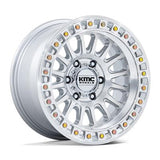 KMC KM552 IMS 17x8.5 Gloss Silver Machined Simulated Beadlock
$544.99Wheels and hardware for a bigger-tire setup — check offset before you order. Confirm fitment by VIN before ordering.
KMC KM552 IMS 17x8.5 Gloss Silver Machined Simulated Beadlock
$544.99Wheels and hardware for a bigger-tire setup — check offset before you order. Confirm fitment by VIN before ordering.


What is the biggest tire that fits a stock Silverado?
It depends far more on your generation, trim and wheel offset than on any single number. Owners of 2019-and-newer trucks routinely run 33-inch tires at stock height with the factory wheels, sometimes with minor trimming. On 2014–2018 and older trucks, a 33 usually needs a leveling kit, trimming, or both. There is no universal answer.
The reason the internet is full of contradictory answers is that "stock Silverado" describes about a dozen different trucks. A 2WD Work Truck on 17-inch steel wheels, a Z71 with 18s, and a High Country on 22s have different suspension travel, different wheel offsets and different plastic in the wheel well. All three are "stock."
So treat any specific claim — including one from a forum with 400 replies — as a data point about one configuration, not a rule. What follows gives you the tools to work out the answer for your truck instead.
The most useful anchor is the factory ZR2. Chevrolet fits it with 33-inch Goodyear Wrangler Territory MT tires on ZR2-specific 18-inch wheels, and it also gets a 2-inch factory suspension lift, as do the Custom Trail Boss and LT Trail Boss. Chevrolet chose to give the 33-inch off-road truck extra height. That tells you something about clearance margins at full articulation, even if a 33 physically fits a stock truck on pavement.
What tires did your Silverado come with?
Start from the factory size, because every fitment decision is relative to it. The table below lists documented OEM sizes for each Silverado 1500 generation, with the overall diameter calculated from the size code. Your specific truck will have used one of these, and the placard in your door jamb confirms which.
| Generation | Years | OEM tire sizes | Calculated diameter | Typical factory wheel and offset |
|---|---|---|---|---|
| GMT800 | 1999–2006 | 235/75R16 255/70R16 245/70R17 265/70R17 |
29.9 in 30.1 in 30.5 in 31.6 in |
7Jx16 or 7.5Jx17, roughly ET20–ET31 |
| GMT900 | 2007–2013 | 265/70R17 265/65R18 265/60R19 275/55R20 |
31.6 in 31.6 in 31.5 in 31.9 in |
7.5Jx17 to 8.5Jx20, around ET31 |
| K2XX | 2014–2018 | 255/70R17 265/70R17 265/65R18 275/55R20 285/45R22 |
31.1 in 31.6 in 31.6 in 31.9 in 32.1 in |
8Jx17 ET24 to 9Jx22 ET24 |
| T1XX | 2019–present | 255/70R17 265/70R17 265/65R18 275/60R20 |
31.1 in 31.6 in 31.6 in 33.0 in |
8Jx17 ET24, 8.5Jx18 ET26, 9Jx20 ET28 |
Two things jump out. First, GMT900 and K2XX trucks all sit in a narrow 31.1 to 32.1-inch band regardless of wheel diameter — GM held overall diameter nearly constant and just changed sidewall height as the wheels grew. Second, the T1XX broke that pattern: 275/60R20 comes out at 33.0 inches, which is a full inch taller than anything the previous two generations offered.
That single fact resolves most of the argument. If you own a 2019-or-newer Silverado with the 20-inch package, you already have 33s. Asking whether 33s fit is asking whether the tires currently on your truck fit.
Note that factory offsets are all positive and fairly high — roughly ET24 to ET31 depending on generation. That number matters more than most people realize, and it is where aftermarket wheels change the equation entirely.
Why width matters more than height
Height moves the tire up and forward into the front of the wheel well. Width moves it sideways into the fender liner, the frame and the upper control arm. On a pickup with a lot of suspension travel and turning lock, the sideways direction runs out of room first. That is why a 275/70R18 often fits when a 285/65R18 rubs, despite being taller.
Run the numbers on a typical upsize. Going from 265/65R18 at 31.6 inches to 275/70R18 at 33.2 inches adds 1.6 inches of diameter — which is only 0.8 inches of clearance loss at the top, since the axle is in the middle. But that same change adds 10 mm of section width, and it all goes outward and inward from the wheel centerline.
Section width is also nominal, not measured. A 275 tire on a 9-inch wheel measures wider than the same size on an 8-inch wheel, and aggressive mud-terrain shoulder lugs stick out beyond the stated section width. Two different 275/70R18 tires can be meaningfully different in real width.
The practical version: when you are on the edge, choose the taller-narrower option over the shorter-wider one. It rubs less and it looks better under a truck fender anyway.
What actually rubs, and when?
Almost never when driving straight. Rubbing shows up at full steering lock, at full suspension compression, or both at once — pulling into a steep driveway at an angle, backing into a parking spot, or articulating off-road. The usual contact points are the front plastic air dam, the rear of the front fender liner, the lower control arm and the frame at full lock.
The front air dam is the easiest one to deal with. It is a plastic spoiler under the front bumper, it is there for aerodynamics, and it is commonly trimmed or removed by owners running larger tires. Removing it costs you a small amount of fuel economy and nothing else structural.
The fender liner is the next contact point. Many owners running larger tires trim the leading and trailing edges of the liner, or relocate the plastic pinch weld area. This is straightforward work but it is permanent, so measure carefully before you cut.
The frame contact at full lock is the one you cannot trim away. If the tire hits frame or control arm, you are either reducing steering lock with stops, changing offset, or accepting the rub. This is the point where a leveling kit alone will not save you, because a leveling kit changes ride height, not the width of your truck.
How much does wheel offset change the answer?
Enormously. Offset is the distance from the wheel's mounting face to its centerline. Factory Silverado offsets run roughly ET24 to ET31 — well positive, tucking the tire inboard. A popular aftermarket wheel at ET-12 pushes the same tire outward by roughly 1.5 inches per side compared to a factory ET25.
That is the hidden variable behind contradictory forum answers. Someone says 33s fit fine on their stock truck; someone else says 33s rub badly. Both are telling the truth, and one of them is running aggressive negative-offset wheels that shove the tire into the fender.
Negative offset also has costs beyond rubbing. Moving the tire outboard increases scrub radius, which changes steering feel, increases the load on wheel bearings and can make the truck tramline more on grooved pavement. It is a styling choice with mechanical consequences.
If your goal is the biggest tire that fits with the least trouble, stay near the factory offset. If your goal is a specific aggressive stance, expect to trim, and accept that the same tire size will fit worse than it would on stock wheels.
What are the realistic upsize targets?
The table below lists common upsize sizes with their calculated diameters, so you can compare against the factory diameter from the first table. What each one requires depends on your generation, offset and trim, so treat the right-hand column as the question you need to answer, not as a promise.
| Target size | Calculated diameter | Nominal class | What to verify before ordering |
|---|---|---|---|
| 275/65R18 | 32.1 in | ~32" | Modest step from 265/65R18; check offset and load index |
| 275/70R17 | 32.2 in | ~32" | Popular 17-inch step-up; verify liner clearance at lock |
| 285/70R17 | 32.7 in | ~33" | Extra width is the constraint, not height |
| 285/65R18 | 32.6 in | ~33" | Wider than factory; check control arm and frame at full lock |
| 275/70R18 | 33.2 in | 33" | Taller-narrower option; usually the easier 33 |
| 305/55R20 | 33.2 in | 33" | Substantially wider; offset becomes critical |
| 285/60R20 | 33.5 in | 33"+ | Tall and wide; leveling and trimming commonly needed |
| 295/70R17 | 33.3 in | 33"+ | Wide; verify against your specific configuration |
| 305/70R17 | 33.8 in | ~34" | Beyond stock-height territory on most configurations |
Read the diameters carefully. Tire marketing rounds aggressively — a "33-inch" tire in one brand's catalog can be 32.6 inches and in another's 33.3 inches. The metric size code is the honest measurement, and the math on it is the same for every brand.
Note that several of these "33s" are actually shorter than the 275/60R20 that comes on the truck. That is worth knowing before you pay for a tire that makes your truck slightly smaller.
Do you need a leveling kit for 33s?
On a 2019-and-newer truck with a 20-inch factory setup, not necessarily — you already have the diameter. On earlier generations, or when moving to a wider tire, a leveling kit is the usual first step because it adds front ride height and restores clearance in the exact area where the tire hits.
What a leveling kit actually does is raise the front to match or approach the rear, which corrects the factory rake. It does not add suspension travel; it repositions it. That means you gain static clearance but you can still contact at full compression, which is why leveling and trimming often go together rather than either one alone.
Leveling also changes front suspension geometry, so budget for an alignment afterward. Our comparison of leveling kits, lift kits and strut spacers for the Silverado and Sierra covers which type suits which goal, and the Colorado and Canyon leveling and lift fitment guide walks through the install process on GM's mid-size trucks.
The part of lifting that is a safety item, not a preference
Raising the front changes the angle at which the upper control arm ball joint operates, and that is not a cosmetic detail. In September 2021 a lift kit manufacturer filed NHTSA safety recall 21V-718 covering 2019–2021 Silverado 1500 and Sierra 1500 trucks upfitted with a particular kit, after accelerated wear on the factory upper control arm ball joint was found capable of causing the front wheel to separate while the vehicle is in motion.
The recall population was narrow and explicitly excluded retail aftermarket lift kits, so this does not mean every lifted truck is recalled. What generalises is the mechanism the report describes: altered geometry runs the factory ball joint through a range of motion that exacerbates wear.
Practical takeaway. If you lift a truck to fit larger tires, upper control arms designed for the new ride height are part of the job rather than an upgrade. And if a lifted truck develops noise or a clicking feel in the steering, abnormal front tire wear, or abnormal steering, inspect the upper ball joints before driving it further. The detail is in our guide to GM front-end control arms, ball joints and tie rods.
Leveling kits
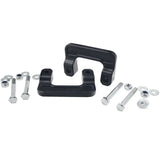 2" Front End Leveling Lift Kit Compatible Chevrolet Avalanche
$39.99Leveling kits that make room for a larger tire. Confirm fitment by VIN before ordering.
2" Front End Leveling Lift Kit Compatible Chevrolet Avalanche
$39.99Leveling kits that make room for a larger tire. Confirm fitment by VIN before ordering.
 Bilstein Front Suspension Leveling Kit for 2014-2019 Chevy
$1,121.99Leveling kits that make room for a larger tire. Confirm fitment by VIN before ordering.
Bilstein Front Suspension Leveling Kit for 2014-2019 Chevy
$1,121.99Leveling kits that make room for a larger tire. Confirm fitment by VIN before ordering.
 ReadyLift 3 in. Front Leveling Kit 663050 for 2001-2012
$304.99Leveling kits that make room for a larger tire. Confirm fitment by VIN before ordering.
ReadyLift 3 in. Front Leveling Kit 663050 for 2001-2012
$304.99Leveling kits that make room for a larger tire. Confirm fitment by VIN before ordering.
 ACDelco Suspension Self-Leveling Pump, Automatic Level
$351.99Leveling kits that make room for a larger tire. Confirm fitment by VIN before ordering.
ACDelco Suspension Self-Leveling Pump, Automatic Level
$351.99Leveling kits that make room for a larger tire. Confirm fitment by VIN before ordering.


What else changes when you go bigger?
Four things, and only one of them is cosmetic. Your speedometer and odometer read low, your effective gearing gets taller, your load rating must still meet the vehicle's requirement, and your TPMS sensors need to move to the new wheels or be replaced. Only the first is easily corrected.
Speedometer error scales with diameter. Going from a 31.6-inch tire to a 33.2-inch tire is about a 5% increase, so an indicated 60 mph is roughly 63 mph. Many GM trucks can have tire size recalibrated through a dealer or a suitable programmer; check what your model year supports before assuming it.
The load rating is the safety item. Your door jamb placard lists the original tire size and its load requirements, and any replacement must meet or exceed them. This matters most if you tow or haul — dropping to a lower load index because a size looked right is a genuine hazard. Check the load index and, on LT tires, the load range against the placard.
Taller tires also make your truck feel slower and shift the transmission's decision-making, and they lengthen stopping distances because you have added rotating mass and changed the effective gear ratio at the wheel. If you tow near your rating, this is a real consideration, not a footnote.
How do you test-fit before you commit?
Spending an hour checking clearance is cheaper than a return shipment. Work through this before you order.
- Read your door jamb placard and write down the factory tire size, load information and pressures.
- Confirm your generation and trim, and whether your truck has a factory Z71, Trail Boss or ZR2 suspension.
- Look up your current wheel's width and offset. It is often stamped on the back of the spoke or the inner barrel.
- Calculate the diameter of your target size and compare it to your factory diameter.
- Park on level ground, turn the wheel to full lock, and measure the gap between the tire and the fender liner, frame and control arm on both sides.
- Raise the truck safely on rated jack stands and cycle the front suspension to look at clearance through travel.
- Check whether your target wheel offset differs from stock, and add roughly half the offset difference to each side of your clearance math.
- Ask your tire seller for fitment data on your exact year, cab, bed and trim rather than "Silverado 1500."
- Decide in advance whether you are willing to trim the air dam and fender liner. If not, size down.
- After installation, torque the lug nuts to your vehicle's specification and recheck them after a short drive.
Safety note: never work under a vehicle supported only by a jack, always use rated jack stands on level ground, and never guess at lug nut torque. Torque specs vary by wheel type and model year — check the placard on your driver's door jamb or your owner's manual, and use a torque wrench rather than an impact gun for final tightening.
What to check before you order
- Confirm your generation. GMT800 is 1999–2006, GMT900 is 2007–2013, K2XX is 2014–2018, T1XX is 2019 onward. They do not share fitment.
- Read your factory size off the door jamb placard, not off a forum thread.
- Calculate diameters from the metric size code, not from marketing round numbers.
- Check wheel offset, yours and the one you are buying. This is the biggest hidden variable.
- Match or exceed the load index and load range on the placard, especially if you tow.
- Plan for TPMS sensors if you are buying new wheels.
- Budget for an alignment if you are adding a leveling kit — and for upper control arms if you are lifting.
- Decide about trimming the air dam and liner before you order, not after the tires arrive.
For more on wheel and tire fitment across the GM truck lineup, browse more GM parts and accessories guides.
TPMS and torque tools
 ACDelco Sensor, Valve Stem, TPMS
$86.99TPMS sensors and torque tools for a wheel and tire swap. Confirm fitment by VIN before ordering.
ACDelco Sensor, Valve Stem, TPMS
$86.99TPMS sensors and torque tools for a wheel and tire swap. Confirm fitment by VIN before ordering.
 ACDelco Sensor, Valve Stem, TPMS
$82.99TPMS sensors and torque tools for a wheel and tire swap. Confirm fitment by VIN before ordering.
ACDelco Sensor, Valve Stem, TPMS
$82.99TPMS sensors and torque tools for a wheel and tire swap. Confirm fitment by VIN before ordering.
 ACDelco 13586335 TPMS Sensor, GM Original Equipment
$32.83TPMS sensors and torque tools for a wheel and tire swap. Confirm fitment by VIN before ordering.
ACDelco 13586335 TPMS Sensor, GM Original Equipment
$32.83TPMS sensors and torque tools for a wheel and tire swap. Confirm fitment by VIN before ordering.
 ACDelco 25774007 TPMS Sensor, GM Original Equipment
$51.87TPMS sensors and torque tools for a wheel and tire swap. Confirm fitment by VIN before ordering.
ACDelco 25774007 TPMS Sensor, GM Original Equipment
$51.87TPMS sensors and torque tools for a wheel and tire swap. Confirm fitment by VIN before ordering.


Frequently Asked Questions
Will 33-inch tires fit my Silverado without a lift?
On a 2019-and-newer truck with the 20-inch package, you already have them — the factory 275/60R20 measures about 33.0 inches. On 2014–2018 and older trucks the factory sizes sit between 31.1 and 32.1 inches, so a 33 is a real step and usually needs a leveling kit, trimming, or both.
Why do people give completely different answers about tire fitment?
Because "stock Silverado" describes a dozen different trucks. A 2WD Work Truck on 17-inch steels, a Z71 on 18s and a High Country on 22s have different suspension travel, offsets and wheel-well plastic. Someone running aggressive negative-offset wheels will rub with a size that fits fine on factory wheels.
Does tire width or height matter more for rubbing?
Width. Height moves the tire up and forward, but width pushes it sideways into the fender liner, frame and control arm — and on a pickup with lots of steering lock, the sideways direction runs out of room first. When you are on the edge, pick the taller-narrower option over the shorter-wider one.
What does wheel offset do to fitment?
It is the biggest hidden variable. Factory Silverado offsets run roughly ET24 to ET31, tucking the tire inboard. A popular aftermarket wheel at ET-12 pushes the same tire outward by around 1.5 inches per side. It also increases scrub radius, which changes steering feel and loads the wheel bearings harder.
Where does a bigger tire actually rub?
Almost never driving straight — it shows up at full steering lock, full suspension compression, or both. The usual contacts are the plastic front air dam, the rear of the front fender liner, the lower control arm and the frame. The air dam and liner can be trimmed; frame contact at full lock cannot.
Do I need upper control arms if I lift my truck?
Treat them as part of the job rather than an upgrade. Lifting changes the angle the factory upper ball joint operates at, and NHTSA recall 21V-718 documented accelerated wear on that joint on certain upfitted 2019–2021 trucks, with front wheel separation as the failure mode. That recall excluded retail lift kits, but the wear mechanism is general.
Does a bigger tire affect my speedometer?
Yes, and it reads low. Going from 31.6 to 33.2 inches is roughly a 5% increase, so an indicated 60 mph is about 63. Many GM trucks can be recalibrated for tire size through a dealer or a suitable programmer — check what your model year supports.
Do I have to match the factory load rating?
Yes, and this is the safety item rather than a technicality. Your door jamb placard lists the original size and its load requirements, and any replacement must meet or exceed them. Dropping to a lower load index because a size looked right is a genuine hazard, especially if you tow or haul.
Is a "33-inch" tire always 33 inches?
No. Marketing rounds aggressively — one brand's 33 measures 32.6 inches and another's 33.3. Several common "33s" are actually shorter than the 275/60R20 fitted to many 2019-and-newer trucks. Calculate from the metric size code, which is honest and works the same across every brand.
If a leveling kit gives clearance, why does the factory ZR2 also get a lift?
Because static clearance and clearance through full suspension travel are different things. Chevrolet fits the ZR2 with 33-inch tires and a 2-inch factory lift, as it does the Trail Boss trims. A leveling kit repositions travel rather than adding it, which is why leveling and trimming so often go together.
A Note on Sourcing
The ball joint recall details — the campaign number, the covered population, the wear mechanism and the wheel separation failure mode — come from Fox Factory's Part 573 Safety Recall Report 21V-718, filed 10 September 2021 (PDF), published by NHTSA and read directly. That recall covered a specific upfitted population and explicitly excluded retail aftermarket lift kits — it does not mean every lifted truck is recalled or entitled to a free repair. Only a VIN check confirms an open recall on your vehicle.
OEM tire sizes and factory wheel offsets are from GM fitment data. Overall diameters in both tables are calculated from the metric size code rather than taken from marketing figures, which is why several "33-inch" tires here measure under 33 inches.
What fits your specific truck is not something this page can promise. Cab, bed, trim, suspension package and wheel offset all change the answer, which is why the guidance throughout is to measure at full lock and through suspension travel rather than to trust a size chart — including this one.
Torque figures are deliberately omitted because lug nut specifications vary by wheel type and model year; the placard in your door jamb governs.
Will these tires fit your Silverado?
Check your year, generation, trim and wheel offset before you order. A 2019-and-newer truck on 20-inch factory wheels is already running roughly 33 inches; a 2014–2018 truck on 18s is running about 31.6 and has a real step to make. The same size can fit one and rub badly on the other.
Filter by your exact year and wheel diameter in wheels and tires, and find leveling and related hardware in Silverado and Colorado parts.