
For most GM trucks and SUVs, ceramic pads are the right default and semi-metallic pads are the right choice when you tow heavy, run mountain grades, or load the bed regularly. Ceramic gives you quiet stops and light-colored dust. Semi-metallic gives you better bite once the rotors are hot and better resistance to fade under sustained load. Pick based on how you actually use the truck, not on which box looks nicer.
That is the short version. The longer version matters because "ceramic" and "semi-metallic" are marketing buckets, not recipes. Two pads with the same label can behave nothing alike. Below is how to tell them apart on the shelf, what changes when you hitch a trailer, and how to narrow the choice for a specific year and model before you buy brake pads and hardware for your Silverado, Sierra, Tahoe or Yukon.
Parts and tools you'll need
- Front and rear pad sets plus caliper hardware kits — buy the abutment clips with the pads, not later
- High-temperature silicone caliper grease for the slide pins, and copper paste for the pad backing plate abutments — GM specifies the latter by name and quantity, covered below
- A torque wrench that covers roughly 10–130 lb-ft, plus a breaker bar for the caliper bracket bolts
- If the pads are wearing early because of trailer weight, look at your towing and hauling hardware for your truck at the same time — weight distribution and trailer brake setup change how much work the truck's brakes do
Ceramic brake pads
 ACDelco Brake Pads, Gold Ceramic
$88.99ACDelco ceramic brake pads. Confirm fitment by VIN before ordering.
ACDelco Brake Pads, Gold Ceramic
$88.99ACDelco ceramic brake pads. Confirm fitment by VIN before ordering.
 ACDelco Brake Pads, Gold Ceramic
$139.99ACDelco ceramic brake pads. Confirm fitment by VIN before ordering.
ACDelco Brake Pads, Gold Ceramic
$139.99ACDelco ceramic brake pads. Confirm fitment by VIN before ordering.
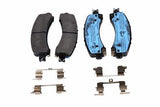 ACDelco Brake Pads, OE Replacement, Ceramic
$152.99ACDelco ceramic brake pads. Confirm fitment by VIN before ordering.
ACDelco Brake Pads, OE Replacement, Ceramic
$152.99ACDelco ceramic brake pads. Confirm fitment by VIN before ordering.
 ACDelco Brake Pads, Gold Ceramic
$83.99ACDelco ceramic brake pads. Confirm fitment by VIN before ordering.
ACDelco Brake Pads, Gold Ceramic
$83.99ACDelco ceramic brake pads. Confirm fitment by VIN before ordering.


What is the actual difference between ceramic and semi-metallic pads?
Semi-metallic pads use a high percentage of steel, iron, or copper fibers bound in resin. Ceramic pads use ceramic fibers and non-ferrous filler with a much smaller metal content. The metal content is what drives the differences you feel: heat handling, noise, dust color, and how aggressively the pad attacks the rotor face.
Neither name is a legal definition. There is no standard that says a pad must contain X percent ceramic fiber to be sold as ceramic. Manufacturers blend to a performance target and then label the box with whichever term fits the market. That is why a "ceramic" pad from a heavy-duty line can out-tow a cheap "semi-metallic" pad, and why comparing two boxes by name alone tells you very little.
What the names do reliably predict is the general shape of the tradeoff. More metal moves heat out of the pad and into the rotor and caliper faster, and holds friction better at high temperature. Less metal means quieter operation, softer initial bite, and dust that does not stick to wheels the way iron dust does.
Organic and low-metallic pads sit in between
You will also see NAO (non-asbestos organic) and low-metallic NAO pads. NAO is the softest and quietest, and it wears fastest under load — it is the wrong answer for a half-ton that ever sees a trailer. Low-metallic NAO adds a modest amount of steel or copper for bite and is a reasonable middle ground on lighter GM crossovers like the Equinox, Terrain, and Traverse.
How do you read a brake pad's friction code?
Every pad has an edge code stamped on the side of the backing plate. The two letters in that code are the SAE J866 friction rating: the first letter is the friction coefficient measured at 200–400°F, the second is measured at 300–650°F. Higher letters mean a higher coefficient. That two-letter pair tells you more about the pad than the word on the box.
The letters map to coefficient ranges like this:
| Edge code letter | Friction coefficient (µ) | What it means in practice |
|---|---|---|
| E | 0.25 – 0.35 | Low bite. Long pedal travel for a given stop. Uncommon on trucks. |
| F | 0.35 – 0.45 | Typical passenger-car and light-truck OE territory. |
| G | 0.45 – 0.55 | Noticeably firmer bite. Common on heavy-duty and severe-duty lines. |
| H | 0.55 – 0.65 | Aggressive. Often noisier and harder on rotors on the street. |
Read the pair, not just one letter. An FF pad holds roughly the same friction hot as cold — predictable, which is what most drivers want. An FG pad bites harder once it is hot, which can feel reassuring on a grade. A GF pad loses friction as it heats, which is the pattern you do not want with a trailer behind you.
The edge code also carries a manufacturer identifier, an AMECA compliance number for the friction material, and environmental compliance markings. Those markings exist because of the Copper-Free Brake Initiative, an agreement between the EPA and the brake industry to cut copper in pads to under five percent by weight by 2021 and to 0.5 percent by weight by 2025, along with reductions in mercury, lead, cadmium, asbestiform fibers, and chromium-six salts. If you are replacing pads on an older truck, the new pads will not have the same copper content as the originals, and copper content affects both friction stability and how quietly a pad runs.
Which brake pads are better for towing with a Silverado or Sierra?
For regular towing, choose a pad specifically rated for severe duty or heavy duty — usually a semi-metallic or a heavy-duty ceramic formulation with a G-range hot rating. Trailer weight does not just add mass; it extends the time the pads spend generating heat on a descent, and heat is what separates a pad that works from one that goes soft halfway down a grade.
Fade is not usually a single dramatic event. It shows up as a pedal that gradually needs more travel and more pressure over a long descent, and it does not recover until the brakes cool. A standard low-dust ceramic pad chosen for a commuter car will do this sooner than a heavy-duty pad, and the difference is largest exactly when you least want it.
Two things reduce brake heat more than any pad choice. First, use the truck's engine braking properly — the tow/haul mode logic on a Silverado 1500 holds lower gears and changes shift behavior specifically to keep you off the pedal on grades. Second, make sure the trailer's own brakes are doing their share. A trailer brake controller set too light quietly transfers the whole job to the truck.
Safety note: trailer brake requirements are set by state law and by the trailer's gross weight, and the thresholds differ from state to state. Do not assume a trailer under some rule-of-thumb weight is legal to tow unbraked where you live. Check your state's requirement and your truck's trailering information label before you load.
Semi-metallic brake pads
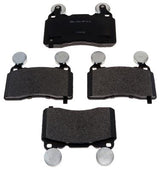 ACDelco Brake Pads, Professional Semi-Metallic
$93.99ACDelco semi-metallic brake pads. Confirm fitment by VIN before ordering.
ACDelco Brake Pads, Professional Semi-Metallic
$93.99ACDelco semi-metallic brake pads. Confirm fitment by VIN before ordering.
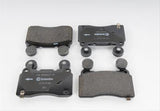 ACDelco Brake Pads, OE Replacement, Semi-Metallic
$284.99ACDelco semi-metallic brake pads. Confirm fitment by VIN before ordering.
ACDelco Brake Pads, OE Replacement, Semi-Metallic
$284.99ACDelco semi-metallic brake pads. Confirm fitment by VIN before ordering.
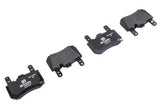 ACDelco Brake Pads, GM Genuine Parts, Semi-metallic
$496.99ACDelco semi-metallic brake pads. Confirm fitment by VIN before ordering.
ACDelco Brake Pads, GM Genuine Parts, Semi-metallic
$496.99ACDelco semi-metallic brake pads. Confirm fitment by VIN before ordering.
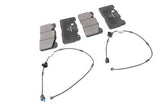 ACDelco Brake Pads, GM Genuine Parts, Semi-metallic
$974.99ACDelco semi-metallic brake pads. Confirm fitment by VIN before ordering.
ACDelco Brake Pads, GM Genuine Parts, Semi-metallic
$974.99ACDelco semi-metallic brake pads. Confirm fitment by VIN before ordering.
Do ceramic pads actually produce less dust?
Yes, and more importantly the dust behaves differently. Ceramic pads shed a lighter-colored, less abrasive dust that tends not to bond to wheel finishes. Semi-metallic pads shed iron particles that darken wheels quickly and can pit or stain a polished or machined finish if you leave them baked on through a summer.
If you have expensive wheels on a Tahoe, Yukon, or Escalade and the truck is mostly a family vehicle, this is a legitimate reason to choose ceramic. It is a cosmetic and cleaning-effort decision, not a safety one. Nobody should pick a pad that fades because they dislike washing wheels, but plenty of GM SUVs never see a load heavy enough for that to be a real tradeoff.
One warning about how you clean those wheels. GM cautions that wheel cleaners or a power washer aimed directly at the caliper can wash the anti-squeal copper paste off the pad abutments, and that it may need reapplying. If you are meticulous about wheel cleaning, you are also the person most likely to develop a squeal that has nothing to do with your pad choice.
Are semi-metallic pads harder on rotors?
Generally yes, though the effect is smaller than internet arguments suggest and depends far more on the specific formulation than on the category. The metal content in semi-metallic pads is abrasive against cast iron, so rotor wear per mile tends to be higher, and the pads can leave visible scoring if debris gets between pad and rotor.
Ceramic pads work more through a transfer layer — a thin film of pad material deposited on the rotor face — so wear is gentler but that layer has to be established correctly. Both types will destroy rotors if you run pads down to the backing plate, which is by far the most common cause of rotor replacement.
Semi-metallic pads are also more likely to squeal cold, especially the first few stops on a damp morning. If you hear something new after a pad change, the sound tells you a lot about the cause. Our guide to what different brake noises are actually telling you covers which sounds are normal break-in and which mean you should pull the wheel back off.
Before you blame the compound for a squeal
Pad choice gets blamed for a lot of noise that is actually an assembly or a frequency issue, and GM has published useful figures on both.
The assembly side. GM's service bulletin 17-NA-040 instructs technicians to apply copper paste to the pad backing plate abutments — the ends of the pad that contact the caliper bracket — covering the abutment area completely with roughly 0.10 g (0.0035 oz) at each end, never letting it reach the friction material. GM says to do this whenever pads are removed or replaced, so it applies to your new pads regardless of which compound you chose. For the specific condition of a squeal on the first few applies after the vehicle has sat, GM's instruction is explicitly not to replace the pads.
The frequency side. GM's preliminary information document PIC6429A notes that the most commonly reported brake squeal frequencies fall in the 2,000 to 4,000 hertz band — the range the copper paste is there to damp. Noises above roughly 4 kHz are typically not affected by the paste and are described as normal for that braking system. GM also notes that the large majority of brake noise cases reaching its technical assistance centre turn out to need no parts at all.
The practical read: if your new pads squeal, check whether the abutments were treated before you conclude you bought the wrong compound. Swapping ceramic for semi-metallic or back again will not fix a noise that came from a dry abutment.
Which pad should you buy for your GM truck or SUV?
Match the pad to the load, not to the badge. A Silverado 1500 that hauls mulch twice a year and a Silverado 1500 that pulls a 7,000-pound travel trailer every weekend are different vehicles from the brakes' point of view. Use this as a starting point, then confirm fitment against your specific year, cab, and brake option code.
| How you use the vehicle | Typical GM applications | Recommended compound | Why |
|---|---|---|---|
| Daily commuting, empty bed, occasional light load | Silverado 1500, Sierra 1500, Colorado, Canyon | Ceramic | Quiet, clean wheels, plenty of capacity for the duty cycle |
| Family hauler, third row, road trips | Tahoe, Suburban, Yukon, Traverse, Acadia, Enclave | Ceramic | Low noise matters more here than peak hot friction |
| Regular towing near the truck's rating | Silverado 1500/2500HD, Sierra 1500/2500HD, Suburban | Semi-metallic or heavy-duty ceramic with a G hot rating | Sustained heat resistance on long descents |
| Work truck, constant payload, stop-and-go with weight | Silverado 2500HD/3500HD, Sierra HD, Express/Savana | Semi-metallic, severe duty line | Highest thermal capacity and wear life under load |
| Mountain or grade driving, loaded, frequently | Any of the above | Semi-metallic, severe duty line | Fade resistance is the limiting factor, not initial bite |
| Performance driving, occasional track | Camaro, Corvette, CTS-V, Blackwing | Purpose-built performance compound, not a generic street pad | Street pads of either type are outside their design window on track |
Two caveats on that table. First, heavy-duty ceramic formulations exist and some of them tow well — do not read "ceramic" as automatically disqualified for trailer work, read the edge code and the manufacturer's stated application. Second, the compound only matters if the pad fits. A pad that is right for a 2019–2026 Silverado 1500 is not the same part as one for a 2014–2018 truck, and HD models use entirely different calipers and pad shapes from half-tons.
What do the ACDelco product tiers actually mean?
ACDelco sells brake pads in tiers, and the tier is a different axis from the friction compound. GM Genuine Parts OE pads are the parts the vehicle was validated with, designed to work with the vehicle's ABS and stability control calibration, and carry a 24-month/unlimited-mile limited warranty. ACDelco Gold is positioned as the alternative to OE with broad coverage across GM and non-GM applications, tested through the AMP3 program for noise, vibration, harshness, durability and wear, also with a 24-month/unlimited-mile limited warranty. ACDelco Silver is the value tier following essential OE designs, with a 12-month/unlimited-mile limited warranty.
Both ceramic and semi-metallic options exist within these lines, so "ACDelco Gold" alone does not tell you the compound. Check the specific part listing. Warranty terms above apply to parts purchased April 1, 2018 or later by the original retail purchaser, so confirm current terms before you rely on them.
Is the top tier worth it? On a vehicle you plan to keep, usually. On a high-mileage truck you are selling next year, a mid-tier pad from a reputable line is fine. The cheap unbranded option is where you actually take on risk, because that is where the edge code and the compliance markings become the only evidence you have about what is inside the pad.
How do you bed in new brake pads?
Bedding transfers an even layer of pad material onto the rotor face. Skip it and you get uneven deposits, which feel exactly like a warped rotor — a pulsing pedal that gets worse with mileage. The procedure below is a common approach, but follow the specific instructions in your pad manufacturer's box if they differ, since bedding requirements vary by compound.
- Find an empty road where you can accelerate and brake repeatedly without traffic behind you.
- Make five to seven moderate stops from roughly 35 mph down to about 5 mph, easing off before the truck comes to rest.
- Drive for a minute or two to let the brakes cool between sets.
- Make three to five firmer stops from roughly 55 mph down to about 15 mph, still without locking the wheels or engaging ABS.
- Drive for several miles without touching the brakes if you safely can, to let everything cool evenly.
- Avoid holding the pedal down at a stop while the brakes are still hot — that is what imprints a pad-shaped deposit on the rotor.
Expect some smell and possibly light smoke during bedding. That is resin curing out of a fresh pad and it is normal on the first heat cycle.
What else should you replace at the same time?
Pads are the cheap part of the job. The parts around them determine whether the pads wear evenly and quietly.
- Abutment clips and shims. Old clips rust, swell, and pinch the pad so it drags. This is the single most common cause of one pad wearing out ahead of the other three.
- Copper paste on the pad abutments. Specified by GM whenever pads come out, and the cheapest insurance against a squeal there is.
- Caliper slide pins and boots. A seized pin means one pad does all the work. Clean and re-grease, or replace if the boots are torn.
- Rotors. Measure thickness against the minimum stamped on the rotor hat before you decide to reuse. If it is under, or close, replace rather than machine.
- Wear sensors, if your application uses one. Some GM applications use an electronic wear sensor, others use a mechanical squealer tab built into the pad. Check the parts listing for your exact year and model rather than assuming.
- Brake fluid. Fluid absorbs moisture over time and moisture lowers boiling point, which matters most under exactly the towing conditions discussed above.
If it is the rear pads that keep wearing out early on a 2019–2021 Silverado or Sierra 1500, the compound is probably not your problem. GM's bulletin 21-NA-089 documents rear calipers packing with mud and debris, which holds the pads against the rotor so they drag continuously. The fix is a shielded replacement caliper under the RG1 designation, and GM states it is a customer-paid repair. Fitting a different pad compound into a caliper full of mud changes nothing.
Torque matters here and generic numbers do not transfer between models. Caliper bracket bolts, caliper guide-pin bolts, and lug nuts all have specific values that vary by vehicle, year, and wheel type. Look up the figures for your exact vehicle in a service manual, and check the placard on the driver's door jamb for the wheel-related information GM publishes there. Do not reuse a generic torque figure you found on a forum.
Safety note: support the vehicle on properly rated jack stands on level ground, never on a jack alone, and chock the wheels that stay on the ground. Full-size GM trucks and SUVs are heavy enough that a shifted stand is not survivable.
Rotors and tools
 Poly Coated Vented Brake Rotor for Chevrolet/Cadillac/GMC
$60.00Rotors and torque tools to go with new pads. Confirm fitment by VIN before ordering.
Poly Coated Vented Brake Rotor for Chevrolet/Cadillac/GMC
$60.00Rotors and torque tools to go with new pads. Confirm fitment by VIN before ordering.
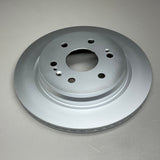 ADAPTIVE ONE Vented Cast Iron Poly Coated Rotor
$68.00Rotors and torque tools to go with new pads. Confirm fitment by VIN before ordering.
ADAPTIVE ONE Vented Cast Iron Poly Coated Rotor
$68.00Rotors and torque tools to go with new pads. Confirm fitment by VIN before ordering.
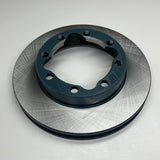 NAPA Non-Directional Vented Cast Iron Premium Rotor
$74.00Rotors and torque tools to go with new pads. Confirm fitment by VIN before ordering.
NAPA Non-Directional Vented Cast Iron Premium Rotor
$74.00Rotors and torque tools to go with new pads. Confirm fitment by VIN before ordering.
 ACDelco Disc Brake Rotor, Stock Replacement
$109.99Rotors and torque tools to go with new pads. Confirm fitment by VIN before ordering.
ACDelco Disc Brake Rotor, Stock Replacement
$109.99Rotors and torque tools to go with new pads. Confirm fitment by VIN before ordering.


What to check before you order
- Year, model, cab and bed configuration. A 2019–2026 Silverado 1500 crew cab does not share pads with the 2014–2018 generation, and 1500 parts do not fit 2500HD or 3500HD.
- Brake option code. Some GM trucks and SUVs were built with more than one brake package depending on trim, tow package, or fleet order. Confirm which one you have before ordering by model name alone.
- Front versus rear. They are separate part numbers with different pad shapes, and buying two "sets" without checking which axle they cover is a common mistake.
- Edge code. Compare the two-letter friction rating of the new pad to the old one if you can still read it. Matching or slightly exceeding it keeps the brake balance the vehicle was designed around.
- Hardware included or not. Some pad sets include clips and shims, some do not. Assume they do not unless the listing says otherwise.
- Copper paste on hand before you start, not after the wheel is off.
- Rotor condition. Measure before you order pads only. Discovering a rotor is under minimum thickness with the truck already on stands costs you a day.
Frequently Asked Questions
Should I buy ceramic or semi-metallic pads for my Silverado?
Ceramic if it commutes and carries light loads, which covers most half-tons. Semi-metallic or a heavy-duty ceramic with a G-range hot rating if you tow near the truck's rating or run mountain grades. The deciding factor is sustained heat, not peak stopping power — fade on a long descent is what separates the two.
What does the edge code on a brake pad mean?
The two letters are the SAE J866 friction rating: the first is the coefficient measured at 200–400°F, the second at 300–650°F. F is roughly 0.35–0.45, G is 0.45–0.55. Read the pair together — an FF pad behaves the same hot as cold, while a GF pad loses friction as it heats, which is the last thing you want towing.
Is "ceramic" a regulated term?
No. There is no standard requiring a given percentage of ceramic fibre for a pad to be sold as ceramic. Manufacturers blend to a performance target and label the box for the market. That is why a heavy-duty ceramic can out-tow a cheap semi-metallic, and why the edge code tells you more than the name does.
Do ceramic pads really produce less dust?
Yes, and the dust behaves differently — lighter in colour, less abrasive, and less inclined to bond to wheel finishes. Semi-metallic pads shed iron particles that darken wheels fast and can stain a polished finish if left baked on. It is a legitimate reason to choose ceramic on a family SUV, though it is a cleaning decision rather than a safety one.
Are semi-metallic pads harder on rotors?
Generally yes, but the effect depends far more on the specific formulation than the category, and it is smaller than online arguments suggest. Both types will ruin rotors if you run the pads to the backing plate, which remains the most common reason rotors get replaced.
My new pads squeal. Did I buy the wrong compound?
Probably not. Check whether the pad abutments were treated first. GM specifies copper paste on the pad backing plate abutments whenever pads are removed or replaced, roughly 0.10 g at each end. Swapping compounds will not fix a noise caused by a dry abutment, and GM's guidance for that particular squeal is explicitly not to replace the pads.
Are some brake squeals just normal?
Yes. GM reports that common squeal frequencies fall in the 2,000 to 4,000 hertz band, which is what the copper paste damps. Noises above roughly 4 kHz are typically unaffected by the paste and are described as normal for that braking system. GM also notes most brake noise cases reaching its technical assistance centre need no parts at all.
Why do my rear pads keep wearing out early?
On a 2019–2021 Silverado or Sierra 1500, likely not the compound. GM's bulletin 21-NA-089 documents rear calipers packing with mud and debris that holds the pads against the rotor so they drag constantly. The fix is the shielded RG1 caliper, which GM states is a customer-paid repair. A different pad in a mud-packed caliper changes nothing.
How do I bed in new brake pads?
Five to seven moderate stops from about 35 mph to 5 mph, a cool-down, then three to five firmer stops from about 55 mph to 15 mph without engaging ABS, then several miles without braking if you safely can. Do not hold the pedal at a stop while the brakes are hot — that imprints a pad-shaped deposit that feels exactly like a warped rotor. Follow your pad manufacturer's instructions where they differ.
Is the top ACDelco tier worth the money?
On a vehicle you plan to keep, usually. On a high-mileage truck you are selling soon, a mid-tier pad from a reputable line is fine. The real risk sits with cheap unbranded pads, where the edge code and compliance markings are the only evidence you have about what is actually in the friction material.
A Note on Sourcing
The copper paste specification, the quantity, the wheel-cleaning warning and the instruction not to replace pads for that squeal come from GM service bulletin 17-NA-040 (PDF). The squeal frequency figures come from GM preliminary information document PIC6429A (PDF). The rear pad wear condition, the RG1 caliper and the customer-paid warranty position come from GM service bulletin 21-NA-089 (PDF). All three are published by NHTSA as manufacturer communications and were read directly.
The friction coefficient ranges are the SAE J866 edge code standard, and the copper reduction thresholds are those of the Copper-Free Brake Initiative agreed between the EPA and the brake industry.
ACDelco tier definitions and warranty terms are from ACDelco's published product information. Warranty terms change, so confirm current coverage before relying on them.
The compound recommendations by use case are our own judgement, based on how these pads behave in service rather than manufacturer guidance. Torque figures are deliberately omitted because they vary by vehicle, year and wheel type.
If you want more background on GM brake and chassis work before you start, there are more GM parts and accessories guides covering related systems.
Still deciding between ceramic and semi-metallic?
If the truck tows near its rating or lives on grades, go semi-metallic or a heavy-duty ceramic with a G-range hot rating. If it commutes and hauls kids, go ceramic and enjoy the clean wheels. Compare the compounds, edge codes, and hardware kits side by side in GM brake parts and hardware, and filter by your year, model, and engine before you add anything to the cart.