
Tow/Haul mode changes how your Silverado's transmission behaves under load: it holds gears longer, downshifts earlier when you lift off, and uses engine braking on descents so you are not riding the brake pedal down a grade. Turn it on any time there is a trailer behind you or real weight in the bed. Leave it off when the truck is empty on flat road.
That is the whole rule. Below is what it actually changes, where the control is on your generation, when it genuinely helps, and the one claim about it that gets repeated online without support. If you are setting up the rest of your towing package, our trailer brake controller setup guide is the companion to this one.
What does Tow/Haul mode actually do?
It changes the transmission's shift strategy, not the engine's power output. You do not get more horsepower or a higher tow rating. What you get is a truck that stops hunting for gears under load and starts using the engine to help slow the rig down.
- Holds gears longer. Shift points move up so the engine stays in its torque range instead of upshifting early and lugging against the load.
- Downshifts earlier on lift-off. When you come off the throttle or the truck senses a descent, it downshifts proactively so engine braking takes the load rather than the trailer pushing the truck.
- Applies grade braking on descents. The transmission actively holds a lower gear to control speed, which is what keeps your brakes from overheating on a long hill.
- Sharpens throttle response. More direct pedal feel, which matters most when manoeuvring a trailer at low speed.
- Changes cylinder deactivation behaviour. On V8s with Active Fuel Management or Dynamic Fuel Management, the calibration keeps the engine on all cylinders more of the time under load rather than dropping to reduced-cylinder operation.
The grade braking behaviour is the one worth understanding, because it is the feature that prevents the failure most likely to hurt you. Brakes fade when they get hot, and they get hot when you hold them for a sustained descent with weight behind you. Engine braking does that work without generating heat in the friction material.
Where is the control on your truck?
| Generation | Where to find it |
|---|---|
| 2019–2026 (T1) | Commonly the drive mode selector to the left of the steering wheel — rotate to the trailer icon. Trucks with a column shifter may instead have a button on the end of the stalk. A trailer icon lights in the cluster to confirm. |
| 2014–2018 (K2) | Button on the end of the column shift stalk. Push it inward; a Tow/Haul message appears in the driver information centre. |
| 2007–2013 (GMT900) | Same as K2 — button on the end of the column shift stalk, confirmed by a message in the display. |
Controls vary by trim and configuration within a generation, so if neither location matches your truck, check the drive mode section of your owner's manual. Note also that Tow/Haul does not persist through a key cycle on most of these trucks — you generally have to re-select it each time you start the engine, which is the single most common reason people forget to use it.
When should you use it?
Any time there is meaningful load behind or in the truck, and any time you are on a sustained grade regardless of load.
- Towing a trailer of any size, including a light utility trailer
- Carrying real weight in the bed — a few hundred pounds of gravel, tools or firewood counts
- Driving in hilly or mountainous terrain, loaded or empty
- Descending a long grade where you want engine braking rather than brake pedal
- Stop-and-go traffic with a loaded bed or a trailer, where the constant shifting is worst
When to leave it off: an empty truck on flat highway. The higher shift points cost fuel and give you nothing back when there is no load to manage. That is the entire downside — which brings us to a claim worth correcting.
It does not damage your transmission
You will see the advice that using Tow/Haul unloaded causes drivetrain wear. There is no good basis for that. Tow/Haul is a factory calibration operating the transmission within its designed parameters — GM built the mode, validated it, and shipped it. Higher shift points mean more engine revolutions per mile and worse fuel economy, and that is the real cost.
If anything, the wear argument runs the other way. Towing a heavy trailer without Tow/Haul leaves the transmission hunting between gears and the torque converter cycling repeatedly under load, which generates heat in the fluid — and heat is what actually shortens a transmission's life.
Trailer brake controllers
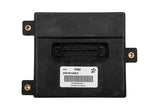 ACDelco Trailer Brake Control Module
$173.99ACDelco controllers. Confirm year. Confirm fitment by VIN before ordering.
ACDelco Trailer Brake Control Module
$173.99ACDelco controllers. Confirm year. Confirm fitment by VIN before ordering.
 ACDelco Trailer Brake Controller 84109447
$83.99ACDelco controllers. Confirm year. Confirm fitment by VIN before ordering.
ACDelco Trailer Brake Controller 84109447
$83.99ACDelco controllers. Confirm year. Confirm fitment by VIN before ordering.
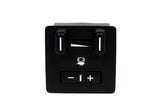 ACDelco Trailer Brake Controller 15926102
$86.99ACDelco controllers. Confirm year. Confirm fitment by VIN before ordering.
ACDelco Trailer Brake Controller 15926102
$86.99ACDelco controllers. Confirm year. Confirm fitment by VIN before ordering.

Does Tow/Haul improve fuel economy while towing?
It may, but treat any confident claim in either direction with suspicion, including one framed as counterintuitive.
The plausible mechanism is real: a truck that settles into a gear and stays there avoids the repeated shifting and torque converter cycling that burns fuel when a transmission is hunting on a grade. On rolling terrain with a heavy trailer, that can produce a net gain.
But holding lower gears also means higher engine speed, and higher engine speed uses more fuel. Which effect wins depends on the terrain, the trailer, your speed and your right foot. There is no general answer, and anyone offering a specific mpg figure for your truck is guessing.
The honest reason to use Tow/Haul is control and heat management, not economy. If it happens to save fuel on your route, that is a bonus rather than the argument.
How it works with the trailer brake controller
The two systems address different halves of stopping a loaded rig. The brake controller decides how hard the trailer's own brakes apply. Tow/Haul decides how much slowing the engine and transmission contribute before the brakes are needed at all.
Set the trailer brake gain first, against the loaded trailer, using the manual apply lever — then engage Tow/Haul. Gain that was set against an empty trailer will be wrong for a loaded one, and no amount of engine braking compensates for trailer brakes that apply too weakly.
On a long descent, both matter. Engine braking through Tow/Haul keeps you off the pedal, and correctly set trailer brakes mean the trailer is helping to slow the rig rather than pushing the truck. Our brake controller setup guide covers the gain test procedure step by step.
Transmission fluid
 ACDelco 10-9243 Dexron VI Full Synthetic ATF 88865549, 1 Qt
$16.99Towing is hard on fluid. Dexron VI fits 6-speeds; 8- and 10-speeds use other fluids. Confirm fitment by VIN before ordering.
ACDelco 10-9243 Dexron VI Full Synthetic ATF 88865549, 1 Qt
$16.99Towing is hard on fluid. Dexron VI fits 6-speeds; 8- and 10-speeds use other fluids. Confirm fitment by VIN before ordering.
 ACDelco 10-9244 Dexron VI Full Synthetic ATF 88865618, 1 Gal
$49.99Towing is hard on fluid. Dexron VI fits 6-speeds; 8- and 10-speeds use other fluids. Confirm fitment by VIN before ordering.
ACDelco 10-9244 Dexron VI Full Synthetic ATF 88865618, 1 Gal
$49.99Towing is hard on fluid. Dexron VI fits 6-speeds; 8- and 10-speeds use other fluids. Confirm fitment by VIN before ordering.


Tow/Haul versus the other drive modes
| Mode | Best for |
|---|---|
| Tow/Haul | Towing, hauling, any sustained grade |
| Eco | Light daily driving with an empty truck |
| Sport / Performance | Quicker shifts, unloaded |
| Off-Road / Z71 | Low-traction surfaces and trails |
| Normal | Everyday mixed driving |
Eco and Tow/Haul pull in opposite directions — one is trying to upshift early and deactivate cylinders, the other is trying to hold gears and keep all cylinders firing. They are not meant to be combined, and on trucks where both are selectable, Tow/Haul takes precedence.
Scan tools
 FOXWELL NT726 Bidirectional OBD2 Scanner
$368.99Watch transmission temperature.
FOXWELL NT726 Bidirectional OBD2 Scanner
$368.99Watch transmission temperature.
 FOXWELL NT614 Elite OBD2 Scanner
$233.69Watch transmission temperature.
FOXWELL NT614 Elite OBD2 Scanner
$233.69Watch transmission temperature.

What Tow/Haul does not do
- It does not raise your tow rating. That comes from drivetrain, axle ratio, cab and bed configuration — see our towing capacity breakdown by year, engine and trim.
- It does not add power. Same engine, different shift points.
- It does not fix trailer sway. Sway is a loading problem — tongue weight and load distribution. Start with weight distribution.
- It does not replace trailer brakes. Engine braking helps; it is not a substitute for a correctly set controller on a braked trailer.
Towing mirrors
 14-20 Silverado/Sierra Powered Heated Towing Mirrors
$159.99Power heated towing mirrors. Confirm year. Confirm fitment by VIN before ordering.
14-20 Silverado/Sierra Powered Heated Towing Mirrors
$159.99Power heated towing mirrors. Confirm year. Confirm fitment by VIN before ordering.
 07-12 Silverado/Sierra Powered Heated Towing Mirrors
$139.99Power heated towing mirrors. Confirm year. Confirm fitment by VIN before ordering.
07-12 Silverado/Sierra Powered Heated Towing Mirrors
$139.99Power heated towing mirrors. Confirm year. Confirm fitment by VIN before ordering.


Frequently Asked Questions
What does Tow/Haul mode actually change?
The transmission's shift strategy. It holds gears longer so the engine stays in its torque range, downshifts earlier when you lift off, applies grade braking on descents, sharpens throttle response, and keeps V8s on all cylinders more of the time under load. It does not add power or raise your tow rating.
When should I use Tow/Haul mode?
Any time there is a trailer behind you or real weight in the bed, and any time you are on a sustained grade regardless of load. Leave it off for an empty truck on flat highway, where the higher shift points cost fuel and give nothing back.
Does using Tow/Haul unloaded damage the transmission?
No. It is a factory calibration operating the transmission within its designed parameters. The real cost of using it unloaded is fuel economy. If anything the wear argument runs the other way — towing heavy without it leaves the transmission hunting and the converter cycling, which generates the heat that shortens transmission life.
Does Tow/Haul improve fuel economy when towing?
It may, but be sceptical of confident claims either way. Settling into a gear avoids the shifting and converter cycling that burns fuel on a grade; holding lower gears raises engine speed, which uses more. Which wins depends on terrain, trailer and speed. Use it for control and heat management, not economy.
Where is the Tow/Haul button on a Silverado?
On 2019–2026 trucks it is commonly the drive mode selector left of the steering wheel — rotate to the trailer icon — though column-shifter trucks may have a button on the end of the stalk. On 2007–2018 trucks it is the button on the end of the column shift stalk.
Does Tow/Haul stay on when I restart the truck?
Generally no. On most of these trucks it does not persist through a key cycle, so you have to re-select it each time you start the engine. That is the most common reason people forget to use it.
Can I use Tow/Haul and Eco mode together?
They work against each other — Eco upshifts early and deactivates cylinders, Tow/Haul holds gears and keeps cylinders firing. They are not intended to be combined, and where both are selectable, Tow/Haul takes precedence.
Should I use Tow/Haul going down a hill without a trailer?
Yes, on a long or steep descent. Grade braking holds a lower gear to control speed using the engine, which keeps heat out of the brake friction material. Brake fade is a heat problem, and an empty truck on a mountain descent still generates it.
Does Tow/Haul mode increase towing capacity?
No. Tow rating comes from drivetrain, axle ratio, cab and bed configuration, and is set for your specific truck. Tow/Haul changes how the transmission behaves within that rating, not the rating itself.
Will Tow/Haul stop my trailer swaying?
No. Sway is a loading problem, driven by tongue weight and load distribution rather than shift strategy. Fix the loading first — no drive mode compensates for a trailer loaded tail-heavy.
A Note on Sourcing
Control locations vary by trim and configuration within a generation, so the table gives the common arrangements rather than a guaranteed location. Your owner's manual's drive mode section is authoritative for your truck.
Two claims that circulate about this feature are corrected here. The first is that using Tow/Haul unloaded causes drivetrain wear — it is a factory calibration operating within designed parameters, and the real cost is fuel economy. The second is that Tow/Haul reliably improves towing fuel economy; the mechanism is plausible but the outcome depends on terrain, trailer and speed, and this page does not claim a figure.
The cylinder deactivation behaviour is described in general terms because the specific calibration differs between engines and model years.
The recommendation to use Tow/Haul for control and heat management rather than economy is our own judgement, based on what the mode is actually doing to the driveline.
Related guides
- How to set up the trailer brake controller on a Silverado 1500
- Do you need a weight distribution hitch?
- Silverado and Sierra towing capacity by year, engine and trim
- The complete Silverado 1500 how-to guide
Towing gear for your Silverado
-
 Towing Mirrors Pair (Silverado/Sierra/Tahoe/Suburban)
-
 DEMCO 5th Wheel Trailer Hitch Mount Kit
-
 ACDelco Dexron-VI Full Synthetic ATF — heat is what shortens a towing transmission's life, and fluid condition is how you manage it