
The Chevrolet Silverado 1500 is one of the most capable, versatile, and widely owned trucks on the road — but getting the most out of it means knowing how to use and maintain every system correctly. Whether you just picked up a brand-new 2026 model or you've owned yours for years, this guide is your single source of truth for every major how-to task a Silverado 1500 owner will ever face.
Each section below summarizes the key procedure and links to our full step-by-step guide for that topic. Bookmark this page — you'll come back to it.
Table of Contents
- How to Change the Oil on a Silverado 1500
- How to Engage 4-Wheel Drive on a Silverado 1500
- How to Use Tow/Haul Mode Correctly
- How to Improve Fuel Economy on Your Silverado 1500
- How to Set Up the Trailer Brake Controller
- How to Change the Cabin Air Filter
- How to Read Silverado 1500 Warning Lights
- How to Program a Key Fob on a Silverado 1500
- How to Change Spark Plugs on the 5.3L V8
- How to Winterize Your Silverado 1500
1. How to Change the Oil on a Silverado 1500
The Silverado 1500's oil change procedure varies slightly between generations, but the fundamentals are consistent. Most 2014–2026 EcoTec3 5.3L and 6.2L engines take 0W-20 full synthetic meeting dexos1 and hold 8 quarts with filter. Older 5.3L Vortec engines (pre-2014) use 5W-30 and hold 6 quarts.
One important exception on the 6.2L. GM recalled 6.2L L87 engines produced between 1 March 2021 and 31 May 2024 over connecting rod and crankshaft manufacturing defects. For vehicles that passed inspection and kept their original engine, GM's remedy specifies switching from 0W-20 to a dexos R 0W-40 oil, along with a new oil fill cap showing the revised specification. Whether it applies to your truck depends on your VIN — and if the engine was replaced under warranty, on when the replacement was built. Check your fill cap and confirm with your dealer before buying oil.
Key steps: Warm the engine for 2–3 minutes, drain the old oil via the drain plug on the oil pan, replace the spin-on oil filter, refill with the correct spec oil, and reset the Oil Life Monitor via the DIC or infotainment screen. Confirm your filter by VIN rather than by displacement — not every GM engine uses a spin-on, and several V6 and turbo four-cylinder applications use a cartridge element in a housing instead.
The most common mistake: forgetting to reset the OLM after the change. The truck will keep counting down from wherever it was before and trigger early service reminders.
📖 Full guide: How to Change the Oil on a Chevy Silverado 1500 (Step-by-Step)
Oil and filter
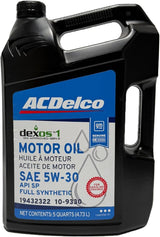 ACDelco 10-9330 dexos1 Gen 3 Full Synthetic 5W-30 Oil
$58.95dexos1 oil and filter. Confirm engine. Confirm fitment by VIN before ordering.
ACDelco 10-9330 dexos1 Gen 3 Full Synthetic 5W-30 Oil
$58.95dexos1 oil and filter. Confirm engine. Confirm fitment by VIN before ordering.
 ACDelco GM Original Equipment PF64 (25206966) Oil Filter
$13.89dexos1 oil and filter. Confirm engine. Confirm fitment by VIN before ordering.
ACDelco GM Original Equipment PF64 (25206966) Oil Filter
$13.89dexos1 oil and filter. Confirm engine. Confirm fitment by VIN before ordering.

2. How to Engage 4-Wheel Drive on a Silverado 1500
The Silverado 1500 uses an Autotrac transfer case on most trims, controlled by a rotary dial to the left of the steering wheel (2019+) or dashboard buttons (2014–2018). Your options are: 2H (two-wheel drive), Auto (automatic AWD-like mode), 4Hi (4-wheel drive high range), and 4Lo (4-wheel drive low range).
When to use each mode:
- 2H: Dry pavement, normal conditions
- Auto: Light rain, occasional slippery surfaces — the system engages 4WD automatically as needed
- 4Hi: Snow, mud, loose gravel, slippery roads
- 4Lo: Rock crawling, deep mud, steep off-road grades — stop the truck, shift to Neutral, then select 4Lo
Shift-on-the-move speed limits vary by model year and transfer case, so use the figure in your owner's manual rather than a general one. Never drive on dry pavement in 4Hi or 4Lo — this causes driveline binding and can damage the transfer case.
📖 Full guide: How to Engage 4-Wheel Drive on a Chevy Silverado 1500 (All Years)
3. How to Use Tow/Haul Mode on Your Silverado 1500
Tow/Haul mode is one of the most important and most underused features on the Silverado 1500. When activated, it changes transmission shift programming to hold gears longer and increases engine braking on downhills — both of which reduce heat and strain on the drivetrain when pulling a trailer or heavy load.
How to activate: On 2019+ models, turn the Traction Select dial (left of steering wheel) to the trailer icon. On 2014–2018 models, press the Tow/Haul button at the end of the column shifter stalk. A trailer icon or TOW/HAUL message will appear in the DIC to confirm it's active.
When to use it: Any time you're towing a trailer, hauling a heavy load in the bed, or descending steep grades — even without a trailer.
📖 Full guide: How to Use Tow/Haul Mode on a Chevy Silverado 1500
4. How to Improve Fuel Economy on Your Silverado 1500
Real-world Silverado 1500 fuel economy depends enormously on driving habits, tire pressure, and whether you're towing. Many owners report figures below the EPA ratings for their configuration due to habits or neglected maintenance.
Top fuel economy improvements:
- Keep tire pressure at the door jamb placard spec — underinflated tires cost real mpg
- Use cruise control on the highway — reduces speed variation that hurts mpg
- Avoid aggressive acceleration — the biggest single driver behavior impact
- Use Eco mode for daily commuting (not for towing)
- Replace dirty air filters
- Remove unnecessary bed cargo — weight you are not using costs fuel every mile
📖 Full guide: How to Improve Fuel Economy on Your Chevy Silverado 1500
5. How to Set Up the Trailer Brake Controller on a Silverado 1500
Silverados equipped with the Max Trailering Package (RPO NHT) include an integrated trailer brake controller built into the dash. If your truck has it, you'll see a Trailer Brake setting in the infotainment menu or a dedicated display in the DIC. If yours didn't come with NHT, an aftermarket controller must be wired into the brake output harness under the dash.
Basic integrated TBC setup: Go to Settings → Trailering → Trailer Brake Gain. Set an initial gain, then perform a manual override test at low speed to verify the trailer brakes are engaging. Adjust gain up if the trailer pushes the truck; down if trailer wheels lock up. Gain is load-dependent — reset it whenever the trailer or its load changes.
📖 Full guide: How to Set Up the Trailer Brake Controller on a Silverado 1500
Trailer brake controllers
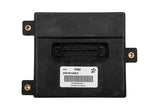 ACDelco Trailer Brake Control Module
$173.99Factory-style controllers. Confirm year. Confirm fitment by VIN before ordering.
ACDelco Trailer Brake Control Module
$173.99Factory-style controllers. Confirm year. Confirm fitment by VIN before ordering.
 ACDelco Trailer Brake Controller 84109447
$83.99Factory-style controllers. Confirm year. Confirm fitment by VIN before ordering.
ACDelco Trailer Brake Controller 84109447
$83.99Factory-style controllers. Confirm year. Confirm fitment by VIN before ordering.

6. How to Change the Cabin Air Filter on a Silverado 1500
The cabin air filter cleans the air entering your truck's HVAC system. A dirty filter reduces airflow, makes the blower motor work harder, and can cause musty odors from the vents. Inspect it periodically and replace per your maintenance schedule and driving conditions.
Where it's located: On 2014–2026 Silverado 1500s, the cabin air filter is behind the glove box. Open the glovebox, press the sides inward to release the stops, drop it down to access the filter housing. The whole job takes under 10 minutes.
📖 Full guide: How to Change the Cabin Air Filter on a Chevy Silverado 1500
Cabin air filters
 ACDelco CF185 Cabin Air Filter
$28.49ACDelco cabin filters. Confirm year. Confirm fitment by VIN before ordering.
ACDelco CF185 Cabin Air Filter
$28.49ACDelco cabin filters. Confirm year. Confirm fitment by VIN before ordering.
 ACDelco Gold CF1184C Cabin Air Filter
$27.99ACDelco cabin filters. Confirm year. Confirm fitment by VIN before ordering.
ACDelco Gold CF1184C Cabin Air Filter
$27.99ACDelco cabin filters. Confirm year. Confirm fitment by VIN before ordering.


7. How to Read Silverado 1500 Warning Lights
Modern Silverados have dozens of warning lights, icons, and DIC messages — and knowing what each one means can be the difference between a quick fix and an expensive breakdown. The most critical lights to know:
- Red Oil Pressure Light: Pull over immediately — running with no oil pressure destroys engines in minutes
- Flashing Check Engine Light: Active misfire — stop driving. Raw fuel is going into the catalytic converter, and a converter costs far more than the repair causing it
- Solid Check Engine Light: Non-critical fault — get it scanned soon
- Battery Light: Charging system fault — you may have limited drive time before the truck dies
- Service 4WD: Transfer case or actuator fault — 4WD system is compromised
- Reduced Engine Power: The truck is in limp mode — have it scanned before driving far
📖 Full guide: Chevy Silverado 1500 Warning Lights: Complete Guide to Every Icon
Scan tools
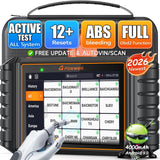 FOXWELL NT726 Bidirectional OBD2 Scanner
$368.99Read the codes behind warning lights.
FOXWELL NT726 Bidirectional OBD2 Scanner
$368.99Read the codes behind warning lights.
8. How to Program a Key Fob on a Silverado 1500
Programming a Silverado 1500 key fob varies significantly by generation. 2007–2013 trucks can be self-programmed with one working key. 2014–2018 models can add a key if you already have two programmed ones. 2019+ T1-generation trucks require dealer or locksmith programming equipment — there is no on-board procedure.
One catch on 2019: GM sold two generations side by side that year. The carryover trucks were badged Silverado 1500 LD and follow the earlier procedure, so check whether yours has the older dashboard before assuming.
📖 Full guide: How to Program a Key Fob on a Chevy Silverado 1500 (All Years)
9. How to Change Spark Plugs on the Silverado 1500 5.3L V8
The 5.3L EcoTec3 V8 uses iridium spark plugs with a long service interval, but inspection earlier is sensible on trucks that tow frequently or show any misfire symptoms. The aluminum heads require careful technique — always thread plugs in by hand first and finish with a torque wrench.
Two things not to do. Do not hand-gap the plugs: modern OE iridium plugs are pre-gapped at the factory and the fine centre electrode chips easily. And do not apply anti-seize to the threads — OE plugs ship with a plating that serves the same purpose, and anti-seize acts as a lubricant that causes you to over-torque while the wrench still reads correctly. In an aluminum head, that strips threads and turns a maintenance job into a cylinder head repair.
Key tip: On the driver's side, plugs 1, 3, 5, and 7 are relatively accessible. On the passenger's side, plugs 2, 4, 6, and 8 may require removing the air intake tube for full access. Use the plug part number and torque figure listed for your specific engine and model year rather than a generic one.
📖 Full guide: How to Change Spark Plugs on a Chevy Silverado 1500 5.3L V8
Spark plugs
 ACDelco 41-114 Iridium Spark Plugs 12622441, GM OE, Qty 8
$109.99Iridium plugs for the V8. Confirm engine. Confirm fitment by VIN before ordering.
ACDelco 41-114 Iridium Spark Plugs 12622441, GM OE, Qty 8
$109.99Iridium plugs for the V8. Confirm engine. Confirm fitment by VIN before ordering.

10. How to Winterize Your Silverado 1500
Cold weather is hard on every system in your Silverado — battery, tires, fluids, wipers, and four-wheel drive all need attention before winter arrives.
Winter prep checklist:
- Test battery load capacity — cold weather substantially reduces available output
- Check coolant freeze protection
- Verify the 4WD system engages and disengages properly before you need it on ice
- Switch to winter or all-season tires if operating in sustained below-freezing temps
- Replace wiper blades and top off with a winter-rated washer fluid
- Keep the fuel tank above half in extreme cold
📖 Full guide: How to Winterize Your Chevy Silverado 1500
Cold weather
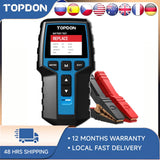 TOPDON BT200 12V Car Battery Tester Digital Automotive
$103.99Test the battery before winter.
TOPDON BT200 12V Car Battery Tester Digital Automotive
$103.99Test the battery before winter.
 Chevrolet Silverado 1500 Windshield Wiper Blades
$39.99Fresh blades for winter. Confirm year. Confirm fitment by VIN before ordering.
Chevrolet Silverado 1500 Windshield Wiper Blades
$39.99Fresh blades for winter. Confirm year. Confirm fitment by VIN before ordering.

Quick Reference: Silverado 1500 Fluid Specs
Figures below are typical for 2014–2026 trucks and are a planning reference, not a substitute for your owner's manual. Capacities and specifications vary by engine, model year and configuration.
| Fluid | 2014–2026 Spec | Capacity |
|---|---|---|
| Engine Oil (5.3L) | 0W-20 dexos1 Full Synthetic | 8 quarts w/filter |
| Engine Oil (6.2L) | 0W-20 dexos1 — but see the L87 recall note below | 8 quarts w/filter |
| Engine Oil (3.0L Duramax) | dexosD Full Synthetic | Verify by model year |
| Transmission (6L80) | Dexron VI ATF | ~11 quarts (drain/fill) |
| Transmission (8L90) | Dexron HP ATF | ~11 quarts (drain/fill) |
| Transfer Case | Auto-Trak II | ~2 quarts |
| Front Differential | 75W-90 Synthetic Gear Lube | ~2 quarts |
| Rear Differential | 75W-90 Synthetic Gear Lube | ~2.5 quarts |
| Coolant | Identify by GM specification, not by colour | ~16 quarts (system) |
| Power Steering | Electric (no fluid) | N/A (2014+) |
6.2L L87 recall note: engines produced 1 March 2021 – 31 May 2024 fall under GM's connecting rod and crankshaft recall. Vehicles that passed inspection and kept the original engine move from 0W-20 to dexos R 0W-40. 2019–2020 and 2025-and-newer stay on 0W-20; a 2021–2024 with a replacement engine depends on that engine's build date. Confirm against your VIN with your dealer — do not go by model year alone. Our 6.2L maintenance guide carries the full breakdown, and the dexos specification guide explains how dexos1, dexosD and dexos R differ.
Silverado 1500 Maintenance Schedule at a Glance
Intervals below are a planning framework. Your owner's manual and the oil life monitor govern, and severe service — towing, short trips, dust, extended idling — shortens several of them.
| Interval | Service Item |
|---|---|
| Per OLM | Engine oil & filter change, reset OLM |
| Every 7,500 miles | Tire rotation |
| Every 15,000 miles | Cabin air filter inspection |
| Every 25,000 miles | Brake inspection, battery test |
| Every 30,000 miles | Engine air filter, coolant test |
| Every 45,000 miles | Transmission fluid, transfer case fluid |
| Per manual | Spark plug replacement — interval varies by engine |
| Long interval | Coolant flush, differential fluid change |
More Silverado 1500 Resources
- 2026 Silverado 1500: Full Review & Specs
- Best Oil for the Silverado 1500 5.3L
- Silverado 1500 Towing Capacity Guide
- Silverado 1500 Won't Start: Causes & Fixes
- AFM/DFM Lifter Failure: What Every Silverado Owner Needs to Know
- Top 10 Best Upgrades for Your Silverado 1500
- GM 5.3L vs 6.2L: Which V8 Should You Choose?
- How to Reset the Oil Life on Your Silverado
- The Complete GM & Chevrolet Owner's Guide
— GM Service Guy
Shop Essential Silverado 1500 Parts
Confirm viscosity and part numbers against your VIN before ordering:


