
The Silverado 1500 is never going to beat a hybrid sedan at the pump, but most owners are leaving real fuel economy on the table through habits and maintenance issues that are entirely fixable. Here is what actually moves the needle — and, at the end, what does not.
1. Keep Tyres at the Correct Pressure
Underinflated tyres are the most common and most fixable cause of poor Silverado fuel economy, and most owners are running lower than they think.
What to do: check pressure cold, before driving, once a month. The correct figure is on the driver's door jamb placard — not the maximum pressure moulded into the tyre sidewall, which is a different number for a different purpose. A cheap gauge is all you need.
Tire pressure
 DTI-13G Digital Tire Inflator
$85.99Keep tires at the placard.
DTI-13G Digital Tire Inflator
$85.99Keep tires at the placard.
 Portable Corded Tire Inflator Pump
$64.99Keep tires at the placard.
Portable Corded Tire Inflator Pump
$64.99Keep tires at the placard.


2. Use Cruise Control on the Highway
Speed variation costs fuel. Every small acceleration burns more than holding a steady speed does, and on flat highway running cruise control removes most of that variation. It is less useful in rolling hills, where the system will hold speed up a grade more aggressively than you would.
3. Smooth Out Acceleration and Braking
Aggressive acceleration is the single largest driver-behaviour factor. Accelerating to your target speed over several seconds rather than a couple makes a measurable difference in city driving.
Braking matters just as much and gets less attention. Anticipate stops and coast into them — every hard stop converts speed you paid for into heat.
4. Use Eco Mode on an Empty Truck
On trucks with the Traction Select dial, Eco adjusts shift points to upshift earlier and hold lower revs under light load. It helps on an empty truck on a flat commute. Switch back to Normal or Tow/Haul the moment you have a real load — Eco holding tall gears under weight is worse for both economy and drivetrain heat.
5. Replace a Dirty Engine Air Filter
A clogged filter restricts airflow and makes the engine work harder. The effect on a modern truck is smaller than the figures you see quoted, because the engine management compensates for airflow changes — but a genuinely dirty filter is still worth replacing, and it is a five-minute job.
If you fit an oiled aftermarket filter, oil it sparingly. Over-oiling passes oil onto the mass airflow sensor, and GM has published a bulletin on the driveability and transmission shift complaints that follow.
Air filters
 ACDelco A3459C Air Cleaner Element 85614334
$37.98Engine air filters. Confirm year. Confirm fitment by VIN before ordering.
ACDelco A3459C Air Cleaner Element 85614334
$37.98Engine air filters. Confirm year. Confirm fitment by VIN before ordering.
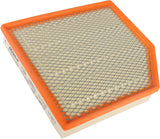 ACDelco A3258C Air Cleaner Element 84848112
$28.95Engine air filters. Confirm year. Confirm fitment by VIN before ordering.
ACDelco A3258C Air Cleaner Element 84848112
$28.95Engine air filters. Confirm year. Confirm fitment by VIN before ordering.
6. Remove Weight You Are Not Using
A bed full of tools, sand or equipment you are not using costs fuel on every trip. The same applies to an empty bed-mounted toolbox. Carry what the trip needs.
7. Remove Roof and Bed Accessories When Not in Use
At highway speed, aerodynamic drag is most of what the engine is fighting. Roof racks, ladder racks and bed extenders all add to it, and an empty rack is pure loss. If it is not earning its place this month, take it off.
Tonneau covers
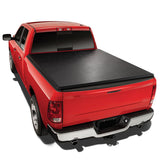 04-13 Chevy Silverado GMC Sierra 1500 Roll-Up Tonneau Cover
$379.99Covers for the bed. Confirm year and bed. Confirm fitment by VIN before ordering.
04-13 Chevy Silverado GMC Sierra 1500 Roll-Up Tonneau Cover
$379.99Covers for the bed. Confirm year and bed. Confirm fitment by VIN before ordering.
 07-18 Chevy Silverado GMC Sierra Hard Tri-Fold Tonneau Cover
$619.99Covers for the bed. Confirm year and bed. Confirm fitment by VIN before ordering.
07-18 Chevy Silverado GMC Sierra Hard Tri-Fold Tonneau Cover
$619.99Covers for the bed. Confirm year and bed. Confirm fitment by VIN before ordering.

8. Use the Viscosity Your Engine Specifies
Running a heavier oil than specified adds viscosity drag and costs economy without protecting the engine better — modern engines are built around a specific grade. Most 2014-onward EcoTec3 V8s specify 0W-20 to the dexos1 standard.
One important exception — do not apply the rule above to a recalled 6.2L. GM recalled 6.2L L87 engines built between 1 March 2021 and 31 May 2024 over connecting rod and crankshaft defects (NHTSA 25V-274). For vehicles that passed inspection and kept their original engine, GM's remedy specifies moving from 0W-20 to a dexos R 0W-40, with a new fill cap showing the change. If that applies to your truck, the heavier oil is the correct oil and a small economy difference is not a reason to override it. Check your fill cap and your VIN — our 6.2L guide has the detail.
Oil
 GM ACDelco 109326 0W-20 dexos1 Gen 3 Full Synthetic Motor Oil
$109.99dexos1 oil. Confirm viscosity. Confirm fitment by VIN before ordering.
GM ACDelco 109326 0W-20 dexos1 Gen 3 Full Synthetic Motor Oil
$109.99dexos1 oil. Confirm viscosity. Confirm fitment by VIN before ordering.
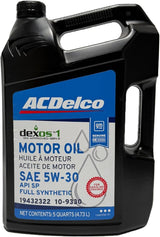 ACDelco 10-9330 dexos1 Gen 3 Full Synthetic 5W-30 Oil
$58.95dexos1 oil. Confirm viscosity. Confirm fitment by VIN before ordering.
ACDelco 10-9330 dexos1 Gen 3 Full Synthetic 5W-30 Oil
$58.95dexos1 oil. Confirm viscosity. Confirm fitment by VIN before ordering.

9. Highway Speed Matters More Than Anything Else on a Long Trip
Aerodynamic drag rises with the square of speed, so the penalty climbs faster than the speed does. Going from 65 to 75 mph costs far more than the 15% speed increase suggests.
On a long drive, slowing down 5–10 mph is usually the single most effective thing you can do — more than any part you can buy.
10. Keep Up with Ignition and Sensors
Worn plugs cause incomplete combustion, so the engine burns more fuel for the same work. Replace them at the interval in your maintenance schedule for your specific engine — intervals vary and a general figure is not reliable.
A lazy oxygen sensor skewing fuel trim is the quieter version of the same problem: no warning light, no obvious symptom, just a truck that drinks slightly more than it should. Our sensor diagnosis guide covers telling them apart before replacing anything.
Plugs and fuel cleaner
 ACDelco 41-114 Iridium Spark Plugs 12622441, GM OE, Qty 8
$109.99Fresh plugs for the V8. Confirm engine. Confirm fitment by VIN before ordering.
ACDelco 41-114 Iridium Spark Plugs 12622441, GM OE, Qty 8
$109.99Fresh plugs for the V8. Confirm engine. Confirm fitment by VIN before ordering.
 BG 44K Fuel System Cleaner Power Enhancer 11oz.
$24.95Keeps injectors clean.
BG 44K Fuel System Cleaner Power Enhancer 11oz.
$24.95Keeps injectors clean.


What Will Not Fix Your Fuel Economy
Worth being blunt, because this is where owners spend money for nothing:
- Cold air intakes. Sold on airflow, not economy. Any real-world mpg change is small enough to be lost in the noise of how you drive that week, and an over-oiled filter can cost you more than the intake gains.
- Tuners marketed for economy. A tune can change throttle response and shift behaviour, which may make a truck feel better to drive. Treating it as a fuel-economy purchase rarely pays back, and modifications can carry warranty and emissions implications depending on the device and where you live.
- Fuel additives, magnets and vortex devices. Detergent additives have a legitimate role in fuel system cleanliness. None of them are an economy fix.
The list at the top of this page is free or nearly free. That is not a coincidence — it is where the actual gains are.
Real-World MPG: What Owners Report
Owner-reported ranges, not EPA figures, and heavily dependent on driving style, load and terrain:
| Engine | City | Highway | Towing |
|---|---|---|---|
| 2.7L TurboMax 2WD | 18–20 | 22–25 | 14–17 |
| 5.3L V8 4WD | 14–16 | 18–21 | 9–13 |
| 6.2L V8 4WD | 13–15 | 17–20 | 8–12 |
| 3.0L Duramax 4WD | 20–22 | 25–28 | 15–18 |
Towing figures in particular vary enormously with trailer weight and frontal area — a tall enclosed trailer costs far more than its weight suggests.
📖 Back to: The Complete Silverado 1500 How-To Guide
Related: Best Oil for Silverado 5.3L | Duramax vs Gas: Real-World MPG | 5.3L vs 6.2L
A Note on Sourcing
Percentage improvement figures have been removed rather than repeated. An earlier version of this page quoted specific gains for cruise control, smooth acceleration and air filter replacement. Those numbers circulate widely but depend entirely on baseline driving style and conditions, and stating them as Silverado-specific was more precise than the evidence supports. The ranking of the tips is sound; the percentages were not.
The L87 recall details — production window, campaign number and the move to dexos R 0W-40 — come from NHTSA campaign 25V-274 and the associated GM dealer bulletin. This page previously told all 2014–2026 EcoTec3 owners to use 0W-20 and argued against heavier oil, which would have discouraged affected owners from following the recall remedy. That was a meaningful error and it is why the exception now sits inside the oil section rather than elsewhere.
The "what will not fix it" section reflects our own position. We sell intakes and tuners. They are not fuel economy products and we are not going to imply otherwise on a page about fuel economy.
MPG figures are owner-reported ranges rather than EPA ratings, included to set expectations rather than as specifications.
— GM Service Guy
Shop Related Parts & Accessories
Items that support the maintenance items above — confirm fitment and viscosity against your VIN:
-
 TPMS Tire Pressure Sensor — a working TPMS is how you find out a tyre is low
-
 ACDelco dexos1 Gen3 0W-20 Motor Oil for 5.3L/6.2L (6-qt case) — check your fill cap first if you have a 2021–2024 6.2L