
It's one of the most common questions we get from Silverado, Sierra, Tahoe, Suburban and Yukon buyers: is the 6.2L worth the upgrade over the 5.3L? The 5.3L is the volume seller and genuinely capable. The 6.2L is the performance choice. The real answer depends on how you use the truck, what the upgrade actually costs, and — if you are shopping used — one recall you need to know about first.
Before you shop a used 6.2L: check the L87 recall.
GM recalled 6.2L L87 engines produced between 1 March 2021 and 31 May 2024 over connecting rod and crankshaft manufacturing defects — NHTSA campaign 25V-274, covering roughly 597,630 US vehicles. The remedy is an inspection; vehicles that pass and keep their original engine move from 0W-20 to a dexos R 0W-40 oil and get a new fill cap showing the revised specification.
This does not mean avoid the 6.2L. It means run the VIN before you buy and find out whether the inspection was done, what the outcome was, and whether the engine was replaced. That history changes what you are buying and what oil it takes.
The Basics: What Are These Engines?
5.3L EcoTec3 V8 (L84)
- Horsepower: 355 hp
- Torque: 383 lb-ft
- Displacement: 5,328cc (325 cubic inches)
- Architecture: Gen V small block (LT family)
- Cylinder deactivation: Dynamic Fuel Management on 2019-onward trucks
6.2L EcoTec3 V8 (L87)
- Horsepower: 420 hp
- Torque: 460 lb-ft
- Displacement: 6,162cc (376 cubic inches)
- Architecture: Gen V small block (LT family) — a different generation from the older LS engines, despite the family resemblance
- Cylinder deactivation: Dynamic Fuel Management on 2019-onward trucks
Availability varies by model year. The 6.2L has generally been restricted to upper trims, but which trims exactly has moved around over the years. Check the build sheet for the specific year you are shopping rather than assuming.
Spark plugs
 ACDelco 41-114 Iridium Spark Plugs 12622441, GM OE, Qty 8
$109.99Plugs for the 5.3L and 6.2L. Confirm engine. Confirm fitment by VIN before ordering.
ACDelco 41-114 Iridium Spark Plugs 12622441, GM OE, Qty 8
$109.99Plugs for the 5.3L and 6.2L. Confirm engine. Confirm fitment by VIN before ordering.
 41-110 Iridium Spark Plugs 12621258 (4.8L/5.3L/6.0L)
$38.04Plugs for the 5.3L and 6.2L. Confirm engine. Confirm fitment by VIN before ordering.
41-110 Iridium Spark Plugs 12621258 (4.8L/5.3L/6.0L)
$38.04Plugs for the 5.3L and 6.2L. Confirm engine. Confirm fitment by VIN before ordering.


Performance Comparison
The 6.2L produces 65 more horsepower and 77 more lb-ft. In practice:
- Acceleration: roughly a second quicker to 60 mph in comparable crew cab configurations — a difference you notice merging and passing
- Towing feel: at heavy trailer weights the 5.3L is working; the 6.2L is not
- Highway passing: the 6.2L holds gear where the 5.3L downshifts
Published acceleration figures vary by source, cab, bed and drivetrain, so treat any specific number as approximate rather than a spec.
Towing Capacity
On a Silverado 1500 the 6.2L adds meaningful capacity — in the region of 1,800 lbs on comparably equipped crew cabs with the max trailering package. On Tahoe and Suburban the gap narrows sharply, because the SUV's own weight constrains the combined rating more than the engine does.
Do not buy a trailer against a number from an article. Tow ratings swing by well over 2,000 lbs across cab, bed, drivetrain and axle combinations within a single engine. The door jamb placard and the trailering supplement for your VIN are authoritative — our towing capacity guide covers how much those figures move.
Trailer brake controllers
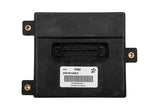 ACDelco Trailer Brake Control Module
$173.99Factory-style controllers. Confirm year. Confirm fitment by VIN before ordering.
ACDelco Trailer Brake Control Module
$173.99Factory-style controllers. Confirm year. Confirm fitment by VIN before ordering.
 ACDelco Trailer Brake Controller 84109447
$83.99Factory-style controllers. Confirm year. Confirm fitment by VIN before ordering.
ACDelco Trailer Brake Controller 84109447
$83.99Factory-style controllers. Confirm year. Confirm fitment by VIN before ordering.

Fuel Economy: Closer Than You'd Think
EPA combined figures typically separate the two engines by about 1 mpg — smaller than most people expect from an engine 16% larger. Cylinder deactivation is doing much of that work. Many owners report highway economy that is closer still, with the gap widening under load or aggressive driving.
Check the EPA figures for the exact year and drivetrain you are considering; they shift between model years.
Oil
 GM ACDelco 109326 0W-20 dexos1 Gen 3 Full Synthetic Motor Oil
$109.99dexos1 oil and filter. Confirm viscosity for your engine and year. Confirm fitment by VIN before ordering.
GM ACDelco 109326 0W-20 dexos1 Gen 3 Full Synthetic Motor Oil
$109.99dexos1 oil and filter. Confirm viscosity for your engine and year. Confirm fitment by VIN before ordering.
 ACDelco GM Original Equipment PF64 (25206966) Oil Filter
$13.89dexos1 oil and filter. Confirm viscosity for your engine and year. Confirm fitment by VIN before ordering.
ACDelco GM Original Equipment PF64 (25206966) Oil Filter
$13.89dexos1 oil and filter. Confirm viscosity for your engine and year. Confirm fitment by VIN before ordering.


Cost: The Part That Decides It for Most Buyers
The 6.2L generally is not a standalone box you tick. It has been tied to upper trims, which means getting it usually requires stepping up a trim level and paying for everything else that comes with it — suspension, wheels, interior, the lot.
If you wanted those features anyway, the engine is close to a bonus. If you only want the engine, the cost per horsepower is poor. On the used market that logic inverts, because trim premiums compress with age and a 6.2L truck can land near an equivalent 5.3L. That is the strongest case for the bigger engine — with the recall check above done first.
Reliability
Both engines share the Gen V small block architecture and much of their design, so the differences are narrower than forum arguments suggest.
The L87 recall
The 2021–2024 connecting rod and crankshaft issue is specific to the 6.2L L87 and is the single biggest reliability consideration between these two engines right now. 2019–2020 and 2025-and-newer L87s are outside the campaign. Check the VIN.
AFM/DFM lifter failure
Both engines use cylinder deactivation and both see lifter failures. The 5.3L has more reported failures in absolute terms simply because far more were built. Our AFM/DFM lifter failure guide covers symptoms and what to do.
A straight answer on AFM disablers
These devices keep the engine from dropping into reduced-cylinder mode. That is genuinely useful to some owners, and it is not a repair. A disabler does not fix a failing lifter, does not undo existing wear, and is not a substitute for diagnosis if you already hear a tick. It also does not carry a manufacturer endorsement, and modifying how emissions-related systems operate can have warranty and compliance implications depending on the device and where you live. Buy one for the driving behaviour if you want it; do not buy one believing it is preventive maintenance with an evidence base behind it.
Long-term durability
The 6.2L turns fewer revolutions for the same work, which is a real if modest advantage. Against that, there are plenty of 200,000-mile 5.3Ls. Maintenance history matters more than displacement.
Lifters and AFM
 Valve Lifter Kit 2005-2020 GM
$471.99Lifter kits. Confirm engine. Confirm fitment by VIN before ordering.
Valve Lifter Kit 2005-2020 GM
$471.99Lifter kits. Confirm engine. Confirm fitment by VIN before ordering.
 Valve Lifter 2005-2020 GM
$46.99Lifter kits. Confirm engine. Confirm fitment by VIN before ordering.
Valve Lifter 2005-2020 GM
$46.99Lifter kits. Confirm engine. Confirm fitment by VIN before ordering.
 AFM/DFM Disabler for GM V6 & V8
$57.98Plug-in AFM disabler.
AFM/DFM Disabler for GM V6 & V8
$57.98Plug-in AFM disabler.


Which Should You Choose?
The 5.3L makes sense if
- You are buying a lower or mid trim and want to stay there
- Your towing is comfortably inside the 5.3L's rating
- You want the most cost-effective V8
- Parts availability and service familiarity matter to you — nothing is better supported
The 6.2L makes sense if
- You are already shopping the trim it comes on
- You tow near the top of the 5.3L's range and want headroom
- Performance genuinely matters to you
- You are buying used and can find one near equivalent 5.3L pricing — with the recall history checked
What About the 3.0L Duramax?
If towing efficiency and fuel economy are your priorities, the 3.0L Duramax deserves a look. It offers strong torque, competitive tow ratings and substantially better economy than either petrol V8 — output has increased across its production run, so check figures for your specific year rather than assuming. It costs more upfront, and whether that pays back depends on your annual mileage, diesel pricing where you live, and how much you actually tow.
Worth noting for anyone buying new: both of these V8s are being replaced. The 2027 Silverado drops the 5.3L for a new 5.7L and the 6.2L for a new 6.6L — see our 2027 Silverado guide.
3.0L Duramax
 ACDelco dexosD 0W-20 Diesel Oil Change Kit
$125.46dexosD oil kit. Confirm engine. Confirm fitment by VIN before ordering.
ACDelco dexosD 0W-20 Diesel Oil Change Kit
$125.46dexosD oil kit. Confirm engine. Confirm fitment by VIN before ordering.

Related Guides
- 6.2L L87 Maintenance: Recall Detail and Which Oil Applies
- Best Oil for Chevrolet Silverado 5.3L
- GM AFM/DFM Lifter Failure: Symptoms & Causes
- How to Check GM Recalls by VIN
- Silverado & Sierra Towing Capacity Guide
A Note on Sourcing
The L87 recall details — the 1 March 2021 to 31 May 2024 production window, the 597,630 US vehicle count, the inspection remedy and the move to dexos R 0W-40 — come from NHTSA campaign 25V-274 and the associated GM dealer bulletin. An earlier version of this page recommended the 6.2L, including on the used market, without mentioning the campaign at all. That was a significant omission on a page written to guide a purchase, and it is why the recall now sits at the top rather than in a footnote.
Horsepower, torque and displacement are GM published figures. Acceleration times, tow ratings and EPA economy are given as ranges or approximations because they vary by cab, bed, drivetrain and model year — in the case of tow ratings, by well over 2,000 lbs within a single engine. Your door jamb placard governs.
The AFM disabler section reflects our own position. We sell these devices. They change driving behaviour; they do not repair lifters or prevent failure, and we are not going to imply otherwise on a page about engine reliability.
— GM Service Guy
Shop Related Parts & Accessories
Confirm the viscosity your engine takes against your oil cap or VIN before ordering — 2021–2024 L87s may be on 0W-40 rather than 0W-20:
-
 ACDelco dexos1 Gen3 0W-20 Motor Oil for 5.3L/6.2L (6-qt case)
-
 Cold Air Intake Kit (5.3L/6.2L Silverado/Sierra)
-
 AFM/DFM Disabler Device (GM V6/V8) — changes deactivation behaviour; not a lifter repair