
Nothing's more frustrating than climbing into your Silverado and getting nothing — or a click, or a crank with no fire. The good news: most no-start conditions follow a predictable pattern, and many are fixable without a tow or a big repair bill.
This guide covers the common causes across 1999 to 2026 Silverados, ordered roughly from most to least likely, so you can work through it quickly.
Corrections — two errors have been fixed on this page.
- GM's anti-theft system is Passlock, not PATS. An earlier version referred to "Passlock/PATS". PATS — Passive Anti-Theft System — is Ford's. GM has used VATS, PassKey and Passlock. Searching the wrong name sends you to procedures for a different manufacturer's vehicle.
- "Service StabiliTrak" is not a no-start symptom. It was listed as one alongside the security light. StabiliTrak is stability control — it can be faulted while the engine starts perfectly normally, and it does not cut fuel or spark. The security light is the one that matters here.
Step 1: What Is the Truck Actually Doing?
Before diagnosing anything, identify exactly what happens when you turn the key or press the button. Each symptom points somewhere different:
- Nothing at all — no click, no crank, no dash lights: dead battery, blown fuse, bad ignition switch, or a failed ground
- One loud click, then nothing: the starter solenoid is trying to engage without enough current — battery or connections
- Rapid clicking: classic weak or dead battery
- Cranks normally but won't fire: fuel, spark, crank signal, or anti-theft
- Cranks slowly: weak battery, poor connections, or a starter drawing excessive current
- Security light on and won't fire: Passlock or immobiliser fault
Crank versus no-crank is the most important distinction you can make, and it halves the diagnostic tree straight away. A truck that cranks has a working battery, starter and ground path — so stop looking at those.
Jump starters
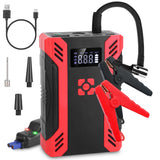 Car Jump Starter with Air Compressor
$177.99Get the truck started.
Car Jump Starter with Air Compressor
$177.99Get the truck started.
Most Common Causes
1. Dead or Weak Battery (Most Common)
Batteries typically last three to five years, less in extreme heat. A battery can read 12.6V and still fail under load, which is why a voltmeter alone is not enough.
How to confirm: a proper load test. Under load a healthy 12V battery should hold above roughly 9.6V.
Fix: replace with the correct group size for your year and engine — confirm against the label on the existing battery or your owner's manual rather than assuming, since Silverado group sizes vary across generations and engines.
2. Corroded or Loose Battery Terminals and Grounds
Even a good battery cannot deliver current through a bad connection. White or bluish powder on the terminals is the giveaway.
Do not stop at the terminals. Check the negative cable where it bolts to the engine block and the body ground straps. A corroded ground produces exactly the same symptoms as a dead battery and costs nothing to clean.
3. Failing Starter Motor
On higher-mileage trucks the starter wears out. Look for grinding during cranking, or an intermittent no-start that worsens.
Field test: with a charged battery, tapping the starter housing while someone cranks will sometimes get one more start out of a failing unit — which confirms the diagnosis rather than fixing anything.
4. Passlock / Anti-Theft (Security Light On)
GM's Passlock system — common on 1999–2010 Silverados — is a well-known source of no-starts. The Security light illuminates, the engine cranks normally, and it will not fire because fuel is being cut.
The relearn procedure: turn the key to ON without cranking and leave it until the Security light stops flashing and goes out, which takes about ten minutes. Turn the key off for around five seconds. Repeat that cycle three times — roughly thirty minutes in total — then attempt to start.
If it starts and the problem returns, the usual culprits are the ignition lock cylinder or the Passlock sensor wiring.
5. Fuel Delivery
If it cranks normally, the Security light is off, and it will not fire, look at fuel next.
- Fuel pump: turn the key to ON and listen for a two-second hum from the tank. No hum points to the pump, its relay, or its supply.
- Fuel pump power control module: on many 2014 and newer GM vehicles this module drives the pump, and it has been the subject of a GM emission recall covering module failure that interrupts fuel flow. If you have a newer truck with a no-start or a stall, check whether that campaign is open on your VIN before buying a fuel pump.
- Fuel filter: on older Silverados with a serviceable inline filter, a clogged filter starves the engine. Most newer trucks use a non-serviceable in-tank filter.
Fuel pressure: older Vortec V8s generally want somewhere in the mid-50s to low-60s PSI. Direct-injected EcoTec3 engines are a different system entirely with a high-pressure pump, so do not apply a port-injection specification to a 2014 or newer truck — look up the figure for your engine.
6. Ignition Switch
The electrical portion of the switch, not the lock cylinder, is a known weak point on older trucks. Symptoms include intermittent no-start, accessories not powering up, or the engine cutting out while driving.
7. Crankshaft Position Sensor
Without a crank signal the control module does not know when to fire injectors or spark, so the engine cranks and never catches.
Classic pattern: starts fine cold, refuses when hot — the heat-soak no-start.
Codes: P0335 and P0336.
8. Neutral Safety Switch / Transmission Range Sensor
The truck only cranks in Park or Neutral. If the range sensor drifts out of adjustment it may not crank at all.
Thirty-second test: try starting in Neutral. If it fires in Neutral but not Park, you have found it.
9. Blown Fuse or Failed Relay
Fuel pump and starter relays fail. Check both the under-hood and in-cab fuse boxes. A useful trick: swap a suspect relay with an identical one from a non-critical circuit such as the horn, and see whether the fault moves.
10. Key Fob (Push-Button Start Trucks)
A dead fob battery will stop a push-button truck starting, often with a "No Remote Detected" message. Most GM systems can read the fob at very close range — hold it against the start button and press. Then replace the coin cell.
Batteries and starters
 ACDelco Professional AGM Battery 65XAGM
$487.99AGM batteries and starters. Confirm fitment by VIN before ordering.
ACDelco Professional AGM Battery 65XAGM
$487.99AGM batteries and starters. Confirm fitment by VIN before ordering.
 ACDelco Starter, New, Replacement 3371201
$171.99AGM batteries and starters. Confirm fitment by VIN before ordering.
ACDelco Starter, New, Replacement 3371201
$171.99AGM batteries and starters. Confirm fitment by VIN before ordering.
 ACDelco Starter, New, Replacement 3371200
$252.99AGM batteries and starters. Confirm fitment by VIN before ordering.
ACDelco Starter, New, Replacement 3371200
$252.99AGM batteries and starters. Confirm fitment by VIN before ordering.


Diagnostic Order
- Note exactly what it does — crank or no crank
- Check battery voltage at rest, ideally 12.4–12.6V
- Inspect and clean terminals and engine and body grounds
- Try starting in Neutral
- Look at the Security light — if lit, run the Passlock relearn
- Scan for codes, including chassis and body codes, not just P-codes
- Listen for the fuel pump prime with the key at ON
- Check fuses and relays in both boxes
- If it cranks slowly, load-test the battery and check starter draw
Testers and scan tools
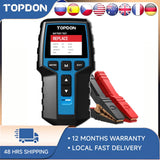 TOPDON BT200 12V Car Battery Tester Digital Automotive
$103.99Test the battery and read codes.
TOPDON BT200 12V Car Battery Tester Digital Automotive
$103.99Test the battery and read codes.
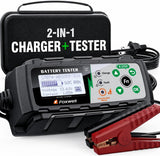 FOXWELL BC521 Battery Charger & Tester
$162.35Test the battery and read codes.
FOXWELL BC521 Battery Charger & Tester
$162.35Test the battery and read codes.
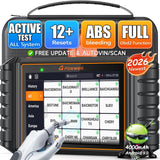 FOXWELL NT726 Bidirectional OBD2 Scanner
$368.99Test the battery and read codes.
FOXWELL NT726 Bidirectional OBD2 Scanner
$368.99Test the battery and read codes.
 FOXWELL NT614 Elite OBD2 Scanner
$233.69Test the battery and read codes.
FOXWELL NT614 Elite OBD2 Scanner
$233.69Test the battery and read codes.

When to Stop and Call for a Tow
If it will not crank after checking battery, connections and fuses, or you are getting control module codes, get it to a shop. Repeated cranking attempts on a fuelling fault can wash oil off the cylinder walls and load the catalytic converter with raw fuel, turning a no-start into a considerably more expensive problem.
Ignition parts
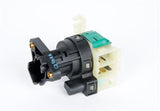 ACDelco Ignition Starter Switch
$145.99Ignition switch and lock cylinder. Confirm year. Confirm fitment by VIN before ordering.
ACDelco Ignition Starter Switch
$145.99Ignition switch and lock cylinder. Confirm year. Confirm fitment by VIN before ordering.
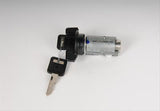 ACDelco Ignition Key Lock Cylinder, Black Finish
$108.99Ignition switch and lock cylinder. Confirm year. Confirm fitment by VIN before ordering.
ACDelco Ignition Key Lock Cylinder, Black Finish
$108.99Ignition switch and lock cylinder. Confirm year. Confirm fitment by VIN before ordering.
Frequently Asked Questions
My Silverado cranks but won't start. Where do I begin?
Cranking tells you the battery, starter and grounds are working, so ignore those. Check the Security light first — if it is on, you have a Passlock or immobiliser fault and the engine is being denied fuel. If it is off, listen for the two-second fuel pump prime when you turn the key to ON, then scan for crankshaft position sensor codes P0335 and P0336.
What is Passlock and how do I reset it?
Passlock is GM's anti-theft system, common on 1999 to 2010 Silverados. When it faults the engine cranks but will not fire, with the Security light illuminated. The relearn is to turn the key to ON without cranking, wait about ten minutes until the Security light goes out, turn off for five seconds, and repeat that cycle three times — roughly thirty minutes total. Note that GM uses Passlock; PATS is Ford's system, and searching for it will bring up the wrong procedures.
Can a Service StabiliTrak message stop my truck starting?
No. StabiliTrak is the stability control system. It can be faulted and disabled while the engine starts and runs perfectly normally, and it does not cut fuel or spark. An earlier version of this page listed it as a no-start symptom, which was wrong. The light to watch for a no-start is the Security light.
My battery reads 12.6 volts. Can it still be the problem?
Yes, and this catches people out constantly. Resting voltage only tells you the state of charge, not whether the battery can deliver current under load. A battery can show 12.6V and collapse the moment the starter draws on it. You need a load test, where a healthy battery should hold above roughly 9.6V.
It clicks once but won't crank. Is that the starter?
Not necessarily. A single click is the solenoid attempting to engage without enough current behind it, which is far more often a battery or connection problem than a failed starter. Check the terminals, then the negative cable where it bolts to the engine block, and the body ground straps. A corroded ground mimics a dead battery exactly.
Could a recall be causing my no-start?
Possibly, on newer trucks. GM has run an emission recall covering the fuel pump power control module, where module failure can interrupt fuel flow to the engine. If you have a 2022 or 2023 truck that cranks but will not fire, or that has stalled unexpectedly, have a dealer check whether that campaign is open against your VIN before you pay for a fuel pump.
Why does it start when cold but not when hot?
That pattern points strongly at the crankshaft position sensor. As it heats up, an ageing sensor can stop producing a usable signal, so the control module has no crank reference and will not fire the injectors. Let it cool and it starts again. Codes P0335 and P0336 support the diagnosis.
How long should I keep cranking before I stop?
Not long. Repeated extended cranking on a fuelling fault washes oil off the cylinder walls and can push raw fuel into the catalytic converter, damaging it. If it has not fired after a few short attempts, stop and diagnose rather than continuing to crank.
A Note on Sourcing
This page is general diagnostic guidance based on service experience, not a GM procedure. The diagnostic order, the field tests and the cost implications are ours.
Two errors were corrected in this revision. GM's anti-theft system was referred to as "Passlock/PATS"; PATS is Ford's system and the reference has been removed. And "Service StabiliTrak" was listed as a no-start symptom, which it is not.
Two figures were deliberately softened rather than restated. Battery group sizes vary across Silverado generations and engines, so the page now tells you to confirm against your own battery label instead of naming a group. And the fuel pressure specification given previously applies to older port-injected Vortec engines — direct-injected EcoTec3 engines use a different system, so applying one figure across 1999 to 2026 would have been wrong.
The fuel pump power control module recall reference links to our own coverage, which is built from GM's bulletins as published by NHTSA.
Codes and procedures vary by model year. Service information for your specific truck is authoritative in a way that a general guide cannot be.
Related GM Service Guides
- The Complete GM & Chevrolet Owner's Guide
- Emission Recall: Fuel Pump Power Control Module
- What Does It Mean When My Battery Gauge Reads 12?
- Battery Replacement & Maintenance Guide for GM Vehicles
Shop Related Parts & Accessories
Useful when the truck won't start:
-
 Buture Beta04 Heavy Duty Car Jump Starter 6000A — $109.99. Gets you moving, but note a jump start that works confirms a battery or charging problem rather than fixing one.
-
 Buture Beta07 Car Jump Starter 6000A w/ Air Compressor — $99.99
-
 VTOMAN V6 Pro Jump Starter Power Bank 2000A — $70.35
-
 Crankshaft Position Sensor (GM) — $35.05. Confirm fitment against your engine before ordering — and confirm the diagnosis first.