
Cold weather stresses every system in your Silverado 1500 — the battery loses output, fluids thicken, tyres lose pressure, and a 4WD system that has not been used since last winter can bind up exactly when you need it. A few hours of prep in the autumn prevents most cold-weather breakdowns.
1. Battery — The Number One Winter Failure Point
Cold cuts available battery output substantially while simultaneously making the engine harder to crank through thickened oil. That double effect is why winter is when most batteries fail, and why a battery that seemed fine in October dies in January.
What to do:
- Get a load test, not a voltage check. This is the important distinction — a battery can read a healthy 12.6V at rest and still collapse under cranking current. Most parts stores do load tests free.
- If the battery is several years old and shows any weakness under load, replace it before winter rather than after it strands you.
- Clean terminal corrosion and check the hold-down bracket is tight — vibration works connections loose over time.
Battery group size varies by model year and configuration, so confirm yours against the vehicle rather than a general figure. AGM batteries generally handle cold and heavy accessory loads well.
Battery tools
 TOPDON BT200 12V Car Battery Tester Digital Automotive
$103.99Test and charge before the cold hits.
TOPDON BT200 12V Car Battery Tester Digital Automotive
$103.99Test and charge before the cold hits.
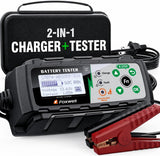 FOXWELL BC521 Battery Charger & Tester
$162.35Test and charge before the cold hits.
FOXWELL BC521 Battery Charger & Tester
$162.35Test and charge before the cold hits.
 FOXWELL BT705 Battery & Alternator Tester
$159.89Test and charge before the cold hits.
FOXWELL BT705 Battery & Alternator Tester
$159.89Test and charge before the cold hits.

2. Coolant — Test the Freeze Point
Identify your coolant by its GM specification, not by its colour. Colour is a dye choice and manufacturers have used the same colours for chemically different products; the specification in your owner's manual is what governs. Mixing incompatible coolant chemistries can produce gelling and cooling system blockage, which is a far bigger problem than the one you were trying to solve.
How to check: an inexpensive antifreeze tester — hydrometer or refractometer — reads the freeze point directly. Test cold. If protection is marginal for your climate, correct the mixture with the right concentrate for your specification.
If the coolant looks brown, cloudy, or has visible scale or rust, it needs replacing regardless of what the freeze point reads.
Coolant and block heater
 ACDelco 10-101 DEX-COOL Extended Life Coolant, 1 Gallon
$31.95DEX-COOL and block heater. Confirm engine. Confirm fitment by VIN before ordering.
ACDelco 10-101 DEX-COOL Extended Life Coolant, 1 Gallon
$31.95DEX-COOL and block heater. Confirm engine. Confirm fitment by VIN before ordering.
 ACDelco Engine Block Heater 12657629
$99.99DEX-COOL and block heater. Confirm engine. Confirm fitment by VIN before ordering.
ACDelco Engine Block Heater 12657629
$99.99DEX-COOL and block heater. Confirm engine. Confirm fitment by VIN before ordering.


3. Engine Oil — Use What Your Engine Specifies
Full synthetic in the grade your engine specifies is already excellent cold-weather oil — the winter rating (the number before the W) describes how readily it flows at low temperature, which is exactly what matters at a cold start. Most 2014-onward EcoTec3 V8s specify 0W-20 to the dexos1 standard.
Exception — the 6.2L L87 recall. Engines built 1 March 2021 to 31 May 2024 fall under NHTSA campaign 25V-274, and vehicles that passed inspection and kept their original engine move from 0W-20 to dexos R 0W-40, with a revised fill cap. If that is your truck, the 0W-40 is correct for winter too — it is still a 0W oil, so cold-start flow is unchanged. Check your fill cap and VIN; our 6.2L guide has the detail.
Oil
 GM ACDelco 109326 0W-20 dexos1 Gen 3 Full Synthetic Motor Oil
$109.99dexos1 0W-20. Confirm viscosity. Confirm fitment by VIN before ordering.
GM ACDelco 109326 0W-20 dexos1 Gen 3 Full Synthetic Motor Oil
$109.99dexos1 0W-20. Confirm viscosity. Confirm fitment by VIN before ordering.

4. Test and Exercise the 4WD System
If you have not used 4WD since last winter, test it before you need it on ice. Months of sitting lets actuators stick and linkages bind.
- Find a safe, empty lot
- Engage 4Hi and drive briefly, listening for unusual noise
- Make a few low-speed turns — do not hold a tight turn in 4Hi on dry pavement, which binds the driveline
- Stop, shift to Neutral, select 4Lo, drive briefly, disengage
- Return to 2H and confirm it disengages cleanly
Severe binding, failure to engage, or a Service 4WD message means diagnosis before winter, not after.
5. Tyres — The Most Important Winter Safety Item
Winter tyres versus all-season
Factory all-seasons cope with light snow and cold rain. If you regularly drive in sustained freezing temperatures, heavy snow or ice, dedicated winter tyres make a substantial difference — and this is the point owners most often miss: 4WD helps you accelerate. It does nothing for steering or stopping. Braking and cornering grip come from the tyres alone, which is why 4WD trucks on worn all-seasons end up in ditches.
Pressure
Tyre pressure falls as temperature drops — roughly 1 PSI for every 10°F. A truck set to placard pressure in mild autumn weather can be meaningfully underinflated on the first hard freeze. Check every few weeks through the cold months, cold, against the door jamb placard.
Tread depth
2/32" is the legal minimum, not the winter replacement point. Snow and wet traction fall off well before that, so aim to replace nearer 4/32" if you drive in winter conditions.
A word on snow chains
Do not fit chains to a Silverado without checking your owner's manual first. GM restricts or prohibits chain use on many configurations, and the restriction depends on tyre size and wheel well clearance rather than on the truck generally. There is often very little space between the tyre and the brake lines, suspension components and inner wheel housing — a chain that contacts them at speed does expensive damage, and on a brake line it does dangerous damage. Where chains are permitted, the manual specifies which axle and which type. If your truck runs a larger-than-factory tyre, assume the factory guidance no longer applies and check clearance directly.
Tire pressure
 DTI-13G Digital Tire Inflator
$85.99Pressure drops in the cold.
DTI-13G Digital Tire Inflator
$85.99Pressure drops in the cold.
 Portable Corded Tire Inflator Pump
$64.99Pressure drops in the cold.
Portable Corded Tire Inflator Pump
$64.99Pressure drops in the cold.


6. Wipers and Washer Fluid
- Winter blades — beam-style designs without an exposed frame, because conventional frames pack with ice and stop conforming to the glass
- Winter-rated washer fluid. Summer fluid freezes in the reservoir, the lines and on the glass. Fluid freezing on contact in front of you at highway speed is a genuine hazard, not an inconvenience
- Keep the reservoir full — road spray burns through it fast
Wipers
 Chevrolet Silverado 1500 Windshield Wiper Blades
$39.99Silverado blades. Confirm year. Confirm fitment by VIN before ordering.
Chevrolet Silverado 1500 Windshield Wiper Blades
$39.99Silverado blades. Confirm year. Confirm fitment by VIN before ordering.

7. Driveline Fluids
Old or moisture-contaminated transfer case and differential fluid performs poorly in extreme cold and can cause rough 4WD engagement. If yours has never been changed and the truck has meaningful mileage, before winter is a sensible time.
Intervals vary by model year, configuration and use — towing and off-road use shorten them — so follow the schedule for your vehicle rather than a general figure.
8. Winter Emergency Kit
- Jump starter or jumper cables — keep a lithium jump pack charged and indoors when possible, since cold reduces its capacity too
- Recovery strap rated for the truck, and know where your rated recovery points are
- Collapsible shovel
- Sand or cat litter for traction
- Ice scraper and snow brush
- Blanket, gloves, hat — the kit is for you as much as the truck
- Torch, and a spare jug of winter washer fluid
If you do get stuck somewhere remote, staying with the vehicle is almost always safer than walking. Clear snow away from the exhaust tailpipe before running the engine for heat — a blocked tailpipe pushes exhaust into the cabin.
Emergency kit
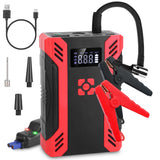 Car Jump Starter with Air Compressor
$177.99Jump starter for cold mornings.
Car Jump Starter with Air Compressor
$177.99Jump starter for cold mornings.
Quick Reference
| System | Action | Priority |
|---|---|---|
| Battery | Load test; replace if weak or aged | Critical |
| Coolant | Test freeze point; replace if discoloured | Critical |
| Tyres | Tread depth, pressure, consider winter tyres | Critical |
| 4WD | Test all modes before the first storm | Important |
| Wipers & washer fluid | Winter blades, winter-rated fluid | Important |
| Engine oil | Confirm the grade your engine specifies | Important |
| Driveline fluids | Change if overdue per your schedule | Recommended |
| Emergency kit | Pack it before you need it | Recommended |
📖 Back to: The Complete Silverado 1500 How-To Guide
Related: How to Engage 4WD on a Silverado 1500 | Battery Replacement Guide
A Note on Sourcing
The snow chain warning was added in this revision. An earlier version recommended universal chains with no fitment caveat. GM restricts or prohibits chain use on many Silverado configurations depending on tyre size and clearance, and the consequences of getting it wrong include contact with brake lines. That warning belongs on any page that mentions chains.
Coolant is now identified by specification rather than colour, consistent with the rest of our guides. Colour is a dye choice, not a chemistry.
The L87 recall details come from NHTSA campaign 25V-274 and the associated GM dealer bulletin. This page previously told all 2014–2026 EcoTec3 owners to verify 0W-20 was in the engine, which is wrong for recalled 6.2L trucks now specified 0W-40.
Battery percentage-capacity figures and fluid change intervals have been removed rather than repeated. Both vary — capacity loss with temperature depends on battery type, age and state of charge, and service intervals vary by configuration and use. The actions are what matter, not the numbers.
— GM Service Guy
Shop Related Parts & Accessories
Cold-weather essentials — confirm fitment against your vehicle before ordering:
-
 Buture Beta04 Heavy Duty Car Jump Starter 6000A
-
 Buture Beta01 Jump Starter with Air Compressor — the compressor is useful when pressures drop with the temperature
-
 ACDelco Radiator Cap 15 PSI
We also stock universal snow chains, but we are not linking them from this page: chain fitment on a Silverado depends on your tyre size and wheel well clearance, and your owner's manual may restrict or prohibit their use entirely. Check that first.