
If your GM has a gasoline engine, you need dexos1 Gen 3. If it has the 3.0L Duramax inline-six, you need dexosD. dexos2 is a European-market specification built on ACEA C3 and it is not the right oil for a US Duramax. High-output engines like the supercharged LT4 take dexosR — as do a large group of recalled 6.2L L87 engines. Four specs, four different jobs.
The confusion here costs people real money, because oil is one of the few maintenance decisions where the wrong choice does not announce itself. Nothing lights up. The engine just wears differently. Below is the decision table by engine, what actually changed between generations, and the federal recall that flipped the answer for nearly 600,000 trucks and SUVs. Everything you need is in GM oil, filters and maintenance parts.
If you own a 2021–2024 truck or SUV with the 6.2L L87, check your VIN before your next oil change. NHTSA Safety Recall 25V-274 covers 597,630 US vehicles for a defect that can cause engine failure and loss of propulsion while driving. For engines that pass inspection, the remedy changes the specified oil from 0W-20 to 0W-40.
This is a safety recall, not a maintenance note. Details and the current investigation status are below.
Parts and tools you'll need
- Licensed dexos oil and ACDelco oil filters for your GM engine — buy the filter and the drain plug gasket at the same time
- Your owner's manual, or the oil cap on your engine, which usually has the viscosity molded into it
- A drain pan rated for at least 10 quarts if you have a V8 or a diesel
- An oil filter wrench that matches your filter's cap size — GM cartridge housings and spin-on filters need different tools
dexos1 Gen 3 oil
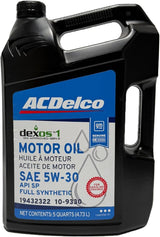 ACDelco 10-9330 dexos1 Gen 3 Full Synthetic 5W-30 Oil
$58.95dexos1 Gen 3 approved oil.
ACDelco 10-9330 dexos1 Gen 3 Full Synthetic 5W-30 Oil
$58.95dexos1 Gen 3 approved oil.
 GM ACDelco 109326 0W-20 dexos1 Gen 3 Full Synthetic Motor Oil
$109.99dexos1 Gen 3 approved oil.
GM ACDelco 109326 0W-20 dexos1 Gen 3 Full Synthetic Motor Oil
$109.99dexos1 Gen 3 approved oil.
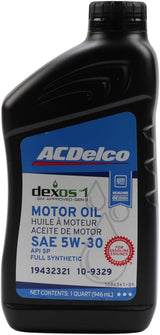 ACDelco 10-9329 dexos1 Gen 3 5W-30 Oil, 1 Qt
$16.99dexos1 Gen 3 approved oil.
ACDelco 10-9329 dexos1 Gen 3 5W-30 Oil, 1 Qt
$16.99dexos1 Gen 3 approved oil.
 ACDelco dexos1 Gen 3 0W-20 Full Synthetic Oil 10-9322
$79.99dexos1 Gen 3 approved oil.
ACDelco dexos1 Gen 3 0W-20 Full Synthetic Oil 10-9322
$79.99dexos1 Gen 3 approved oil.


What is the difference between dexos1 Gen 3, dexos2 and dexosD?
dexos1 Gen 3 is GM's gasoline engine specification, introduced for the 2021–2022 model years, sold in 0W-20 and 5W-30. dexos2 is the European specification based on ACEA C3, introduced for MY2011, sold in 5W-30 and 5W-40. dexosD is the light-duty diesel specification, 0W-20, created specifically for the 3.0L Duramax.
They are not tiers of the same thing. They are different chemistries built for different combustion environments. A gasoline engine and a modern light-duty diesel put entirely different demands on an oil — soot loading, fuel dilution profile, aftertreatment compatibility — and you cannot substitute across them because one number looks bigger than another.
The naming is genuinely bad and GM knows it. dexos2 sounds like it should supersede dexos1, and it does not. dexos2 is a parallel spec for a different market. Read the letter and the market, not the digit.
Which dexos spec does my engine require?
Match your engine, not your model. A 2022 Silverado can leave the factory with four different engines requiring three different oils. Find the engine RPO code on the sticker in your glovebox, or read the eighth character of your VIN, and use this chart.
| Engine | Spec | Viscosity | Capacity | Notes |
|---|---|---|---|---|
| 2.7L L3B TurboMax I4 | dexos1 Gen 3 | 5W-30 | 6.0 qt (5.7 L) | Turbocharged — LSPI protection matters here |
| 3.6L LGX V6 | dexos1 Gen 3 | 5W-30 | 6.0 qt (5.7 L) | Colorado, Canyon, Traverse, Acadia applications |
| 5.3L L83 / L84 V8 | dexos1 Gen 3 | 0W-20 | 8.0 qt (7.6 L) | The most common half-ton engine |
| 6.2L L87 V8 | dexos1 Gen 3 — or dexosR if covered by recall 25V-274 | 0W-20, or 0W-40 | 8.0 qt (7.6 L) | Depends on build date and recall status. See below. |
| 6.2L L86 V8 | dexos1 Gen 3 | 0W-20 | 8.0 qt (7.6 L) | Earlier EcoTec3 6.2L, not in the L87 recall population |
| 6.2L LT4 supercharged V8 | dexosR | 0W-40 | Check manual | Escalade-V, CT5-V Blackwing and similar |
| 3.0L LM2 / LZ0 Duramax I6 | dexosD | 0W-20 | 7.0 qt (6.6 L) | Do not substitute dexos2 or dexos1 |
| 6.6L L8T V8 gas | dexos1 Gen 3 | 5W-30 | 8.0 qt (7.6 L) | 2500HD / 3500HD gasoline engine |
| 6.6L L5P Duramax V8 | API CJ-4 or CK-4 (not a dexos spec) | 15W-40 | 10.0 qt (9.5 L) | Heavy-duty diesel — different rules entirely |
Capacities here are with a filter change and come from GM's published technical figures. Fill to roughly a quart short, run the engine briefly, let it settle, and top to the mark on the dipstick. Do not trust the number in a table over the dipstick in your own engine.
Cold-climate operation can change the recommended viscosity on some of these engines. If you park outside in a place where it regularly goes below zero, the owner's manual has a cold-temperature section, and that section wins.
What changed with dexos1 Gen 3?
Gen 3 tightened oxidation resistance, deposit control, and turbocharger protection over Gen 2, and kept the LSPI requirement that Gen 2 introduced in 2015. It is a stricter version of the same gasoline specification, not a different chemistry, and it is backward compatible with engines that originally called for Gen 1 or Gen 2.
The reason it exists is that engines got smaller and worked harder. A 2.7L four-cylinder pulling a trailer in a full-size truck runs its oil hotter than a 5.7L V8 ever did. Gen 3 raised the bar on oxidation and on aeration — how well the oil resists whipping into foam — because both of those get worse in small, boosted, high-output engines.
LSPI is the one worth understanding. Low-speed pre-ignition happens in direct-injected turbo engines at low rpm and high load, and it can destroy a piston in a single event. Certain oil additive chemistries make it more likely. That is why any 0W-20 synthetic is not the same as a licensed dexos1 Gen 3 0W-20, and it is the single strongest argument for buying the licensed product.
If you want the longer version of the viscosity argument specifically for the 5.3L, we covered what GM actually recommends for the 5.3L V8 in its own guide. For the filter side of the same decision, see our ACDelco oil filter cross-reference.
Why can't I use dexos2 in my Duramax?
dexos2 is built on ACEA C3, developed around European diesel and gasoline engines, and it does not meet what GM specifies for the 3.0L Duramax. GM created dexosD specifically to replace dexos2 for this application. Approved dexosD oil is 0W-20; dexos2 is 5W-30 or 5W-40. The viscosity difference alone should tell you these are not interchangeable.
You will still find dexos2 on shelves and in search results, because it is a live specification for GM vehicles sold in Europe. If you are in the US and you are not driving an imported Opel or Vauxhall, dexos2 is almost certainly not your oil.
The 3.0L Duramax is also picky in a second way that has nothing to do with the spec sheet. It uses an oil-driven variable displacement pump and tight tolerances, and it has a documented sensitivity to oil level and quality. Overfilling it is not a harmless mistake. Fill it to the mark, not above.
What is dexosR and do I need it?
dexosR is GM's high-performance specification, available in 0W-40 and 5W-50. It is required on supercharged and high-output engines — Corvette, Camaro ZL1, Cadillac V-Series, the LT4 6.2L supercharged V8 — and, following the 2025 recall, on a large group of 6.2L L87 truck and SUV engines. It is not an upgrade you casually pick for a normal engine.
The reason it is not a default choice is the viscosity. A 0W-40 is a considerably thicker oil at operating temperature than a 0W-20, and engines designed around 0W-20 have oil passages, variable valve timing actuators and cylinder deactivation hardware sized for that. Thicker is not automatically safer.
Where dexosR earns its place is sustained high load and high oil temperature: track use, supercharged engines, and the specific durability problem GM identified in the L87.
The 6.2L L87 recall: what GM's own filing says
This is the most consequential oil-specification change GM has made in years, and it is worth reading from the federal document rather than from a forum.
NHTSA Safety Recall 25V-274, filed by General Motors in April 2025, covers 597,630 US vehicles: 2021–2024 Cadillac Escalade and Escalade ESV, Chevrolet Silverado 1500, Suburban and Tahoe, and GMC Sierra 1500, Yukon and Yukon XL equipped with the 6.2L V8 gas engine, RPO L87. The production window in the filing is 1 March 2021 to 31 May 2024.
The safety risk, in GM's words: the connecting rod and/or crankshaft components may have manufacturing defects that can lead to engine damage and engine failure. If the engine fails during vehicle operation, the vehicle loses propulsion, increasing the risk of a crash.
The cause GM identifies is two root causes from engine teardown analysis, both attributed to supplier manufacturing and quality issues: rod-bearing damage from sediment on connecting rods and crankshaft oil galleries, and out-of-specification crankshaft dimensions and surface finish.
The remedy, and why it changes your oil
Dealers inspect the engine. Engines that fail inspection are replaced. Engines that pass are moved to a higher viscosity oil, which also requires a new oil fill cap, an oil filter replacement and an owner's manual insert — that is the 0W-20 to 0W-40 change.
The practical decision tree for L87 owners:
- 2019–2020 L87 engines are outside the recall population and stay on 0W-20 dexos1 Gen 3.
- 2021–2024 engines within the build window that passed inspection move to 0W-40.
- 2025-and-later L87 engines incorporate the manufacturing changes and stay on 0W-20.
- If your vehicle received a replacement engine, the build date of that engine determines which oil applies — ask the dealer for it.
Do not decide this from any chart, including this one. Inclusion depends on the exact build date rather than the model year alone. Run your VIN through NHTSA's recall lookup or a GM dealer, and check whether a dealer has already fitted a new oil fill cap and an underhood label — after a recall repair, the cap and the label are the authoritative record for your specific vehicle.
The part that is still developing
Worth knowing before you assume the recall repair closed the matter. As of mid-2026, NHTSA has been reviewing complaints of engine failures in vehicles that already received the recall remedy, the large majority of them engines that got the oil viscosity change rather than a replacement engine.
We are not going to tell you what that means for your truck, because it is an open regulatory question rather than a settled finding. What it does mean practically: if you have had the remedy performed and the engine subsequently develops knocking, a check engine light, or a loss of power, treat that seriously and report it rather than assuming the recall took care of it. Complaints are what drive these investigations.
Is a claim of meeting dexos requirements the same as a licence?
No. GM licenses dexos oils and licensed products carry the dexos trademark and a license number on the bottle. Wording along the lines of meets or exceeds dexos1 Gen 3 requirements is a manufacturer's own claim, not a verified license. For a warranty-age vehicle, buy the licensed product.
This matters less on a fifteen-year-old truck and more on a vehicle still under powertrain warranty. If an engine claim ever comes down to lubrication, the receipts and the license mark on the bottle are what you have. That is worth the small premium.
The practical shortcut: look for the dexos logo and a license number printed on the label, not a sentence in the marketing copy on the back.
How do I find out what is in my engine right now?
Read the oil fill cap first — GM molds the viscosity into most of them. Then check for a service sticker on the windshield or an underhood label from a recall repair. Then confirm against the owner's manual. If those three disagree, the underhood recall label and the manual outrank the cap.
- Pop the hood and read the oil fill cap. Most GM caps show the viscosity, and some show the dexos spec.
- Look for a printed label near the radiator support or on the strut tower left by a dealer after warranty or recall work.
- Open the owner's manual to the specifications section and read the engine oil entry for your specific engine, not for the model line.
- Find your engine RPO code on the glovebox sticker and confirm it matches what you think you have.
- If your vehicle has had an engine replaced, get the build date of the replacement engine before you choose an oil.
- Write the answer on a piece of tape and stick it inside the glovebox lid. You will need it again in five thousand miles.
While you are in there, this is also the right moment to sort out the rest of the maintenance schedule. The full GM maintenance checklist lays out what actually needs doing and when.
What about the 6.6L L5P Duramax?
The 6.6L L5P heavy-duty Duramax does not use a dexos specification at all. GM specifies API CJ-4 or CK-4 15W-40 for it, with a 10-quart capacity. It is a conventional heavy-duty diesel oil requirement, and the dexos family is irrelevant to it.
This trips up owners who move from a 3.0L Duramax to a 6.6L, or who own both. Same badge on the fender, completely different oil. The 3.0L takes 7 quarts of 0W-20 dexosD. The 6.6L takes 10 quarts of 15W-40 CK-4. Nothing about the smaller engine's requirements carries across.
dexosD diesel oil
 ACDelco 10-9277 SAE 0W-20 DexosD Diesel Motor Oil
$22.99dexosD oil for Duramax diesels.
ACDelco 10-9277 SAE 0W-20 DexosD Diesel Motor Oil
$22.99dexosD oil for Duramax diesels.
 ACDelco dexosD 0W-20 Diesel Oil Change Kit
$125.46dexosD oil for Duramax diesels.
ACDelco dexosD 0W-20 Diesel Oil Change Kit
$125.46dexosD oil for Duramax diesels.
 ACDelco dexosD 0W-20 Diesel Oil & PF66A Filter Bundle
$112.99dexosD oil for Duramax diesels.
ACDelco dexosD 0W-20 Diesel Oil & PF66A Filter Bundle
$112.99dexosD oil for Duramax diesels.


Does the oil spec change the oil change interval?
Not directly. GM's oil life monitor calculates the interval from actual operating conditions, not from which licensed oil you put in. Using the correct spec is what lets the monitor's assumptions hold. Using a cheaper non-licensed oil does not extend anything — it just removes the safety margin the monitor was calibrated around.
Reset the monitor every time you change the oil, and only when you change the oil. Resetting it because a light annoys you is how people end up 8,000 miles into a 4,000-mile interval. If you have never done it on your vehicle, the oil life reset procedure for every GM model covers the button sequence for each generation of dash.
What to check before you order
- Identify the engine, not the vehicle. RPO code from the glovebox sticker, or the eighth VIN character.
- Match the spec exactly: dexos1 Gen 3 for gasoline, dexosD for the 3.0L Duramax, dexosR where specified, CK-4 15W-40 for the 6.6L L5P.
- Check recall 25V-274 if you have a 2021–2024 6.2L L87. The answer for your truck may not be the answer for the truck next to it.
- Buy licensed oil, with the dexos mark and license number on the label, not just a claim of compliance.
- Buy the right capacity. An 8-quart V8 needs two 5-quart jugs, not one.
- Buy the filter with the oil. A used filter holds contaminated oil and you have already drained everything else.
- Verify viscosity against your owner's manual before you pour, especially for cold-climate operation.
Oil filters
 ACDelco PF63 Oil Filter 19363567 2-Pack for GM 5.3L/6.2L V8
$13.89ACDelco oil filters. Confirm fitment by VIN before ordering.
ACDelco PF63 Oil Filter 19363567 2-Pack for GM 5.3L/6.2L V8
$13.89ACDelco oil filters. Confirm fitment by VIN before ordering.
 ACDelco GM Original Equipment PF64 (25206966) Oil Filter
$13.89ACDelco oil filters. Confirm fitment by VIN before ordering.
ACDelco GM Original Equipment PF64 (25206966) Oil Filter
$13.89ACDelco oil filters. Confirm fitment by VIN before ordering.
 ACDelco Oil Filter
$24.89ACDelco oil filters. Confirm fitment by VIN before ordering.
ACDelco Oil Filter
$24.89ACDelco oil filters. Confirm fitment by VIN before ordering.
 ACDelco PF61E Engine Oil Filter
$8.49ACDelco oil filters. Confirm fitment by VIN before ordering.
ACDelco PF61E Engine Oil Filter
$8.49ACDelco oil filters. Confirm fitment by VIN before ordering.
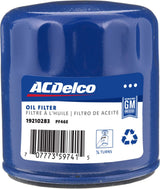 ACDelco PF46E Engine Oil Filter
$16.49ACDelco oil filters. Confirm fitment by VIN before ordering.
ACDelco PF46E Engine Oil Filter
$16.49ACDelco oil filters. Confirm fitment by VIN before ordering.


Frequently Asked Questions
What is the difference between dexos1 Gen 3, dexos2 and dexosD?
dexos1 Gen 3 is GM's gasoline specification in 0W-20 and 5W-30. dexos2 is a European specification built on ACEA C3, in 5W-30 and 5W-40. dexosD is the light-duty diesel spec in 0W-20, created for the 3.0L Duramax. They are different chemistries for different combustion environments, not tiers of the same product — dexos2 does not supersede dexos1.
Can I use dexos2 in my 3.0L Duramax?
No. dexos2 is built on ACEA C3 for European engines and does not meet what GM specifies for the 3.0L. GM created dexosD specifically to replace it for this application. dexosD is 0W-20 and dexos2 is 5W-30 or 5W-40 — the viscosity gap alone should tell you they are not interchangeable.
Does my 6.2L need 0W-20 or 0W-40?
It depends on your build date and recall status. NHTSA recall 25V-274 covers 2021–2024 L87 engines built between 1 March 2021 and 31 May 2024; engines that pass inspection move from 0W-20 to 0W-40. 2019–2020 and 2025-and-later engines stay on 0W-20. Check your VIN rather than any chart — inclusion depends on exact build date, not model year.
What is the 6.2L L87 recall about?
GM filed recall 25V-274 in April 2025 covering 597,630 US vehicles. Engine teardown identified two root causes attributed to supplier manufacturing and quality issues: rod-bearing damage from sediment on connecting rods and crankshaft oil galleries, and out-of-specification crankshaft dimensions and surface finish. If the engine fails while driving, the vehicle loses propulsion.
I already had the recall work done. Is my engine fine now?
Treat any subsequent knocking, check engine light or loss of power seriously rather than assuming the remedy settled it. As of mid-2026, NHTSA has been reviewing complaints of engine failures in vehicles that already received the recall repair, mostly those that got the oil viscosity change rather than a replacement engine. That is an open regulatory question, and complaints are what drive it.
What is dexosR and should I use it?
GM's high-performance spec in 0W-40 and 5W-50, required on supercharged and high-output engines and on recall-affected L87s. It is not a free upgrade — 0W-40 is considerably thicker at operating temperature, and engines designed around 0W-20 have oil passages, VVT actuators and cylinder deactivation hardware sized for that viscosity.
Is a claim of meeting dexos requirements the same as a licence?
No. Licensed products carry the dexos trademark and a license number on the bottle. Wording about meeting or exceeding requirements is a manufacturer's own claim rather than a verified license. On a vehicle still under powertrain warranty, buy the licensed product — the mark on the bottle is what you have if a claim ever turns on lubrication.
Why does LSPI matter for oil choice?
Low-speed pre-ignition occurs in direct-injected turbo engines at low rpm and high load, and it can destroy a piston in a single event. Certain additive chemistries make it more likely, which is why any 0W-20 synthetic is not equivalent to a licensed dexos1 Gen 3 0W-20. It is the strongest argument for buying the licensed oil.
What oil does the 6.6L L5P Duramax take?
Not a dexos oil at all — GM specifies API CJ-4 or CK-4 15W-40, 10 quarts. The 3.0L Duramax takes 7 quarts of 0W-20 dexosD. Same badge, completely different requirements, and nothing carries across between them.
Does using a better oil let me extend the change interval?
No. The oil life monitor calculates from operating conditions, not from which oil you used. Using the correct spec is what lets its assumptions hold; using a cheaper unlicensed oil removes the safety margin it was calibrated around. Reset it only when you actually change the oil.
A Note on Sourcing
The recall details — the campaign number, the 597,630-vehicle population, the covered models, the 1 March 2021 to 31 May 2024 production window, the two root causes and the inspect-or-replace remedy — come from GM's Part 573 Safety Recall Report for 25V-274, April 2025 (PDF), and the remedy description from the accompanying dealer service bulletin N252494000 (PDF). Both are published by NHTSA and were read directly.
Recall inclusion depends on build date, not model year. Nothing on this page confirms whether your specific vehicle is covered — only a VIN check does. After a recall repair, the oil fill cap and the underhood label are the authoritative record for your vehicle, and GM has revised its guidance on this more than once.
The post-remedy investigation is deliberately described without figures or conclusions. It is an open regulatory matter rather than a settled finding, and this page states only that it exists and what an owner should do about it.
Oil capacities and specifications are from GM's published technical figures. The dipstick in your own engine outranks any published capacity, and the cold-temperature section of your owner's manual outranks the viscosity table above.
There are more GM maintenance guides covering the rest of the service schedule.
Everything in this guide, in one place
Once you know your engine and your spec, filter GM engine oil, oil filters, drain plugs and maintenance parts to your vehicle and get the whole change in one order. Confirm the spec on the bottle against your owner's manual before the first quart goes in.