
You need a weight distribution hitch on a Tahoe, Suburban or Yukon when the loaded trailer weighs more than about half the SUV's GVWR, when your owner's manual specifies one at your trailer weight, or when the rear of the truck squats and the headlights point at the treetops. Below that, a plain weight-carrying setup is fine. Above it, you are steering and braking on lightly loaded front tires.
This guide covers the actual decision — the math, the symptoms, how spring bars are rated, why a WD hitch does not raise your tow rating, and where sway control fits in. If you already know you need one, start with towing and hauling accessories for your full-size GM SUV.
Parts and tools you'll need
- Weight distribution hitches, shanks, balls and sway control for your trailer's tongue weight
- Towing hardware and accessories for your Tahoe or Suburban
- Towing hardware for your Yukon or Yukon XL
- A tape measure, a torque wrench, and a bathroom scale plus a length of pipe and two blocks if you plan to measure tongue weight at home
Trailer brake control
 ACDelco Trailer Brake Controller
$83.99Trailer brake controllers for Tahoe, Suburban, Yukon and Escalade towing. Confirm fitment by VIN before ordering.
ACDelco Trailer Brake Controller
$83.99Trailer brake controllers for Tahoe, Suburban, Yukon and Escalade towing. Confirm fitment by VIN before ordering.
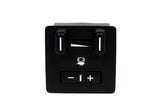 ACDelco Trailer Brake Controller
$86.99Trailer brake controllers for Tahoe, Suburban, Yukon and Escalade towing. Confirm fitment by VIN before ordering.
ACDelco Trailer Brake Controller
$86.99Trailer brake controllers for Tahoe, Suburban, Yukon and Escalade towing. Confirm fitment by VIN before ordering.
 ACDelco Trailer Brake Controllers, ACDelco GM Genuine Parts
$147.99Trailer brake controllers for Tahoe, Suburban, Yukon and Escalade towing. Confirm fitment by VIN before ordering.
ACDelco Trailer Brake Controllers, ACDelco GM Genuine Parts
$147.99Trailer brake controllers for Tahoe, Suburban, Yukon and Escalade towing. Confirm fitment by VIN before ordering.
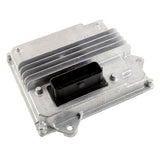 ACDelco Trailer Brake Controllers, ACDelco GM Genuine Parts
$212.99Trailer brake controllers for Tahoe, Suburban, Yukon and Escalade towing. Confirm fitment by VIN before ordering.
ACDelco Trailer Brake Controllers, ACDelco GM Genuine Parts
$212.99Trailer brake controllers for Tahoe, Suburban, Yukon and Escalade towing. Confirm fitment by VIN before ordering.


Do you need a weight distribution hitch for a Tahoe, Suburban or Yukon?
Use three tests. First, if the gross trailer weight exceeds roughly 50% of your SUV's GVWR, you need one. Second, if your owner's manual specifies a weight-distributing hitch at your trailer weight, that is not optional. Third, if the rear squats noticeably and the front end feels light, you already have your answer.
The 50% rule is the one most people can apply in a driveway. Your GVWR is on the certification label inside the driver's door. Your trailer's loaded weight comes from a scale, not from the brochure. If the trailer number is more than half the GVWR number, you are in weight distribution territory.
The manual test matters more than the rule of thumb, because manufacturers set their own thresholds and they are model-specific. GM publishes a weight-distributing hitch requirement in the trailering section of the owner's manual, and on some GM vehicles that threshold is as low as 5,000 pounds of trailer weight, paired with a sway control requirement. Look up the figure for your exact year and model rather than assuming a Tahoe matches a Traverse or a half-ton pickup.
The symptom test is the honest one. Hook up, walk to the front of the vehicle, and look at the gap between the tire and the fender. Compare it to unhitched. If the front has risen visibly and the rear has dropped, weight has come off the front axle — which is where your steering and most of your braking live.
What does a weight distribution hitch actually do?
It uses spring bars to lever some of the trailer's tongue weight off the SUV's rear axle and redistribute it forward to the front axle and back onto the trailer's axles. The result is a level vehicle, restored front-tire load, better steering feel, better headlight aim and shorter stopping distances. It does not make the trailer lighter.
Picture the hitch ball as the end of a lever. Tongue weight pushing down behind the rear axle pries the front of the vehicle up. That is why a squatting truck also has a light nose. The spring bars apply an opposing force between the hitch head and brackets on the trailer frame, and that torque pushes the front back down.
Full-size GM SUVs are particularly sensitive to this because of the geometry. There is a fair amount of overhang behind the rear axle, so tongue weight sits well behind the fulcrum. A Suburban and a Yukon XL have more of that overhang than a Tahoe, which is exactly why longer-bodied SUVs often benefit from distribution at trailer weights where the short-wheelbase version is still comfortable.
Air suspension hides the symptom, not the problem
Vehicles with rear air leveling complicate the picture, and this is worth stating plainly because it defeats the easiest test on this page. The suspension can level the vehicle's appearance without restoring the front axle load, so a level-looking SUV is not proof that weight distribution is unnecessary.
Measure fender heights at all four corners, unhitched and then hitched, rather than trusting the way it looks. If the rear has been levelled by the air system but the front has still risen, you have unloaded the front axle and simply cannot see it. If you are unsure which system your vehicle has, our guide to identifying and servicing GM air suspension covers the RPO codes that tell you.
How do you know if you're over the line?
Run the checks below in order. Any single "yes" in the top half of the table is enough on its own.
| Check | How to run it | Weight distribution needed? |
|---|---|---|
| Manual requirement | Read the trailering section of your owner's manual for your year and model | Yes if you are at or above the stated trailer weight |
| 50% rule | Loaded trailer weight vs. the GVWR on your door jamb label | Yes if trailer weight is more than half of GVWR |
| Hitch label | Read the two ratings stamped on the receiver: weight-carrying and weight-distributing | Yes if you exceed the weight-carrying number |
| Squat test | Measure fender-to-ground front and rear, unhitched then hitched | Likely, if the front rises or the rear drops significantly |
| Headlight aim | Park facing a wall at night, hitched | Likely, if the beams climb noticeably |
| Sway or wander | Note behavior in crosswinds and when passed by semis | Sway control at minimum, usually both |
Notice the hitch label check. Most receivers carry two capacities: a lower weight-carrying rating and a higher weight-distributing rating. Those numbers are not marketing. Exceeding the weight-carrying figure without a WD system is exceeding the equipment's rating, whatever the vehicle's tow rating says.
The sway line is separate from the weight line. A trailer can be perfectly within weight and still sway badly because of poor load placement, high sidewalls or a short trailer wheelbase. That is a load and control problem, not a squat problem.
How do you calculate tongue weight?
Tongue weight should be 10–15% of the fully loaded trailer weight. On a 6,000-pound trailer that is 600 to 900 pounds. You size the weight distribution system to that tongue weight figure, not to the trailer's gross weight, so getting it right is the whole job.
| Loaded trailer weight | 10% tongue weight | 15% tongue weight | Practical note |
|---|---|---|---|
| 3,000 lb | 300 lb | 450 lb | Usually weight-carrying territory; check your manual |
| 5,000 lb | 500 lb | 750 lb | Common threshold where manufacturers start requiring WD |
| 6,000 lb | 600 lb | 900 lb | Distribution and sway control are the norm here |
| 7,000 lb | 700 lb | 1,050 lb | Watch payload; tongue weight counts against it |
| 8,000 lb | 800 lb | 1,200 lb | Near the ceiling for most full-size SUVs; verify ratings |
The number that trips people up is payload. Tongue weight sits on the SUV, so it comes out of your payload allowance along with passengers, cargo, roof boxes and the hitch hardware itself. A Suburban loaded with seven people, a week of luggage and 900 pounds of tongue weight can be over its payload while still being well under its tow rating.
Weigh the trailer loaded the way you actually travel — water in the tank, bikes on the rack, cooler in the front compartment. Trailer brochures list dry weight, and dry weight is a number you will never tow.
To measure tongue weight at home, a bathroom scale, a length of pipe and two blocks of wood set up as a 3:1 lever will get you close. Or use a CAT scale: weigh the combination hitched, then unhitch and weigh the tow vehicle alone. The difference is your tongue weight.
How do you pick the right spring bar rating?
Match the spring bar rating to your measured tongue weight, including everything loaded in the back of the SUV behind the rear axle. Systems are sold in tongue weight brackets, and you want to land in the middle of a bracket rather than at either edge. Bars that are too stiff ride harshly; bars that are too light will not distribute.
This is the most common sizing error in towing. People buy by trailer weight because that is the number they know, and end up with bars rated for a tongue weight they do not have. Read the packaging carefully: gross trailer weight and tongue weight are both printed, and it is the tongue weight figure that determines fitment.
Round bar and trunnion bar are the two main styles. Trunnion bars generally give more ground clearance and are the usual choice on trailers with low frames or generous ground clearance requirements; round bars hang lower. Both work. Pick based on clearance and on what the system you like offers.
Include the SUV's own cargo in the calculation. Load the rear of a Yukon XL with gear and you have added leverage behind the rear axle before the trailer is even connected. The hitch is doing arithmetic on the whole rear overhang, not just the ball.
Is sway control the same thing as weight distribution?
No. Weight distribution fixes vertical load — squat and front axle unloading. Sway control fixes lateral movement — the trailer wagging behind you. Many systems bundle both, and manufacturers frequently require both above a given trailer weight, but they solve different problems and one does not substitute for the other.
Sway control comes in a few forms. Friction bars clamp between the hitch head and the trailer frame and resist side-to-side motion with an abrasive pad; two of them, one per side, give more control than one. Integrated cam systems build sway resistance into the spring bar brackets. Some heads use a friction or cam mechanism internally.
You will see systems described as 2-point or 4-point sway control. More points means resistance applied at more locations, which generally means more stability, particularly on tall trailers that catch crosswind.
One important caution: some sway control types carry restrictions when used with surge or hydraulic trailer brakes, because friction resistance can interfere with the coupler's operation. Read the manufacturer's instructions for the specific system before you buy if your trailer has surge brakes. Do not assume.
Does a weight distribution hitch increase your towing capacity?
No. A weight distribution hitch does not raise your hitch's towing capacity — it lets you use the hitch to its full rated potential. Your vehicle's tow rating, GVWR, GCWR and payload are unchanged. What changes is whether you can safely and legally reach the receiver's higher weight-distributing rating.
This distinction matters because it is the single most common misunderstanding in towing forums. A Tahoe does not tow more because you bolted on spring bars. It tows the same amount with the front axle properly loaded instead of unloaded.
If you are still working out what your specific truck or SUV is actually rated for, our breakdown of GM towing capacity by year, engine and trim walks through how the ratings are structured and where to find yours.
Everything is limited by the lowest number in the chain: the vehicle rating, the receiver rating, the hitch ball rating, the shank rating, the coupler rating, and the trailer's own axle ratings. Find the smallest and that is your real limit.
Suspension parts for towing
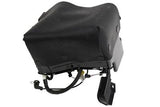 ACDelco Suspension Self-Leveling Pump, Automatic Level
$351.99Rear suspension and leveling parts that carry tongue weight. Confirm fitment by VIN before ordering.
ACDelco Suspension Self-Leveling Pump, Automatic Level
$351.99Rear suspension and leveling parts that carry tongue weight. Confirm fitment by VIN before ordering.
 Front Air Suspension Shock Absorber for 2007–2014 Cadillac
$381.58Rear suspension and leveling parts that carry tongue weight. Confirm fitment by VIN before ordering.
Front Air Suspension Shock Absorber for 2007–2014 Cadillac
$381.58Rear suspension and leveling parts that carry tongue weight. Confirm fitment by VIN before ordering.
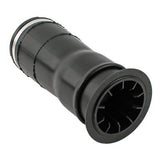 ACDelco Air Suspension Springs, Replacement
$245.99Rear suspension and leveling parts that carry tongue weight. Confirm fitment by VIN before ordering.
ACDelco Air Suspension Springs, Replacement
$245.99Rear suspension and leveling parts that carry tongue weight. Confirm fitment by VIN before ordering.
 ACDelco Gold PK392 (88960982) Rear Suspension Air Line Kit
$37.99Rear suspension and leveling parts that carry tongue weight. Confirm fitment by VIN before ordering.
ACDelco Gold PK392 (88960982) Rear Suspension Air Line Kit
$37.99Rear suspension and leveling parts that carry tongue weight. Confirm fitment by VIN before ordering.


How do you set one up?
Setup determines whether the system does anything at all. A weight distribution hitch installed by feel is a heavy, expensive way to tow exactly as badly as before. The outline below is the standard sequence; follow the instructions that come with your specific system for the actual dimensions.
- Park the SUV and trailer on level ground, unhitched.
- Measure and write down the fender-to-ground height at the front and rear wheel arches of the SUV.
- Measure the trailer coupler height and set the ball height so the trailer sits level or very slightly nose-down when hitched.
- Install the shank in the receiver at the rise or drop that achieves that, and torque the fasteners to the manufacturer's spec.
- Set the head tilt to the angle the instructions call for. This angle is what preloads the bars.
- Hitch the trailer, then raise the tongue with the jack to take the load off the bars.
- Attach the spring bars and set the chains or brackets to the specified link count or tension.
- Lower the jack fully and re-measure the front and rear fender heights.
- Adjust head tilt or chain links until the front fender height returns to close to its unhitched measurement.
- Recheck all fasteners after a short test drive, and again after the first long trip.
Safety note: a loaded trailer tongue is heavy enough to injure you badly if it drops. Keep hands clear of the coupler and bar brackets while lowering, use the jack rather than muscle, and chock the trailer wheels before you unhitch. Confirm your trailer brakes and breakaway cable work before every trip, not just at setup.
Once you are moving, the other half of towing well is how you drive it. Tow/haul mode holds lower gears and changes shift behaviour specifically to keep you off the brake pedal on descents, which matters more the closer you are to your ratings.
What if you tow only occasionally?
Occasional towing does not change the physics. If you pull a 6,000-pound travel trailer twice a summer, the SUV squats the same way on those two trips as it would on twenty. The question is not how often, it is how heavy relative to the vehicle.
Where frequency does matter is in setup convenience. If you hitch up once a season, a system that is fussy to install will end up half-adjusted. The integrated head designs that carry sway control internally are easier to hook up correctly under time pressure, which is worth something real.
A boat on a trailer with the engine hanging off the back has a different weight distribution problem than a travel trailer. Boat trailers often run lower tongue weight percentages, and some boat setups have surge brakes, which brings the sway control caution above back into play. Weigh it rather than guessing.
If you tow well under the thresholds — a small utility trailer, a couple of dirt bikes, a jet ski — you do not need any of this. Buy a properly rated ball mount, use the right ball size, load the trailer with 10–15% tongue weight, and drive. It is fine to skip the expensive option when the expensive option solves a problem you do not have.
What to check before you order
- Read your owner's manual's trailering section for the exact weight at which your year and model requires weight distribution and sway control.
- Find your GVWR on the driver's door jamb label and compare it to the loaded trailer weight from a scale.
- Read both ratings stamped on your receiver, weight-carrying and weight-distributing.
- Measure or calculate actual tongue weight at 10–15% of loaded trailer weight, and size the system to that number.
- Add tongue weight to your payload math, along with passengers and cargo.
- Decide on sway control type, and check for surge brake restrictions if your trailer has them.
- Check ball size and shank rise or drop so the trailer sits level when hitched.
Towing accessories
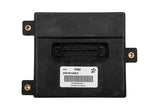 ACDelco Trailer Brake Control Module
$173.99Trailer sensors, hitch accessories and tools. Confirm fitment by VIN before ordering.
ACDelco Trailer Brake Control Module
$173.99Trailer sensors, hitch accessories and tools. Confirm fitment by VIN before ordering.
 ACDelco Trailer Brake Control Module
$155.99Trailer sensors, hitch accessories and tools. Confirm fitment by VIN before ordering.
ACDelco Trailer Brake Control Module
$155.99Trailer sensors, hitch accessories and tools. Confirm fitment by VIN before ordering.
 For Chevrolet Silverado 1500 2007-2024 Compatible Chevrolet
$33.90Trailer sensors, hitch accessories and tools. Confirm fitment by VIN before ordering.
For Chevrolet Silverado 1500 2007-2024 Compatible Chevrolet
$33.90Trailer sensors, hitch accessories and tools. Confirm fitment by VIN before ordering.
 ACDelco Trailer Brake Control
$84.99Trailer sensors, hitch accessories and tools. Confirm fitment by VIN before ordering.
ACDelco Trailer Brake Control
$84.99Trailer sensors, hitch accessories and tools. Confirm fitment by VIN before ordering.


Frequently Asked Questions
Do I need a weight distribution hitch for a Tahoe, Suburban or Yukon?
Three tests, any one of which is enough. If the loaded trailer weighs more than roughly 50% of your SUV's GVWR, yes. If your owner's manual specifies a weight-distributing hitch at your trailer weight, that is not optional. And if the rear squats while the front rises when you hitch up, you already have your answer.
Does a weight distribution hitch increase towing capacity?
No. It does not raise your tow rating, GVWR, GCWR or payload — it lets you use the hitch to its full rated potential. Most receivers carry two ratings, a lower weight-carrying figure and a higher weight-distributing one, and the WD system is what lets you legally reach the higher of the two.
How much should tongue weight be?
10–15% of the fully loaded trailer weight — 600 to 900 lb on a 6,000 lb trailer. Weigh the trailer the way you actually travel, with water, bikes and gear aboard, because brochure dry weight is a number you will never tow. Size the hitch system to the tongue weight, not the gross trailer weight.
How do I measure tongue weight at home?
A bathroom scale, a length of pipe and two blocks of wood arranged as a 3:1 lever gets you close. Alternatively use a CAT scale: weigh the combination hitched, then unhitch and weigh the tow vehicle alone. The difference is your tongue weight.
My SUV sits level when hitched. Do I still need weight distribution?
Possibly, and this is the trap on vehicles with rear air levelling. The suspension can level the vehicle's appearance without restoring front axle load, so a level stance is not proof. Measure fender heights at all four corners unhitched and hitched — if the front has risen, the front axle is unloaded regardless of how it looks.
Is sway control the same as weight distribution?
No. Weight distribution fixes vertical load — squat and front axle unloading. Sway control fixes lateral movement, the trailer wagging behind you. Many systems bundle both and manufacturers often require both above a given weight, but neither substitutes for the other.
What spring bar rating should I buy?
One matched to your measured tongue weight, including whatever is loaded behind the SUV's rear axle, landing mid-bracket rather than at an edge. The most common sizing error is buying by trailer weight, since that is the number people know. Too-stiff bars ride harshly; too-light bars will not distribute.
Can I use sway control with surge brakes?
Not always. Some sway control types carry restrictions with surge or hydraulic trailer brakes, because friction resistance can interfere with the coupler's operation. Read the instructions for the specific system before buying if your trailer has surge brakes — common on boat trailers.
Does tongue weight count against payload?
Yes, and it catches people out. Tongue weight sits on the SUV, so it comes out of payload along with passengers, cargo, roof boxes and the hitch hardware. A Suburban with seven people, a week of luggage and 900 lb of tongue weight can exceed payload while still being well under its tow rating.
I only tow twice a year. Can I skip it?
Frequency does not change the physics — a 6,000 lb trailer squats the SUV the same way on two trips as on twenty. What frequency does affect is setup: if you hitch once a season, choose a system that is quick to set up correctly, because a fussy one ends up half-adjusted.
A Note on Sourcing
Trailer weight thresholds are model-specific and this page does not publish one as a universal figure. GM states its weight-distributing hitch and sway control requirements in the trailering section of the owner's manual, and on some GM vehicles the threshold is as low as 5,000 lb of trailer weight. The manual for your exact year and model governs, along with the ratings stamped on your receiver and the certification label in your door jamb.
The 50% rule, the 10–15% tongue weight range and the setup sequence are standard towing practice, not a GM specification. They are decision aids for working out whether you need a system and roughly what size — the instructions supplied with the specific hitch are authoritative for setup dimensions and torque values.
The point that a weight distribution hitch does not raise tow capacity is a matter of how the ratings are defined, not an opinion. Every limit in the chain — vehicle, receiver, ball, shank, coupler and trailer axles — applies independently, and the lowest one is your real ceiling.
The surge brake caution is deliberately general. Restrictions vary by sway control design, so the manufacturer's instructions for your specific system are the only reliable source on whether it is compatible.
For more on towing setup, capacities and hitch hardware across the GM lineup, browse more GM owner guides.
Still deciding?
If your loaded trailer is more than half your SUV's GVWR, or your manual names a threshold you are above, the decision is already made — compare systems by tongue weight rating and by whether sway control is integrated or separate. If you are well under, a good ball mount and correct loading will serve you better than hardware you do not need.
Compare weight distribution systems, shanks and sway control in towing and hauling accessories, then filter by vehicle for your Tahoe or Suburban or your Yukon or Yukon XL.