
Match the radio frequency first, then decide OEM versus programmable. GM uses both 315 MHz and 433 MHz TPMS sensors, and they are not interchangeable — a 433 MHz sensor in a 315 MHz truck will never register, no matter how many relearns you run. Once frequency is settled, a good programmable sensor performs the same as the GM part for less money.
That is the decision in four sentences. The rest of this guide explains how to identify which frequency your vehicle uses, what the current GM part numbers are, when a programmable sensor is the smarter buy, and what the relearn actually involves. If you are replacing sensors as part of a wheel swap, browse TPMS sensors and wheel and tire accessories alongside this.
Parts and tools you'll need
- TPMS sensors, valve hardware and wheel accessories — filter by frequency and application
- GM electrical and sensor parts for the rest of the job
- A TPMS activation or relearn tool, or a scan tool with TPMS functions
- A service pack for the sensor: valve core, grommet or seal, and nut — plus an inch-pound torque wrench
OEM TPMS sensors
 ACDelco Sensor, Valve Stem, TPMS
$86.99GM original-equipment TPMS sensors. Confirm fitment by VIN before ordering.
ACDelco Sensor, Valve Stem, TPMS
$86.99GM original-equipment TPMS sensors. Confirm fitment by VIN before ordering.
 ACDelco Sensor, Valve Stem, TPMS
$82.99GM original-equipment TPMS sensors. Confirm fitment by VIN before ordering.
ACDelco Sensor, Valve Stem, TPMS
$82.99GM original-equipment TPMS sensors. Confirm fitment by VIN before ordering.
 ACDelco 13586335 TPMS Sensor, GM Original Equipment
$32.83GM original-equipment TPMS sensors. Confirm fitment by VIN before ordering.
ACDelco 13586335 TPMS Sensor, GM Original Equipment
$32.83GM original-equipment TPMS sensors. Confirm fitment by VIN before ordering.
 ACDelco 25774007 TPMS Sensor, GM Original Equipment
$51.87GM original-equipment TPMS sensors. Confirm fitment by VIN before ordering.
ACDelco 25774007 TPMS Sensor, GM Original Equipment
$51.87GM original-equipment TPMS sensors. Confirm fitment by VIN before ordering.


What is the difference between an OEM and a programmable TPMS sensor?
An OEM sensor arrives pre-coded for a specific GM application. A programmable sensor ships blank and gets configured with a TPMS tool to emulate the correct protocol before installation. Once programmed correctly, the vehicle cannot tell the difference — both transmit the same data on the same frequency in the same format.
The advantage of a programmable sensor is inventory. One part number covers hundreds of applications, which is why tire shops carry them by the box. For a DIY owner, that translates into easier sourcing and usually lower cost, especially when you need four.
The advantage of an OEM sensor is that there is nothing to configure. You unbox it, install it, run the relearn and drive. No tool required beyond whatever the relearn itself needs. For someone replacing one sensor once, that simplicity is worth something.
The real trap with programmable sensors is not the sensor — it is the tool. You need one that can write the correct GM protocol to the sensor brand you bought. Not every cheap TPMS tool programs every sensor brand. Confirm tool-and-sensor compatibility before you order either one, because a programmable sensor you cannot program is a paperweight.
Which frequency does your GM use, 315 or 433 MHz?
Both are in the GM fleet, and the split does not follow a clean model or year line. The safest method is to look up the sensor by your VIN in a GM parts catalog and read which part number comes back. GM's own catalog treats these as different parts with different supersessions, which tells you how seriously to take the distinction.
| GM part number | Frequency | Current replacement number | Notes |
|---|---|---|---|
| 13598772 | 315 MHz | 86363052 | Wide application across the GM range |
| 13540601 | Consolidates into the same 315 MHz service part | 86363052 | Catalogued for 2010–2022 Buick, Cadillac, Chevrolet and GMC models |
| 13598773 | 433 MHz | 86363053 | Different radio, not a substitute for the 315 MHz part |
Two things to take from that table. First, GM has consolidated several older sensor numbers into a smaller set of current service parts, so a listing quoting a 135-series number is probably still correct — it just supersedes to an 863-series part. Second, the 315 and 433 parts sit one digit apart, which is exactly the kind of thing that gets mis-picked at a counter.
Do not try to determine frequency by looking at the sensor. Physically, a 315 MHz and a 433 MHz sensor can be identical. The frequency is in the electronics and, if you are lucky, printed in small type on the body. Look up the part by VIN instead of guessing from the shape.
If you buy programmable sensors, the frequency question mostly goes away, because the tool writes the correct protocol for the vehicle you select. That is a genuine argument for the programmable route in a multi-vehicle household. You do still need to pick the right vehicle in the tool.
Do you have to do a relearn after replacing a TPMS sensor?
Yes. Every new sensor has a unique ID, and the vehicle's module has to learn which ID sits at which corner. Without a relearn, the truck either keeps flashing a warning or reports the wrong tire's pressure — which is arguably worse, because you will chase a slow leak on the wrong wheel.
GM vehicles generally use a stationary relearn. You put the module into learn mode through the vehicle's own controls, then trigger each sensor in turn with an activation tool while the vehicle waits, and the vehicle confirms each one. The specific menu path, the wheel order and the confirmation signal vary by model and year, so follow the procedure in your owner's manual rather than a generic script off a forum.
That is not a cop-out. The relearn steps on a 2015 Silverado, a 2021 Tahoe and a 2024 Trax are genuinely different in the details, and the manual for your exact vehicle has the correct sequence. The manual is also where you will find out whether your model can start the relearn from the driver information center or needs a scan tool on the OBD port.
What is universal: relearn one position at a time, in the order your procedure specifies, and confirm each corner before moving to the next. If a corner does not confirm, the sensor is either bad, unprogrammed, on the wrong frequency, or out of range of the tool.
Also universal: set all four tires to the pressure on the placard in your driver's door jamb before you finish. The system reports what it reads, and a relearn done on tires at random pressures gives you a dashboard full of numbers you cannot trust.
Relearn tools
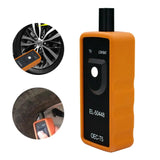 OEC-T5 EL-50448 TPMS Universal GM Buick OLIVER
$43.49Tools for the TPMS relearn after replacing sensors or rotating tires.
OEC-T5 EL-50448 TPMS Universal GM Buick OLIVER
$43.49Tools for the TPMS relearn after replacing sensors or rotating tires.
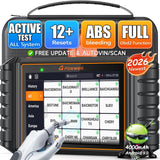 FOXWELL NT726 Bidirectional OBD2 Scanner
$368.99Tools for the TPMS relearn after replacing sensors or rotating tires.
FOXWELL NT726 Bidirectional OBD2 Scanner
$368.99Tools for the TPMS relearn after replacing sensors or rotating tires.
 FOXWELL NT624 Elite OBD2 Scanner, All-System Scan Tool
$332.09Tools for the TPMS relearn after replacing sensors or rotating tires.
FOXWELL NT624 Elite OBD2 Scanner, All-System Scan Tool
$332.09Tools for the TPMS relearn after replacing sensors or rotating tires.

How long do TPMS sensors last?
The sensor itself rarely fails. The battery inside it does, and it is not replaceable. Sealed lithium cells in TPMS sensors typically run somewhere in the range of five to ten years depending on how much the vehicle is driven, since the sensor transmits more often when the wheel is rotating.
The practical consequence is that TPMS failures arrive in clusters. All four sensors were installed on the same day, so all four batteries age together. The first one to die is a warning that the other three are close behind.
The second-most-common failure has nothing to do with electronics. Aluminum valve stems corrode where they meet a steel wheel, especially in salt states, and the stem snaps or leaks. That is a mechanical failure of a part that happens to have a radio attached, and it is why the service pack of seals, cores and nuts exists.
A third cause is damage during tire service. A tire machine that catches the sensor body cracks it. If a sensor dies immediately after a tire was mounted, the mounting is the first suspect, not coincidence.
Should you replace all four sensors at once?
If the vehicle is past about seven years old and one sensor has failed on battery, yes. You are already paying to break down and remount the tire; doing all four at once costs a little more in parts and saves three future rounds of the same labor. If the failure was physical damage to one sensor on an otherwise young set, replace just the one.
The exception worth noting is a set that has been split — two original sensors and two that were replaced three years ago. In that case, replace the two originals and leave the newer pair. Age of the battery is the variable, not matching for its own sake.
Whenever a tire comes off the wheel for any reason, replace the sensor service pack. The rubber grommet or seal is a single-use item, and reusing a compressed seal is how a slow leak at the valve becomes your next problem.
What about wheel swaps and winter tire sets?
A second set of wheels needs its own set of sensors, and this is the most common reason a GM owner buys TPMS parts. The alternative — moving four sensors between two sets of wheels twice a year — means dismounting eight tires annually and replacing eight service packs. Buying a second set of sensors pays for itself quickly.
The catch in a two-set household is the relearn. Every seasonal swap requires a relearn so the module knows which four IDs are currently on the vehicle. Some GM systems store two sets; many do not. Budget the relearn into the swap, and if you own a relearn tool the whole job stays in your driveway.
Aftermarket wheels bring a second consideration: valve hole diameter and seat angle. TPMS sensors are designed for a specific valve hole, and a wheel drilled for a different standard will not seal correctly. Check the wheel manufacturer's TPMS compatibility note before ordering sensors for a new set.
Some aftermarket wheels also have a stem angle that leaves the sensor body contacting the inside of the rim barrel. When that happens, the sensor cracks the first time you hit a pothole. Rubber snap-in sensors flex and tolerate more variation than rigid aluminum-stem sensors, which is a decent argument for snap-in on unfamiliar wheels.
What tools do you actually need?
At minimum, a TPMS activation tool that can trigger a sensor so the vehicle sees it. To use programmable sensors, you need a tool that also writes to your chosen sensor brand. For vehicles that relearn through the OBD port, you need a scan tool with TPMS functions.
The buying advice is to skip the bottom of the market. The cheapest tools trigger some sensors and not others, do not update their vehicle coverage, and cannot program anything. A mid-range tool from an established TPMS brand that receives coverage updates will still be useful in five years. Our OBD2 scanner buying guide covers which scan tool tiers include TPMS relearn functions, if you would rather buy one tool than two.
You will also want an inch-pound torque wrench with a small socket for the valve nut. TPMS valve nuts are torqued to a low, specific figure — overtightening cracks the sensor housing, undertightening leaks. That value comes with the sensor's instructions; use that number rather than feel.
Beyond that, this is a tire shop job in one respect: getting the tire off the wheel and back on without damaging anything requires a tire machine. Most owners buy the sensors and have them installed. That is a perfectly reasonable division of labor, and knowing exactly which sensor you need is still the part that saves you money.
How does the job go?
- Look up the correct sensor for your VIN and confirm the frequency before ordering anything.
- If you bought programmable sensors, program all of them before they go anywhere near a wheel.
- Have the tire dismounted, the old sensor removed and the new one installed with a fresh service pack.
- Torque the valve nut to the specification in the sensor's instructions with an inch-pound wrench.
- Remount and balance the tire, then reinstall the wheel.
- Torque the lug nuts in a star pattern to the value in your owner's manual.
- Set all four tires to the pressure on the driver's door jamb placard, cold.
- Run the relearn procedure from your owner's manual, confirming each corner before moving on.
- Drive a few minutes and confirm the warning lamp is out and the displayed pressures match a hand gauge.
Safety note: TPMS exists because underinflated tires fail, and they fail at highway speed. If the light is on, put a gauge on all four tires the same day rather than assuming the sensor is the problem. Sometimes the light is right. Our write-up on what happens to a TPMS sensor when you pick up a nail covers the repair-versus-replace decision when the tire itself is damaged.
When is the OEM sensor the better buy?
Three situations. First, if you own no TPMS tool and are replacing a single sensor, the pre-coded OEM part removes a step. Second, if your vehicle is new enough that aftermarket coverage is thin, the GM part is the one guaranteed to exist. Third, if a previous aftermarket sensor has already given you trouble, going back to the factory part eliminates one variable.
Everywhere else, a quality programmable sensor from an established manufacturer is the sensible choice, and the tire shop doing your install probably has a tool that programs it. Ask before you buy: if their tool covers the brand you are considering, the programming is a non-issue.
What to avoid on both sides is the unbranded bargain sensor with no manufacturer name and no listed frequency. Those are the ones that fail the relearn, fail early, or transmit on a protocol your GM module quietly ignores. The savings do not survive one round of remounting.
If you are also chasing an unrelated warning light or a wiring issue on the same vehicle, the GM electrical and ignition parts collection is worth a look while the wheels are off.
What to check before you order
- Look up the sensor by VIN and note whether your vehicle uses 315 MHz or 433 MHz.
- If you are going programmable, confirm your tool writes the protocol for that sensor brand.
- Order a service pack — grommet or seal, valve core and nut — with every sensor.
- Note the sensor's valve nut torque specification before installation day.
- Check valve hole compatibility if you are fitting aftermarket wheels.
- Decide whether you are replacing one or all four based on the age of the set, not the failure count.
- Confirm the relearn procedure for your exact model and year in your owner's manual.
More TPMS sensors and kits
 GANGLE 13516165 TPMS Sensor for Cadillac XT4/XT5/XT6/CT6
$17.33Additional GM TPMS sensors and stem kits. Confirm fitment by VIN before ordering.
GANGLE 13516165 TPMS Sensor for Cadillac XT4/XT5/XT6/CT6
$17.33Additional GM TPMS sensors and stem kits. Confirm fitment by VIN before ordering.
 315MHz Tire Pressure Monitoring System Sensor TPMS 13586335
$11.00Additional GM TPMS sensors and stem kits. Confirm fitment by VIN before ordering.
315MHz Tire Pressure Monitoring System Sensor TPMS 13586335
$11.00Additional GM TPMS sensors and stem kits. Confirm fitment by VIN before ordering.
 Car Sensor TPMS For GMC Sierra GMC Yukon 2007 2008 2009 2010
$28.29Additional GM TPMS sensors and stem kits. Confirm fitment by VIN before ordering.
Car Sensor TPMS For GMC Sierra GMC Yukon 2007 2008 2009 2010
$28.29Additional GM TPMS sensors and stem kits. Confirm fitment by VIN before ordering.
 ACDelco 13598787 TPMS Sensor Kit with Sensor and Stem
$108.99Additional GM TPMS sensors and stem kits. Confirm fitment by VIN before ordering.
ACDelco 13598787 TPMS Sensor Kit with Sensor and Stem
$108.99Additional GM TPMS sensors and stem kits. Confirm fitment by VIN before ordering.
 ACDelco 23445327 Tire Pressure Monitoring System (TPMS) Sensor
$73.99Additional GM TPMS sensors and stem kits. Confirm fitment by VIN before ordering.
ACDelco 23445327 Tire Pressure Monitoring System (TPMS) Sensor
$73.99Additional GM TPMS sensors and stem kits. Confirm fitment by VIN before ordering.


Frequently Asked Questions
Are 315 MHz and 433 MHz TPMS sensors interchangeable?
No. A 433 MHz sensor in a 315 MHz vehicle will never register, no matter how many relearns you run. GM uses both across its fleet and the split does not follow a clean model or year line, so look the sensor up by VIN rather than assuming.
Can I tell the frequency by looking at the sensor?
No — a 315 MHz and a 433 MHz sensor can be physically identical. The frequency is in the electronics and, if you are lucky, printed in small type on the body. The current GM service parts also sit one digit apart (86363052 for 315 MHz, 86363053 for 433 MHz), which is exactly what gets mis-picked at a counter.
Are programmable TPMS sensors as good as OEM?
Once programmed correctly, the vehicle cannot tell the difference — both transmit the same data on the same frequency in the same format. The trap is not the sensor but the tool: you need one that writes the correct GM protocol to the brand you bought. A programmable sensor you cannot program is a paperweight.
Do I need a relearn after replacing a TPMS sensor?
Always. Every sensor has a unique ID and the module must learn which ID is at which corner. Skip it and the truck either keeps warning you or reports the wrong tire's pressure — which is worse, because you will chase a slow leak on the wrong wheel.
How long do TPMS sensors last?
The sensor rarely fails; the sealed, non-replaceable battery does, typically somewhere in the five-to-ten-year range depending on how much the vehicle is driven. Because all four were installed the same day, failures arrive in clusters — the first one to die is a warning about the other three.
Should I replace all four sensors at once?
If the vehicle is past about seven years and one has failed on battery, yes — you are already paying for the tire to come off. If one sensor was physically damaged on an otherwise young set, replace just that one. Battery age is the variable, not matching for its own sake.
Do I need a second set of sensors for winter wheels?
It is usually the better buy. Moving four sensors between two wheel sets twice a year means dismounting eight tires annually and eight service packs. Either way, budget a relearn into every seasonal swap — some GM systems store two sets, many do not.
Why did my new sensor fail right after a tire was mounted?
Probably the mounting. A tire machine that catches the sensor body cracks it, and that is the first suspect rather than coincidence. On aftermarket wheels, check stem angle too — a sensor body contacting the rim barrel cracks at the first pothole.
Do I need to replace the service pack every time?
Yes, whenever the tire comes off the wheel for any reason. The rubber grommet or seal is single-use, and reusing a compressed seal is how a slow leak at the valve becomes your next problem.
Can I ignore the TPMS light if the tires look fine?
No. TPMS exists because underinflated tires fail at highway speed. Put a gauge on all four the same day rather than assuming the sensor is at fault — sometimes the light is right. Tyres should be set to the placard pressure on the driver's door jamb, cold.
A Note on Sourcing
Part numbers and supersessions are from GM parts catalogue data. Several older sensor numbers consolidate into a smaller set of current service parts, which is why a listing quoting a 135-series number can still be correct. Look yours up by VIN rather than ordering from this table — the 315 and 433 MHz parts differ by a single digit.
Battery life is given as a range rather than a figure because it depends on how much the vehicle is driven; the sensor transmits more often when the wheel is turning. No manufacturer publishes a guaranteed service life for a sealed cell.
Relearn procedures are deliberately not reproduced here. Menu paths, wheel order and confirmation signals differ between models and model years, and a generic script would fail on a substantial share of vehicles. Your owner's manual has the correct sequence for your vehicle.
Valve nut torque is also omitted — it is a low, sensor-specific figure, and overtightening cracks the housing. Use the number that comes with your sensor.
The OEM-versus-programmable recommendation is our own. We sell TPMS parts, and the position stated here is that a quality programmable sensor performs identically for less money in most cases, that the OEM part is the better buy in three specific situations, and that unbranded sensors with no listed frequency are worth avoiding on both counts.
More fitment and parts write-ups are collected in our GM parts and accessories guides.
Still deciding between OEM and programmable?
Compare sensors side by side with your frequency and VIN lookup in hand. Filter by application, check that the listing states a frequency, and confirm the service pack is included before you check out.