
Buy a bed mat if you mostly haul groceries, dogs and the occasional load of mulch. Buy a spray-in if the truck works and you want the bed permanently sealed against rust. Buy a drop-in only if you want protection you can remove later, and only if you commit to pulling it periodically. Those are the three real answers.
Everything past this point is the reasoning, plus a scope note that matters: this covers the 2019–2026 Silverado 1500 and Sierra 1500 and the current 2500HD and 3500HD trucks. Bed dimensions changed between generations, so a mat cut for a 2014–2018 bed will not sit right in a newer one. If you already know which type you want, filter bed liners and bed mats for your Silverado or Sierra by bed length and go.
Parts and tools you'll need
- Bed mats, drop-in liners and bed accessories — filter by bed length first
- Silverado and Colorado parts or Sierra and Canyon parts depending on your badge
- A tape measure — you will need the bed floor length before you order anything
- A shop vacuum, degreaser and a set of trim clips if you are pulling an existing liner
Bed mats
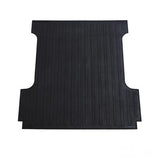 Westin Rubber Truck Bed Mat 506465 for 2019-2026 Chevy & GMC
$187.99Bed mats for Silverado and Sierra — match your bed length. Confirm fitment by VIN before ordering.
Westin Rubber Truck Bed Mat 506465 for 2019-2026 Chevy & GMC
$187.99Bed mats for Silverado and Sierra — match your bed length. Confirm fitment by VIN before ordering.
 2019-2024 Chevy Silverado GMC Sierra 1500 5.8ft TPE 3D Truck
$139.99Bed mats for Silverado and Sierra — match your bed length. Confirm fitment by VIN before ordering.
2019-2024 Chevy Silverado GMC Sierra 1500 5.8ft TPE 3D Truck
$139.99Bed mats for Silverado and Sierra — match your bed length. Confirm fitment by VIN before ordering.
 BedRug XLT Bed Mat XLTBMC19LBS for 2019-2025 Chevy & GMC
$378.99Bed mats for Silverado and Sierra — match your bed length. Confirm fitment by VIN before ordering.
BedRug XLT Bed Mat XLTBMC19LBS for 2019-2025 Chevy & GMC
$378.99Bed mats for Silverado and Sierra — match your bed length. Confirm fitment by VIN before ordering.
 BedRug BedTred Impact Bed Mat (Multi-Pro Tailgate) IMC19SBMPS
$311.99Bed mats for Silverado and Sierra — match your bed length. Confirm fitment by VIN before ordering.
BedRug BedTred Impact Bed Mat (Multi-Pro Tailgate) IMC19SBMPS
$311.99Bed mats for Silverado and Sierra — match your bed length. Confirm fitment by VIN before ordering.


What is the actual difference between drop-in, spray-in and a bed mat?
A drop-in is a molded plastic shell that sits in the bed and bolts or clips in. A spray-in is a polyurethane coating bonded directly to the painted bed metal. A bed mat is a heavy rubber or thermoplastic sheet that covers only the floor. They protect different things, fail in different ways, and cost different amounts of labor to undo.
| Bed mat | Drop-in liner | Spray-in liner | |
|---|---|---|---|
| Covers | Bed floor only | Floor, walls, tailgate, sometimes rails | Floor, walls, tailgate, rails, seams |
| Dent protection | Good on the floor, none on the sides | Best — the shell absorbs the hit | Modest; the coating is thin over the metal |
| Scratch and abrasion protection | Good on the floor | Good, but the shell scratches itself | Best; textured surface hides wear |
| Rust risk | Low if you lift and rinse occasionally | Highest — grit and water get trapped underneath | Lowest when the prep was done right |
| Cargo grip | Excellent; rubber grips hard | Poor; smooth plastic lets loads slide | Excellent; textured surface |
| Reversible? | Yes — lift it out in one minute | Yes — unbolt and remove | No — removal means sanding or replacement panels |
| Installation | DIY, no tools, minutes | DIY, basic hand tools, under an hour | Professional application, bed out of service for a day |
| Effect on resale | Neutral; buyer sees original bed underneath | Neutral to negative if rust is hiding under it | Usually positive on a work truck |
| Weight added | Modest, but real on a long bed | Noticeable | Minimal |
| Best for | Daily drivers, family trucks, dogs | Removable protection, seasonal heavy hauling | Work trucks, long ownership, salt states |
Read down the rust risk row before anything else. It is the row that decides most of these purchases and the one most buyers ignore until it is too late.
Does a drop-in bed liner cause rust?
It can, and this is the well-documented weakness of the type. A drop-in does not seal to the bed. Water, sand and road salt work under the edges, sit against painted metal in the dark, and never dry out. Add the vibration of driving and the plastic shell sands the paint off from underneath.
The failure pattern is specific and predictable. Owners find it when they finally pull a liner they have not touched in six years and discover perforated metal along the bed floor seams and behind the wheel wells. The truck looked immaculate the whole time, because the damage was under a plastic cover.
None of that means drop-ins are a bad product. It means they are a maintenance item, not a set-and-forget one. If you own a drop-in, pull it once a year, hose out the bed, let it dry completely, and put it back. That single hour of work removes essentially the entire downside.
It also means a used truck with a drop-in deserves a hard look. If you are shopping, ask the seller to remove it. A refusal is an answer.
Is a spray-in liner worth it?
For a truck that works, or one you plan to keep past the ten-year mark in a salt state, yes. A properly applied spray-in bonds to the metal so nothing can get underneath, covers the seams where beds actually rot, and seals the drilled holes for tie-downs. It is the only one of the three that improves corrosion resistance rather than just hiding the bed.
The catch is that the quality gap between a good spray-in and a bad one is enormous, and it is almost entirely about preparation. The bed has to be cleaned, scuffed and masked properly before anything is sprayed. A shop that scuffs lightly and sprays over contamination will produce a liner that lifts in sheets in a couple of years, at which point moisture gets under the lifted section and you have the drop-in problem with none of the drop-in's reversibility.
Thickness matters too, and it is the specification to ask about. Application thickness varies by product and by shop, and it changes both the dent resistance and the price. Ask what thickness the quote covers and get it in writing, because spray-in liner describes a category, not a specification.
The honest downside is permanence. Once the bed is coated, it is coated. If you decide in three years that you want the original bed back, the answer is sanding, chemical stripping or a replacement bed panel. Nobody enjoys any of those.
The second honest downside is that a spray-in is thin over the sheet metal. It resists scratches beautifully and does very little to stop a dent. Drop a transmission on a spray-in bed and you get a dent with a nice textured finish on it.
Is a bed mat enough on its own?
For most Silverado and Sierra owners, yes. The overwhelming majority of bed damage on a personal-use truck happens on the floor, from sliding cargo and dropped objects. A thick rubber mat absorbs that, grips loads so they stop sliding in the first place, and lifts out in a minute when you want to rinse the bed.
Rubber mats also solve a problem the other two do not. They deaden noise. An empty steel bed with a plastic liner in it drums and rattles over expansion joints. A heavy rubber mat kills that almost completely, which is a bigger quality-of-life improvement than most people expect from a floor covering.
The tradeoff is that a mat protects nothing above the floor. If you regularly load lumber that swings into the bed sides, or you throw bikes and tools over the rail, you will scratch the walls and the mat cannot help. That is the line where a drop-in or a spray-in starts to earn its cost — or where bed rails and tie-down hardware stop the load moving in the first place.
Fit is the thing to get right. A mat cut for your specific bed length sits inside the wheel-well contours and stays put on its own weight. A universal mat trimmed with a utility knife curls at the corners, traps water in the folds, and slides forward when you brake. Buy the model-specific one.
Which fits which Silverado and Sierra bed?
Bed length decides fitment, and current Silverado 1500 and Sierra 1500 trucks are offered in three: the short bed at 69.9 in, plus the standard bed and the long bed. Heavy duty trucks use their own lengths. Measure your bed floor from the bulkhead to the inside of the closed tailgate before you order anything.
| Truck | Bed option | Typical cab pairing | What to do before ordering |
|---|---|---|---|
| Silverado 1500 / Sierra 1500 | Short bed, 69.9 in | Crew cab | Confirm 69.9 in on the listing |
| Silverado 1500 / Sierra 1500 | Standard bed | Crew cab and double cab | Measure the floor and match the listed length |
| Silverado 1500 / Sierra 1500 | Long bed | Regular cab and double cab | Measure; long-bed mats are a separate part |
| Silverado 2500HD / 3500HD, Sierra HD | Standard and long beds | All cabs | HD beds are not interchangeable with 1500 beds |
| Sierra 1500 with CarbonPro | Composite bed | Upper trims | See the section below before you coat anything |
| 2014–2018 Silverado / Sierra | Previous generation | All | Different bed — do not order current-gen parts |
Measure the floor, not the outside of the truck, and measure at the floor rather than at the rail. Bed sides taper. A tape run along the top rail will read longer than the panel the mat actually has to cover.
One trap specific to 2019: GM sold two Silverado and Sierra generations side by side that year. The carryover old-body trucks were badged Silverado 1500 LD and Sierra 1500 Limited, and they use the previous-generation bed. If yours has the older dashboard, order 2014–2018 parts regardless of what the title says.
What if you have a CarbonPro bed?
GMC's CarbonPro is a carbon-fiber composite bed rather than steel, and it changes the calculation. The composite is already dent- and corrosion-resistant by construction, which is most of what you were buying protection for. Adding a spray-in coating to it is generally unnecessary and eliminates a feature you paid for.
A mat still makes sense on CarbonPro if you want cargo grip and noise reduction, and it comes out again whenever you want. What you should not do is permanently coat a composite bed without first confirming with GMC or the coating manufacturer that the product is approved for the substrate. Adhesion chemistry that works on painted steel is not automatically correct on composite.
The same caution applies to any factory spray-on bedliner that came on the truck. If your Silverado or Sierra left the factory with a sprayed bed, you already have the coating. Adding a mat on top for grip and quiet is fine. Adding a drop-in over a spray-in is not — you would be trapping grit against the coating and abrading it.
Can you combine a bed cover with a liner?
Yes, and the combination is common, but the order of operations matters. Tonneau cover rails clamp to the bed rails, and a drop-in liner with an over-rail lip can interfere with the clamps. Under-rail drop-ins and bed mats have no such conflict. Sort out the liner decision before you buy the cover.
Spray-in liners and tonneau covers get along well, with one caveat: if the bed rail is coated, the clamp bites into the coating rather than the steel. Most installers handle this fine, but it is worth checking the clamp tension a week after installation as the coating relaxes slightly under pressure.
If a cover is on your list, work through the cover decision separately — the hard-versus-soft and folding-versus-roll-up questions are entirely different from the liner question. Our guide to picking a bed cover for a Chevrolet covers those tradeoffs, and measuring and installing a tonneau correctly covers the fitment side.
Bed covers
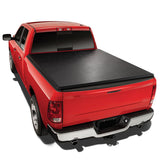 04-13 Chevy Silverado GMC Sierra 1500 Roll-Up Tonneau Cover
$379.99Tonneau covers that work with a mat or liner. Confirm fitment by VIN before ordering.
04-13 Chevy Silverado GMC Sierra 1500 Roll-Up Tonneau Cover
$379.99Tonneau covers that work with a mat or liner. Confirm fitment by VIN before ordering.
 07-18 Chevy Silverado GMC Sierra Hard Tri-Fold Tonneau Cover
$619.99Tonneau covers that work with a mat or liner. Confirm fitment by VIN before ordering.
07-18 Chevy Silverado GMC Sierra Hard Tri-Fold Tonneau Cover
$619.99Tonneau covers that work with a mat or liner. Confirm fitment by VIN before ordering.
 04-13 Chevy Silverado / GMC Sierra Hard Tri-Fold Tonneau Cover
$619.99Tonneau covers that work with a mat or liner. Confirm fitment by VIN before ordering.
04-13 Chevy Silverado / GMC Sierra Hard Tri-Fold Tonneau Cover
$619.99Tonneau covers that work with a mat or liner. Confirm fitment by VIN before ordering.
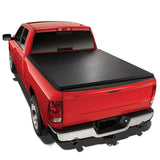 07-14 Chevrolet Silverado GMC Sierra Roll-Up Tonneau Cover
$369.99Tonneau covers that work with a mat or liner. Confirm fitment by VIN before ordering.
07-14 Chevrolet Silverado GMC Sierra Roll-Up Tonneau Cover
$369.99Tonneau covers that work with a mat or liner. Confirm fitment by VIN before ordering.


How do you install a bed mat properly?
It is the easiest accessory install on the truck, and there is still a wrong way to do it. The mat has to go down on a clean, dry bed with nothing trapped under it, and it needs to sit flat before you load anything on top.
- Empty the bed completely and remove any existing drop-in liner.
- Sweep, then vacuum, then wash the bed floor. Pay attention to the corners and the front bulkhead seam.
- Inspect the bare bed for existing rust. If you find any, treat it now — a mat over active corrosion just hides the problem.
- Let the bed dry completely. Not damp. Completely.
- Unroll the mat in the sun for thirty minutes if it shipped folded, so it relaxes flat.
- Lay the mat in from the tailgate end and slide it forward until it meets the bulkhead.
- Work the edges down around the wheel well contours and check that no corner is riding up.
- Confirm the tailgate closes without pinching the mat.
- Load and go. Plan to lift the mat and rinse the bed a few times a year, more often if you run salted roads.
Safety note on the load itself: a mat improves grip but does not restrain cargo. Anything that can shift or leave the bed still needs to be strapped to the tie-down points, and heavy items belong forward, over the rear axle rather than hanging off the tailgate.
Which one should you actually buy?
Family truck that hauls a few times a month, dogs in the back, no salt: bed mat. It is the cheapest, it grips, it quiets the bed, and you can pull it out to inspect the metal any time.
Work truck, tools loaded and unloaded daily, ten-year ownership plan, northern winters: spray-in. Pay for the prep and pick the shop on reputation rather than price, because a bad spray-in is worse than no liner at all.
Seasonal heavy use, or you want protection you can undo before selling: drop-in, with a calendar reminder to pull it once a year. It gives the best dent protection of the three because the shell takes the impact instead of the sheet metal.
Truck with a CarbonPro or factory sprayed bed: mat only, for grip and noise. You already have the corrosion protection.
What to check before you order
- Measure your bed floor length from the bulkhead to the closed tailgate and write it down.
- Confirm your generation — 2019 and later Silverado and Sierra beds differ from 2014–2018, and 2019 itself was a two-body year.
- Decide whether you need side and rail protection or only floor protection.
- If you already have a drop-in, pull it and inspect the bed before spending money on anything else.
- If you are getting a spray-in quote, ask what surface prep and what coating thickness the price includes.
- Check for conflicts with a tonneau cover, a bed rack or a fifth-wheel setup before you commit.
- Confirm the product is approved for a composite bed if you have CarbonPro.
Cargo control
 Car Tie Down Anchor Pickup Truck Bed Side Wall Clip
$32.19Tie-downs and nets for a protected bed. Confirm fitment by VIN before ordering.
Car Tie Down Anchor Pickup Truck Bed Side Wall Clip
$32.19Tie-downs and nets for a protected bed. Confirm fitment by VIN before ordering.
 Auto Straps For Cargo Tape Retractable Tie Down Belts
$64.59Tie-downs and nets for a protected bed. Confirm fitment by VIN before ordering.
Auto Straps For Cargo Tape Retractable Tie Down Belts
$64.59Tie-downs and nets for a protected bed. Confirm fitment by VIN before ordering.
 AUTOWN Truck Bed Cargo Net for GMC Sierra & Chevy Silverado
$22.13Tie-downs and nets for a protected bed. Confirm fitment by VIN before ordering.
AUTOWN Truck Bed Cargo Net for GMC Sierra & Chevy Silverado
$22.13Tie-downs and nets for a protected bed. Confirm fitment by VIN before ordering.
 Universal Car Trunk Organizer Elastic Cargo Net Heavy Duty
$36.14Tie-downs and nets for a protected bed. Confirm fitment by VIN before ordering.
Universal Car Trunk Organizer Elastic Cargo Net Heavy Duty
$36.14Tie-downs and nets for a protected bed. Confirm fitment by VIN before ordering.


Frequently Asked Questions
Do drop-in bed liners cause rust?
They can, and it is the documented weakness of the type. A drop-in does not seal to the bed, so water, sand and salt work under the edges and sit against painted metal in the dark, while vibration lets the shell sand the paint off from underneath. Pull it once a year, rinse, dry fully and refit — that removes essentially the entire downside.
Is a spray-in bed liner worth the money?
For a working truck, or one you will keep past ten years in a salt state, yes — it bonds to the metal so nothing gets underneath, and covers the seams where beds actually rot. The quality gap between a good and bad spray-in is enormous and almost entirely about surface preparation.
Is a bed mat enough on its own?
For most personal-use trucks, yes. The overwhelming majority of bed damage happens on the floor from sliding cargo and dropped objects, and a thick rubber mat absorbs that while gripping loads so they stop sliding. It also deadens the drumming an empty bed makes over expansion joints.
Does a spray-in liner stop dents?
Not really. It is thin over the sheet metal — excellent against scratches and abrasion, modest against impact. Drop a transmission on a spray-in bed and you get a dent with a nice textured finish on it. The drop-in shell is the one that actually absorbs a hit.
Which bed liner is best for resale?
A spray-in usually helps on a work truck. A mat is neutral, since the buyer can see the original bed underneath. A drop-in can hurt if there is corrosion hiding under it — which is exactly why, when buying used, you should ask the seller to remove it. A refusal is an answer.
How do I know which bed mat fits my truck?
Measure the bed floor from the bulkhead to the inside of the closed tailgate, at the floor rather than the rail — bed sides taper, so a tape along the top rail reads long. Then match that to the listed length. Buy the model-specific mat; a trimmed universal one curls at the corners and traps water.
Should I put a liner on a CarbonPro bed?
A mat, if you want grip and noise reduction. Not a spray-in — the composite is already dent- and corrosion-resistant by construction, so coating it is generally unnecessary and removes a feature you paid for. Never permanently coat a composite bed without confirming the product is approved for the substrate.
Can I use a bed liner with a tonneau cover?
Usually, but decide the liner first. Tonneau rails clamp to the bed rails, and a drop-in with an over-rail lip can interfere with the clamps. Under-rail drop-ins and mats have no conflict. With a spray-in, check clamp tension a week after installation as the coating relaxes slightly.
Can I put a drop-in over a spray-in liner?
No. You would be trapping grit against the coating and abrading it — the worst of both. If the truck came with a factory sprayed bed, add a mat on top for grip and quiet, and leave it at that.
My 2019 Silverado — which generation bed do I have?
Depends which 2019. GM sold two generations side by side that year; the carryover trucks were badged Silverado 1500 LD and Sierra 1500 Limited and use the previous-generation bed. If yours has the older dashboard, order 2014–2018 parts regardless of the model year on the title.
A Note on Sourcing
Bed dimensions and generation boundaries come from GM published specifications. The 2019 model year overlap is real — GM sold the carryover Silverado 1500 LD and Sierra 1500 Limited alongside the new-body truck — and it affects bed parts the same way it affects brakes and tyres on these trucks.
Spray-in coating thickness is not standardised across products or shops, which is why this page tells you to ask what the quote covers and get it in writing rather than quoting a figure.
The drop-in corrosion pattern is a well-documented failure mode rather than a manufacturer claim, and the mitigation — lifting the liner annually to rinse and dry the bed — is our own recommendation based on how the damage actually develops.
Composite bed guidance is deliberately cautious. Adhesion chemistry validated on painted steel is not automatically correct on a composite substrate; confirm with GMC or the coating manufacturer before permanently coating a CarbonPro bed.
More accessory fitment write-ups are collected in our GM parts and accessories guides.
Still deciding?
Compare mats, drop-ins and bed accessories side by side with your bed length in hand. Filter to your truck, check the fitment note on each product, and pick the level of protection that matches how the bed actually gets used rather than how it might get used someday.