
Multimatic DSSV dampers can be rebuilt, but only by a handful of specialist shops, and a basic seal-and-fluid service has been reported around $250 per corner. Once you need valving or shaft work the cost approaches a full aftermarket coilover set. Your four real options are OEM replacement, specialist rebuild, Chevrolet Performance long-travel DSSV, or aftermarket coilovers.
That is the short version. The longer version depends on which generation of ZR2 or AT4X you have, how you actually use the truck, and whether you care about keeping the factory ride on pavement. Below is the comparison nobody writes because most of the pages on this query belong to a vendor selling one answer. Start with shocks, struts and suspension parts for your Colorado or Canyon and filter to your year.
Parts and tools you'll need
- Shocks, struts, mounts and suspension hardware for 2017–2026 Colorado and Canyon — the upper strut mount and bushings are the parts people forget
- Chevrolet Colorado parts or GMC Canyon parts for the related hardware
- A torque wrench, metric sockets through 21 mm, and a breaker bar for the lower shock bolts
- Penetrating oil applied the night before, if the truck has seen salt or mud
Colorado and Canyon suspension
 BDS 2017-2022 Chevrolet Colorado ZR2 Box Kit 5of5
$491.99Leveling and lift parts for Colorado and Canyon. Confirm fitment by VIN before ordering.
BDS 2017-2022 Chevrolet Colorado ZR2 Box Kit 5of5
$491.99Leveling and lift parts for Colorado and Canyon. Confirm fitment by VIN before ordering.
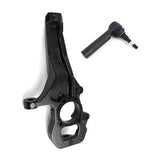 BDS 2017-2022 Chevrolet Colorado ZR2 Box Kit 2of5
$352.99Leveling and lift parts for Colorado and Canyon. Confirm fitment by VIN before ordering.
BDS 2017-2022 Chevrolet Colorado ZR2 Box Kit 2of5
$352.99Leveling and lift parts for Colorado and Canyon. Confirm fitment by VIN before ordering.
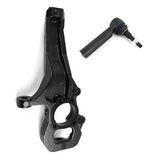 BDS 2017-2022 Chevrolet Colorado ZR2 Box Kit 1of5
$352.99Leveling and lift parts for Colorado and Canyon. Confirm fitment by VIN before ordering.
BDS 2017-2022 Chevrolet Colorado ZR2 Box Kit 1of5
$352.99Leveling and lift parts for Colorado and Canyon. Confirm fitment by VIN before ordering.
 ACDelco Shock, OE Replacement, Colorado ZR2
$940.99Leveling and lift parts for Colorado and Canyon. Confirm fitment by VIN before ordering.
ACDelco Shock, OE Replacement, Colorado ZR2
$940.99Leveling and lift parts for Colorado and Canyon. Confirm fitment by VIN before ordering.


Which ZR2 or AT4X do you actually have?
The Colorado ZR2 ran from 2017 to 2022 on the second-generation platform, then relaunched for 2023 on the third-generation truck. The GMC Canyon AT4X did not exist until 2023 — that is the first Canyon with DSSV dampers. Parts do not cross between the two generations, and neither do most aftermarket kits.
| Truck | Years | Damper | Jounce control dampers | Notes |
|---|---|---|---|---|
| Colorado ZR2 (2nd gen) | 2017–2022 | Multimatic DSSV front strut and rear shock | Not offered from the factory | Largest aftermarket support; Chevrolet Performance long-travel kit available |
| Colorado ZR2 (3rd gen) | 2023–2026 | Multimatic DSSV | Optional / trim dependent | GMT 31XX-2 platform; 12.2 in ground clearance |
| Colorado ZR2 Bison | 2024–2026 | Multimatic DSSV | Standard | 35-inch tires on 17-inch AEV beadlock-capable wheels |
| Canyon AT4X | 2023–2026 | Multimatic DSSV | Optional | Mechanically very close to the third-gen ZR2 |
| Canyon AT4X AEV Edition | 2024–2026 | Multimatic DSSV | Optional upgrade | Same 12.2 in clearance and 35-inch tires as the Bison |
Approach, departure and breakover angles on the Bison and AT4X AEV Edition run about 38.2, 26 and 26.9 degrees respectively. Those matter here because they tell you what the truck was designed to absorb, and therefore what the dampers have been doing for the last however many thousand miles.
How does DSSV actually work, and why does that change the replacement decision?
DSSV stands for Dynamic Suspensions Spool Valve. Instead of stacks of deflecting shims, it uses spring-loaded cylindrical spool valves moving over shaped ports, which lets compression and rebound be tuned completely independently. That precision is the whole point of the damper, and it is also why a generic replacement is not a like-for-like swap.
On the Colorado ZR2 the front strut carries two body-mounted spool valves plus a third piston-mounted valve dedicated to extreme off-road compression, along with a separate rebound valve — six tuning curves in total. The rear shock uses the simpler two-spool arrangement for four curves. That asymmetry is deliberate: the front end takes the initial hit.
The practical consequence is that a DSSV damper is a precision hydraulic device with tighter internal tolerances than a conventional twin-tube shock. It is not a part you can have rebuilt by any shop with a nitrogen bottle and a shim assortment, and that is the constraint driving every option below.
When do DSSV dampers actually wear out?
There is no published service interval. In practice, owners start seeing seepage and pressure loss somewhere in the 40,000 to 80,000 mile range on trucks used off road, later on trucks that mostly commute. A minority of early second-generation trucks had seal failures at very low mileage — some reported under 5,000 miles — which was a design issue with shaft support, not normal wear.
The symptoms are not subtle once you know what to look for. An oily film on the damper body that collects dust is the first sign. A ride that has gone floaty over whoops, or a front end that packs down and stays down over successive bumps, is the second. Neither shows up as a warning light because these dampers are entirely passive.
- Park the truck on level ground and look at all four dampers with a flashlight. Any wet or dusty-oily band on the shaft or body means the seal is passing.
- Push down hard on each corner and release. It should return and settle in one motion, not oscillate.
- Drive a known rough road you have driven a hundred times and pay attention to whether the truck settles after a series of bumps or keeps moving.
- Check for damage: dented bodies, torn boots, and bent shafts are common on trucks that see rocks.
- Inspect the upper strut mounts and sway bar links while you are down there. They fail on the same schedule and cause noises people blame on the dampers.
- Compare left to right. Suspension parts fail one at a time and the good side is your reference.
If what you actually have is a clunk rather than a damping problem, spend an evening with the strut mount and sway bar link noise diagnosis before you spend four figures on dampers. End links are the cheapest part on the truck and they cause a disproportionate share of the complaints.
Option 1: replace with OEM DSSV
New factory DSSV units restore the truck exactly as engineered, including the on-road ride quality that makes a ZR2 tolerable as a daily driver. They are expensive and they will eventually fail the same way the originals did. This is the right choice if you like how the truck rides and you are not chasing more capability.
Buy them as axle pairs. A new damper on one side and a 70,000-mile damper on the other gives you a truck that behaves differently in left and right turns, which is worse than two evenly worn dampers.
The second-generation ZR2 has better parts availability here simply because there are more of them out there and they have been on the road longer. Third-generation and AT4X owners will find fewer options, and that shortage is itself an argument for one of the paths below.
Option 2: have the DSSV dampers rebuilt
A specialist rebuild replaces seals and fluid and re-pressurizes the damper. Reported pricing for that basic service has run around $250 per corner. Shops that do this work are few — Peak Suspension developed a program specifically for ZR2 DSSV units — and turnaround means your truck sits.
Where the math falls apart is when you want more than a seal service. Owners who have gone down this road consistently report that shaft, seal head and valving upgrades roughly double the rebuild cost, at which point you are into the price of a complete aftermarket coilover set that comes with new everything and a warranty.
So the honest rule is: rebuild if the dampers are simply tired and you want the factory tune back. Do not rebuild if you are trying to fix a truck that was never valved the way you wanted, or if you have already replaced tires and added weight the original tune does not account for.
Option 3: Chevrolet Performance long-travel DSSV
Chevrolet Performance sells long-travel DSSV shocks developed with Multimatic for the 2017–2022 Colorado ZR2 — front under 85143349 and rear under 85143352 — adding roughly ten percent rear suspension travel, a 16 mm rod and high-temperature seals. GM markets these for competition and off-road use only.
Read that last sentence carefully, because it is not boilerplate. These are race-intent dampers. They are the most expensive option on this page by a wide margin, and the off-road-use-only designation has implications for warranty and for how the truck behaves on pavement.
If you race the truck or run high-speed desert terrain, this is the factory-blessed upgrade and it is genuinely good. If you take the family camping four weekends a year, it is the wrong tool and you will feel it every day on the commute.
Option 4: aftermarket coilovers
King, ADS, Fox and similar builders offer 2.5-inch remote-reservoir coilovers for the second-generation ZR2, typically in the neighborhood of $3,000 for a complete set. They are field-serviceable, revalvable, and supported by a large network of shops — which is the real argument for them over DSSV.
The trade-off is on-road manners. Factory DSSV is remarkably good on pavement for an off-road damper, and most aftermarket coilovers give some of that back in exchange for more off-road capability and much easier long-term maintenance. Whether that trade is worth it depends entirely on the ratio of dirt to asphalt in your life.
Third-generation ZR2 and Canyon AT4X support is thinner and growing. If you own one of those trucks, confirm the kit is built for your specific platform and model year rather than assuming a second-gen kit transfers.
Shocks and coilovers
 Bilstein B8 5100 Shock for 2019-2025 Chevy & GMC
$155.99Shocks and coilovers — confirm ZR2 vs standard fitment. Confirm fitment by VIN before ordering.
Bilstein B8 5100 Shock for 2019-2025 Chevy & GMC
$155.99Shocks and coilovers — confirm ZR2 vs standard fitment. Confirm fitment by VIN before ordering.
 Bilstein B8 5160 Shock 25316957 for 2019-2025 Chevy & GMC
$368.99Shocks and coilovers — confirm ZR2 vs standard fitment. Confirm fitment by VIN before ordering.
Bilstein B8 5160 Shock 25316957 for 2019-2025 Chevy & GMC
$368.99Shocks and coilovers — confirm ZR2 vs standard fitment. Confirm fitment by VIN before ordering.
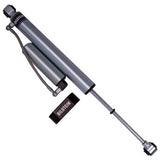 Bilstein B8 5160 Shock 25316964 for 2019-2025 Chevy & GMC
$368.99Shocks and coilovers — confirm ZR2 vs standard fitment. Confirm fitment by VIN before ordering.
Bilstein B8 5160 Shock 25316964 for 2019-2025 Chevy & GMC
$368.99Shocks and coilovers — confirm ZR2 vs standard fitment. Confirm fitment by VIN before ordering.
 Bilstein B8 Control Arm Kit 51322335 for 2019-2025 Chevy & GMC
$898.99Shocks and coilovers — confirm ZR2 vs standard fitment. Confirm fitment by VIN before ordering.
Bilstein B8 Control Arm Kit 51322335 for 2019-2025 Chevy & GMC
$898.99Shocks and coilovers — confirm ZR2 vs standard fitment. Confirm fitment by VIN before ordering.


Comparing the four options
| OEM DSSV | DSSV rebuild | Chevy Performance long-travel | Aftermarket coilover | |
|---|---|---|---|---|
| Relative cost | High | Lowest for a basic service | Highest | High |
| On-road ride | Factory | Factory | Compromised | Varies by build |
| Off-road capability | Factory | Factory | Highest | High |
| Serviceable later | Specialist only | Specialist only | Specialist only | Yes, widely |
| Revalvable | No | Limited | No | Yes |
| Truck downtime | One day | Days to weeks | One day | One day |
| 3rd-gen / AT4X support | Yes | Limited | Not listed | Growing |
| Best for | Keeping it stock | Tired but healthy dampers | Competition use | Heavy off-road, long-term ownership |
What are jounce control dampers and do I need them?
Jounce control dampers are small nitrogen-charged bump shocks that act as a secondary suspension near the end of travel. Multimatic supplies them for the ZR2 and they are standard on the ZR2 Bison and optional on the Canyon AT4X and AT4X AEV Edition. They help most in hard-hit off-road use and towing off pavement.
They are not a substitute for worn primary dampers. If your DSSV units are leaking, adding jounce dampers will not fix the ride — it will just give you a truck that still floats but bottoms out less harshly. Fix the primary dampers first.
They are worth adding if you routinely run terrain that uses full travel, or if you have added weight with a bed rack, a camper or a bumper. A heavier truck reaches the bump stops sooner and jounce dampers are specifically about controlling what happens at that point.
Will any of this throw a code or affect the truck electronically?
No. DSSV dampers on the ZR2 and AT4X are entirely passive — there is no wiring, no solenoid, and no module watching them. Swapping to aftermarket coilovers does not set a code or disable a driver mode. This is genuinely different from the MagneRide systems on GM's full-size SUVs, where removing a damper leaves an open circuit the controller reports.
What can be affected is ride height, and ride height feeds the headlamp aim and, on some builds, the sensors involved in stability control calibration. A lift changes geometry. If you go up meaningfully in ride height, get an alignment and check your headlamp aim, and expect the truck's rollover-sensing calibration to have been developed around the stock height.
A safety note
Front struts on these trucks are a coil-over assembly under spring preload. If you are separating the spring from the damper, use a proper spring compressor and treat it as the genuinely dangerous step it is. Otherwise, buy the assembly pre-loaded and skip that entirely — it is worth the extra cost.
Support the truck on rated jack stands at the frame, not the suspension, and remember the suspension will droop as you unload it. Torque everything to spec with the suspension at ride height where the service procedure calls for it, because bushings tightened at full droop bind and tear.
What to check before you order
- Confirm your generation. 2017–2022 and 2023+ Colorado ZR2 are different trucks; the Canyon AT4X starts in 2023.
- Verify the dampers are actually the problem. Look for seepage, and rule out strut mounts, end links and bushings first.
- Decide your usage honestly. Mostly pavement points at OEM or rebuild. Mostly dirt points at aftermarket coilovers.
- Order in axle pairs, never one corner.
- Check rebuild turnaround before you pull anything off — the truck is immobile while the dampers are away.
- If you have added weight or bigger tires, factor that into the valving decision rather than assuming the factory tune still applies.
- Buy new upper mounts and hardware with the dampers. They are cheap and you are already in there.
- Plan an alignment after any suspension work that changes ride height.
Tools
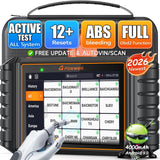 FOXWELL NT726 Bidirectional OBD2 Scanner
$368.99Scan and torque tools for the job.
FOXWELL NT726 Bidirectional OBD2 Scanner
$368.99Scan and torque tools for the job.
 ACDelco Tools Torque Wrenches, Digital LCD Display, 1/2 in.
$162.99Scan and torque tools for the job.
ACDelco Tools Torque Wrenches, Digital LCD Display, 1/2 in.
$162.99Scan and torque tools for the job.
 ACDelco Tools Torque Wrenches, Digital LCD Display, 3/8 in.
$249.99Scan and torque tools for the job.
ACDelco Tools Torque Wrenches, Digital LCD Display, 3/8 in.
$249.99Scan and torque tools for the job.


Frequently Asked Questions
Can Multimatic DSSV shocks be rebuilt?
Yes, but only by a handful of specialist shops, and a basic seal-and-fluid service has been reported around $250 per corner. Once you need shaft, seal head or valving work the cost roughly doubles — at which point you are into the price of a complete aftermarket coilover set with new everything and a warranty.
How long do DSSV dampers last?
There is no published service interval. Owners typically see seepage and pressure loss somewhere in the 40,000 to 80,000 mile range on trucks used off road, later on commuters. Some early second-generation trucks had seal failures under 5,000 miles, which was a shaft support design issue rather than normal wear.
How do I tell if my ZR2 shocks are worn?
Look for an oily film on the damper body that collects dust — that is the seal passing. Then check whether the truck settles in one motion when you push a corner down and release, and whether it packs down over successive bumps on a road you know. There is no warning light; these dampers are entirely passive.
What does DSSV actually mean?
Dynamic Suspensions Spool Valve. Instead of stacks of deflecting shims it uses spring-loaded cylindrical spool valves over shaped ports, letting compression and rebound be tuned independently. The ZR2 front strut carries three compression valves plus a rebound valve — six tuning curves, against four at the rear.
Do Colorado ZR2 parts cross between generations?
No. The 2017–2022 second-generation ZR2 and the 2023-and-newer third-generation truck are different vehicles, and most aftermarket kits do not transfer either. The Canyon AT4X did not exist before 2023 — that is the first Canyon with DSSV.
Should I go OEM DSSV or aftermarket coilovers?
Decide by usage, not marketing. Factory DSSV is remarkably good on pavement for an off-road damper, so mostly-pavement trucks point at OEM or a rebuild. Aftermarket coilovers give some road manners back in exchange for more capability and far easier long-term servicing, which suits heavy dirt use and long ownership.
What about the Chevrolet Performance long-travel shocks?
They add roughly ten percent rear travel with a 16 mm rod and high-temperature seals, for the 2017–2022 ZR2 (front 85143349, rear 85143352). GM markets them for competition and off-road use only, and that is not boilerplate — they are race-intent dampers with warranty and on-road implications.
Do I need jounce control dampers?
Only if you routinely use full travel, or have added weight with a rack, camper or bumper — a heavier truck reaches the bump stops sooner. They are not a substitute for worn primary dampers. Adding them to leaking DSSV units gives you a truck that still floats but bottoms out less harshly.
Will aftermarket shocks throw a code on a ZR2?
No. DSSV dampers here are entirely passive — no wiring, no solenoid, no module watching them. This is genuinely different from MagneRide on GM's full-size SUVs, where removing a damper leaves an open circuit the controller reports.
Can I replace just one shock?
Order in axle pairs. A new damper opposite a 70,000-mile one gives you a truck that behaves differently in left and right turns, which is worse than two evenly worn dampers.
A Note on Sourcing
DSSV valve architecture, platform details, ground clearance and approach/departure/breakover figures come from GM and Multimatic published information. The Chevrolet Performance long-travel part numbers and the off-road-use-only designation are from Chevrolet Performance's own listing.
The 40,000-to-80,000-mile wear window is an observed pattern, not a manufacturer specification — GM publishes no service interval for these dampers. The low-mileage seal failures on some early second-generation trucks are owner-reported and attributed to shaft support design rather than normal wear.
Rebuild and coilover pricing is reported rather than quoted. The roughly $250-per-corner seal service figure and the approximately $3,000 coilover set figure reflect what owners and shops have reported; both move, and neither is a quote. The useful part is the ratio — a full rebuild with valving work lands close to a new coilover set.
The four-option framework and the recommendation to decide by usage are our own. We sell suspension parts, and the position stated here is that most pages on this topic belong to a vendor selling one answer, that end links and strut mounts should be ruled out before spending four figures on dampers, and that the race-intent option is the wrong tool for a truck that camps four weekends a year.
There are more GM performance and suspension guides covering the rest of the chassis.
Still deciding?
Work out which of the four paths matches how you use the truck, not which one has the best marketing, then compare Colorado and Canyon shocks, struts and suspension hardware filtered to your exact year and trim. Colorado owners can start from Chevrolet Colorado parts; Canyon owners from GMC Canyon parts.