
GM Special Coverage N242484750 covers free turbocharger replacement on 2022 Chevrolet Trailblazer and 2022 Buick Encore GX vehicles built with the 1.2L three-cylinder engine. Coverage runs 15 years or 150,000 miles from the in-service date, transfers with ownership, and applies when the turbo fails and sets a check engine light with reduced engine power. The reimbursement window for repairs you already paid for closed on 28 February 2026.
Read the primary document yourself: GM Special Coverage bulletin N242484750-02, released 1 September 2026 (PDF) — the current revision, including the parts list, labour operations and customer letter. The previous revision from October 2025 is also public. Both read in full.
Important corrections — this page has been revised against GM's bulletin.
- The reimbursement deadline has passed. An earlier version of this page told owners who had already paid for a turbo that reimbursement was "often" available and described an open-ended process. GM's bulletin sets a hard cut-off: claims had to reach a dealer or GM's Reimbursement Department by 28 February 2026, unless state law specifies longer. That date is in the current September 2026 revision, so it has not been extended. If you paid out of pocket, read the reimbursement section below before assuming you have no recourse — but do not assume you have plenty of time either.
- The labour time was roughly double GM's figure. An earlier version said four to six and a half hours. GM's current published warranty time is 2.7 hours for the turbocharger replacement, plus 0.3 to install the vacuum tank kit. Revision 02 exists specifically to reduce that time.
- The primary part number was missing. GM specifies turbocharger 19434771, with 25204082 as the alternate if the first is unavailable. The earlier parts list did not include 19434771 at all.
If a 2022 Trailblazer or Encore GX rolls in with a check engine light, an "Engine Power Is Reduced" message, and a turbo that sounds like a coffee grinder, stop before quoting the job. There is a very good chance General Motors already agreed to pay for it. Special Coverage N242484750 quietly extended turbo warranty on these 1.2L three-cylinders far past the factory powertrain term, and a lot of owners are still paying out of pocket because nobody told them.
Here is the whole picture: who qualifies, how to confirm it in about four minutes, what the failure actually looks like, and what the repair runs if your VIN comes back ineligible.
What Is GM Special Coverage N242484750?
A special coverage is not a recall. A recall is a safety defect that NHTSA tracks. A special coverage is General Motors deciding, on its own, that a part is failing more often than it should and extending the warranty on that specific part — nothing else.
N242484750 does exactly that for the turbocharger. GM's language is direct:
Certain 2022 model year Buick Encore GX and Chevrolet Trailblazer vehicles, equipped with a 1.2L engine, may have a condition that could cause the turbocharger to fail. If this condition occurs, the Malfunction Indicator Lamp (Check Engine Light) will illuminate, and a diagnostic trouble code will set. Additionally, a message may be displayed indicating the vehicle's available engine power is reduced.
The remedy is simple and there is no diagnostic fee shell game: dealers are to replace the turbocharger as necessary, at no charge to the customer.
One thing worth knowing about how GM administers this. The September 2026 revision was issued as a single bulletin updating three special coverages at once — N232407740-03, N242450640-02 and N242484750-02 — together spanning 2020–2022 Encore GX and 2021–2022 Trailblazer. Same failure, same fix, split across model years for administrative reasons. If you own a 2020 or 2021, you are not outside this problem; you are under a different number.
Which 2022 Trailblazer and Encore GX Models Are Covered?
This is where most owners get tripped up. The bulletin covers the 1.2L engine only — RPO code LIH, the little turbo three that powers the base and mid trims. The 1.3L L3T engine used in AWD and higher trims is not covered by N242484750. Different turbocharger, different part numbers, different bulletin history.
Three ways to confirm which engine you have:
- The VIN. The eighth character of the VIN is the engine code. On these platforms the 1.2L LIH and 1.3L L3T carry different eighth-digit codes — a dealer parts counter can read it in seconds.
- The RPO sticker. Open the glove box and look for the Service Parts Identification label. Scan the three-character RPO list for LIH (1.2L) or L3T (1.3L).
- Drivetrain shortcut. On 2022 Trailblazer and Encore GX, all-wheel drive was paired with the 1.3L. If the vehicle is AWD, it is almost certainly a 1.3L and outside this bulletin.
Trim level and options do not matter. Mileage at the time of failure does not matter, as long as it falls inside the coverage window. What matters is the engine and whether the specific VIN is flagged in GM Global Warranty Management.
Note where GM says to look. This coverage appears in the Applicable Warranties section of Investigate Vehicle History — not the field actions list where recalls sit. That distinction is why asking "are there any recalls on my VIN" returns nothing useful here.
How Long Does N242484750 Coverage Last?
Fifteen years or 150,000 miles (240,000 km), whichever comes first, measured from the date the vehicle was originally placed in service — not the date you bought it — regardless of ownership.
- It transfers. Coverage follows the VIN. Second, third, fourth owner — it does not matter. If you bought a 2022 Trailblazer used last month, the coverage came with it.
- It outlives the factory warranty by a decade. A 2022 vehicle placed in service in March 2022 stays covered for this specific failure into 2037, or until the odometer crosses 150,000. That is dramatically longer than the 5-year/60,000-mile powertrain limited warranty these vehicles shipped with.
On vehicle service contracts, GM's position is specific. Eligible claims with repair orders dated on or after 14 January 2025 are covered by this special coverage and must be submitted under it. Claims with repair orders before that date go to the service contract provider instead.
And there is a clause worth reading if you have a third-party warranty. GM states that the right to reimbursement is personal to the owner or lessee, that it may not be assigned, and that it confers no rights on third parties including service contract providers — no subrogation, no contribution, no third-party beneficiary claim. In practice: your service contract company cannot pay your claim and then recover it from GM. That is GM's language, and it is unusually emphatic.
What Are the Symptoms of a Failing 1.2L Turbocharger?
GM's bulletin names the two complaints that most often lead to a turbo replacement on this engine: a cold start rattle noise, or a stored P0299 code, and directs technicians to bulletin 23-NA-058 for diagnosis.
The failure rarely arrives all at once. It builds. Watch for these, roughly in the order they usually show up:
- Check engine light with a boost-related code. P0299 (turbocharger/supercharger underboost) is the headline code on this engine family. P0234, P0243, P0245, P0246, and P00AF also turn up depending on how the wastegate is misbehaving.
- "Engine Power Is Reduced" on the DIC. The ECM pulls timing and throttle authority to protect the engine. Merging onto a highway on-ramp in limp mode is genuinely unpleasant.
- Cold start rattle. Named in GM's own service procedure as a frequent presenting complaint.
- Flat, lazy acceleration. A 1.2L three-cylinder without boost is a very small engine moving a 3,100-pound crossover. You will feel it immediately.
- Whistling, whining, or a siren-like howl that rises with RPM — usually shaft bearing wear.
- Blue smoke at startup or under load, meaning turbo seals are passing oil into the intake or exhaust.
- Oil consumption climbing with no external leak you can find.
Everything except the cold start rattle and P0299 is general diagnostic knowledge rather than GM's language, offered because owners rarely arrive with a code in hand.
If the light is flashing, stop driving. That is a misfire severe enough to damage the catalytic converter, and a shedding turbo can send debris downstream into the cat — turning a covered repair into an expensive one that is not covered.
What Actually Causes the 1.2L Turbo to Fail?
The special coverage bulletin does not state a cause. It describes the condition and the remedy and stops there, which is normal for a special coverage — unlike a Part 573 recall report, there is no regulatory requirement to explain root cause.
GM's preliminary information document PIP5829, covering 2019–2022 Encore GX and 2020–2022 Trailblazer 1.2L models, points at turbocharger wastegate linkage wear as the cause behind a stored P0299. The wastegate controls how much exhaust gas bypasses the turbine wheel. When the linkage wears, the wastegate no longer holds its commanded position, boost falls below target, and the ECM flags underboost.
The diagnostic in PIP5829 is a vacuum test: disconnect the wastegate solenoid vacuum supply hose, apply roughly −50 kPa (15 in Hg) with a hand vacuum pump at idle, and see whether the reading holds steady. If it will not build or will not hold, the actuator side is condemned.
Contributing factors on this engine family that make it worse — our assessment, not GM's:
- Small oil sump, hot turbo. These three-cylinders run a modest oil capacity and the turbo is fed by that same oil. Stretched oil change intervals cook the bearing feed.
- Coked oil feed passages. Heat-soak after shutdown bakes deposits into the tiny feed passage. Starved bearing, short life.
- Carbon and blow-by from direct injection loading up the intake side.
- Short-trip duty cycles. The turbo never gets a proper cooldown, and the oil never fully sheds moisture.
None of that changes your eligibility. GM owns this one for 2022 1.2L cars.
How Do I Find Out If My VIN Qualifies?
- Grab the VIN. Driver-side dash at the base of the windshield, or the door jamb sticker.
- Check the engine. Confirm LIH (1.2L) on the RPO label before you go any further. A 1.3L will be denied and you will have wasted a trip.
- Call any GM dealer's service department — Chevrolet or Buick, it does not have to be where the vehicle was purchased. Ask them to run the VIN in GM Global Warranty Management and specifically say the words "Special Coverage N242484750," and to look in the Applicable Warranties section. Do not just ask "are there any recalls," because special coverages do not appear in a recall lookup.
- Ask for the answer in writing. A printed VIN inquiry showing the open special coverage is your leverage if a different advisor tells you something else next week.
- Schedule the diagnosis. The dealer still has to confirm the turbo is the failed part. Bring the codes if you already pulled them, but let their tooling make the call — the claim depends on their documentation.
GM's customer letter includes an instruction worth respecting: do not take the vehicle in as a result of the letter unless you believe it actually has the condition. If the turbo is fine, there is nothing to do and nothing to pre-emptively replace.
Owner letters go by mail to the registered address on file. If you bought the vehicle used, the letter almost certainly went to the previous owner's mailbox. That is why so many of these go unclaimed.
Can I Get Reimbursed If I Already Paid for the Turbo?
The deadline has passed. GM's bulletin — including the current September 2026 revision — states that requests for reimbursement of previously paid repairs had to be submitted to a dealer prior to or by 28 February 2026, unless state law specifies a longer reimbursement period.
An earlier version of this page said reimbursement was "often" available and described the process as though it were open. That was wrong, and it is the kind of error that costs somebody real money by making them relaxed about a deadline.
That said, three things are still worth doing if you paid out of pocket:
- Check your state's rules. GM's own wording carves out state law specifying a longer reimbursement period. That is a real exception, not boilerplate.
- Ask anyway, with documentation. Bring the original repair order showing the turbocharger was replaced, the date and the mileage, plus proof of payment. A dealer can submit it; GM can decline it. The bulletin carries labour operations for both approved and denied reimbursement claims, so a denial is a normal documented outcome rather than a brush-off.
- Escalate past the dealer if the refusal is not about the deadline. Chevrolet Customer Assistance is 1-800-222-1020, Buick is 1-800-521-7300. Open a case number.
What has not expired is the repair itself. The 15-year / 150,000-mile coverage runs from the in-service date and is unaffected by the reimbursement deadline. If your turbo fails tomorrow, GM still pays. The deadline only governs money you already spent.
And note GM's position on vehicles already outside the window: the customer letter states that for vehicles beyond the years or miles, GM is still offering reimbursement if the failure occurred within the stated years and miles. So the trigger is when the condition happened, not when you filed.
What Does the Turbo Job Cost If You Are Not Covered?
If your VIN comes back ineligible — 1.3L engine, outside the window, or the failure is something else entirely — here is the realistic damage. Figures are 2026 estimates and vary by market; they are our own, not GM's.
| Line Item | DIY | Independent Shop | Dealer |
|---|---|---|---|
| Turbocharger assembly (1.2L LIH) | $380–$1,450 | $500–$1,500 | $1,100–$1,700 |
| Gaskets, nuts, clamps, seals | $45–$95 | included | included |
| Vacuum tank kit (if not fitted) | $55–$130 | $70–$160 | $110–$210 |
| Coolant lines / O-rings | $30–$90 | $40–$110 | $60–$150 |
| Oil and filter change (required after) | $40–$70 | $80–$120 | $100–$150 |
| Labour — GM warranty time is 3.0 hrs; retail estimates run higher | $0 | $360–$750 | $540–$900 |
| Realistic total | $550–$1,835 | $1,050–$2,640 | $1,910–$3,110 |
| Total under N242484750 | $0 | ||
On that labour line. GM's published warranty times in the current bulletin are 2.7 hours for the turbocharger replacement plus 0.3 to install the vacuum tank kit, with diagnosis billed separately at 0.1 to 1.0 hours. An earlier version of this page quoted four to six and a half hours, which was roughly double.
Warranty times are deliberately tight and a retail shop will usually quote more, so treat 3.0 hours as the floor rather than the expected invoice. But if an independent quotes you six hours on a job GM pays 2.7 for, that is worth a conversation.
What Are the OEM Part Numbers?
GM's bulletin specifies the turbocharger as part number 19434771, with 25204082 as the substitute if the first is unavailable. The full parts list in the bulletin is:
| Qty | Part | Part number |
|---|---|---|
| 1 | Turbocharger | 19434771 (alt. 25204082) |
| 1 | Vacuum Tank Kit | 25205791 |
| 1 | Exhaust Pipe Clamp | 55513359 |
| 1 | Catalytic Converter Gasket | 12641115 |
| 1 | Exhaust System Gasket | 13499082 |
| 1 | PCV Vacuum Hose | 55513554 |
| 1 | Turbocharger Gasket | 55494843 |
| 2 | Turbocharger Oil Drain Gasket | 55514397 |
| 4 | Turbocharger Nut | 11612078 |
| 1 | Turbocharger Oil Seal | 55487539 |
| 1 | Turbocharger Washer | 55497445 |
| 2 | Vacuum Tank Bolt | 11588723 |
The vacuum tank kit is the detail most coverage misses. GM's service procedure instructs that if the vehicle is not already equipped with one, install it at the same time as the turbo. That is a separate labour operation and a separate part, and it is part of the covered repair.
On parts availability, GM is blunt: supply is limited, quantity limiters may be in effect, parts may be non-returnable through SPRINT and RIM, and dealers are told not to order them as shelf stock because relatively few vehicles are expected to need the repair. If your dealer says the turbo is on order, that is the system working as designed rather than an excuse.
For contrast, the 1.3L L3T turbo family runs on an entirely different set — 12700584, 12704391, 12706368, 12709430, 25204527, 25205781 and 25207819. These two families are not interchangeable. The 1.2L and 1.3L turbos differ in turbine housing, flange, and control strategy. Ordering across families is the single most common mistake on this repair.
GM supersedes part numbers regularly on this platform. Always validate the final number against your VIN at a parts counter before ordering, and note that turbocharger assemblies typically carry a refundable core charge.
Should You Replace the 1.2L Turbo Yourself?
Straight answer: if your VIN is covered, absolutely not. Let GM pay. Doing it yourself forfeits a free repair.
If you are outside coverage and considering it, this is an intermediate-to-advanced job on a very tightly packaged three-cylinder. The following is general workshop guidance, not GM's procedure:
- Access is bad. The turbo sits against the firewall side of a transverse three-cylinder in a small engine bay. Expect to remove intake ducting, heat shields, and the exhaust connection to get hands on it.
- Seized exhaust hardware. Studs and nuts on a turbo that has heat-cycled for four years break. Plan on penetrating oil, heat, and a stud extraction plan before you start. Note GM specifies four new turbocharger nuts as part of the job.
- Do not fully remove the oil feed pipe. GM's revision 02 reduced the labour time specifically because the updated in-service strategy avoids removing the camshaft cover, which is achieved by not fully removing the oil feed pipe. Working to the older method costs you hours.
- Priming matters. Pre-fill the turbo's oil inlet before first start and crank with fuel disabled to build pressure. A dry first start is a destroyed bearing.
- Scan tool required at the end. Clear codes, verify boost against commanded target in live data, and confirm the wastegate actuates through its full sweep.
What Else Should You Replace at the Same Time?
GM's parts list above is the covered repair. These are additional items worth attention — our recommendations, not GM's requirements:
- Oil and filter, immediately after the swap. This engine wants dexos1 Gen 3 full synthetic 5W-30, and the MAHLE OC 614 cartridge filter covers the Trailblazer application. Fresh oil is what feeds the new turbo bearing.
- Charge air (intercooler) piping inspection — a split boot mimics turbo underboost and will set P0299 all over again on a brand new turbo.
- PCV system check, since excess crankcase pressure pushes oil past turbo seals. Note GM does include a new PCV vacuum hose in the covered parts list.
- Air filter, because anything the compressor wheel ingests ends the new turbo.
Which Related Bulletins Should Trailblazer and Encore GX Owners Know?
- N242484750-02 — Special Coverage, turbocharger replacement, 2022 Encore GX and Trailblazer, 1.2L. 15 years / 150,000 miles. Current revision released 1 September 2026. The subject of this article. Bulletin PDF.
- N242450640-02 — Special Coverage, turbocharger replacement, 2021 Encore GX and Trailblazer, 1.2L. Same failure, one model year earlier, updated in the same 1 September 2026 release.
- N232407740-03 — Special Coverage, turbocharger, 2020 Encore GX, 1.2L. The original campaign in this chain, also updated in that release.
- 23-NA-058 — the diagnostic bulletin GM's service procedure points to for cold start rattle and P0299 on this engine.
- PIP5829 — Preliminary Information, MIL on with DTC P0299, 2019–2022 Encore GX and 2020–2022 Trailblazer 1.2L. Identifies wastegate linkage wear and gives the vacuum test procedure.
- 23-NA-122 — Service bulletin covering an oil leak between the engine front cover and turbocharger heat shield on 1.2L Turbo (LIH) models, traced to block porosity. Explicitly instructs technicians not to replace the engine for that condition.
If you own a 2020 or 2021 rather than a 2022, do not read this page and assume you are out of luck. Ask about N232407740 or N242450640 by number.
A Note on Sourcing
We cite documents we have read and label the rest.
The coverage terms on this page come from the GM Special Coverage bulletin N242484750-02, released 1 September 2026 and hosted by NHTSA as a manufacturer communication, which we have opened and read in full. That supplies the condition and correction language, the 15-year / 150,000-mile term, the vehicle service contract cut-off, the anti-assignment clause, the complete parts list and part numbers, the labour operations and times, the parts availability caveats, the reimbursement deadline and the customer letter. We also read the October 2025 revision to establish what changed.
Three things in an earlier version of this page were corrected against that bulletin — the reimbursement deadline, which had passed; the labour time, which was roughly double GM's figure; and the turbocharger part number, where the primary number was missing from the list entirely.
The special coverage bulletin states no cause. The wastegate linkage explanation comes from GM's preliminary information document PIP5829, which is a separate document about a related diagnosis, and it is attributed as such rather than presented as GM's official position on this coverage.
The following are ours, not GM's, and are labelled where they appear: the contributing factors behind the failure, the symptom list beyond cold start rattle and P0299, the cost estimates, the DIY guidance, and the additional maintenance recommendations.
Coverage terms develop. This bulletin has been revised twice, most recently to change labour times. Verify eligibility against your specific VIN through a GM dealer — the Applicable Warranties section of Investigate Vehicle History is the only authoritative answer.
What Other Pages on This Coverage Get Wrong
- Treating reimbursement as open-ended. The deadline was 28 February 2026 and the current bulletin has not extended it. We had this wrong, and it is the error most likely to cost a reader money.
- Quoting inflated labour times. GM pays 2.7 hours for the turbo plus 0.3 for the vacuum tank kit. Estimates of five or six hours are retail padding, not the published figure — and revision 02 exists to reduce that time further.
- Missing the vacuum tank kit. If the vehicle does not already have one, it is installed alongside the turbo as part of the covered repair. Almost no coverage mentions it.
- Listing the wrong turbo part number. GM specifies 19434771, with 25204082 only as a substitute when the first is unavailable.
- Not mentioning the anti-assignment clause. GM explicitly refuses third-party claims including from service contract providers, with no subrogation or contribution rights. That matters to anyone holding an aftermarket warranty.
- Presenting this as one bulletin. It is one of three covering 2020–2022, all updated together on 1 September 2026. Owners of 2020 and 2021 vehicles are covered under different numbers, not excluded.
- Telling owners to look in the recall list. This appears under Applicable Warranties in Investigate Vehicle History, which is why a recall lookup returns nothing.
- Citing the bulletin without linking it. NHTSA publishes GM's manufacturer communications, and this one is linked here.
Frequently Asked Questions
Is N242484750 a recall?
No. It is a special coverage — an extended warranty on one specific part. It does not appear in NHTSA recall lookups, which is exactly why so many owners never hear about it. Ask a dealer to check the Applicable Warranties section of Investigate Vehicle History by bulletin number.
Does the coverage apply to a used 2022 Trailblazer I just bought?
Yes. Coverage follows the VIN regardless of ownership for 15 years or 150,000 miles from the original in-service date.
I already paid for a turbo. Can I still get reimbursed?
The deadline was 28 February 2026, so probably not — but GM's wording carves out state laws specifying a longer reimbursement period, so it is worth asking with your repair order and proof of payment in hand. The repair coverage itself is unaffected and runs for 15 years or 150,000 miles.
My Encore GX has the 1.3L. Am I covered?
Not under N242484750. That bulletin is written for the 1.2L engine only. Have a dealer run your VIN anyway — other campaigns exist for the 1.3L platform.
I have a 2021, not a 2022.
Ask about N242450640, and for a 2020 Encore GX ask about N232407740. All three were updated in the same 1 September 2026 release and cover the same failure.
Can I drive it with a failing turbo?
Briefly and gently, to get it to a shop. Reduced engine power mode makes highway speeds unsafe, and a disintegrating turbo can send debris into the exhaust and catalytic converter — damage that is not covered by this bulletin.
Will the dealer charge me a diagnostic fee?
Not if the turbo is the failed part and your VIN is covered — the bulletin states the repair is at no charge, and carries a separate diagnostic labour operation. But note GM's own instruction: if diagnosis does not lead to turbocharger replacement, nothing further is covered under this field action, and any other repair falls to warranty, customer pay or goodwill.
What code confirms turbo failure on the 1.2L?
P0299 (underboost) is the most common, and GM names it alongside cold start rattle as the frequent presenting complaint. It is not proof by itself — a split intercooler boot or leaking charge pipe sets the same code. That is why GM's own procedure includes a vacuum test of the wastegate before condemning the turbo.
How long does the replacement take?
GM's published warranty time is 2.7 hours for the turbocharger, plus 0.3 to install the vacuum tank kit and 0.1 to 1.0 for diagnosis. A retail shop will usually quote more. Parts availability is the bigger variable — GM tells dealers not to stock these, so ask about ETA when you schedule.
What oil does the 1.2L Trailblazer and Encore GX take?
GM dexos1 Gen 3 full synthetic 5W-30. Sump capacity is small on this engine, so the oil works harder and heat-cycles more than it would in a V6 — stick to the shorter end of the service interval, especially if the vehicle sees mostly short trips.
Where can I read the actual bulletin?
It is public. NHTSA hosts GM's manufacturer communications, and the current bulletin N242484750-02 contains the condition, the coverage term, the full parts list, the labour operations, the reimbursement terms and the customer letter.
Shop the Parts and Tools Mentioned
-
 MAHLE Engine Oil Filter OC 614 — $10.00. Covers the Chevrolet Trailblazer, Trax, Equinox and GMC Terrain application. Change it with the oil right after a turbo replacement.
-
 ACDelco dexos1 Gen 3 Full Synthetic 5W-30, 5 Qt — $58.95. GM part 19432322, the correct spec for the 1.2L. The 5-quart jug covers a full change with a little left over.
-
 MOTOPOWER MP69033 OBD2 Scanner — $49. Pull the stored code yourself so you can walk into the service desk saying "P0299" instead of "it feels slow."
-
 KONNWEI KW850 Full OBD2 Scanner — $87.74. Live data, so you can compare actual boost against commanded boost after the turbo is replaced.
-
 1/2" Drive Deep Impact Socket Set, 34-Pc Metric — $96.99. For the seized, heat-cycled turbo exhaust hardware that snaps ordinary sockets.
Always confirm fitment against your own VIN before ordering. More GM parts, filters, oil, and diagnostic tools at gmserviceguy.shop.
Related Guides
Sources
- GM Special Coverage bulletin N242484750-02 (PDF) — released 1 September 2026, hosted by NHTSA as a manufacturer communication. Current revision and primary source for this page; opened and read in full.
- GM Special Coverage bulletin N242484750-01 (PDF) — October 2025 revision, superseded on labour times.
- GM PIP5829, 23-NA-058 and 23-NA-122 — preliminary information and service bulletins cited for diagnosis context. Not linked; verify through a GM dealer or a service information subscription.
Owner questions: Chevrolet 1-800-222-1020, Buick 1-800-521-7300. Coverage terms and part numbers can be superseded — always verify eligibility against your specific VIN through a GM dealer. Cost figures are our own estimates and vary by region and shop rate.
Turbo and charge-air parts
 ACDelco Turbocharger 25201063
$702.99ACDelco stock replacement turbocharger. Confirm fitment by VIN before ordering.
ACDelco Turbocharger 25201063
$702.99ACDelco stock replacement turbocharger. Confirm fitment by VIN before ordering.
 ACDelco Air-to-Air Intercooler 23336319
$290.99ACDelco air-to-air intercooler. Confirm fitment by VIN before ordering.
ACDelco Air-to-Air Intercooler 23336319
$290.99ACDelco air-to-air intercooler. Confirm fitment by VIN before ordering.
 GM Genuine 12597774 PCV Tube
$24.67GM Genuine PCV tube. Confirm fitment by VIN before ordering.
GM Genuine 12597774 PCV Tube
$24.67GM Genuine PCV tube. Confirm fitment by VIN before ordering.
 Exhaust Manifold Gasket Set, 2011–2021 1.4L
$5.99Exhaust manifold gasket set for 1.4L turbo engines. Confirm fitment by VIN before ordering.
Exhaust Manifold Gasket Set, 2011–2021 1.4L
$5.99Exhaust manifold gasket set for 1.4L turbo engines. Confirm fitment by VIN before ordering.


Oil and tools
 ACDelco dexos1 Gen 3 0W-20 (10-9322)
$79.99dexos1 Gen 3 0W-20 — clean oil protects turbo bearings.
ACDelco dexos1 Gen 3 0W-20 (10-9322)
$79.99dexos1 Gen 3 0W-20 — clean oil protects turbo bearings.
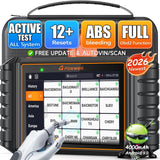 FOXWELL NT726 Bidirectional Scanner
$368.99Shows desired-versus-actual boost in live data.
FOXWELL NT726 Bidirectional Scanner
$368.99Shows desired-versus-actual boost in live data.
 Compression Tester with Fuel/Vacuum Gauge
$25.65Vacuum/pressure gauge for boost leaks.
Compression Tester with Fuel/Vacuum Gauge
$25.65Vacuum/pressure gauge for boost leaks.

