
GM Customer Satisfaction Program N252541251 covers 2020–2024 Chevrolet Corvettes in which the driver may not be notified that a rear turn-signal lamp has failed. Dealers reprogram the exterior lighting control module at no charge, or the fix can arrive over the air. The program runs to 30 September 2028. The separate noncompliance recall N252541250 (NHTSA 26V213) covers 32,988 2025–2026 Corvettes for the same condition.
Read the primary documents yourself. Customer Satisfaction Program: GM bulletin N252541251-02, released 1 September 2026 (PDF) — the current revision, including the customer letter. Companion recall: Part 573 Noncompliance Recall Report for NHTSA campaign 26V213 (PDF), submitted 2 April 2026. Both read in full.
Important corrections — this page has been substantially revised.
- The program covers 2020–2024 Chevrolet Corvette only. An earlier version said involvement was determined VIN by VIN across the GM range and told readers "do not assume it is Corvette-only." GM's bulletin lists one make and model. If you own a non-Corvette GM vehicle, this program does not apply to you.
- The expiry date is not 31 July 2028. That date came from the original July 2026 bulletin. The current revision extends the program to 30 September 2028 — though the customer letter inside the same document says 31 August 2028. Both dates are reproduced below; the discrepancy is GM's, not ours.
- The scope grew. The original bulletin covered the 2024 model year alone. Revision 02 added 2020–2023.
- A public document does exist. An earlier version of this page stated that customer satisfaction programs are not filed with NHTSA and that no document could be linked. That was wrong — NHTSA publishes manufacturer communications, and all three revisions of this bulletin are public. The reimbursement guidance below is now sourced rather than inferred.
This one is easy to ignore because nothing on your dash lights up — and that is precisely the defect. Your Corvette is supposed to tell you when a rear turn signal burns out. On the cars in this program, it may not. You keep driving, signaling with a lamp that is not lighting, and nobody behind you knows you are about to turn.
The fix is a software calibration and it costs nothing. Here is who it applies to, why the same condition produced a federal recall on newer cars and a voluntary program on older ones, and how to check your own rear signals in about ninety seconds without any tools.
Which Corvettes Are Covered
The condition runs across two GM field actions, split by model year. Together they cover the Corvette from 2020 to 2026.
| N252541251 (this program) | N252541250 / 26V213 | |
|---|---|---|
| Vehicles | 2020–2024 Corvette | 2025–2026 Corvette |
| Type | Customer Satisfaction Program | F/CMVSS noncompliance recall |
| Population | Not stated — determined VIN by VIN | 32,988 |
| NHTSA campaign | None | 26V213 |
| Shows in NHTSA VIN lookup | No | Yes |
| Expires | 30 September 2028 | Never |
| Remedy | Lighting control module software update — dealer or OTA. Identical in both. | |
| Primary document | GM bulletin (PDF) | Part 573 report (PDF) |
The practical consequence is the single most important thing on this page. A customer satisfaction program does not appear in a standard NHTSA recall lookup. If you own a 2020–2024 Corvette and your VIN comes back clean at nhtsa.gov, that tells you nothing about this program. Only a GM dealer checking Investigate Vehicle History, or your GM Owner Center account, will show it.
GM's bulletin does not explain why the older cars get a voluntary program while the newer ones got a federal recall, and we are not going to guess. What is documented is that the remedy is identical, and that neither costs the owner anything.
What Changed Between Bulletin Revisions
This program has been revised twice, and the changes matter enough to set out plainly.
| Revision | Released | Vehicles | In effect until |
|---|---|---|---|
| 00 | 15 July 2026 | 2024 Corvette | 31 July 2028 |
| 01 | 5 August 2026 | — | — |
| 02 | 1 September 2026 | 2020–2024 Corvette | 30 September 2028 |
Revision 02 states its own purpose: the bulletin was updated to add additional vehicles, and dealers are told to discard all previous copies. It also notes that the phased launch is now complete, meaning the rollout has finished rather than still working through batches.
So an owner of a 2021 Corvette who checked in July 2026 would have been told they were not involved, and would be involved now. That is the practical reason to re-check rather than treat a single answer as final — and it is why an earlier version of this page, written from the July bulletin, understated the scope.
One discrepancy inside GM's own document
The dealer-facing section of revision 02 says the program is in effect until 30 September 2028. The sample customer letter in the same PDF says the service will be performed at no charge until 31 August 2028.
We are reporting both rather than picking one. Work to the earlier date — 31 August 2028 — since that is what an owner's letter will say, and there is no advantage in cutting it fine either way.
The Cause: A Fix for One Thing That Broke Another
The recall filing for the 2025–2026 cars gives a cause, and it is unusually specific:
In October 2024, the rear-lamp assembly supplier made a software change to assist technicians performing a tire pressure monitor system (TPMS) learn process. The change inadvertently prevented the exterior lighting control module from detecting a failed rear turn signal in certain circumstances.
Read that twice, because it is a good illustration of how modern vehicle faults happen. Nobody designed a bad turn signal monitor. A supplier made a small, well-intentioned software change to make a workshop procedure easier — the TPMS learn process uses the turn signals and horn to confirm which wheel sensor is being programmed. That change had a side effect nobody caught, in an unrelated safety function, and it took more than a year to surface.
The supplier is named as Valeo Lighting Systems North America LLC, of Seymour, Indiana. On the recall side the involved component is the rear tail lamp assembly, part numbers 86538876 and 86538887. GM corrected the lighting control module calibrations at its assembly plant on 2 February 2026.
That cause is documented for the recall population only. The customer satisfaction program bulletin describes the condition and the fix but gives no cause, so we are not asserting the same mechanism applies to the 2020–2024 cars.
How It Was Found
The recall chronology is short, and notable for what is absent from it.
- 9 December 2025 — a GM employee submitted a report through GM's Speak Up for Safety system after validation testing for the 2027 model year Corvette. During the test, the vehicle failed to detect and notify the driver of an inoperative rear turn-signal lamp.
- 27 January 2026 — GM opened a product investigation.
- 26 March 2026 — GM's Safety Field Action Decision Authority decided to conduct a noncompliance recall.
- 2 April 2026 — report filed, dealers notified, recall VINs searchable.
- 18 May 2026 — recall owner notification estimated to start mailing.
- 15 July 2026 — the customer satisfaction program is released for the 2024 model year.
- 1 September 2026 — the program is expanded to 2020–2024.
What is absent: any field complaints at all. GM states it is not aware of any field complaints or incidents associated with this condition. Nobody reported it, because the defect is the absence of a notification — there was nothing for an owner to notice and complain about.
It was found during validation testing on a model year that had not launched yet. An engineer testing a 2027 car discovered a fault that had been shipping since late 2024.
Why a Missing Notification Is a Federal Matter
Federal Motor Vehicle Safety Standard No. 108, "Lamps, reflective devices, and associated equipment," governs vehicle lighting. Section S9.3.6 requires that the driver be notified when a rear turn-signal lamp fails. GM's filing states the 2025–2026 vehicles fail to conform to Section S9.3.6, and the stated safety risk is direct: if a driver is not notified of a failed rear turn-signal, there is an increased risk of a crash.
That is why the newer cars got a noncompliance recall rather than a defect recall. The distinction is real: a defect recall says something is broken, while a noncompliance recall says the vehicle does not meet a federal standard. Both are federally tracked and neither expires.
The reasoning behind the standard is practical. Rear turn signals are the one lamp on your car you almost never see. Headlights reflect off garage doors. Brake lights you can sometimes catch in a storefront window. A rear turn signal fails silently and you can drive for months not knowing — signaling every lane change to traffic that has no idea what you are about to do.
What Are the Symptoms?
This is the tricky part: the symptom is the absence of a symptom. There is no warning light for a broken warning light. The recall filing leaves the field for any warning that can occur blank.
- Other drivers reacting badly to your lane changes — honking, close passes, someone occupying the space you signaled for.
- A ticket or a warning for a non-functioning signal you did not know about.
- A failed state inspection in states that check lighting.
- Normal turn signal clicking at the usual speed. On older vehicles a burned-out bulb caused hyperflashing — the fast clicking that told you something was out. LED lighting and modern control modules removed that cue entirely.
- No driver information center message at all, which is exactly what the program is meant to fix.
How Do I Test My Own Rear Turn Signals?
Ninety seconds, no tools. Do this regardless of whether your VIN is in the program.
- Park facing away from a garage door, wall, or storefront window at night, close enough to see the reflection behind you clearly.
- Turn the ignition on without starting, and switch on the hazards. Both rear signals should flash. Walk back and confirm both sides.
- Now test each side individually. Hazards flash both sides simultaneously and will hide a fault that only appears on one circuit. Signal left, walk back, look. Signal right, repeat.
- Or use your phone. Prop it behind the car recording video, run through left signal, right signal, brake, and reverse, then play it back. This is the method to use if you are alone and have no reflective surface.
- Check the reflection in a following vehicle's windshield at a red light — imperfect, but it catches a total outage.
This is general workshop practice rather than GM's instruction, offered because the program fixes the warning, not the lamp.
What Will the Dealer Do?
Reprogram the exterior lighting control module with an updated software calibration. GM's bulletin confirms no parts are required, and the labour operations are short — 0.2 hours to verify the calibration level, 0.3 hours to reprogram with SPS.
On over-the-air updates, both documents say the same thing:
For vehicles that are capable of receiving software changes using wireless over-the-air (OTA) technology, owners who have accepted applicable terms and conditions will have the opportunity to accept these software changes via OTA without having to bring their vehicle to a dealership. Alternatively, all owners may have the updates performed at a GM dealer.
Eligibility turns on whether your car is OTA-capable and whether you have accepted the terms — not on model year. An earlier version of this page drew a model-year line here; the documents do not.
One useful detail from the bulletin: vehicles closed out through successful OTA programming are marked closed in GM's system automatically, and dealers are told to check that status before doing anything. So it is worth checking whether your car has already taken the update before booking an appointment.
If You Are Buying a Used Corvette
The bulletin contains a provision worth knowing if you are shopping.
Dealers must hold any involved vehicle in their possession — new, used, Certified Pre-Owned, courtesy transportation or shuttle vehicles — and complete the repair before a customer takes possession. Involved cars cannot be delivered, dealer-traded, released to auction, or used for demonstration until it is done.
Certified Pre-Owned Corvettes in dealer inventory are de-certified until the program is performed, and are re-certified only once the warranty transaction has gone through.
So a 2020–2024 Corvette bought from a GM dealer should already have had this done. A private sale or an independent lot carries no such obligation — which makes the IVH check worth doing before money changes hands.
Reimbursement — This Is Documented
If you already paid to have this condition looked at, there is a formal reimbursement process and a deadline.
GM's customer letter sets it out: owners who paid for repairs for this condition before the mailing should complete the enclosed reimbursement form and present it to their dealer with the required documents. The form and documents must reach the dealer or GM's Reimbursement Department within one year of the date on the letter, unless state law specifies longer. The bulletin carries dedicated labour operations for approved and denied reimbursement claims.
An earlier version of this page described reimbursement as "a reasonable expectation rather than a documented entitlement," because we believed no program document was public. It is documented, and that hedge was wrong.
Two practical points. First, GM notes that even if you have previously had repairs for this condition, you still need to bring the car in — a past repair does not close the program. Second, the one-year clock runs from the letter date, so an unopened envelope is a deadline quietly expiring.
On the recall side, GM's filing states that because all covered vehicles are under warranty, reimbursement is not offered — no 2025–2026 owner should have been out of pocket to begin with.
What If a Rear Signal Actually Is Burned Out?
The software update tells you about an outage. It does not fix one. If your test above found a dead rear signal, that is a separate repair.
- Check the ground and connector first before condemning an assembly. Corroded grounds at the rear of the car mimic a failed lamp and cost nothing to clean.
- On a C8 the rear lamps are sealed LED assemblies with no serviceable bulb, so a failed segment means replacing the assembly. That is a parts cost, not a bulb cost.
- If both sides fail together, look at the module or the fuse, not the lamps.
This section is general diagnostic knowledge, not GM's language.
A Note on Sourcing
We cite documents we have read and label the rest.
This page is built from two primary documents, both read in full. The GM bulletin for Customer Satisfaction Program N252541251-02, released 1 September 2026, which supplies the 2020–2024 Corvette scope, the expiry dates, the remedy and labour operations, the dealer hold and CPO de-certification provisions, the reimbursement process and the customer letter. And the Part 573 Noncompliance Recall Report for NHTSA campaign 26V213, submitted 2 April 2026, which supplies the 32,988-vehicle recall population, the FMVSS 108 noncompliance, the TPMS-related cause, the supplier and part numbers and the chronology. We also read the original July 2026 bulletin to establish what changed.
An earlier version of this page stated that customer satisfaction programs are not filed with NHTSA and that no public document existed for this one. That was wrong. NHTSA publishes manufacturer communications alongside recall filings, and all three revisions of this bulletin are public. Several claims on the page were hedged on that false premise and have been corrected: the program scope, the expiry date, and the standing of the reimbursement provision.
The remaining correction concerns scope. An earlier version said involvement was determined VIN by VIN across the GM range and advised readers not to assume the program was Corvette-only. The bulletin lists one make and model.
The ninety-second signal test and the notes on diagnosing a genuinely failed lamp are general workshop knowledge, not GM's language, and are labelled where they appear.
Programs develop. This one has already been revised twice and its scope has widened once. Your dealer's IVH check and the GM Owner Center are current in a way this page cannot be — and on a customer satisfaction program, the NHTSA VIN lookup will not help you at all.
What Other Pages on This Program Get Wrong
- Treating the program as GM-wide. It covers 2020–2024 Chevrolet Corvette. We had this wrong ourselves and told readers not to assume it was Corvette-only.
- Quoting the superseded 31 July 2028 expiry. That came from the original bulletin. The current revision runs to 30 September 2028, with the customer letter saying 31 August 2028.
- Missing that the scope expanded. The program launched covering the 2024 model year alone and added 2020–2023 on 1 September 2026. An owner who checked in July was told something different from what is true now.
- Claiming no document exists. NHTSA publishes manufacturer communications, and every revision of this bulletin is public — including the customer letter and the reimbursement process. We got this wrong too.
- Not warning that the program is invisible to NHTSA. A clean VIN lookup at nhtsa.gov says nothing about a customer satisfaction program. This remains the single most consequential misunderstanding.
- Getting the recall population wrong. The companion recall covers 32,988 Corvettes, not a few thousand.
- Missing the cause. A supplier software change made in October 2024 to help technicians with the TPMS learn process inadvertently disabled rear turn-signal outage detection. That is more informative than "a software error."
- Missing that nobody complained. GM reports no field complaints or incidents. It was found in validation testing on the not-yet-launched 2027 Corvette — a defect that suppresses warnings generates no warnings to report.
- Ignoring the used-car angle. Dealers must hold and repair involved cars before delivery, and CPO Corvettes are de-certified until it is done. A private sale carries no such obligation.
Frequently Asked Questions
Which Corvettes are covered?
The customer satisfaction program covers 2020–2024 Chevrolet Corvette. The separate noncompliance recall, N252541250 / NHTSA 26V213, covers 32,988 2025–2026 Corvettes for the same condition. Between them the Corvette is covered from 2020 to 2026. No other GM model is involved in either.
Is N252541251 a safety recall?
No. It is a customer satisfaction program — a free repair GM offers voluntarily, with an expiry date. The companion action on the 2025–2026 cars is a federal noncompliance recall, and that one never expires.
Why doesn't this show up when I check my VIN on the NHTSA site?
Customer satisfaction programs are not NHTSA campaigns and do not appear in the federal recall database. Only a GM dealer checking Investigate Vehicle History, or your GM Owner Center account, will show it. Note that the underlying bulletin is still a public document — it is the VIN-level involvement that the federal lookup cannot tell you.
When does the program expire?
GM's current bulletin says 30 September 2028 in its dealer-facing section, while the customer letter in the same document says 31 August 2028. Work to the earlier date. An earlier version of this page said 31 July 2028, which came from the original bulletin and has been superseded.
I checked earlier this year and my car was not involved.
Check again if you own a 2020–2023 Corvette. The program originally covered the 2024 model year only and was expanded to 2020–2024 on 1 September 2026.
What actually caused it?
On the recall population, GM says that in October 2024 the rear-lamp supplier, Valeo, made a software change intended to help technicians perform the TPMS learn process, and that the change inadvertently stopped the exterior lighting control module from detecting a failed rear turn signal. GM corrected the calibrations in production on 2 February 2026. The program bulletin for the older cars states the condition but gives no cause.
Can I get the update over the air?
Possibly. Eligibility depends on whether your car is OTA-capable and whether you have accepted the applicable terms and conditions, not on model year. Vehicles updated by OTA are closed out automatically in GM's system, so it is worth checking status before booking a dealer appointment.
I already paid to have this looked at. Can I get that back?
Yes, there is a documented process. Complete the reimbursement form enclosed with GM's customer letter and present it to your dealer with the required documents, or mail it to GM's Reimbursement Department. It must be received within one year of the date on the letter unless state law allows longer. Note that a previous repair does not close the program — you still need to bring the car in.
Are my turn signals actually broken?
Not necessarily. This condition is about the notification system, not the lamps. Your rear signals may be working perfectly — the concern is that if one does fail, you may not be told. Run the ninety-second test above to know for sure.
Is it safe to drive?
Yes, provided your rear turn signals are actually functioning. No do-not-drive advisory applies to either the program or the recall. Test them periodically until the software update is installed. The risk is not a sudden failure — it is driving for weeks unaware that a lamp went out.
I am buying a used Corvette. What should I check?
Ask the seller to confirm the program shows closed on Investigate Vehicle History. A GM dealer is obliged to hold and repair an involved car before delivery, and Certified Pre-Owned cars are de-certified until it is done — but a private seller or independent lot has no such obligation.
Where can I read the actual documents?
Both are public. The GM bulletin for N252541251-02 contains the vehicle list, the remedy, the dealer obligations, the reimbursement process and the customer letter. The Part 573 report for campaign 26V213 contains the defect description, the cause, the population table and the remedy for the 2025–2026 cars.
The Bottom Line
N252541251 fixes a blind spot in your Corvette's self-monitoring, not a broken light. It is free, it needs no parts, and for many cars it can arrive over the air.
Two things to do today: call a GM dealer, give them your VIN and the number N252541251, and ask whether it shows OPEN on Investigate Vehicle History. Then go run the ninety-second signal test in your driveway tonight, because the update will tell you about the next outage — not one that already happened.
And if a letter has arrived and you paid for related work before it, the reimbursement clock is one year from the date on that letter.
Related Guides
Sources
- GM Customer Satisfaction Program bulletin N252541251-02 (PDF) — released 1 September 2026, hosted by NHTSA as a manufacturer communication. Current revision and primary source for this page; opened and read in full.
- GM bulletin N252541251, original release (PDF) — 15 July 2026, covering the 2024 model year only. Superseded.
- Part 573 Noncompliance Recall Report, NHTSA campaign 26V213 (PDF) — General Motors, LLC, submitted 2 April 2026. GM recall number N252541250, covering 2025–2026 Corvette.
- NHTSA recall lookup — search your VIN under campaign 26V213. Will not show customer satisfaction program N252541251.
Owner questions: GM's customer letter directs Buick, Chevrolet and GMC owners to the Customer Assistance Center on 1-866-467-9700, and Cadillac owners to 1-800-333-4223. Chevrolet customer service for the companion recall is 1-800-222-1020. NHTSA Vehicle Safety Hotline 1-888-327-4236. Program terms and involved vehicle lists can be revised — always verify your specific VIN through a GM dealer or the GM Owner Center.
Bulbs and lighting
 20-Piece LED Car Light Bulbs
$18.0020-piece LED bulb assortment. Confirm fitment by VIN before ordering.
20-Piece LED Car Light Bulbs
$18.0020-piece LED bulb assortment. Confirm fitment by VIN before ordering.
 ACDelco 2-Pin Replacement Connector PT3739
$90.99Two-pin replacement connector for a corroded lamp socket. Confirm fitment by VIN before ordering.
ACDelco 2-Pin Replacement Connector PT3739
$90.99Two-pin replacement connector for a corroded lamp socket. Confirm fitment by VIN before ordering.
 Nomex Split Loom, 1 in. x 10 ft
$105.66Split loom to protect repaired lamp wiring.
Nomex Split Loom, 1 in. x 10 ft
$105.66Split loom to protect repaired lamp wiring.
 FOXWELL NT301 Code Reader
$68.82Budget code reader with live data.
FOXWELL NT301 Code Reader
$68.82Budget code reader with live data.
 50-Piece 1/4 in. Drive Socket Set
$54.99Quarter-inch drive socket set.
50-Piece 1/4 in. Drive Socket Set
$54.99Quarter-inch drive socket set.
 ACDelco Digital Torque Wrench, 1/2 in. (14.8–147.5 ft-lb)
$162.99Half-inch digital torque wrench.
ACDelco Digital Torque Wrench, 1/2 in. (14.8–147.5 ft-lb)
$162.99Half-inch digital torque wrench.


Tools for lighting faults
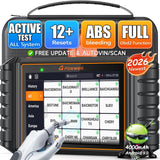 FOXWELL NT726 Bidirectional Scanner
$368.99Reads body control module lamp outage codes.
FOXWELL NT726 Bidirectional Scanner
$368.99Reads body control module lamp outage codes.
 FOXWELL NT624 Elite All-System Scanner
$332.09Full-system scanner.
FOXWELL NT624 Elite All-System Scanner
$332.09Full-system scanner.
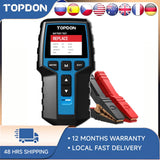 TOPDON BT200 Battery Tester
$103.99Battery tester.
TOPDON BT200 Battery Tester
$103.99Battery tester.
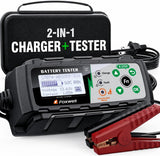 FOXWELL BC521 Battery Charger & Tester
$162.35Charger and tester.
FOXWELL BC521 Battery Charger & Tester
$162.35Charger and tester.
 Trim Removal Tool Kit
$9.99Trim removal tool kit for tail lamp access.
Trim Removal Tool Kit
$9.99Trim removal tool kit for tail lamp access.
 95-Piece Mechanics Tool Set (Metric & SAE)
$99.99Mechanic tool set.
95-Piece Mechanics Tool Set (Metric & SAE)
$99.99Mechanic tool set.


