
GM Special Coverage N262546590-01 pays for repair of a coolant leak at the radiator inlet hose quick connect on 2025–2026 Buick Enclave, 2024–2026 Chevrolet Traverse, 2024–2026 GMC Acadia, 2023–2026 Chevrolet Colorado, and 2023–2026 GMC Canyon. Coverage runs 5 years or 60,000 miles from the in-service date, regardless of ownership. The fix is a seal, not a hose.
Read the primary document yourself: GM Special Coverage bulletin N262546590-01, released 14 July 2026 (PDF) — the current revision, including the parts list, labour times, service procedure and customer letter. The original April 2026 bulletin is also public. Both read in full.
Corrections — this page has been revised against GM's bulletin.
- The vehicle service contract cut-off is 14 July 2026, not 1 April 2026. Repair orders dated before 14 July go to your service contract provider, not to GM under this coverage.
- Both vehicle groups get an inspection first. An earlier version said the Colorado and Canyon were inspected first while the crossovers went straight to a drain-and-replace. GM's procedure opens with an inspection for the Enclave, Traverse and Acadia too — no leak, no covered repair, on any of the five vehicles.
- The engine columns were ours, not GM's. The bulletin names no engines and the coverage is not engine-restricted. That table has been relabelled.
Coolant on the driveway under a two-year-old Traverse is not something you should be paying for, and as of April 2026 you probably are not. GM opened a special coverage on the radiator inlet hose quick connect, then widened it in July to pull in the Colorado and Canyon.
There is a catch buried in this one that costs people real money, and it comes down to which radiator hose is leaking. More on that below, because it is the difference between a free repair and a $500 invoice.
What Is GM Special Coverage N262546590-01?
A special coverage is GM extending the warranty on one specific part, on its own initiative, because that part is failing more than it should. It is not a safety recall and NHTSA does not track it as one — though NHTSA does publish the bulletin, which is how you can read it above.
GM's description of the condition is one sentence:
Certain vehicles listed above, may have a condition where coolant leaks from the radiator hose quick connect at the radiator inlet.
And the correction is one sentence: dealers are to remove the inlet hose and replace the seal, at no charge to the customer.
Read that again, because it is the detail most coverage of this program gets wrong. The hose is not replaced. The seal inside the quick connect is. GM's parts list is three seals and some coolant — there is no hose on it.
The original bulletin was released in April 2026 for the Enclave, Traverse and Acadia. The -01 revision on 14 July 2026 added the Colorado and Canyon. GM states the phased launch is now complete, so if your vehicle is on the list below, the coverage is live today.
Which Vehicles Are Covered by N262546590-01?
| Vehicle | Model years | Added |
|---|---|---|
| Chevrolet Traverse | 2024–2026 | April 2026 |
| GMC Acadia | 2024–2026 | April 2026 |
| Buick Enclave | 2025–2026 | April 2026 |
| Chevrolet Colorado | 2023–2026 | July 2026 (-01) |
| GMC Canyon | 2023–2026 | July 2026 (-01) |
GM's bulletin lists no engines and imposes no engine restriction — involvement is by VIN, not by powertrain. As a matter of general product knowledge rather than anything in the bulletin, the crossovers here run the 2.5L turbo four and the trucks the 2.7L turbo four, and the shared thread is the quick-connect design at the radiator inlet rather than the engine behind it. Do not use the engine to rule yourself in or out.
Model year and nameplate get you in the door. The VIN decides. GM identifies involved vehicles individually in Global Warranty Management, so a 2024 Traverse being on the list is not proof that your 2024 Traverse is on it.
Note where to look. GM states this coverage appears in the Applicable Warranties section of Investigate Vehicle History — not the field actions list where recalls sit. That is why a recall lookup returns nothing.
How Long Does N262546590-01 Coverage Last?
5 years or 60,000 miles (100,000 km), whichever comes first, from the date the vehicle was originally placed in service, regardless of ownership. A second owner inherits it with the vehicle.
That is two years and 24,000 miles past the standard 3-year/36,000-mile bumper-to-bumper warranty. It is a much shorter extension than GM's turbocharger campaigns, which run 15 years, so this window genuinely closes. A 2023 Colorado placed in service in early 2023 runs out in early 2028 or at 60,000 miles, whichever it hits first.
One oddity worth knowing if a letter arrives. The sample customer letter inside GM's bulletin states the term as "5 years... or 60 miles (100,000 km)" — dropping three digits from the mileage. The bulletin body says 60,000 miles and the metric figure confirms it. It is a typo in GM's document, not a trap.
If your vehicle carries a separate vehicle service contract: eligible claims with repair orders dated on or after 14 July 2026 go under this special coverage and must use the bulletin's labour operation codes. Repair orders before that date have to be submitted to the service contract provider instead. An earlier version of this page gave 1 April 2026 for that cut-off, which was the original bulletin's date rather than the revised one.
And there is a clause worth reading if you hold a third-party warranty. GM states the right to reimbursement is personal to the owner or lessee, may not be assigned, and confers no rights on third parties including service contract providers — no subrogation, no contribution. Your aftermarket warranty company cannot pay the claim and then recover it from GM.
What Are the Symptoms of a Radiator Inlet Hose Leak?
GM's bulletin describes the condition but lists no symptoms. The following is general diagnostic knowledge, offered because owners rarely arrive knowing what they are looking at:
- Low coolant warning on the driver information center, often the first sign.
- DTC P3075 has been reported on these vehicles tied to low coolant level from this leak. If a scan tool reports it, look at the radiator hose connections before anything else.
- Orange or pink crusty residue around the hose-to-radiator joint. DEX-COOL dries into a chalky deposit that marks the leak path even after the wet spot evaporates.
- A sweet syrupy smell after shutdown, strongest at the front of the engine bay.
- Small puddles or drips under the front of the vehicle, usually toward the radiator rather than mid-engine.
- Coolant level dropping with no visible puddle — a seep can evaporate off hot components before it ever reaches the ground.
- Temperature climbing on the gauge if the loss has gone on long enough.
These leaks tend to weep slowly rather than let go all at once, which is exactly why they get missed until the low coolant light comes on. Running an engine low on coolant is how a cheap seal becomes a head gasket.
What Actually Fails on These Cooling Connections?
The hose itself is fine. The failure is the seal inside the quick connect fitting where the hose meets the radiator.
Quick connects replaced hose clamps on modern vehicles because they cut assembly time on the production line. The tradeoff is that the entire seal depends on a small seal sitting correctly in its groove. If that seal is out of spec, seated wrong, or contaminated during assembly, it weeps under the pressure and heat cycling a cooling system sees every single drive.
GM's own repair procedure shows how tight the tolerance is, and it is unusually specific about cleanliness:
- Clear all debris before removing the quick connections from the radiator and engine, to avoid introducing contaminants into the system.
- Do not use sharp or metallic tools to remove the old seal, to prevent damage to the sealing groove.
- Clean with a lint-free cloth. Water may be used. Do not use soap or detergents. A nylon brush is permitted; wire brushes are not. Dry with compressed air.
- Ensure your hands are clean before handling the new seal — GM states contamination on the seal could cause premature failure.
GM's warning is blunt: failure to fully clean and remove contamination and corrosion inside the quick connection could result in premature leaks. In other words, a repair done carelessly comes back.
What Will the Dealer Actually Do?
Both vehicle groups start with an inspection, and this is where the free repair can slip away.
GM's procedure opens by having the technician inspect the radiator inlet hose to see whether it is leaking at the hose-to-radiator interface. If the hose is not leaking, the customer is told that no further repairs are covered under this special coverage and no further action is taken. If it is leaking, the cooling system is drained, the inlet hose comes off, the old seals are discarded, the connections are cleaned to the standard above, and new seals go in.
An earlier version of this page said the crossovers skipped straight to a drain-and-replace while only the trucks were inspected first. That was wrong — the inspect-first gate applies to all five vehicles.
That structure matters for how you approach the appointment. Show up with evidence: photographs of the residue, the low coolant message, dated notes on how much you have topped off. A leak that only weeps when hot can pass a cold inspection, and a "no leak found" result closes the door on the free repair that day.
Parts and labour, from the bulletin
| Qty | Part | Part number |
|---|---|---|
| 2 | Radiator Lower Hose Seal | 42966997 |
| 1 | Radiator Lower Hose Seal | 86428206 |
| As required | Coolant | 12346290 (US) / 10953464 (CA) |
GM's published labour times: 1.1 hours for the Enclave, Traverse and Acadia; 1.2 hours for the Colorado and Canyon; plus 0.1 to 0.3 hours diagnostic time. GM notes these come directly from its Labor Time Guide.
On parts availability, GM is blunt: supply is limited, quantity limiters may apply, parts may be non-returnable, and dealers are told not to order them as shelf stock because relatively few vehicles are expected to need the fix. A backorder is the system working as designed.
The Upper Hose Versus Inlet Hose Catch
This is the part worth reading twice, especially if you own a Colorado or Canyon.
N262546590 is written for the radiator inlet hose quick connect. GM separately issued PIT6494A in March 2026 covering quick connector seal failures on the upper radiator hose on Colorado and Canyon trucks. The two documents are not the same thing and they do not pay the same way.
PIT6494A is a service bulletin, not a special coverage. Its warranty section directs dealers to submit the repair under standard bumper-to-bumper coverage — which means once you are past 3 years or 36,000 miles, the bulletin does nothing for you and the bill is yours. A federal class action filed in July 2026 centres on exactly this gap. The named plaintiff had a dealer find DTC P3075 and a leak at the quick-connect end of the upper radiator hose, and paid $489.36 out of pocket because his truck had aged out of the basic warranty.
The PIT6494A details and the lawsuit figure come from those separate sources, not from the special coverage bulletin, and are labelled as such.
So when you call, be precise about which connection is leaking, and ask about both documents by number. If a service advisor tells you your leak is not covered, ask specifically whether they checked N262546590-01 and not just PIT6494A. They are different programs with different payment paths.
How Do I Find Out If My VIN Qualifies?
- Get the VIN from the driver-side windshield base or the door jamb sticker.
- Call any GM dealer service department — Chevrolet, GMC, or Buick. It does not have to be where you bought the vehicle.
- Say the bulletin number out loud: N262546590-01. Ask them to check the Applicable Warranties section in Investigate Vehicle History. Do not just ask "do I have any recalls" — special coverages do not appear in recall lookups.
- Get it in writing. A printed VIN inquiry showing the open coverage protects you from a different advisor giving you a different answer next week.
- Document the leak before you go. Photograph the residue, note the dates you added coolant, and keep the low coolant message on screen if you can. The inspection gate is real.
GM's customer letter includes an instruction worth respecting: do not take the vehicle in as a result of the letter unless you believe it actually has the condition.
Can I Get Reimbursed If I Already Paid for This Repair?
Yes, and there is a deadline. GM's bulletin states that requests for reimbursement of previously paid repairs must be submitted to the dealer within one year of the date on the customer letter.
That is a rolling deadline rather than a fixed calendar date, so the clock starts when your letter is dated — not when you open it. An unopened envelope is a deadline quietly running down.
What you need:
- The original repair order, showing the radiator hose or quick connect seal work, the date, and the mileage.
- Proof of payment. Card statement or receipt. Cash with no paper trail is a hard sell.
- Submission through a GM dealer, or by mail to GM's Reimbursement Department. The bulletin carries dedicated labour operations for both approved and denied claims, so a denial is a documented outcome rather than a brush-off.
Independent shop invoices are usually acceptable. Reimbursement covers reasonable and customary expenses for the repair itself — not rental cars you arranged yourself, not undocumented towing, not the coolant flush you added on while it was there.
And note GM's position on vehicles already outside the window: the customer letter states that for vehicles beyond the years or miles, GM is still offering reimbursement if the condition occurred within them. The trigger is when the leak happened, not when you filed.
What Does This Cost If You Are Not Covered?
If your VIN is outside the window or the leak is somewhere else entirely, here is the realistic range. These are our own 2026 estimates, not GM figures, and vary by market.
| Line Item | DIY | Independent Shop | Dealer |
|---|---|---|---|
| Quick connect seals | $15–$120 | $25–$150 | $45–$190 |
| DEX-COOL coolant (1–2 gal) | $32–$64 | $45–$90 | $60–$120 |
| Labour — GM warranty time is 1.1–1.2 hrs | $0 | $130–$300 | $200–$400 |
| Diagnostic fee | $0 | $0–$120 | $140–$200 |
| Realistic total | $47–$184 | $200–$660 | $445–$910 |
| Total under N262546590-01 | $0 | ||
For a real-world anchor: the class action plaintiff paid $489.36 at a dealer for the upper hose version of this repair on a Colorado. That sits right in the middle of the dealer column.
Should You Replace the Seal Yourself?
If your VIN is covered, no. Let GM pay, and get the documented repair on record in case the leak comes back.
If you are outside coverage, this is one of the more approachable cooling jobs — GM pays a little over an hour for it. The details are what make it hold, and the cleanliness steps above are GM's, not ours. Beyond those:
- Cold engine only. A pressurised cooling system will scald you. Wait until it is cold to the touch, then release pressure at the surge tank cap slowly.
- Catch the coolant. It is sweet-tasting and lethal to pets and wildlife. Use a drain pan and dispose of it properly.
- Seal orientation matters. Fully seated in its groove, no twists, nothing protruding. Take the extra thirty seconds to look at it.
- Burp the system. An air pocket in a modern GM cooling system reads as an overheat, and you will be chasing a problem you created.
- Pressure test after. Bring the system up to pressure cold and watch the joint before you call it done.
What Else Should You Check While You Are In There?
Our recommendations, not GM's requirements:
- The other quick connects. Same design, same age, same heat cycles. Check the upper hose connection while the light is on it — and see the PIT6494A section above, because that one pays differently.
- Surge tank cap. A cap that no longer holds rated pressure changes how the whole system behaves and masks small leaks.
- Coolant condition. If it looks rusty, muddy, or has lost its orange, the leak is not your only problem.
- The surge tank itself for hairline cracks at the seams.
- Refill with the correct coolant. GM specifies coolant part 12346290 in the US for this repair. Confirm the spec for your vehicle and do not mix coolant types.
Which Related Bulletins Should Owners Know?
- N262546590 — the original Special Coverage, released April 2026, for the Enclave, Traverse and Acadia. 5 years / 60,000 miles. Bulletin PDF.
- N262546590-01 — the 14 July 2026 revision that added 2023–2026 Colorado and Canyon. Same condition and coverage term. Phased launch now complete. Bulletin PDF.
- PIT6494A — March 2026 service bulletin on upper radiator hose quick connector seal failures on Colorado and Canyon. Submitted under standard bumper-to-bumper warranty, not special coverage, so it does nothing for you past 3 years or 36,000 miles.
A Note on Sourcing
We cite documents we have read and label the rest.
The coverage terms, vehicle list, parts, labour times and repair procedure on this page come from the GM Special Coverage bulletin N262546590-01, released 14 July 2026 and hosted by NHTSA as a manufacturer communication, which we have opened and read in full. We also read the original April 2026 bulletin to establish what the revision changed — it added the Colorado and Canyon, which were not in the original scope.
Three things in an earlier version were corrected against those documents. The vehicle service contract cut-off, given as 1 April 2026 when the current bulletin sets it at 14 July 2026. The claim that only the trucks were subject to an inspection before repair, when GM's procedure gates all five vehicles that way. And an engine column in the vehicle table that implied the coverage is engine-restricted, which the bulletin does not say.
PIT6494A and the class action are separate sources, not part of this bulletin, and are attributed where they appear. We have not read PIT6494A directly.
The symptom list, the cost estimates and the additional checks are ours, not GM's, and are labelled where they appear. The cleanliness and tooling instructions in the repair section are GM's own wording.
Coverage terms develop. This bulletin has already been revised once and the vehicle list grew. Verify eligibility against your specific VIN through a GM dealer — the Applicable Warranties section of Investigate Vehicle History is the only authoritative answer.
What Other Pages on This Coverage Get Wrong
- Saying the hose gets replaced. It does not. GM's parts list is three seals and coolant — the correction is to remove the inlet hose and replace the seal.
- Missing the inspection gate. No leak found means no covered repair, on all five vehicles. Turning up with a cold engine and an intermittent weep can cost you the free fix.
- Quoting the wrong service contract cut-off. It moved to 14 July 2026 with the revision. We had this wrong.
- Treating it as engine-specific. The bulletin names no engines. Involvement is by VIN.
- Confusing it with PIT6494A. The upper hose on a Colorado or Canyon is a different document that pays only under basic warranty — which is what the class action is about.
- Not mentioning the reimbursement clock. One year from the date on your customer letter, not from when you get round to it.
- Skipping GM's cleaning requirements. No sharp or metallic tools, no soap or detergents, no wire brushes, clean hands on the new seal. GM says contamination causes premature failure — which is to say, a repeat leak.
- Citing the bulletin without linking it. NHTSA publishes GM's manufacturer communications, and both revisions are linked here.
Frequently Asked Questions
Is N262546590-01 a recall?
No. It is a special coverage — an extended warranty on one specific condition. It will not appear in a NHTSA recall lookup, so you have to ask a dealer to check the Applicable Warranties section by bulletin number. The bulletin itself is a public document.
Does the coverage transfer if I bought the vehicle used?
Yes. It applies regardless of ownership for 5 years or 60,000 miles from the original in-service date.
Does the dealer replace the hose?
No. GM's correction is to remove the inlet hose and replace the seal inside the quick connect, then clean the connection and refill the system. The parts list is two of seal 42966997, one of seal 86428206, and coolant.
Can I keep driving with a small coolant leak?
Short trips while you get it scheduled, watching the temperature gauge and coolant level closely. Do not ignore it. Running low on coolant risks warping a cylinder head, which is an order of magnitude larger and is not covered by this bulletin.
What code shows up with this leak?
P3075 has been reported on these vehicles in connection with low coolant level caused by a leaking radiator hose quick connect. That is field knowledge rather than GM's bulletin, and the code points at the symptom rather than the part — the connections still need a visual inspection.
My leak is at the upper hose, not the inlet. Am I covered?
Probably not under this special coverage, which names the radiator inlet hose. The upper hose connector on Colorado and Canyon is addressed by PIT6494A, which pays under standard bumper-to-bumper warranty only. Ask your dealer about both documents by number and get the answer in writing.
Will the dealer charge me a diagnostic fee?
Not if the inlet hose leak is confirmed and your VIN is covered — the bulletin carries a separate diagnostic labour operation. But if the inspection finds no leak, GM's procedure says nothing further is covered under this program, so confirm coverage on your VIN before signing a diagnostic authorisation.
How long should the repair take?
GM's published warranty times are 1.1 hours for the Enclave, Traverse and Acadia and 1.2 hours for the Colorado and Canyon, plus 0.1 to 0.3 for diagnosis. Parts availability is the bigger variable — GM tells dealers not to stock these seals.
What coolant do these vehicles use?
GM's bulletin specifies coolant part number 12346290 in the US and 10953464 in Canada for this repair. Do not mix coolant types — confirm the exact spec in your owner's manual for your model year.
Where can I read the actual bulletin?
It is public. NHTSA hosts GM's manufacturer communications, and the current bulletin N262546590-01 contains the condition, the coverage term, the parts list, the labour times, the full service procedure and the customer letter.
The Bottom Line
If you own a 2024–2026 Traverse or Acadia, a 2025–2026 Enclave, or a 2023–2026 Colorado or Canyon and you are losing coolant, call before you pay. Say N262546590-01 to the service advisor and ask them to check the Applicable Warranties section against your VIN.
Unlike GM's 15-year turbo campaigns, this window is 5 years or 60,000 miles. The earliest covered trucks are already deep into it. Do not sit on this one, and turn up with photographic evidence of the leak, because the repair only gets authorised if the inspection finds it.
Already paid for the repair? Pull the invoice — you have one year from the date on your customer letter.
Shop the Parts and Tools Mentioned
-
 ACDelco 10-101 DEX-COOL Extended Life Coolant, 1 Gallon — $31.95. You will need coolant to refill after any quick connect repair, and for topping off a slow leak in the meantime. Confirm the spec for your model year.
-
 ACDelco 10-5046 Dex-Cool Leak Detection Tracer Dye — $8.95. GM part 1149328. Genuinely useful here — it turns an intermittent weep into visible proof for the service advisor, and the inspection gate is what decides whether GM pays.
-
 ACDelco 10-5057 Engine Cooling System Tracer Dye — $8.95. GM part 12378563. General cooling system version of the same idea if you are not sure the leak is at a hose joint.
Always confirm fitment against your own VIN before ordering. More GM coolant, parts, and diagnostic tools at gmserviceguy.shop.
Related Guides
Sources
- GM Special Coverage bulletin N262546590-01 (PDF) — released 14 July 2026, hosted by NHTSA as a manufacturer communication. Current revision and primary source for this page; opened and read in full.
- GM Special Coverage bulletin N262546590 (PDF) — original April 2026 release, covering Enclave, Traverse and Acadia only. Superseded.
- GM PIT6494A — service bulletin on upper radiator hose quick connector seals, Colorado and Canyon. Cited for contrast; not read directly. Verify through a GM dealer.
Owner questions: Chevrolet 1-800-222-1020, GMC 1-800-462-8782, Buick 1-800-521-7300. Coverage terms, procedures and involved vehicle lists can be revised — always verify eligibility against your specific VIN through a GM dealer. Cost figures are our own estimates and vary by region and shop rate. This article is general information, not legal advice.
Radiator hoses
 ACDelco Gold Upper Radiator Hose 22827731
$146.99ACDelco Gold upper radiator hose 22827731. Confirm fitment by VIN before ordering.
ACDelco Gold Upper Radiator Hose 22827731
$146.99ACDelco Gold upper radiator hose 22827731. Confirm fitment by VIN before ordering.
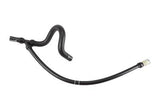 ACDelco Gold Radiator Hose 15834772
$147.99ACDelco Gold molded radiator hose 15834772. Confirm fitment by VIN before ordering.
ACDelco Gold Radiator Hose 15834772
$147.99ACDelco Gold molded radiator hose 15834772. Confirm fitment by VIN before ordering.
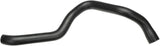 ACDelco Gold 26225X Upper Radiator Hose
$35.66ACDelco Gold 26225X upper radiator hose. Confirm fitment by VIN before ordering.
ACDelco Gold 26225X Upper Radiator Hose
$35.66ACDelco Gold 26225X upper radiator hose. Confirm fitment by VIN before ordering.
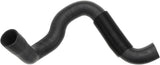 ACDelco Gold 24219L Lower Radiator Hose
$38.72ACDelco Gold 24219L lower radiator hose. Confirm fitment by VIN before ordering.
ACDelco Gold 24219L Lower Radiator Hose
$38.72ACDelco Gold 24219L lower radiator hose. Confirm fitment by VIN before ordering.
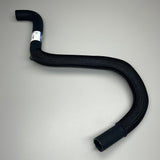 Dayco 71881 Radiator Hose
$22.00Dayco 71881 curved radiator hose. Confirm fitment by VIN before ordering.
Dayco 71881 Radiator Hose
$22.00Dayco 71881 curved radiator hose. Confirm fitment by VIN before ordering.
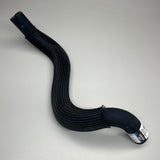 Dayco 72378 Radiator Hose
$30.00Dayco 72378 curved radiator hose. Confirm fitment by VIN before ordering.
Dayco 72378 Radiator Hose
$30.00Dayco 72378 curved radiator hose. Confirm fitment by VIN before ordering.

Coolant and tools
 ACDelco RC85 15 PSI Radiator Cap
$17.99ACDelco 15 PSI radiator cap. Confirm fitment by VIN before ordering.
ACDelco RC85 15 PSI Radiator Cap
$17.99ACDelco 15 PSI radiator cap. Confirm fitment by VIN before ordering.
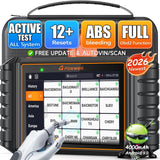 FOXWELL NT726 Bidirectional Scanner
$368.99Watch coolant temperature in live data.
FOXWELL NT726 Bidirectional Scanner
$368.99Watch coolant temperature in live data.
 FOXWELL NT301 Code Reader
$68.82Budget code reader with live data.
FOXWELL NT301 Code Reader
$68.82Budget code reader with live data.

