
GM advises owners of affected vehicles not to drive them. In GM's words: "As a precaution, owners should not drive these vehicles until the remedy is performed. GM will be contacting these owners to assist with towing their vehicles to a GM dealership for inspection and, if necessary, repair." If your VIN is affected, do not drive it — arrange the tow.
Safety Recall N262557621 — executed alongside N262557620 under NHTSA campaign 26V289 — covers 66 vehicles in which a component missing from the transfer case may cause the front and/or rear wheels to lock up without warning. The missing part is an oil pick-up tube. Without it the transfer case bearings are not properly lubricated. GM found it after tearing down a transfer case from a Silverado that locked its wheels in a parking lot.
Read the primary document yourself: Part 573 Safety Recall Report for NHTSA campaign 26V289 (PDF), submitted by General Motors on 7 May 2026. Everything factual on this page comes from that filing.
Jump to a section: What to do right now · The one warning you may get · Which vehicles — two separate groups · What is missing and why it matters · How the part got left out · How GM found it · The remedy · Why there are two recall numbers · A note on sourcing · What other pages get wrong · FAQ
What to Do Right Now
Check your VIN before you drive the vehicle again. VINs became searchable on NHTSA.gov on 7 May 2026.
If your VIN is affected:
- Do not drive it. GM's guidance is explicit, and the failure mode is wheels locking without warning.
- Contact your dealer or brand customer service about towing. GM stated it would be contacting owners to assist with towing to a dealership — so ask about that rather than assuming you must arrange and pay for it yourself.
- Chevrolet: 1-800-222-1020 · GMC: 1-800-462-8782 · Cadillac: 1-800-333-4223
- NHTSA Vehicle Safety Hotline: 1-888-327-4236, campaign 26V289 — or run the VIN at nhtsa.gov/recalls
If your VIN is clear, you are done — and with 66 vehicles involved, that is what virtually every reader will see.
One group should check even if they think this cannot apply to them: owners of 2015–2020 full-size GM SUVs and trucks who have had a transfer case replaced at a dealer. See below, because that population is genuinely counterintuitive.
The One Warning You May Get
GM's filing includes a specific answer to the question owners most want answered, and it is worth stating on its own.
In some cases, drivers may hear a grinding sound before wheels lock-up.
Read both halves of that. There may be a grinding noise beforehand — and the qualifier "in some cases" means there may not be. GM's own defect description says the lock-up can occur "without warning to the driver."
So the grinding sound is worth knowing about, but it is not a monitoring strategy. You cannot listen your way to safety on this one. If your VIN is affected the vehicle should not be driven whether or not you have heard anything.
And if you do hear a grinding noise from underneath a 4WD or AWD GM truck or SUV — recall or no recall — stop and have it inspected. That advice holds generally, and our transfer case guide covers what else can produce it.
Which Vehicles — Two Separate Groups
This recall has an unusual structure. Two entirely different populations are caught by the same defect, and the second one surprises people.
Group 1 — 2026 model year vehicles, built with a suspect transfer case
| Model | Units |
|---|---|
| 2026 Chevrolet Silverado 1500 | 16 |
| 2026 GMC Sierra 1500 | 12 |
| 2026 GMC Yukon | 5 |
| 2026 Cadillac Escalade | 4 |
| 2026 GMC Yukon XL | 3 |
| 2026 Chevrolet Tahoe | 2 |
| 2026 Cadillac Escalade ESV | 2 |
| 2026 Chevrolet Suburban 1500 | 1 |
Group 2 — 2015–2020 vehicles that had a transfer case replaced
This is the group worth reading twice. A single suspect transfer case assembly was shipped as a service replacement part. GM identified 54 dealers that may have received it, and 21 potentially impacted vehicles that had a transfer case replacement at those dealerships during the suspect window.
Those 21 span 2015–2020 Chevrolet Tahoe and Suburban, GMC Yukon and Yukon XL, and Cadillac Escalade and Escalade ESV.
So a vehicle up to eleven model years old can be in a 2026 recall — not because of how it was built, but because of a part fitted to it later. If you own one of these and have had transfer case work done, run the VIN.
The one exclusion that matters
This recall only involves vehicles with four-wheel drive or all-wheel drive. Two-wheel drive vehicles are not affected. GM repeats that line for every vehicle in the filing.
The reason is simple: the transfer case is part of a 4WD or AWD powertrain and is not present on rear-wheel-drive-only vehicles. No transfer case, no defect.
Total population: 66 vehicles. GM's estimated percentage with the defect: 69.7%. That figure is unusual — it reflects that inspection will find some transfer cases are complete, which is exactly why the remedy begins with an inspection rather than an automatic replacement.
What Is Missing and Why It Matters
The missing component is an oil pick-up tube.
GM's explanation of the consequence is one sentence and it is the whole story:
Without this tube, transfer case bearings will not be properly lubricated.
Follow that through. A transfer case splits drive between front and rear axles, and it does so through gears and bearings under substantial load. The oil pick-up tube is what draws lubricant to where it is needed. Remove it and the bearings run progressively drier.
Bearings starved of lubrication do not fail gently. They overheat, wear, and eventually seize — and a seizure inside a transfer case is mechanically connected to the wheels at both ends of the vehicle. That is why the failure mode is the front and/or rear wheels locking up.
Note what this is not. It is not a software fault, not a sensor, not a control module deciding something wrong. It is a mechanical assembly missing a lubrication component, which is why the remedy is inspection and physical replacement rather than a reprogram.
And note that it is progressive. Bearings do not run dry and fail on the same day. A vehicle that has been fine for months is not therefore fine, which is the reasoning behind a do-not-drive advisory on vehicles that are currently driving normally.
Tools for checking the transfer case
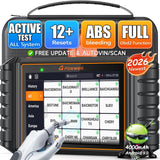 FOXWELL NT726 Bidirectional Scanner
$368.99Reads transfer case control module codes on supported vehicles.
FOXWELL NT726 Bidirectional Scanner
$368.99Reads transfer case control module codes on supported vehicles.
 FOXWELL NT604 ABS/SRS/Transmission Scanner
$209.09Scanner with transmission and 4WD system data.
FOXWELL NT604 ABS/SRS/Transmission Scanner
$209.09Scanner with transmission and 4WD system data.
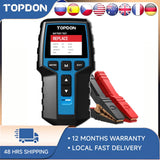 TOPDON BT200 Battery Tester
$103.99Low voltage causes transfer case shift faults.
TOPDON BT200 Battery Tester
$103.99Low voltage causes transfer case shift faults.
 FOXWELL NT301 Code Reader
$68.82Budget code reader with live data.
FOXWELL NT301 Code Reader
$68.82Budget code reader with live data.
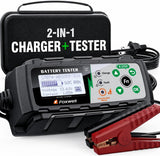 FOXWELL BC521 Battery Charger & Tester
$162.35Charger and tester for battery health.
FOXWELL BC521 Battery Charger & Tester
$162.35Charger and tester for battery health.


How the Part Got Left Out
GM's stated cause is unusually candid, and it is worth quoting because it explains how a part gets missed on a modern assembly line.
During changes to their assembly line, the supplier's standardized work processes and error detection protocols were not properly followed, allowing the oil pickup tubes to not be installed in some transfer case assemblies and circumventing error proofing protocols which would have otherwise rejected the incomplete transfer case assemblies.
The important phrase is "circumventing error proofing protocols." Modern assembly lines are built so that missing a step should be caught automatically — the station will not release the part, or the test will fail it. Here the safeguards existed and were bypassed during a period of line changes.
The supplier is named as Magna Powertrain de México – Ramos, in Ramos Arizpe, Mexico. The affected component is the transfer case assembly, part numbers 85843424, 85843425, 85797738 and 87842227.
GM states the supplier completed correction of its processes and implemented additional validation checks on 2 April 2026, which is why the production population stops where it does.
How GM Found It
The chronology is short and it reads like good process working.
- 14 April 2026 — a GM engineer submitted a report to GM's Speak Up For Safety programme after reviewing teardown results on a transfer case from a 2026 Chevrolet Silverado 1500 that experienced wheel lock-up in a parking lot. The transfer case was missing its oil pick-up tube.
- 17 April 2026 — GM opened a product investigation.
- The supplier used end-of-line test torque data to identify suspect assemblies. That process found 68 suspect transfer cases: 46 went into 2026 model year US production vehicles, and one was shipped as a service replacement part.
- 30 April 2026 — GM's Safety Field Action Decision Authority decided to conduct a safety recall.
- 7 May 2026 — Part 573 report filed, dealers notified, VINs searchable.
- 22 June 2026 — owner notification of an available remedy estimated to begin mailing.
Two things stand out.
First, the wheel lock-up that started this happened in a parking lot rather than at speed. Four field complaints were identified as potentially related, and GM reports no crashes or injuries.
Second, the supplier could identify the suspect units from end-of-line torque data. A missing internal component changes assembly torque, and that signature was still in the records — which is how a population of 66 gets narrowed out of a full production run.
This is the same Speak Up For Safety channel that produced the Cadillac Vistiq third-row seat recall — an internal report from an engineer, escalated.
The Remedy
Dealers will inspect and, if necessary, replace the transfer case assembly, free of charge.
Inspection first is deliberate. With GM estimating 69.7% of the population has the defect, roughly three in ten inspected vehicles are expected to be complete. Those vehicles keep their original transfer case.
Replacement parts were either produced outside the supplier's suspect manufacturing window or have been rebuilt to correct the issue.
On cost: under 49 C.F.R. § 573.13(d)(1), all covered vehicles are under warranty, so no reimbursement plan is offered. The inspection and any replacement are free.
On towing: GM stated it would contact owners to assist with towing vehicles to a dealership. Raise it when you call rather than paying for a tow and hoping to claim it back.
Expect this to take some time at the dealer. A transfer case replacement is a substantial job, and worth asking about courtesy transportation when you book.
Transfer case parts
 Transfer Case Selector Switch 15136039
$37.60Transfer case selector dash switch for Tahoe, Suburban, Silverado and Sierra. Confirm fitment by VIN before ordering.
Transfer Case Selector Switch 15136039
$37.60Transfer case selector dash switch for Tahoe, Suburban, Silverado and Sierra. Confirm fitment by VIN before ordering.
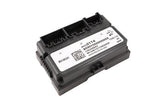 ACDelco Transfer Case Control Module
$258.99ACDelco transfer case control module. Confirm fitment by VIN before ordering.
ACDelco Transfer Case Control Module
$258.99ACDelco transfer case control module. Confirm fitment by VIN before ordering.
 ACDelco Transfer Case Component 84308646
$245.99ACDelco transfer case component 84308646. Confirm fitment by VIN before ordering.
ACDelco Transfer Case Component 84308646
$245.99ACDelco transfer case component 84308646. Confirm fitment by VIN before ordering.


Why There Are Two Recall Numbers
A small point that causes confusion, so worth clearing up.
This is one NHTSA campaign — 26V289 — executed under two GM bulletin numbers: N262557620 and N262557621. GM states that explicitly in the filing.
Both numbers refer to the same defect, the same missing oil pick-up tube and the same remedy. Splitting a campaign across bulletins is ordinary practice when different vehicle populations need different service instructions — and this recall does have two clearly different populations, the 2026 production vehicles and the 2015–2020 vehicles that received a service replacement part.
We are not going to guess which bulletin covers which group, since GM's filing does not say. If a dealer quotes you one number and you have the other, they are talking about the same recall.
Either way, the NHTSA campaign number 26V289 covers both, and a single VIN lookup returns your status regardless.
A Note on Sourcing
We cite documents we have read and label the rest.
Everything factual on this page comes from the Part 573 Safety Recall Report for NHTSA campaign 26V289, submitted by General Motors on 7 May 2026, which we opened and read in full. That includes the 66-vehicle population and its model-by-model breakdown, the 69.7% defect estimate, the 4WD/AWD-only scope, the defect and safety risk descriptions, the do-not-drive advisory and towing assistance, the stated cause, the grinding-sound warning, the supplier name, the component part numbers, the full chronology, the remedy and the schedule.
Quoted passages are GM's own wording from that filing. The document is linked above so you can check any of it against the original rather than taking our summary on trust.
Recalls develop. Populations get expanded and advisories change. Your VIN lookup at NHTSA.gov and your dealer are current in a way this page cannot be — and on a do-not-drive recall, that matters more than usual.
Shift linkage parts
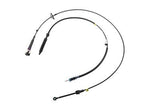 ACDelco Transfer Case Shift Cable 19434386
$98.99ACDelco transfer case shift cable. Confirm fitment by VIN before ordering.
ACDelco Transfer Case Shift Cable 19434386
$98.99ACDelco transfer case shift cable. Confirm fitment by VIN before ordering.
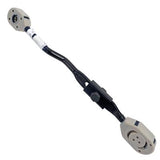 ACDelco Transfer Case Shift Linkage
$106.99ACDelco transfer case shift linkage. Confirm fitment by VIN before ordering.
ACDelco Transfer Case Shift Linkage
$106.99ACDelco transfer case shift linkage. Confirm fitment by VIN before ordering.
 ACDelco Digital Torque Wrench, 1/2 in. (14.8–147.5 ft-lb)
$162.99Half-inch digital torque wrench.
ACDelco Digital Torque Wrench, 1/2 in. (14.8–147.5 ft-lb)
$162.99Half-inch digital torque wrench.
 95-Piece Mechanics Tool Set (Metric & SAE)
$99.99Mechanic tool set.
95-Piece Mechanics Tool Set (Metric & SAE)
$99.99Mechanic tool set.


What Other Pages on This Recall Get Wrong
- Burying the do-not-drive advisory. GM states owners should not drive these vehicles until the remedy is performed, and that it will assist with towing. That belongs at the top of any page about this recall, not in a paragraph about remedies.
- Not mentioning the towing assistance. Owners told not to drive reasonably want to know how the vehicle gets to the dealer. GM said it would help.
- Missing the 2015–2020 population entirely. Most coverage lists only the 2026 vehicles. But 21 of the 66 are older SUVs and trucks that received a suspect transfer case as a service replacement part — a group that would never think to check a 2026 recall.
- Omitting the 4WD/AWD-only scope. Two-wheel-drive vehicles have no transfer case and cannot be affected. GM repeats that for every vehicle in the filing, and it spares a lot of owners unnecessary worry.
- Not explaining what is actually missing. "A component missing from the transfer case" tells you nothing. It is an oil pick-up tube, and without it the bearings are not properly lubricated — which is why they seize and why the wheels lock.
- Ignoring the grinding sound. GM says drivers may hear one before lock-up in some cases. That is worth knowing — while being clear it is not a substitute for the VIN check, since the filing also says the lock-up can occur without warning.
- Presenting replacement as automatic. The remedy is inspect first, replace if necessary. GM estimates around three in ten inspected vehicles will be found complete.
- Citing the filing without linking it. Plenty of pages reference "NHTSA documents" and leave you to find them. The report is a public PDF and it is linked here.
Frequently Asked Questions
Should I really stop driving it?
If your VIN is affected, yes. GM's filing states that as a precaution owners should not drive these vehicles until the remedy is performed, and that GM would be contacting owners to assist with towing them to a dealership. The failure mode is the front and/or rear wheels locking up without warning, which is not something to risk at road speed.
Who pays for the tow?
Ask before you arrange one. GM stated it would be contacting owners to assist with towing vehicles to a GM dealership for inspection and repair. Call your brand's customer service line and raise it directly rather than paying up front and hoping to recover it.
What is actually missing from the transfer case?
An oil pick-up tube. Without it, the transfer case bearings are not properly lubricated. Bearings starved of lubrication overheat, wear and eventually seize — and because the transfer case is mechanically connected to both axles, a seizure can lock the front and/or rear wheels.
My truck is two-wheel drive. Am I affected?
No. This recall only involves vehicles with four-wheel drive or all-wheel drive. A rear-wheel-drive-only vehicle has no transfer case at all, so the defect cannot apply. GM repeats that exclusion for every vehicle listed in the filing.
My Tahoe is a 2017. Why would a 2026 recall affect me?
Because of a service part. One suspect transfer case assembly was shipped as a replacement part, and GM identified 54 dealers that may have received it and 21 potentially affected vehicles that had a transfer case replaced at those dealerships during the suspect window. Those span 2015–2020 Tahoe, Suburban, Yukon, Yukon XL, Escalade and Escalade ESV. If you have had transfer case work done, run your VIN.
Will I get any warning before the wheels lock?
Possibly, but do not count on it. GM's filing says drivers may hear a grinding sound before lock-up in some cases — while the defect description says the lock-up can occur without warning. If you hear grinding from underneath a 4WD or AWD vehicle, stop and have it inspected regardless of recall status.
Will my transfer case definitely be replaced?
Not necessarily. The remedy is to inspect and replace only if needed. GM estimates 69.7% of the population has the defect, so roughly three in ten inspected vehicles are expected to be found complete and keep their original unit.
Why do I see two different recall numbers?
Because this single NHTSA campaign, 26V289, is executed under two GM bulletins — N262557620 and N262557621. Same defect, same remedy, different service instructions for different populations. One VIN lookup covers both.
What will it cost me?
Nothing. Inspection and any replacement are free, and GM's filing notes that because all covered vehicles are under warranty, no reimbursement plan is offered under 49 C.F.R. § 573.13(d)(1).
Where can I read the actual recall document?
It is public. The Part 573 Safety Recall Report for campaign 26V289 is hosted by NHTSA as a PDF and contains the defect description, the chronology, the model-by-model population table and the remedy in GM's own words.
Related Guides
Sources
- Part 573 Safety Recall Report, NHTSA campaign 26V289 (PDF) — General Motors, LLC, submitted 7 May 2026. GM recall numbers N262557620 and N262557621. Primary source for every fact on this page; opened and read in full.
- NHTSA recall lookup — search your VIN for current recall status. Campaign number 26V289.
Owner questions: Chevrolet 1-800-222-1020, GMC 1-800-462-8782, Cadillac 1-800-333-4223. NHTSA Vehicle Safety Hotline 1-888-327-4236.