
P0008 and P0009 on a Buick almost always mean the timing chains have stretched far enough that the crankshaft and camshafts no longer line up within the ECM's tolerance. On the 3.6L V6 that is a mechanical repair, not a sensor swap. You need a full timing chain kit — three chains, two idler sprockets, tensioners and guides — plus cover gaskets and fresh oil. Here is exactly what goes in the box, and what does not.
Before you buy anything, confirm which engine is in your car. A 2013 LaCrosse with the 3.6L LFX and a 2013 Regal with the 2.0L turbo four are two completely different timing jobs with zero shared parts. Start with the engine and drivetrain parts for your LaCrosse or Regal and filter by year and engine before you add anything to a cart.
Parts and tools you'll need
- Timing chain kits, tensioners and cover gaskets for your specific engine RPO
- Buick-specific parts and accessories — coolant, front cover seals, serpentine belt, water pump
- A camshaft holding/locking tool set for the GM High Feature V6 (the cams will not stay put on their own)
- A scan tool that can read and clear GM powertrain codes and watch live cam position data
Timing chain parts
 ACDelco Engine Timing Chain Kit
$450.99Timing chain kits and sets — confirm engine RPO. Confirm fitment by VIN before ordering.
ACDelco Engine Timing Chain Kit
$450.99Timing chain kits and sets — confirm engine RPO. Confirm fitment by VIN before ordering.
 Timing Set 2003-2017 Buick, Saab, Saturn
$129.99Timing chain kits and sets — confirm engine RPO. Confirm fitment by VIN before ordering.
Timing Set 2003-2017 Buick, Saab, Saturn
$129.99Timing chain kits and sets — confirm engine RPO. Confirm fitment by VIN before ordering.
 ACDelco Camshaft Phasers, Variable Valve Timing Assemblies
$237.99Timing chain kits and sets — confirm engine RPO. Confirm fitment by VIN before ordering.
ACDelco Camshaft Phasers, Variable Valve Timing Assemblies
$237.99Timing chain kits and sets — confirm engine RPO. Confirm fitment by VIN before ordering.
 ACDelco 10-2010 RTV Engine Sealant, 5.3 oz Cartridge 12378521
$22.35Timing chain kits and sets — confirm engine RPO. Confirm fitment by VIN before ordering.
ACDelco 10-2010 RTV Engine Sealant, 5.3 oz Cartridge 12378521
$22.35Timing chain kits and sets — confirm engine RPO. Confirm fitment by VIN before ordering.


What do P0008 and P0009 actually mean?
P0008 is Engine Position System Performance, Bank 1. P0009 is the same fault on Bank 2. The ECM compares the crankshaft position signal against the camshaft position signals and sets these codes when the relationship drifts outside the programmed window. On a chain-driven engine, that drift is physical slack.
These are not the same as a stuck cam phaser code. P0011, P0014, P0021 and P0024 point at camshaft position actuator control — oil flow, solenoids, screens. P0016 through P0019 are crank-to-cam correlation faults for a specific bank and cam. P0008 and P0009 are the broader position-system-out-of-spec codes, and on GM's 3.6L V6 they very often arrive together with one or more of the correlation codes.
The pattern matters. A single P0011 with no rattle can be a dirty screen or a bad solenoid. P0008 plus P0016 plus a cold-start rattle on a 120,000-mile 3.6L is a chain conversation. If you are still sorting out which codes you have and what they rank, our guide on how to pull and prioritize GM trouble codes walks through the order to work them in.
Which Buick engines have the chain stretch problem?
The chain-stretch reputation belongs to GM's High Feature V6 family — the 3.6L in LaCrosse, the 3.0L LF1, and the earlier 3.6L LY7. The four-cylinder Ecotecs used in Regal and the eAssist LaCrosse have timing chains too, but they are a different engine architecture with a different failure profile and a different parts kit.
| Model & years | Engine (RPO) | Chain layout | P0008/P0009 risk |
|---|---|---|---|
| LaCrosse 2005–2009 | 3.6L V6 (LY7, VIN 7) | 3 chains, DOHC 4-cam | High — earliest and worst-known generation |
| LaCrosse 2010–2011 | 3.6L V6 (LLT, VIN V) | 3 chains, DOHC 4-cam, direct injection | High — the classic stretch engine |
| LaCrosse 2010–2011 | 3.0L V6 (LF1, VIN G) | 3 chains, same HFV6 architecture | Moderate — same family, lower volume |
| LaCrosse 2012–2016 | 3.6L V6 (LFX) | 3 chains, DOHC 4-cam | Moderate — later onset than LLT |
| LaCrosse 2017–2019 | 3.6L V6 (LGX) | Revised HFV6 chain drive | Lower — redesigned, fewer reports |
| LaCrosse 2012–2016 eAssist | 2.4L I4 (LUK) | Single chain, I4 Ecotec | Different job — not a V6 kit |
| Regal 2011–2017 | 2.4L I4 (LAF/LUK), 2.0L turbo (LHU/LTG) | Single chain, I4 Ecotec | Different job — not a V6 kit |
| Regal Sportback/TourX 2018–2020 | 2.0L turbo (LTG) | Single chain, I4 Ecotec | Different job — not a V6 kit |
Read that table twice before ordering. The single biggest cause of a returned timing kit on these cars is a Regal owner buying a V6 kit because a search result said Buick timing chain. Your engine RPO is on the emissions/service parts label — often on the trunk lid or under the hood — and the eighth digit of your VIN identifies the engine as well.
Why does the 3.6L need three chains?
Because it has four camshafts. One primary chain runs off the crankshaft to a pair of idler sprockets in the middle of the front cover. Each idler then drives a shorter secondary chain, and each secondary chain drives the intake and exhaust cam phasers on one cylinder head. That is one primary chain plus two secondary chains, four cam phasers, and a set of tensioners and guides to keep all of it under control.
Every one of those chains wears. Every guide face wears. The tensioners extend to take up slack until they run out of travel, and after that the slack shows up as timing drift the ECM can see. That is why the correct repair is a complete kit and not the loose one.
What's actually in a full timing chain kit?
A complete 3.6L kit is built around three chains, two idler sprockets, the crank sprocket, and the full tensioner-and-guide set. Cam phasers are usually sold separately. Aftermarket kits vary in exactly how much they bundle, so read the contents list on the specific kit you are looking at rather than assuming.
| Component | Qty on a 3.6L V6 | In most full kits? | Why it matters |
|---|---|---|---|
| Primary (crank-to-idler) chain | 1 | Yes | Carries the whole load; stretch here moves both banks |
| Secondary (cam) chains | 2 | Yes | One per head; sets bank-specific correlation |
| Idler sprockets | 2 | Usually | Worn teeth chew a new chain fast |
| Crankshaft sprocket | 1 | Usually | Cheap now, expensive to go back in for |
| Hydraulic chain tensioners | 3 (typical) | Yes | Old tensioners are already near end of travel |
| Chain guides / shoes | Multiple | Yes | Grooved nylon faces are the usual smoking gun |
| Camshaft position actuators (phasers) | 4 | Rarely | Sold separately; inspect before reusing |
| Front cover gasket / seal set | 1 set | Sometimes | The cover comes off; do not reuse |
| Water pump | 1 | No | Already exposed on many of these — do it now |
Widely stocked full kits for this engine family — the Cloyes 9-0753S is the one most shops reach for, and it covers a broad slice of GM's 2.8L/3.0L/3.2L/3.6L V6 range — bundle the chains, sprockets, tensioners and guides in one box. Fitment across that range is not universal by year, so verify the kit's application list against your exact year and RPO before you commit. Do not assume 3.6L alone is enough.
Gaskets and VVT parts
 Intake Manifold Gasket Set 2008-2017
$34.99Gaskets and cam phasing parts often replaced with the chain. Confirm fitment by VIN before ordering.
Intake Manifold Gasket Set 2008-2017
$34.99Gaskets and cam phasing parts often replaced with the chain. Confirm fitment by VIN before ordering.
 Intake Manifold Gasket Set 2010-2017
$27.99Gaskets and cam phasing parts often replaced with the chain. Confirm fitment by VIN before ordering.
Intake Manifold Gasket Set 2010-2017
$27.99Gaskets and cam phasing parts often replaced with the chain. Confirm fitment by VIN before ordering.
 12595277 12598158 Intake Manifold Gasket Set with glue
$59.59Gaskets and cam phasing parts often replaced with the chain. Confirm fitment by VIN before ordering.
12595277 12598158 Intake Manifold Gasket Set with glue
$59.59Gaskets and cam phasing parts often replaced with the chain. Confirm fitment by VIN before ordering.
 Exhaust Manifold Gasket Set 2010-2017
$10.99Gaskets and cam phasing parts often replaced with the chain. Confirm fitment by VIN before ordering.
Exhaust Manifold Gasket Set 2010-2017
$10.99Gaskets and cam phasing parts often replaced with the chain. Confirm fitment by VIN before ordering.


What the kit does not include but you should buy anyway
Plan on a second, smaller shopping list beyond the chain kit itself. Skipping these is how a one-weekend job becomes two.
- Front cover gasket and seal set, including the crankshaft front seal.
- Engine oil and an oil filter — the sump gets contaminated with whatever the guides shed, and the new chains need clean oil immediately.
- Coolant, if your procedure requires draining to remove the cover or water pump.
- Camshaft position actuator solenoids and their screens, if yours are original and high-mileage.
- A serpentine belt and tensioner, since both are off the car anyway.
- RTV sealant of the exact type the service procedure calls out — not a generic tube.
Pick these up alongside the chains in the Buick parts and accessories for your LaCrosse or Regal so you are not waiting on a gasket with the front of the engine open.
How do you confirm it's the chain and not something cheaper?
Work in this order before you buy a kit. Chains are the expensive answer, and a surprising number of P0008 cars have a contributing problem that is cheaper to fix and would have destroyed the new chains anyway.
- Check the oil level and condition. Low or sludged oil starves the tensioners and is the root cause more often than the chain itself.
- Read all stored and pending codes, plus freeze frame data, so you know the RPM and temperature where the fault sets.
- Listen at a genuine cold start after an overnight sit. A one-to-three-second rattle that fades as oil pressure builds is the classic stretch symptom.
- Watch live camshaft position and desired-versus-actual cam angle on a scan tool while the engine idles and again at 2,000 RPM.
- Inspect and clean the camshaft actuator solenoid screens. Debris here mimics timing faults.
- If codes return with clean oil, clean screens and a healthy-looking solenoid, pull the front cover and look at the guides. Grooved or cracked guide faces confirm it.
Our broader walkthrough on what timing chain replacement involves across GM engines covers the symptom-by-symptom diagnosis in more depth if you are still deciding whether to open it up.
What causes these chains to stretch early?
Oil, mostly. The 3.6L uses oil pressure to run the cam phasers and the hydraulic tensioners, so oil that is old, low, or the wrong viscosity leaves the tensioners doing their job badly. Extended drain intervals on a car driven in short trips is the fastest path to a stretched chain.
The other contributor is time under load. Direct-injection versions of this engine live with more soot in the oil, and the nylon guide faces are a wear item by design. Cars that got frequent oil changes with the correct specification oil routinely go well past 150,000 miles; cars that went 10,000 miles between changes on whatever was on sale often do not see 100,000.
After the repair, the single most useful thing you can do is shorten your oil change interval and use oil that meets the GM specification printed in your owner's manual. That specification changed across these model years, so confirm yours rather than reusing what the last shop put in — our dexos specification guide covers which is which.
How hard is the job?
Honest answer: this is the hardest common repair on the car. On a transverse V6 the front cover faces the passenger-side inner fender, access is tight, and the cams must be locked in position while the chains come off or the phasers will rotate and you lose your reference. Most DIY builds involve raising the engine, removing the passenger-side mount, and working through a very small window.
A realistic overview of the sequence:
- Disconnect the battery and drain fluids as the procedure requires.
- Remove the accessory drive, crankshaft balancer and everything in front of the timing cover.
- Support the engine, then remove the passenger-side mount and bracket for access.
- Remove valve covers and bring the engine to the specified timing reference position.
- Remove the front cover, then fit the camshaft holding tools before releasing any tensioner.
- Replace chains, guides, tensioners, idlers and the crank sprocket as a complete set.
- Verify every timing mark and chain link relationship twice before turning anything.
- Reassemble with new gaskets and seals, refill with fresh oil, then clear codes and re-verify cam position data on a scan tool.
Torque specs on this engine vary by year, RPO and component — front cover bolts, cam phaser bolts and the crankshaft balancer bolt are all different, and several are torque-plus-angle with single-use hardware. Do not use a generic figure you found on a forum. Pull the factory service procedure for your exact year and engine and follow its torque sequence and hardware replacement notes.
Should you replace only the stretched side?
No. If one secondary chain has stretched enough to set a code, the other one is the same age, has the same mileage, and lived in the same oil. The labor to get in there is the entire cost of this job; the parts difference between one chain and the full set is small by comparison.
The same logic applies to the guides and tensioners. A new chain running on a grooved guide wears in fast, and a tensioner that is already extended near its limit has no travel left to take up the new chain's break-in stretch. Replace the set.
What to check before you order
- Engine RPO, not just displacement. LY7, LLT, LF1, LFX and LGX are not interchangeable across all years for chain hardware.
- V6 versus I4. Regal and eAssist LaCrosse use a single-chain Ecotec four-cylinder — a V6 kit will not fit anything on that car.
- Kit contents. Confirm whether idler sprockets, the crank sprocket and tensioners are included, or sold separately.
- Phasers. Budget for the possibility that one or more cam actuators are worn and need replacing.
- Gaskets and seals. Front cover gasket, crank seal and the correct RTV are not optional.
- Special tools. Cam holding tools and a balancer removal tool are required, not nice-to-have.
- Oil spec. Verify the GM oil specification for your year and buy it with the parts.
Safety note: the engine has to be supported when the mount comes off. Use a proper engine support bar or a jack with a wide pad and cribbing, never a bumper jack, and put stands under the vehicle before you get underneath it.
Oil, filter and tools
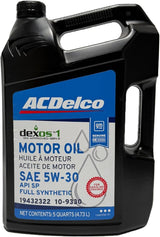 ACDelco 10-9330 dexos1 Gen 3 Full Synthetic 5W-30 Oil
$58.95Fresh oil and the right tools for the job.
ACDelco 10-9330 dexos1 Gen 3 Full Synthetic 5W-30 Oil
$58.95Fresh oil and the right tools for the job.
 ACDelco GM Original Equipment PF64 (25206966) Oil Filter
$13.89Fresh oil and the right tools for the job.
ACDelco GM Original Equipment PF64 (25206966) Oil Filter
$13.89Fresh oil and the right tools for the job.
 FOXWELL NT614 Elite OBD2 Scanner
$233.69Fresh oil and the right tools for the job.
FOXWELL NT614 Elite OBD2 Scanner
$233.69Fresh oil and the right tools for the job.
 ACDelco Tools Torque Wrenches, Digital LCD Display, 1/2 in.
$162.99Fresh oil and the right tools for the job.
ACDelco Tools Torque Wrenches, Digital LCD Display, 1/2 in.
$162.99Fresh oil and the right tools for the job.


Frequently Asked Questions
What does P0008 mean on a Buick?
Engine Position System Performance, Bank 1 — P0009 is the same fault on Bank 2. The ECM compares the crankshaft position signal against the camshaft position signals and sets the code when the relationship drifts outside its window. On a chain-driven engine, that drift is physical slack.
Is P0008 always a timing chain?
Not always, and chains are the expensive answer. Check oil level and condition first — low or sludged oil starves the hydraulic tensioners and is the root cause more often than the chain itself. Then clean the camshaft actuator solenoid screens, since debris there mimics timing faults. Only after that pull the cover and look at the guides.
How do I tell P0008 apart from a cam phaser code?
By what else is set. P0011, P0014, P0021 and P0024 point at camshaft actuator control — oil flow, solenoids, screens. P0016 through P0019 are crank-to-cam correlation faults. A single P0011 with no rattle can be a dirty screen; P0008 plus P0016 plus a cold-start rattle on a 120,000-mile 3.6L is a chain conversation.
Does a Regal use the same timing chain kit as a LaCrosse?
No, and this is the biggest cause of returned kits on these cars. Regal and eAssist LaCrosse use single-chain Ecotec four-cylinders — a completely different architecture from the three-chain High Feature V6. Check your engine RPO on the service parts label or the eighth digit of your VIN.
Why does the 3.6L V6 have three timing chains?
Because it has four camshafts. A primary chain runs from the crank to two idler sprockets, and each idler drives a secondary chain that turns the intake and exhaust phasers on one head. Every chain and every guide face wears, which is why the correct repair is a complete kit rather than the loose one.
What is in a full timing chain kit?
Three chains, two idler sprockets, the crank sprocket, three tensioners and the guide set. Cam phasers are usually sold separately, and front cover gaskets are only sometimes included. Kits vary, so read the contents list rather than assuming — and verify the application list against your exact year and RPO.
Can I replace just the chain that set the code?
No. The other chain is the same age, same mileage, and lived in the same oil. The labour to get in there is the entire cost of this job, and the parts difference between one chain and the full set is small by comparison. The same applies to guides and tensioners.
What causes these chains to stretch early?
Oil, mostly. The engine uses oil pressure to run the phasers and the hydraulic tensioners, so old, low or wrong-viscosity oil leaves the tensioners doing their job badly. Cars with frequent changes on the correct specification oil routinely pass 150,000 miles; cars run 10,000 miles between changes often do not see 100,000.
What does the cold-start rattle sound like?
A one-to-three-second rattle after an overnight sit that fades as oil pressure builds. That is the classic stretch symptom. Listen at a genuine cold start rather than after the car has been running — a warm engine will not reproduce it.
Is this a DIY job?
It is the hardest common repair on the car. The front cover faces the inner fender on a transverse V6, the cams must be locked before any tensioner is released or you lose your timing reference, and most builds require supporting the engine and removing the passenger-side mount. Cam holding tools are required, not optional.
A Note on Sourcing
Code definitions and the distinction between position-system, correlation and actuator-control faults are from GM powertrain diagnostic information. The grouping matters more than any single code, which is why this page describes the pattern rather than treating P0008 as a part number.
Engine RPO assignments by model and year come from GM published product information. The risk column in that table is our own assessment based on reported failure patterns across these engine generations, not a manufacturer statement — no manufacturer publishes a chain-failure likelihood.
Kit contents vary by supplier. The Cloyes 9-0753S is named because it is the widely stocked full kit for this engine family, not as a fitment guarantee — its application range spans several GM V6 displacements and is not universal by year. Verify against your own year and RPO.
Torque figures are deliberately omitted. Front cover, cam phaser and crankshaft balancer fasteners are all different, several are torque-plus-angle, and some are single-use. A generic forum figure on this job will cost you the engine.
For more diagnosis-first repair walkthroughs on GM engines, browse more GM repair guides.
Build the whole job in one order
A timing chain repair on the 3.6L is a parts list, not a part. Get all of it in one place before you start:
- Complete timing chain kit — 3 chains, idlers, crank sprocket, tensioners, guides
- Front cover gasket and crankshaft front seal set
- Camshaft position actuator solenoids and screens, if original
- Water pump, serpentine belt and tensioner while the front is apart
- Engine oil to the correct GM spec, oil filter, and coolant
Shop GM engine and drivetrain parts for your LaCrosse or Regal and filter by your year and engine RPO before you check out.