
Why Secure Cargo Matters
Whether you're transporting a motorcycle across state lines, loading gear onto a roof rack, or hauling equipment in a truck bed, improperly secured cargo can lead to dangerous situations on the road. Sudden stops, sharp turns, or uneven surfaces can cause luggage to shift, leading to damage or even loss of items — and in worst-case scenarios, accidents. Investing time in learning how to properly use ratchet straps will save you hassle and keep everyone safe.
Benefits of Retractable Ratchet Straps
- Quick Storage: The self-retracting design keeps webbing neatly wound inside the housing, preventing tangles and saving space when not in use.
- Heavy-Duty Strength: Reinforced polyester webbing and rust-resistant hooks deliver reliable performance under high loads.
- Precise Tensioning: The ratchet mechanism allows for incremental tightening, ensuring the perfect amount of tension without slack.
- All-Weather Durability: UV-resistant, waterproof materials stand up to harsh conditions and won't degrade over time.
- Versatile Applications: Ideal for securing motorcycles, luggage, bicycles, rooftop cargo boxes, furniture, and more.
Retractable ratchet straps
 124B Retractable Ratchet Straps Motorcycle Lashing Straps
$61.69Retractable ratchet straps.
124B Retractable Ratchet Straps Motorcycle Lashing Straps
$61.69Retractable ratchet straps.
 Automatic Retractable Ratchet Strap 680KG 330CM for Cargo
$56.19Retractable ratchet straps.
Automatic Retractable Ratchet Strap 680KG 330CM for Cargo
$56.19Retractable ratchet straps.
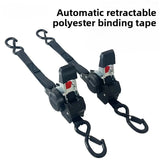 Auto Straps For Cargo Tape Retractable Belts For Motorcycles
$56.49Retractable ratchet straps.
Auto Straps For Cargo Tape Retractable Belts For Motorcycles
$56.49Retractable ratchet straps.
 Auto Straps For Cargo Tape Retractable Tie Down Belts
$64.59Retractable ratchet straps.
Auto Straps For Cargo Tape Retractable Tie Down Belts
$64.59Retractable ratchet straps.


Choosing the Right Ratchet Strap
- Load Capacity and Working Load Limit
- Strap Length and Retractable Range
- Material Quality and Durability
- Hook Types and Compatibility
- Ease of Operation and Safety Features
Load Capacity and Working Load Limit
Every ratchet strap is rated for a specific working load limit (WLL). Always select a strap with a WLL that exceeds the weight of your cargo. For heavier items like motorcycles or large pieces of furniture, a strap rated for at least 1,000 pounds WLL is recommended.
Working load limit and breaking strength are different numbers, and the packaging often leads with the larger one. Breaking strength is where the strap fails; working load limit is the fraction of that you are allowed to use, and it is the only figure you should be planning against. It is also worth remembering that the weakest link governs the whole connection — a heavily rated strap on a lightly rated anchor point is only as strong as the anchor.
Length and Retractable Range
Retractable straps come in various lengths. Consider the distance between your anchor points and the thickness of the load to ensure you have enough slack to wrap around the cargo and tighten effectively. A strap that is too short might strain the mechanism, while one that is too long can create excess slack.
Material Quality and Durability
High-quality polyester webbing resists stretching, abrasion, and UV damage. Look for reinforced stitching patterns at stress points to ensure long-term durability. Zinc-alloy or powder-coated steel hooks help prevent rust and corrosion.
Hook Types and Compatibility
Different anchor points require different hook styles. S-hooks, J-hooks, and snap hooks each have unique advantages. Choose a hook that fits securely onto your vehicle's tie-down points, roof rack, or trailer anchors.
Step-by-Step Guide to Using Retractable Ratchet Straps
- Inspect Your Equipment: Before each use, examine the strap for frays, cuts, or damaged stitching. Check the ratchet mechanism for smooth operation and ensure hooks are free of rust or cracks.
- Identify Anchor Points: Locate sturdy, manufacturer-recommended tie-down points on your vehicle or trailer. Avoid areas with paint or plastic that may slip under tension.
- Position the Strap: Extend the retractable strap around the cargo. Clip each hook to the anchor points and confirm they're locked in place.
- Engage the Ratchet: Operate the ratchet handle in a pumping motion, taking up slack until the strap is snug against the load. Do not over-torque; apply just enough tension to immobilize the cargo.
- Check Tension: Give the cargo a gentle push to test stability. If it shifts, release the ratchet slightly and re-tighten until the load is immobilized.
- Secure and Store: Release the ratchet lever to retract excess webbing. Ensure the strap housing is closed and store the strap in a cool, dry place.
Tie-downs and nets
 Car Tie Down Anchor Pickup Truck Bed Side Wall Clip
$32.19Anchors, tie-downs and cargo nets. Confirm fitment by VIN before ordering.
Car Tie Down Anchor Pickup Truck Bed Side Wall Clip
$32.19Anchors, tie-downs and cargo nets. Confirm fitment by VIN before ordering.
 AUTOWN Truck Bed Cargo Net for GMC Sierra & Chevy Silverado
$22.13Anchors, tie-downs and cargo nets. Confirm fitment by VIN before ordering.
AUTOWN Truck Bed Cargo Net for GMC Sierra & Chevy Silverado
$22.13Anchors, tie-downs and cargo nets. Confirm fitment by VIN before ordering.
 Universal Car Trunk Organizer Elastic Cargo Net Heavy Duty
$36.14Anchors, tie-downs and cargo nets. Confirm fitment by VIN before ordering.
Universal Car Trunk Organizer Elastic Cargo Net Heavy Duty
$36.14Anchors, tie-downs and cargo nets. Confirm fitment by VIN before ordering.
 Heavy Duty Roof Rack Cargo Net PVC Webbing Truck Pickup SUV
$40.09Anchors, tie-downs and cargo nets. Confirm fitment by VIN before ordering.
Heavy Duty Roof Rack Cargo Net PVC Webbing Truck Pickup SUV
$40.09Anchors, tie-downs and cargo nets. Confirm fitment by VIN before ordering.


Common Mistakes to Avoid
- Overloading the Strap: Exceeding the WLL can cause webbing to stretch or snap unexpectedly.
- Incorrect Hook Placement: Hooks should always attach to manufacturers' rated anchor points, not bumper edges or plastic trim.
- Under-Tightening: Slack in the strap can allow cargo to shift, increasing the risk of damage or loss.
- Neglecting Wear and Tear: Replace straps showing signs of fraying or hook damage — don't wait for a failure.
- Poor Storage: Leaving straps exposed to moisture and sunlight can weaken fibers over time.
Maintenance and Storage Tips
- Wipe down webbing with a mild soap solution after exposure to salt or mud, then air-dry fully.
- Lubricate ratchet gears annually with a light machine oil to maintain smooth operation.
- Store straps coiled in a dry, cool environment away from direct sunlight.
Anchor Points Matter as Much as the Strap
On a pickup, the factory tie-downs are the correct attachment points and they carry their own rating — a Silverado DuraBed, for example, comes with twelve tie-downs rated at 500 lb per corner. Our guide to bed rails, tie-downs and cargo management covers those ratings and when an aftermarket track system is actually worth adding.
Bed and cargo protection
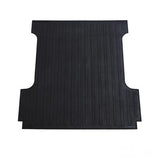 Westin Rubber Truck Bed Mat 506465 for 2019-2026 Chevy & GMC
$187.99Bed mats and cargo liners. Confirm fitment by VIN before ordering.
Westin Rubber Truck Bed Mat 506465 for 2019-2026 Chevy & GMC
$187.99Bed mats and cargo liners. Confirm fitment by VIN before ordering.
 2019-2024 Chevy Silverado GMC Sierra 1500 5.8ft TPE 3D Truck
$139.99Bed mats and cargo liners. Confirm fitment by VIN before ordering.
2019-2024 Chevy Silverado GMC Sierra 1500 5.8ft TPE 3D Truck
$139.99Bed mats and cargo liners. Confirm fitment by VIN before ordering.
 BedRug XLT Bed Mat XLTBMC19LBS for 2019-2025 Chevy & GMC
$378.99Bed mats and cargo liners. Confirm fitment by VIN before ordering.
BedRug XLT Bed Mat XLTBMC19LBS for 2019-2025 Chevy & GMC
$378.99Bed mats and cargo liners. Confirm fitment by VIN before ordering.
 BedRug BedTred Impact Bed Mat (Multi-Pro Tailgate) IMC19SBMPS
$311.99Bed mats and cargo liners. Confirm fitment by VIN before ordering.
BedRug BedTred Impact Bed Mat (Multi-Pro Tailgate) IMC19SBMPS
$311.99Bed mats and cargo liners. Confirm fitment by VIN before ordering.


Final Thoughts
Using retractable ratchet straps effectively means the difference between a smooth, worry-free journey and a roadside emergency. By choosing the right strap, following proper tensioning techniques, and performing regular maintenance, you'll ensure your cargo stays exactly where it belongs — securely in place.
Whether you're planning a cross-country motorcycle trip, moving household items, or securing gear for an outdoor adventure, these best practices will help protect your most valuable hauls.
Shop the auto-retractable ratchet strap with S-hooks →
Shop the 680 kg / 330 cm automatic retractable ratchet strap →
More tool and equipment write-ups are collected in our shop tools guides.