
If you own a 2018-or-newer Chevrolet Equinox with the 1.5L turbo (RPO LYX) and the dipstick keeps dropping between changes, you are not imagining it. What most guides miss is that GM has a bulletin covering one specific mechanism on this exact engine — a plugged PCV orifice raising crankcase pressure — complete with a measurable test, a spec, part numbers and labor times. That bulletin is where this diagnosis should start, because it is the one cause you can confirm with a number rather than a guess.
Jump to a section: Normal vs excessive · The oil this engine takes · The GM-documented cause · How the LYX PCV system actually works · The camshaft cover path · Piston ring wear · Turbocharger seals · Run your own consumption test · The warranty question, answered honestly · Parts and cost · GM documents · What other pages get wrong · FAQ
How Much Oil Loss Is Actually Excessive?
Every engine uses some oil. The question is where the line sits, and GM answers it consistently across its bulletins: excessive oil consumption, not due to leaks, is the use of 0.9 litre (1 quart) or more of engine oil within 3,200 kilometres (2,000 miles).
That threshold appears in GM's preliminary information on oil consumption and in the special coverage bulletins it issued for other engine families. It is a useful benchmark rather than a promise — the document we can quote it from covers 1.4L LUJ and LUV engines in the Encore, Cruze, Sonic and Trax, not the 1.5L Equinox — but GM uses the same figure repeatedly, and it is the number a dealer will measure you against.
So: a quart every 2,000 miles is the boundary. A quart every 1,000 to 1,500 miles is well past it and worth diagnosing rather than topping up.
Before anything else, establish your actual rate. Guessing is the single most common reason these conversations go nowhere — see the consumption test below.
The Oil This Engine Takes — and a Correction
The 1.5L LYX turbo takes SAE 0W-20. The owner's manual is explicit: use 0W-20 for the LYX 1.5L turbo engine, and 5W-30 for the LTG 2.0L turbo engine. GM's own TechLink capacity chart lists the Equinox 1.5L LYX as dexos1 0W-20 with a PF64 filter.
| Engine | Viscosity | Capacity with filter | Filter |
|---|---|---|---|
| 1.5L turbo (LYX) | 0W-20 dexos1 | 4.2 qt FWD / 5.3 qt AWD | PF64 |
| 2.0L turbo (LTG) | 5W-30 dexos1 | 5.0 qt | PF64 |
A correction to this page: an earlier version linked a dexos1 Gen 2 5W-30 oil in its parts list. That is a heavier grade than GM specifies for the LYX, and it directly contradicted this article's own advice against using thicker oil to mask consumption. It has been replaced with the correct 0W-20 below.
Why the grade matters more here than on most engines: GM specifies 0W-20 partly so oil reaches the turbocharger bearings and actuates the variable valve timing quickly on cold start. Running heavier slows both. On an engine whose oil-fed systems are already the weak point, that is the wrong direction of compromise — and it does nothing about the cause.
One more note on specification. dexos1 Gen 3 supersedes Gen 2 and is backward compatible. Gen 3 raises the bar on low-speed pre-ignition protection, which is precisely the failure mode small-displacement turbos are vulnerable to, so it is the sensible choice on this engine.
The Cause GM Documented on This Exact Engine
This is the section other pages leave out, and it is the most actionable thing here.
GM bulletin 20-NA-047 covers 2018–2022 Chevrolet Equinox with the 1.5L LYX engine (the January 2023 revision extended the range from the original 2018–2020). GM's described condition is short: an oil leak and/or the MIL illuminated, with DTC P1101 possibly set.
GM's stated cause: higher than normal crankcase pressures, due to a plugged positive crankcase ventilation (PCV) orifice.
Here is why that belongs in an oil consumption guide even though GM calls it a leak. When the PCV orifice plugs, pressure builds inside the crankcase because the blow-by gases have nowhere to go. That pressure does two things at once: it pushes oil past the front and rear crankshaft seals — the leak GM names — and it forces oil mist into the induction system, where it burns. Either way the dipstick drops. One is on your driveway, the other is out the tailpipe, and the same plugged orifice causes both.
And it is measurable. GM specifies a crankcase pressure test, and gives the numbers:
| Test | GM's specification |
|---|---|
| Where to connect | At the engine oil dipstick port, using the Evaporative Emissions System Tester (EEST) |
| How | Connect with the engine off, then start the engine and record the reading |
| Normal reading | −1 to −5 inches of water, in park at hot idle (for the L3A, LE2, LFV and LYX engines) |
| Fault threshold | Anything above 0 inches of water is a positive crankcase pressure concern requiring further diagnosis |
| Labor operation | 4087348, crankcase pressure test — 0.3 hr |
Note the sign. A healthy crankcase sits under slight vacuum. If yours reads positive, the ventilation path is restricted, and you have converted a vague complaint into a documented finding.
GM also directs inspecting for air induction restrictions before condemning the orifice — nesting material, water intrusion or ice in the intake duct and air cleaner housing, a kinked PCV tube, or modifications to the induction system. Those are free to check and they produce the same pressure reading.
How the LYX PCV System Actually Works
Understanding this explains why the 1.5L feeds oil into the turbo specifically, and why there is no PCV valve you can simply unscrew and shake.
On this engine the crankcase ventilation function is integral to the camshaft cover, cylinder head and intake manifold. Fresh air from the intake is supplied to the crankcase and mixes with blow-by gases. Those gases rise to the top of the engine and enter an oil separation chamber inside the camshaft cover, where oil is separated out. The gases then pass to the intake manifold through a calibrated orifice inside the camshaft cover — the orifice 20-NA-047 is about.
Three check valves manage the routing, and the turbo changes everything:
- Off boost, manifold vacuum draws the gases through the internal passage in the camshaft cover.
- Under boost, there is no manifold vacuum to draw on — so one check valve closes and another opens, routing the gases back to the turbocharger inlet to be consumed.
- Under excessive positive crankcase pressure, a further check valve opens and vents to the air inlet.
That middle path is the one that matters for oil consumption. Any oil the separator fails to catch goes straight into the turbocharger inlet under boost — which is exactly when the engine is working hardest and consuming most. It also means oil residue in the intake tubing ahead of the turbo is a genuine diagnostic finding, not just untidiness.
The practical consequence: on the LYX there is no serviceable PCV valve in the traditional sense. The orifice, the separator and the check valves are built into the camshaft cover assembly. That is why GM's repair is a camshaft cover job rather than a ten-dollar valve.
This description is GM service information as relayed by technicians working on the engine; we were not able to open the SI page ourselves, so we are reporting it as well-corroborated rather than as verified GM wording. The bulletin figures above we did read directly.
PCV parts
 ACDelco Gold 19313320 PCV Valve
$6.88PCV valves and hoses. Confirm fitment by VIN before ordering.
ACDelco Gold 19313320 PCV Valve
$6.88PCV valves and hoses. Confirm fitment by VIN before ordering.
 GM Genuine Parts 12597774 PCV Tube
$24.67PCV valves and hoses. Confirm fitment by VIN before ordering.
GM Genuine Parts 12597774 PCV Tube
$24.67PCV valves and hoses. Confirm fitment by VIN before ordering.
 ACDelco PCV Valve Hose 25193343
$84.99PCV valves and hoses. Confirm fitment by VIN before ordering.
ACDelco PCV Valve Hose 25193343
$84.99PCV valves and hoses. Confirm fitment by VIN before ordering.


The Camshaft Cover Path
GM has a second document pointing at the same component from the oil consumption side. Preliminary information PIP5947C addresses a potential failed engine camshaft cover causing excessive engine oil consumption and blue smoke from the exhaust at low mileage, possibly with a misfire or idle surge, and possibly setting P0300, P050D, P0521, P06DE or P1101. It advises inspection with a view to camshaft cover replacement.
We could not open PIP5947C directly and are citing it as corroborated rather than verified. But it lines up exactly with the mechanism above: when the separator and orifice inside the cover stop working, oil goes into the intake and burns, and you get smoke and consumption rather than a puddle.
The tell that separates this from ring wear: a failed camshaft cover produces consumption at low mileage and often gets worse over months. Ring wear is a high-mileage, gradual story. If a relatively young 1.5L is drinking oil, the cover is the more likely suspect and it is a far smaller repair.
Piston Ring Wear
Once the ventilation side is ruled out, the ring package is the next candidate — and it is the expensive one.
The oil control ring's job is to scrape oil off the cylinder wall and return it to the pan. On a direct-injection engine, combustion byproducts build carbon in the ring grooves over time, and rings that cannot move freely in their grooves stop sealing. Oil then migrates past them into the combustion chamber and burns off — usually without visible smoke, because the volume per cycle is small.
Warning signs: a faint blue-grey tint to the exhaust on cold start or under hard acceleration, a burning-oil smell, oil-fouled spark plugs, and lean-condition codes such as P0171 as oil affects the mixture and the sensors reading it. In advanced cases, reduced power or a rough idle as compression falls.
How to confirm: a compression test and, better, a leak-down test. Do not accept a ring diagnosis without one — it is the difference between a camshaft cover and an engine.
Oil filter and cooling
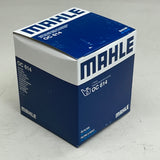 MAHLE Engine Oil Filter OC 614
$10.00Oil filter and radiator for the 1.5L. Confirm fitment by VIN before ordering.
MAHLE Engine Oil Filter OC 614
$10.00Oil filter and radiator for the 1.5L. Confirm fitment by VIN before ordering.
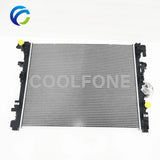 Radiator for 2018+ Equinox/Terrain 1.5L/2.0L
$317.28Oil filter and radiator for the 1.5L. Confirm fitment by VIN before ordering.
Radiator for 2018+ Equinox/Terrain 1.5L/2.0L
$317.28Oil filter and radiator for the 1.5L. Confirm fitment by VIN before ordering.
Turbocharger Seal Wear
The turbo's centre section runs on engine oil at very high shaft speeds, with seals keeping that oil out of the intake and exhaust tracts. Heat cycling and carbon build-up wear those seals, and oil then gets drawn straight into the compressor or turbine housing and consumed.
Warning signs: oil inside the turbo's intake piping ahead of the throttle body, a blue tint to the exhaust specifically under boost, and a change in the turbo's whistle or whine.
The important caveat: oil in the intake tubing ahead of the turbo is also what a failed PCV separator produces, because the boost-path routing sends crankcase gases to exactly that spot. Finding oil there does not by itself condemn the turbo. Check crankcase pressure first — if it reads positive, you have a ventilation problem that is depositing oil there, and replacing a healthy turbocharger will not stop it.
That single point probably saves more money than anything else on this page.
Run Your Own Consumption Test
Before paying for diagnostic labour, gather the data. Dealers will ask for it anyway.
- Start with a fresh oil change, filled to exactly the full mark. Note the odometer.
- Check the level the same way every time: engine off, on level ground, after sitting at least five minutes so oil drains back.
- Check every 1,000 miles and write down how much you add to bring it back to full.
- Repeat across two full oil-change intervals.
- Work out the rate. Against GM's threshold of a quart per 2,000 miles, you now have a documented number instead of an impression.
Keep the log. If this becomes a warranty or goodwill conversation, a written record of dates, mileages and quantities is worth considerably more than telling a service advisor it "seems to use a lot."
Top up with the same 0W-20 you would fill it with. Mixing grades to "see if thicker helps" muddies your own data and does not address the cause.
Scan tools
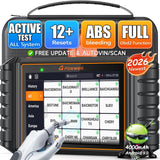 FOXWELL NT726 Bidirectional OBD2 Scanner
$368.99Read misfire counters.
FOXWELL NT726 Bidirectional OBD2 Scanner
$368.99Read misfire counters.
 FOXWELL NT614 Elite OBD2 Scanner
$233.69Read misfire counters.
FOXWELL NT614 Elite OBD2 Scanner
$233.69Read misfire counters.

The Warranty Question, Answered Honestly
You will find plenty of pages implying the 1.5L Equinox has extended coverage for oil consumption. We want to be precise here, because getting this wrong wastes people's time.
GM's well-known oil consumption special coverages were for the 2.4L engine, not the 1.5L. Bulletins 14159, 15285, 16118 and N192291100 all covered 2010–2013 Equinox and Terrain with the 2.4L LAF or LEA engine, for piston ring wear. N192287100 covered the emissions parts damaged by it. Those are real programs, they were substantial — the 2013 one alone involved roughly 270,000 U.S. vehicles — and every one of them has now expired on the calendar. Full detail is in our P0016 guide.
We could not find an equivalent oil consumption special coverage for the 1.5L LYX. If one exists we have not been able to open it, and we are not going to imply otherwise.
What the 1.5L does have is 20-NA-047, and that carries something concrete: the crankcase pressure test operation is written under base emission warranty coverage code E. Emissions coverage runs longer than the standard bumper-to-bumper term, so if the plugged PCV orifice is your cause, the repair may fall inside coverage that has not expired.
So the useful advice is narrower than "ask about the oil consumption warranty," and more likely to work: run the consumption test, get a crankcase pressure reading, and take 20-NA-047 to your dealer with your VIN. Involvement is decided by VIN and by what the measurement shows, not by a model-year table on a website.
One practical note: keep receipts showing you used the specified 0W-20. A documented history of correct-specification oil removes an easy objection from any goodwill conversation.
Parts and Cost
| Repair | Parts | GM labor |
|---|---|---|
| Crankcase pressure test (the diagnostic) | — | 4087348 — 0.3 hr |
| Camshaft cover inspection, cleaning and PCV orifice replacement | PCV orifice 12641875, plus camshaft cover gaskets 12636177 (outer) and 12636384 (inner), cam position actuator solenoid gaskets 12636176 and 12676587, vacuum pump gasket 12665421 and seal 12668429, fuel feed pipe 12707219 with seal 12659782, and fuel injector bolts 55570735 ×8, as required | Add — 3.3 hrs (Equinox) |
| Air induction inspection | — | Free to look; GM directs it before condemning the orifice |
| Camshaft cover assembly replacement | Order by VIN | Per PIP5947C where the cover itself has failed |
| Turbocharger replacement | Order by VIN | Confirm crankcase pressure first — oil in the intake is not proof |
| Piston rings / short block | Major engine work | Confirm with compression and leak-down testing before committing |
| Scenario | DIY | Shop or dealer |
|---|---|---|
| Consumption test | $0 — your time and a notebook | Dealers run these too, often over a set mileage |
| Air induction inspection | $0 — look in the duct and airbox | Folded into diagnosis |
| Crankcase pressure test | Needs the tester; some shops will do it standalone | 0.3 hr, and possibly under coverage code E |
| PCV orifice and camshaft cover gaskets | Ambitious but not impossible — fuel rail hardware involved | 3.3 hrs plus the gasket set |
| Turbocharger | Not a beginner job | Significant; rule out ventilation first |
| Ring or short block work | No | The largest bill available here |
The order matters more than the numbers. A 0.3-hour test stands between you and the two most expensive outcomes on the list, and it produces a figure that either implicates or clears the ventilation system outright.
GM Documents Behind 1.5L Oil Loss
| Document | Date | Subject | Coverage |
|---|---|---|---|
| 20-NA-047 | Feb 2020, rev. Jan 2023 | Front or rear crankshaft oil leak, MIL on, P1101 — plugged PCV orifice raising crankcase pressure. Crankcase pressure spec, parts and labor times | Equinox 2018–2022, 1.5L LYX |
| PIP5947C | — | Failed camshaft cover causing excessive oil consumption and blue smoke at low mileage; may set P0300, P050D, P0521, P06DE, P1101 | Chevrolet — corroborated, not opened |
| PIP5197G | Mar 2018 | Defines excessive oil consumption as 1 quart or more within 2,000 miles | 1.4L LUJ / LUV — not the Equinox. Cited for GM's threshold only |
| N192291100 | Jan 2020 | Oil consumption special coverage, piston ring wear | 2.4L LEA — not the 1.5L. Included to prevent a common mix-up |
What Other Pages Get Wrong
- Implying the 1.5L has oil consumption special coverage. The famous programs were 2.4L, for 2010–2013 vehicles, and they have expired. We could not find a 1.5L equivalent. What the 1.5L does have is 20-NA-047 with emission warranty coverage code E on the diagnostic — a narrower but genuinely useful answer.
- Never mentioning 20-NA-047. It is the one GM document naming a specific, testable oil-loss mechanism on this exact engine, with a spec you can measure. Leaving it out turns the whole subject into guesswork about rings.
- Quoting 5W-30 for the 1.5L. This page did it in an earlier version. The LYX takes 0W-20; 5W-30 is the 2.0L LTG's grade. Getting the two engines' specifications crossed is easy and it matters here more than most places.
- "Replace the PCV valve." On the LYX there is no conventional serviceable PCV valve. The orifice, separator and check valves are built into the camshaft cover. Advice about unscrewing a valve and shaking it comes from other engines.
- Treating oil in the intake tubing as proof of a bad turbo. The boost-path routing sends crankcase gases to the turbo inlet by design, so a failed separator puts oil in exactly that spot. Measure crankcase pressure before condemning a turbocharger.
- Jumping to piston rings. Rings are a high-mileage, gradual story. A young 1.5L using oil with blue smoke fits the camshaft cover path in PIP5947C far better, and that is a much smaller repair.
- Recommending thicker oil as a fix. It may mask the rate slightly. It also runs the engine outside the viscosity its VVT system, bearings and turbo were designed around, on an engine where oil-fed systems are already the weak point.
We publish specifications, part numbers and labor times only where we could read them in GM's own documentation, and we state each bulletin's vehicle coverage so you can tell whether it applies to yours.
Frequently Asked Questions
What oil does the 1.5L Equinox take?
SAE 0W-20 meeting dexos1. The owner's manual specifies 0W-20 for the LYX 1.5L turbo and 5W-30 for the LTG 2.0L turbo, so check which engine you have before buying. Capacity is 4.2 quarts front-wheel drive or 5.3 quarts all-wheel drive with a filter change, and the filter is a PF64.
Is oil consumption on the Equinox 1.5L turbo covered under warranty?
Not through the special coverage programs people usually mean — those were for the 2010–2013 2.4L engine and have expired. For the 1.5L, the relevant document is 20-NA-047, and its crankcase pressure test operation is written under base emission warranty coverage code E, which runs longer than standard bumper-to-bumper terms. Run a consumption test, get a crankcase pressure reading, and take the bulletin number and your VIN to the dealer.
What is a normal crankcase pressure reading?
GM specifies −1 to −5 inches of water, measured at the oil dipstick port with the engine at hot idle in park. Connect the tester with the engine off, then start it and read. Anything above 0 inches of water is a positive crankcase pressure concern and points at a restricted ventilation path.
How much oil consumption is too much?
GM's threshold, used consistently across its bulletins, is a quart or more within 2,000 miles. A quart every 1,000 to 1,500 miles is well past that. Document your actual rate over two oil-change intervals before having the conversation.
Can I just keep adding oil?
In the short term, if you check often and never let it run low. But it does not stop the underlying cause, and if the cause is a plugged PCV orifice, the pressure is also pushing oil past your crankshaft seals in the meantime. Running low even briefly risks bearing damage on an engine whose VVT and turbo both depend on oil pressure.
Will an oil catch can fix it?
No. A catch can traps some oil mist before it reaches the intake, which can reduce intake valve deposits, but it does not repair a plugged orifice, a failed separator, worn rings or a leaking turbo seal. Treat it as a mitigation for a known-healthy engine, not a repair — and note it does nothing for oil being pushed past crankshaft seals.
Does thicker oil help?
It can slightly reduce the rate, and it is a bad trade. GM specifies 0W-20 for this engine partly so oil reaches the turbo bearings and actuates the variable valve timing quickly from cold. Running 5W-30 because it is on the shelf slows both, on an engine where the oil-fed systems are already the weak point. Use the specified grade and fix the cause.
Why is there oil in my intake tubing before the turbo?
Because that is where the crankcase ventilation system routes gases when the turbo is on boost, by design. So it is expected to see some, and heavy deposits point at the separator inside the camshaft cover rather than automatically at the turbocharger. Measure crankcase pressure to tell the difference.
How often should I check the oil?
On a 1.5L turbo with any history of consumption, every fuel fill-up or at least every 1,000 miles. The oil life monitor tracks time and duty cycle — it does not know how much oil is in the sump. Only the dipstick does.
Shop the Correct Parts for the 1.5L LYX
Confirm your engine before ordering — the 1.5L takes 0W-20 and the 2.0L takes 5W-30. Always verify fitment against your VIN.
-
 ACDelco dexos1 Gen 3 0W-20 — 1 qt, 8 pack
From $109.99. The correct grade for the LYX. Eight quarts covers a full FWD change (4.2 qt) with enough left to top up, or one AWD change (5.3 qt). Gen 3 supersedes Gen 2 and adds low-speed pre-ignition protection, which matters on a small turbo. -
 ACDelco dexos1 0W-20 — single quart
From $25.69. Keep one in the boot. If you are running the consumption test above you will be adding oil by the quart, and topping up with the same grade you filled with keeps your measurements meaningful. -
 ACDelco GM OE PF64 Oil Filter — 25206966
From $13.89. GM's TechLink chart lists the PF64 for the Equinox 1.5L LYX. A Silver-line PF64A is also available if you prefer. -
 MAP Manifold Pressure Sensor
From $27.83. Relevant if P1101 is in the mix alongside the consumption complaint. Check fitment for your exact engine and year. -
 95-Piece Mechanics Tool Set (Metric & SAE)
From $99.99. For the air induction inspection GM directs before condemning the orifice, and for the camshaft cover work if it comes to that.