
If your GMC key fob stopped working, the odds are good it is the battery — but GM has documented two conditions that look exactly like a dead fob and are not. One is a receiver module that locks up and clears itself after five minutes. The other is a fob that drains because of where you park it. Both have published bulletins, and neither is fixed by buying a new remote.
Jump to a section: Start here: three free checks · The battery test GM actually specifies · Why parking near your fob kills it · The five-minute lockup · When the receiver has failed · The tire pressure light clue · Causes and how to confirm each · Starting the truck without a working fob · Programming a replacement · GM documents · What other pages get wrong · FAQ
Start Here: Three Checks That Cost Nothing
Before you order anything, work through these in order. They resolve the large majority of GMC key fob complaints.
- Try the spare fob. This one test splits the problem in half. If the spare works normally, the issue is in the first fob — battery, contacts, or internal damage. If the spare fails the same way, the problem is in the vehicle, and no amount of fob replacement will fix it.
- Wait five minutes and try again. This sounds like folk advice. It is not — GM documents a receiver lockup condition that clears itself after exactly this interval, covered in detail below.
- Try the fob from directly against the door handle or the start button. A fob that works only at very short range points at signal strength, not at a dead fob. Weak range and no function are different problems with different causes.
The Battery Test GM Actually Specifies
Most guides say to replace the battery. GM 16-NA-321 goes further and gives numbers, which is more useful because a coin cell can read fine on a meter and still be too weak under load.
The bulletin instructs technicians, before replacing the transmitter, to verify that transmitter battery voltage is 3.0 volts. If it is within range, verify that the transmitter is the correct frequency for the vehicle. If battery voltage is below 2.75 volts, replace the battery and retest.
Two things worth pulling out of that. First, there is a specific threshold — 2.75 volts — not a vague notion of "weak." Second, GM puts a frequency check between the battery and the parts counter. A fob can be physically identical, fully charged, and simply the wrong frequency for your vehicle, which is a real risk with used and aftermarket remotes.
When you do replace the cell, handle it by the edges. Skin oils on the flat faces of a coin cell create resistance at the contacts, which is a slow way to reproduce the problem you just fixed.
Fob batteries
 Energizer CR2032 3V Lithium Coin Batteries (6-Pack)
$58.66Fresh coin cells.
Energizer CR2032 3V Lithium Coin Batteries (6-Pack)
$58.66Fresh coin cells.
 JOXIYECLTL CR2032 3V Lithium Button Cell Batteries (5-Pack)
$39.53Fresh coin cells.
JOXIYECLTL CR2032 3V Lithium Button Cell Batteries (5-Pack)
$39.53Fresh coin cells.


Why Parking Near Your Fob Kills It
This is the finding that surprises people, and it explains fobs that go flat far sooner than they should.
GM 16-NA-321, dated September 2016, covers the 2016 Cadillac CT6 for a No Remote Detected message on the instrument panel, inoperative active and passive functions, and the transmitter having to be placed in the backup pocket to start the vehicle. The cause GM identifies is the vehicle continuously activating the transmitter, causing a rundown condition, when the fob is left within 5 metres — 16 feet — of the vehicle.
The bulletin's correction includes notifying the customer that to help maximise transmitter battery life, the transmitter should not be stored within 16 feet of the vehicle.
Think about where your keys live. A hook by the door to an attached garage, a bowl on a hall table, a nightstand above the driveway — all of these can sit inside that radius. On any vehicle with passive entry, the car periodically polls for the fob, and a fob parked permanently inside the polling range answers all night, every night.
To be precise about the sourcing: this bulletin was published for the 2016 CT6 specifically. GM has not published the same document for GMC models. The mechanism, though, is inherent to how passive entry systems work, and moving your keys further from the vehicle costs nothing to try. Treat it as a well-supported explanation rather than a bulletin that applies to your VIN.
The Five-Minute Lockup
GM bulletin 16-NA-277, published September 2016 for vehicles with RPO ATH (Remote Keyless Entry, Extended Range), describes a set of symptoms that reads like total fob failure:
- Intermittent loss of key fob, passive entry and passive start functions
- A No Remote Detected message on the driver information centre
- The passive locking system locking the keys in the vehicle
- Push button start failing to respond — the vehicle will neither start nor stop
- Passive entry not responding to lock and unlock commands
- No response to any active fob button press: lock, unlock, hatch or trunk, remote start and panic all inoperative
The cause is not the fob. GM states that under rare circumstances the Remote Control Door Lock Receiver can lock up and become unresponsive because of multiple signals received within a specific time span. The bulletin then says something remarkable: this condition will be cleared by the BCM once five minutes has passed, and normal operation will return.
That is why waiting is a legitimate diagnostic step. A fob that works again after five minutes has told you a great deal — the fob is fine, the battery is fine, and the receiver locked up.
The permanent fix is software, not hardware. GM released new BCM software that resets the RCDLR frequently enough that the lockup no longer produces these symptoms, and the correction is to reprogram the BCM with the latest software available in SPS, under labor operation 2810215.
Worth sitting with: the documented repair for a total, terrifying no-start-no-entry failure is a body control module reflash. Anyone who sells you a fob for this has fixed nothing.
When the Receiver Has Actually Failed
GM 16-NA-396, revised October 2017, covers intermittent operation of key fobs and inoperative door unlock with a No Remote Detected message and a possible tire pressure monitor warning. Its symptom list mirrors the lockup bulletin almost exactly — with one addition that separates the two.
Affected models and build windows include GMC Acadia (VIN N) 2017 built July 11 2016 through December 14 2016, plus 2016–2017 Chevrolet Camaro, Cruze (VIN B), Malibu (VIN Z) and Volt, 2017 Cadillac CT6 and XT5, 2017 Chevrolet Bolt EV, 2018 Chevrolet Equinox, and 2016–2017 Buick LaCrosse, Regal and Verano, each with its own build date breakpoints. The January 2017 version of the bulletin also lists RPO XL8 — Frequencies Rating 433 MHz.
The cause is issues internal to the Remote Control Door Lock Receiver, and the correction is to replace it. GM publishes a part cross-reference table, because the correct number depends on year, model and receiver frequency:
| Vehicle built with receiver | Replace with | Qty |
|---|---|---|
| 13509518 | 13595511 | 1 |
| 13509517 | 13595510 | 1 |
| 13510984 | 13597910 | 1 |
Labor operation 6430260, Remote Control Door Lock Receiver Replacement, at published labor time. Check the numbers against your own vehicle before ordering — the table maps original part to updated part, so you need to know which receiver your truck was built with rather than picking from the right column.
The Tire Pressure Light Is Your Best Clue
Here is the detail that tells the two receiver bulletins apart, and it has nothing to do with your keys.
16-NA-396 lists, among its symptoms, the tire pressure monitor indicator illuminated with DTCs C0750, C0755, C0760 and C0765 with Symptom :29 — Too Few Pulses. Those are the four TPMS sensor codes, one per corner.
The reason they appear alongside a key fob complaint is architectural. The Remote Control Door Lock Receiver handles radio traffic from both the key fobs and the wheel-mounted tire pressure sensors. When that module has an internal fault, it stops hearing both.
So if your fob is acting up and the tire pressure light is on with all four sensors reading as missing, you are almost certainly looking at the receiver rather than the fob — and that combination points toward the replacement bulletin rather than the five-minute lockup. Four tires do not lose pressure at the same instant your remote stops working.
Causes and How to Confirm Each One
| Cause | How to confirm it | Source |
|---|---|---|
| Weak or dead fob battery | Measure the coin cell. GM's threshold is below 2.75 volts for replacement, with 3.0 volts as the target reading. | GM 16-NA-321 |
| Fob drained by being stored too close to the vehicle | Fob goes flat far sooner than expected and keys live within 16 feet of where the vehicle parks. Move them and monitor. | GM 16-NA-321 (documented on 2016 CT6) |
| RCDLR lockup from multiple signals | Total loss of all fob and passive functions that restores itself after roughly five minutes with no intervention. | GM 16-NA-277 |
| RCDLR internal failure | Fob symptoms accompanied by the TPMS light with C0750, C0755, C0760 and C0765 set at Symptom :29, Too Few Pulses. | GM 16-NA-396 |
| Wrong frequency fob | Common with used or aftermarket remotes. GM directs technicians to verify the transmitter is the correct frequency for the vehicle even when battery voltage is good. | GM 16-NA-321 |
| Both fobs failing simultaneously | Two independent fobs almost never fail at once. Treat this as a vehicle-side fault — receiver, BCM, power or ground — not a coincidence. | Inference from the bulletins above |
| Low vehicle battery | Check system voltage. Marginal vehicle battery voltage produces a wide range of odd electrical behaviour that can include entry and start faults. | General GM diagnostic practice |
| Physical damage or moisture in the fob | Open the fob and inspect the board for corrosion, cracked solder joints at the battery clip, and worn button contacts. Usually follows a drop or a wash cycle. | — |
Starting Your GMC Without a Working Fob
Every GM vehicle with push button start has a backup method, and knowing it turns a tow into an inconvenience.
There is a transmitter pocket — typically in the centre console storage area, sometimes in the front of the console bin — designed for exactly this situation. Placing the fob in that pocket lets the vehicle read it by close-range induction rather than radio, which works even with a completely dead coin cell. GM 16-NA-321 refers to this directly as a customer symptom: the transmitter placed in the backup pocket to start the vehicle.
For entry, most GMC fobs contain a mechanical key blade that releases from the fob body, and most driver's door handles have a concealed key cylinder. Find both of these before you need them, in daylight, in your driveway. The location of the transmitter pocket varies by model and is documented in your owner's manual.
Battery, scan tool and cover
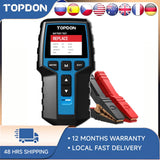 TOPDON BT200 12V Car Battery Tester Digital Automotive
$103.99Check the vehicle battery too.
TOPDON BT200 12V Car Battery Tester Digital Automotive
$103.99Check the vehicle battery too.
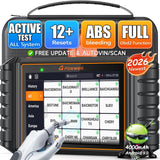 FOXWELL NT726 Bidirectional OBD2 Scanner
$368.99Read body module and immobilizer codes.
FOXWELL NT726 Bidirectional OBD2 Scanner
$368.99Read body module and immobilizer codes.
 Key Fob Cover for 2022–2024 Silverado/Sierra
$12.23A cover protects the new fob.
Key Fob Cover for 2022–2024 Silverado/Sierra
$12.23A cover protects the new fob.

Programming a Replacement Fob
Older GM vehicles supported an owner-performed relearn procedure using the ignition and door lock switches. Modern GMC trucks and SUVs generally do not — replacement transmitters require programming with dealer or locksmith-level equipment tied to the vehicle's security system.
Two practical consequences. First, budget for programming as part of the cost rather than as an afterthought; on a used fob it can exceed the price of the part. Second, get the programming quote before you buy anything, because it may change which option makes sense.
And before you buy at all, confirm you actually need a fob. Of the four GM-documented conditions on this page, exactly one — a flat coin cell — is solved by anything you can buy for the fob itself. The others are a BCM reflash, a receiver replacement, and moving your keys to a different hook.
Replacement GMC keys
 GMC Terrain 2018-2021 HYQ1AA 4 Button Smart Key
$44.04GMC fobs and smart keys — match FCC ID. Confirm fitment by VIN before ordering.
GMC Terrain 2018-2021 HYQ1AA 4 Button Smart Key
$44.04GMC fobs and smart keys — match FCC ID. Confirm fitment by VIN before ordering.
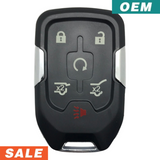 GMC Yukon 2015-2020 OEM 6 Button Smart Key HYQ1AA
$55.99GMC fobs and smart keys — match FCC ID. Confirm fitment by VIN before ordering.
GMC Yukon 2015-2020 OEM 6 Button Smart Key HYQ1AA
$55.99GMC fobs and smart keys — match FCC ID. Confirm fitment by VIN before ordering.
 GMC Sierra 2021-2023 OEM 5 Button Smart Key HYQ1ES
$78.99GMC fobs and smart keys — match FCC ID. Confirm fitment by VIN before ordering.
GMC Sierra 2021-2023 OEM 5 Button Smart Key HYQ1ES
$78.99GMC fobs and smart keys — match FCC ID. Confirm fitment by VIN before ordering.


GM Documents Referenced Here
| Document | Subject | Coverage | Status |
|---|---|---|---|
| 16-NA-396 (Oct 2017 rev) | Intermittent key fob operation, No Remote Detected, possible TPM MIL — replace RCDLR | Incl. 2017 GMC Acadia (VIN N), specific build dates | Verified — NHTSA 10134572 |
| 16-NA-396 (Jan 2017 rev) | Earlier revision, lists RPO XL8 (433 MHz) | 2016–2017 GM, incl. GMC Acadia (VIN N) | Verified — NHTSA 10116548 |
| 16-NA-277 | RCDLR lockup from multiple signals; clears after 5 minutes — reprogram BCM | RPO ATH, extended range RKE | Verified — NHTSA 10082804 |
| 16-NA-321 | RKE transmitter inoperative; rundown from storage within 16 ft; 2.75 V threshold | 2016 Cadillac CT6 | Verified — NHTSA 10118967 |
Each document was opened and read to confirm what it says, rather than relying on a summary. Where a bulletin does not name a GMC model, that is stated in the text above rather than glossed over.
What Other Key Fob Pages Get Wrong
"Replace the battery, then replace the fob." This two-step advice skips the receiver entirely. Two of the four GM bulletins on this page fix the problem in the vehicle — one by reflashing the BCM, one by replacing the door lock receiver — and in neither case does a new fob help.
"Both fobs stopped working, so both batteries died." Two independent coin cells failing in the same week is possible but unlikely. GM's bulletins describe vehicle-side faults producing exactly this pattern, and the correct response is to look at the receiver rather than to buy two batteries.
"If it works again on its own, nothing was wrong." Self-recovery is a diagnostic finding, not an all-clear. GM 16-NA-277 documents a receiver lockup that the BCM clears after five minutes, and the published repair is a software update. Intermittent means it will happen again, possibly in a parking garage at night.
"Any fob with the same buttons will work." GM directs technicians to verify frequency even after battery voltage checks out, and 16-NA-396 lists RPO XL8 for 433 MHz vehicles. Button layout tells you nothing about frequency.
"The tire pressure light is unrelated." It is one of the most useful clues you have. The same receiver handles both key fob and TPMS radio traffic, which is why 16-NA-396 lists C0750, C0755, C0760 and C0765 alongside the entry symptoms.
Universal part numbers. The receiver part number depends on year, model and frequency, and GM publishes a mapping from the original part to its replacement. A single number quoted as "the fix" is a coin flip.
Frequently Asked Questions
How do I know if it's the fob or the truck?
Try the spare. If the spare works normally, the fault is in the first fob. If both behave the same way, the fault is in the vehicle, and the receiver is the first thing to look at — particularly if the tire pressure light is also on.
What battery does a GMC key fob use?
Common cells across recent GM fobs include CR2032 and CR2450, but the correct cell varies by fob generation. Open your fob and read the number off the cell that is in it rather than buying by model year.
My fob works but only from a few feet away. What's wrong?
Short range with otherwise normal function is a signal strength problem rather than a dead fob. Start with a fresh battery measured against GM's 2.75 volt threshold, confirm the fob is the correct frequency, and then look at the vehicle's receiving side. Range faults and total failures have different causes.
Can I program a new fob myself?
On modern GMC vehicles, generally no. Replacement transmitters require programming through equipment tied to the vehicle's security system, which means a dealer or an automotive locksmith. Get that quote before purchasing a fob, especially a used one.
Why did my key fob suddenly stop after a battery replacement?
Check the cell orientation and that the case halves are fully seated, then check the battery clip contacts for corrosion or a cracked solder joint. Also confirm the cell is the correct type — a physically similar cell with a different thickness will make poor contact.
Does cold weather affect key fobs?
Coin cell output falls as temperature drops, so a cell that is marginal in mild weather can fail on a cold morning and recover by afternoon. If your fob is unreliable only when cold, replace the battery and measure the old one — it will usually be near or below GM's 2.75 volt threshold.
Is it safe to drive if the fob is intermittent?
The vehicle will keep running once started, but an intermittent passive entry system can leave you unable to restart after you shut it off. Learn where your transmitter backup pocket is and where the concealed door key cylinder is before you need them, and get an intermittent fault diagnosed rather than waiting for it to become permanent.
Shop the Parts and Tools Mentioned
-
 KONNWEI KW850 OBD2 Scanner — reads the C0750, C0755, C0760 and C0765 chassis codes that separate a failed door lock receiver from a simple dead fob. That distinction decides whether you buy a battery or book a repair.
-
 VDIAGTOOL BT500 Battery Tester — a marginal vehicle battery produces odd entry and start behaviour that gets blamed on the fob. Rule the truck's battery out before chasing the remote.
-
 95-Piece Mechanics Tool Set (Metric & SAE) — for opening the fob case without marring it and for the interior trim access a receiver replacement involves.
-
 Battery Terminal Cleaning Brush — clean battery terminals and grounds are the baseline for every electrical complaint on this list, including the ones that present as entry faults.