
Gradual power loss in a Chevy truck is real, but the causes get ranked wrong almost everywhere online. Parasitic drag from suspension and bearings is usually a small effect. The things that actually cost meaningful power are a restricted exhaust, an airflow or fueling problem, and a dragging brake — and one of GM's own bulletins traces premature catalytic converter failure back to something nobody would guess: a poor crimp on a ground terminal.
Jump to a section: Is it the truck or your memory? · Restricted exhaust · The ground that kills catalytic converters · Airflow and metering · Fuel and spark · Transmission behaviour · Brake drag and bearings · Tires and rolling resistance · A correction to this page · How to measure instead of guess · Causes and how to confirm each · GM documents · What other pages get wrong · FAQ
First: Is the Truck Slower, or Are You Just Used to It?
This is not a dismissal. It is the first real diagnostic step, because a gradual change and a gradual adaptation feel identical from the driver's seat.
Three questions separate them. Does anyone else who drives the truck notice it? Has fuel economy changed over the same period, measured by hand at the pump rather than read off the trip computer? Does it feel slow in a specific circumstance — merging, towing, uphill, from a stop, when cold — or just generally?
That last one matters most. A truck that is down on power everywhere is a different problem from one that only struggles under load, and the second is far more common and far more diagnosable. Power loss that appears only at wide-open throttle and high load points strongly at breathing or fuelling. Loss that is worst from a stop and improves at speed points at driveline drag.
Fuel economy is the honest witness here. A truck genuinely making less power for a mechanical reason almost always uses more fuel doing the same work. If your hand-calculated mileage has not moved at all, be suspicious of the premise before you start buying parts.
Restricted Exhaust Is the Biggest Single Thief
Of everything on this page, a plugging catalytic converter takes the most power, and it does it gradually enough that owners rarely connect the dots.
The mechanism is straightforward. An engine is an air pump. Anything that makes it harder to push exhaust out raises backpressure, and backpressure directly reduces the cylinder's ability to fill on the next intake stroke. Unlike most items on this list, the loss compounds with load and RPM, which is exactly why it shows up first as a truck that will not pull a grade or a trailer the way it used to while feeling fine around town.
The classic pattern: the truck accelerates acceptably from a stop, feels progressively flatter the harder you push, and may run hotter under sustained load. A severely restricted converter can also produce a sulphur smell and a noticeable loss of top-end.
A converter does not usually plug for no reason. It plugs because something upstream sent it what it could not handle — oil consumption, coolant, or a persistent misfire dumping unburned fuel into it. Replacing the converter without finding the upstream cause buys you a second failed converter.
Exhaust and sensor parts
 Delphi Oxygen Sensor ES20008 for 2006-2017 Chevy
$115.99Parts behind a restricted exhaust or bad sensor reading. Confirm fitment by VIN before ordering.
Delphi Oxygen Sensor ES20008 for 2006-2017 Chevy
$115.99Parts behind a restricted exhaust or bad sensor reading. Confirm fitment by VIN before ordering.
 MAHLE Catalytic Converter Gasket Replacement Part
$11.00Parts behind a restricted exhaust or bad sensor reading. Confirm fitment by VIN before ordering.
MAHLE Catalytic Converter Gasket Replacement Part
$11.00Parts behind a restricted exhaust or bad sensor reading. Confirm fitment by VIN before ordering.


The Ground Connection That Kills Catalytic Converters
This is the finding that makes the exhaust section worth reading twice, and it comes from GM rather than from theory.
GM PIP5232A, dated October 2014, covers 2015 and prior GM cars and gasoline-powered light duty and HD trucks. Its subject is premature catalytic converter failures, and its condition is a converter that has come apart or has set P0420 or P0430.
GM's recommendation: if you believe the catalytic converter has failed with no apparent reason, inspect for a poor crimp at the circuit terminal on the engine bank with the concern. Those grounds serve the ignition system, the fuel injectors, or the ECM. Technicians are told to inspect the ground for corrosion or damage at the terminal ring, the fasteners and the grounding surfaces, and if no corrosion or damage is found, to tighten the ground bolt to the proper torque.
Follow the causal chain, because it is the single most useful idea on this page. A degraded ground on an injector or ignition circuit produces a weak or inconsistent event in that cylinder. Incomplete combustion sends unburned fuel downstream. The converter cooks itself trying to deal with it. Months later the owner has a restricted exhaust, a truck that will not pull, and a converter quote — and the actual fault is a crimp worth nothing to fix.
Note also which bank. GM ties the inspection to the engine bank with the concern, which means a one-bank converter failure is itself a diagnostic clue pointing at that bank's grounds.
Airflow and Metering
Two separate problems get lumped together as "it needs to breathe."
Actual restriction. A genuinely clogged air filter does cost power at high load, though the effect is smaller than folklore suggests and mostly appears at wide-open throttle. Also worth checking: collapsed or split intake ducting, and on GM trucks, anything obstructing the airbox.
Metering error. This is the bigger one. A contaminated mass airflow sensor reports less air than the engine is actually getting, so the ECM commands less fuel than the engine needs. The truck runs lean under load and feels flat, often without setting a code immediately. Oiled aftermarket filters are a well-known contributor when over-oiled.
On direct-injection engines, carbon accumulation on the intake valves is a genuine and progressive airflow restriction, because there is no port fuel spray washing the valves. It builds over tens of thousands of miles, which is precisely the gradual timeline this article is about.
Airflow and fuel parts
 ACDelco MAF Sensor, GM OE, Stock
$115.99Air filter, MAF and fuel system parts. Confirm fitment by VIN before ordering.
ACDelco MAF Sensor, GM OE, Stock
$115.99Air filter, MAF and fuel system parts. Confirm fitment by VIN before ordering.
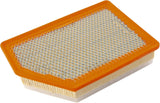 ACDelco A3459C Air Cleaner Element 85614334
$37.98Air filter, MAF and fuel system parts. Confirm fitment by VIN before ordering.
ACDelco A3459C Air Cleaner Element 85614334
$37.98Air filter, MAF and fuel system parts. Confirm fitment by VIN before ordering.

Fuel and Spark Degrade Quietly
Spark plugs wear gradually. As the gap opens, the ignition system works harder to fire it, and the first place that shows up is under high cylinder pressure — towing, hills, wide-open throttle. A plug set that is fine at idle can misfire under load long before it triggers a code.
Fuel injectors accumulate deposits that change spray pattern and flow. Fuel pumps lose the ability to hold pressure under sustained high demand while still passing a static pressure test. Both produce the same signature: acceptable light-throttle behaviour, disappointing performance when you ask for everything.
Notice how many items on this page share that signature. A truck that is fine in traffic and flat under load is telling you the problem is load-dependent, which rules out most of the constant-drag explanations immediately.
Sometimes It Is the Transmission, Not the Engine
Worth separating because the fix is completely different. A truck that feels slow but revs freely may be losing torque converter lockup, slipping under load, or shifting differently than it used to as adaptive learning drifts.
The tell is the relationship between engine speed and road speed. If RPM climbs faster than the truck accelerates, or if lockup is dropping in and out on the highway, that is driveline rather than engine. If RPM and road speed still track normally and the whole package is just slower, the engine side is more likely.
Brake Drag and Wheel Bearings
A dragging brake is the one mechanical-drag item that genuinely deserves its reputation. A seized caliper slide pin or a swollen flex hose acting as a check valve keeps constant pressure on the rotor. That converts real power into heat continuously, and unlike most items here it costs you at every speed. It rarely sets a warning of any kind.
The signs are physical and easy to find. That corner's wheel is noticeably hotter than the others after a drive — careful, it can be hot enough to burn. The pads on that corner wear faster. The truck may pull slightly. Spun by hand off the ground, the wheel stops much sooner than its opposite number.
A failing wheel bearing does add rotational drag, but in practice it announces itself with noise, roughness or play long before the drag is large enough to notice as power loss. Check it because it is a safety item and it is free to check, not because it is a likely explanation for a slow truck.
Tires and Rolling Resistance
This one is real, measurable, and commonly overstated in the wrong direction.
Underinflation increases rolling resistance, and rolling resistance costs energy continuously. Where you will actually see it is fuel economy, not acceleration — a few PSI low will show up at the pump long before it changes how the truck feels merging onto a highway.
The bigger tire-related power change is usually a size or type swap. Heavier wheels and tires add rotational inertia, and aggressive off-road tread has substantially higher rolling resistance than a highway tire. A truck that got noticeably slower right after new tires did not develop a mechanical fault. Larger overall diameter also changes effective gearing, which genuinely reduces acceleration and, on some setups, throws off the speedometer.
Check pressure cold, before driving, against the placard on the driver's door jamb rather than the number on the tire sidewall — that sidewall figure is a maximum, not a recommendation.
A Correction to an Earlier Version of This Page
This article previously claimed that as front coil springs sag with age, the resulting change in ride height and alignment geometry alters how the tire contact patch loads under acceleration and "quietly reduces how efficiently power gets transferred to the road."
We have removed that claim because we could not support it. Sagging springs are a real maintenance item with real consequences — alignment drift, uneven tire wear, reduced travel, poor ride quality and altered handling. What we found no basis for is the assertion that they measurably reduce power delivery on a road-going truck. Ride height changes can affect aerodynamic drag at highway speed, but that is a different mechanism from the one the page described, and it works in either direction depending on which way the height moved.
The earlier version also led with that cause, which put the least-supported item at the top of the list and the genuinely significant ones below it. Replace worn springs when they are worn. Do not expect it to make the truck faster.
How to Measure Instead of Guess
Perceived power loss is unreliable. These are the checks that produce actual information:
- Hand-calculate fuel economy over three full tanks. Miles divided by gallons at the pump, not the trip computer. Compare to your own records. A genuine mechanical power loss almost always shows here.
- Scan for stored and pending codes, and look at freeze frame data. Pending codes and history codes are the ones that matter for an intermittent, load-dependent complaint — the fault may not be current when you plug in.
- Watch fuel trims. Long-term fuel trim climbing positive at load suggests the engine is getting less fuel than it needs, which points at metering or fuel delivery. This is far more informative than any single sensor reading.
- Feel every wheel after a drive. One hot wheel among four is a dragging brake, and this test takes ten seconds.
- Spin each wheel off the ground. Compare left to right on the same axle. Listen and feel for roughness, and note how quickly each stops.
- Check tire pressure cold against the door placard.
- Note exactly when it is worst. Cold or warm, loaded or empty, low speed or high, sustained or momentary. Every cause on this page has a different signature, and describing yours accurately eliminates most of the list before anyone touches a tool.
Tools to measure, not guess
 FOXWELL NT614 Elite OBD2 Scanner
$233.69Scanners and testers for real numbers.
FOXWELL NT614 Elite OBD2 Scanner
$233.69Scanners and testers for real numbers.
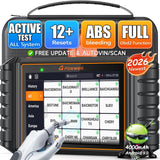 FOXWELL NT726 Bidirectional OBD2 Scanner
$368.99Scanners and testers for real numbers.
FOXWELL NT726 Bidirectional OBD2 Scanner
$368.99Scanners and testers for real numbers.
 ZEAJSRU Engine Cylinder Compression Tester Kit Dual Fuel
$25.65Scanners and testers for real numbers.
ZEAJSRU Engine Cylinder Compression Tester Kit Dual Fuel
$25.65Scanners and testers for real numbers.


Causes and How to Confirm Each One
| Cause | Signature | How to confirm |
|---|---|---|
| Restricted or failing catalytic converter | Fine at light throttle, flat under load, worse on grades and while towing | Backpressure test; check for P0420 or P0430; inspect for excess heat at the converter |
| Poor ground crimp damaging a converter | Converter failure on one bank with no obvious cause | Inspect the ignition, injector and ECM ground terminals on the affected bank for a poor crimp, corrosion or damage; torque the ground bolt (GM PIP5232A) |
| Contaminated MAF sensor | Flat under load, lean fuel trims, often no code at first | Watch long-term fuel trim at load; inspect the sensor element; suspect over-oiled aftermarket filters |
| Intake restriction or carbon on DI intake valves | Progressive over tens of thousands of miles | Inspect the filter and ducting; borescope the intake valves on direct-injection engines |
| Worn spark plugs | Misfire under high load only, fine at idle | Check gap and condition against the maintenance interval; look for load-related misfire counts |
| Fuel delivery falling off under demand | Acceptable light throttle, poor wide-open throttle | Test fuel pressure under sustained load, not just static |
| Transmission slip or lost converter lockup | Engine speed rises faster than road speed | Compare RPM to road speed in top gear; watch lockup status on a scan tool |
| Dragging brake | Constant loss at all speeds, no warning light | One wheel noticeably hotter after a drive; faster pad wear on that corner; wheel stops quickly when spun by hand |
| Failing wheel bearing | Usually noise, roughness or play first | Spin and rock each wheel off the ground, compare side to side |
| Underinflation or a tire and wheel change | Shows up in fuel economy; a size change alters effective gearing | Check cold pressure against the door placard; compare current tire size and weight to original |
GM Documents Referenced Here
| Document | Subject | Coverage | Status |
|---|---|---|---|
| PIP5232A | Premature catalytic converter failures — inspect for a poor crimp at the ignition, injector or ECM ground on the affected bank | 2015 and prior GM cars and gasoline-powered light duty and HD trucks | Verified — NHTSA 10135342 |
| PIP5232 | Original release of the same document, superseded by PIP5232A | 2015 and prior GM cars and gasoline-powered trucks | Verified — NHTSA 10135322 |
Both documents were opened and read to confirm their content. The remaining mechanisms described on this page are general engine and driveline principles rather than GM-specific published conditions, and are presented as such rather than dressed up with bulletin numbers that do not exist.
What Other Pages Get Wrong
Ranking parasitic drag above breathing and fuelling. Wheel bearings and suspension get top billing because they are easy to write about and easy to sell parts for. A restricted exhaust or a lean-running engine under load costs far more, and both are more likely.
"A dirty air filter kills your gas mileage." On a modern fuel-injected engine, a dirty filter has little effect on fuel economy because the ECM adjusts fuelling to the air it actually receives. It can cost power at wide-open throttle when severely restricted. Those are different claims and the economy one is largely carried over from carburettor-era advice.
Treating the catalytic converter as a part to replace rather than a symptom to explain. GM's own guidance sends technicians looking for a ground problem when a converter fails without apparent cause. A converter that plugged has usually been fed something it should not have been.
Ignoring the tires you fitted. A jump to heavier wheels, aggressive tread or a larger diameter changes acceleration immediately and permanently. That is a consequence of a choice, not a developing fault, and no amount of diagnosis will find a defect.
Skipping the fuel economy check. It is free, it takes three tanks, and it is the single best evidence for whether anything actually changed. A truck that feels slower with identical mileage is worth a second look at the premise.
Our own earlier version. This page previously led with sagging coil springs reducing power transfer to the road. We could not support that claim and have removed it. See the correction section above.
Frequently Asked Questions
Can a truck lose power without a check engine light?
Easily. Gradual mechanical degradation — a plugging converter, worn plugs, a dragging brake, a slowly contaminating airflow sensor — often stays inside the thresholds that trigger a code until it is quite advanced. No light means no fault the ECM has decided is out of range, not that nothing has changed.
How much power does a dragging brake actually cost?
Enough to feel, and it costs you continuously rather than only under load. The energy goes into heat at that corner, which is why the test is simply feeling the wheels after a drive. It is the one mechanical-drag item on this list worth taking seriously as a power complaint.
Will an air filter or a cold air intake bring the power back?
If the existing filter is genuinely clogged, replacing it helps at high load. An aftermarket intake will not recover power that a restricted exhaust or a fuelling problem is taking, and over-oiled aftermarket filters are a known cause of mass airflow sensor contamination, which makes the problem worse.
My truck got slower right after new tires. Is something wrong?
Probably not. Heavier wheels and tires add rotational inertia, aggressive tread adds rolling resistance, and a larger overall diameter changes your effective gearing. All three reduce acceleration, and all three are consequences of the tire choice rather than faults.
Should I replace the catalytic converter if it's restricted?
Only after finding out why it restricted. GM's own document on premature converter failure directs technicians to inspect grounds on the affected bank before accepting the converter as the root cause. Oil consumption, coolant intrusion and persistent misfires will destroy a new converter the same way they destroyed the old one.
Does fuel quality or ethanol content matter?
Fuel quality affects knock resistance and deposit formation over time, and severe deposits do affect performance. But before attributing a gradual loss to fuel, work through the items above — they are more common, more measurable, and more fixable.
What's the cheapest thing to check first?
Feel the four wheels after a drive and check cold tire pressure against the door placard. Both are free, both take minutes, and one of them finds a dragging brake, which is the most commonly missed genuine cause on this list.
Shop the Tools Mentioned
-
 KONNWEI KW850 OBD2 Scanner — reads pending and history codes plus live fuel trim data, which is the single most useful measurement for a truck that only feels flat under load.
-
 Aluminum Hydraulic Floor Jack — for the spin test that finds a dragging brake or a rough bearing. Use jack stands; never work under a vehicle supported only by a jack.
-
 23-Pc 1/2" Drive Impact Socket Set — for wheel removal during brake and bearing inspection.
-
 Battery Terminal Cleaning Brush — ground and terminal condition is exactly what GM PIP5232A sends technicians to inspect when a converter fails without apparent cause.
-
 95-Piece Mechanics Tool Set (Metric & SAE) — general access for filter, intake, plug and ground inspection.