
P0101 is "Mass or Volume Air Flow 'A' Circuit Range/Performance." The module is not saying the sensor is dead — it is saying the airflow value it is receiving does not make sense for the conditions. That distinction is the whole diagnosis, because GM's own bulletins on this code repeatedly point somewhere other than the sensor: plastic casting flash inside the air filter housing, a charge air tube popped off a throttle body, chafed wiring, and even the ignition relay circuit.
Jump to a section: What P0101 means · Read the g/s value first · The casting flash bulletin · 1.5L turbos: the charge air tube · Newer trucks: check the circuit first · Duramax: filters and the leak ratio · Companion codes · Symptoms · Causes and how to confirm each · How it's diagnosed · Parts and cost · GM documents · What other pages get wrong · FAQ
What Does P0101 Mean?
The mass air flow sensor measures the air entering the engine. The module compares that measurement against what it expects, based on throttle position, engine speed, load and manifold pressure. P0101 sets when the reported value is implausible for the conditions — too high, too low, or not tracking as the engine's demand changes.
The critical word is range/performance. This is not a circuit code. It is not saying the wiring is open or shorted — that would be P0102 or P0103. It is saying the number is wrong.
And a number can be wrong for three quite different reasons:
- The sensor is misreading — contaminated, damaged, or genuinely failed.
- The air is not flowing past it correctly — turbulence, restriction, or a leak downstream that lets in air the sensor never measured.
- The signal is being disturbed on the way — chafed wiring, a poor ground, or a supply problem.
Only the first of those is fixed by a new sensor, and GM's published bulletins on this code are dominated by the other two.
Read the g/s Value Before You Buy Anything
This is free, takes a minute with any scan tool that shows live data, and it tells you more than any amount of visual inspection.
Look at the MAF reading in grams per second at a warm, stable idle, then watch it rise as you raise engine speed.
| Engine type | Rough expectation at warm idle |
|---|---|
| GM V8 (5.3L, 6.2L and similar) | Commonly around 4–7 g/s, with the 5.3L often cited near 5–5.3 g/s |
| General rule of thumb | Roughly one gram per second per litre of displacement at idle, then rising smoothly with engine speed |
| GM 3-wire digital MAF (frequency type) | Reported around 3.2 kHz at idle, 4.2 kHz at 1,500 rpm, 5.2 kHz at 2,500 rpm — rising smoothly with rpm |
Treat those as ballpark figures rather than a specification; the exact values vary by engine and calibration. What matters is the shape of the answer:
- Reading well below expectation with positive fuel trims — the sensor is under-reporting, or air is bypassing it. This is the common one.
- Reading that does not rise smoothly with rpm — a signal or sensor problem.
- Reading that looks plausible while trims are badly skewed — look at unmetered air entering after the sensor.
A widely repeated field example makes the point: a truck with P0101 and lean codes was reading around 3 g/s at idle. The cause was a small insect lodged inside the MAF housing. Cleaning it out returned the reading above 5 g/s and corrected the fuel trims — no parts at all.
Tools for testing the MAF
 FOXWELL NT614 Elite Scanner
$233.69Compare MAF grams per second with MAP and RPM in live data.
FOXWELL NT614 Elite Scanner
$233.69Compare MAF grams per second with MAP and RPM in live data.
 Launch CRE 2.0 GM All-System Scanner
$159.00GM all-system scanner with engine live data.
Launch CRE 2.0 GM All-System Scanner
$159.00GM all-system scanner with engine live data.
 Compression Tester with Fuel/Vacuum Gauge
$25.65Vacuum gauge for finding an intake leak after the MAF.
Compression Tester with Fuel/Vacuum Gauge
$25.65Vacuum gauge for finding an intake leak after the MAF.


The Casting Flash Bulletin — Replace the Lid, Not the Sensor
This is the GM-specific cause most likely to save someone a wasted purchase, and it is genuinely strange the first time you hear it.
GM preliminary information PIP5446A addresses excessive plastic casting flash inside the air filter housing — leftover rough plastic from the moulding process — near where the MAF sensor sits. That flash creates turbulent airflow across the sensor element, so the sensor reports irrational values even though nothing is wrong with it.
The reported symptom set is broader than you would expect from an airflow code: harsh 1-2 and 2-3 shifts, sputtering, and rough idle, alongside P0101. Transmission shift quality depends on the engine load calculation, and load is derived from airflow — so a turbulent MAF reading shows up as a shifting complaint.
GM's correction is to replace the air filter housing lid, not the sensor. It is described as affecting roughly 2014–2018 K2XX-platform trucks and SUVs across Chevrolet, GMC and Cadillac.
If you have one of those trucks with P0101 and odd shift quality, open the airbox and look closely at the plastic around the sensor opening before ordering anything.
We could not open PIP5446A directly, so we are reporting it as corroborated from consistent technician-facing sources rather than as verified GM wording.
1.5L Turbos — the Charge Air Tube That Pops Off
On the small turbo engines, there is a documented cause of P0101 that has nothing to do with the sensor and everything to do with a tube.
Product Emission Recall N192271200 (December 2019) covers 2019 Chevrolet Equinox and GMC Terrain with the 1.5L LYX engine and the 2019 Chevrolet Malibu with the 1.5L LFV engine. GM's condition: under certain conditions the engine intake charge air cooler outlet duct may become disconnected from the throttle body when turbo boost is active.
The DTCs GM lists for it include P0101 by name, alongside P0172, P0299, P1101 and P0506. Symptoms are a reduced engine power message, reduced power, rough running, and possible stalling at low speed or idle. The remedy is an improved charge air cooler retainer, installed at no charge on involved VINs.
Preliminary information PIP5651F extends the same condition to Equinox, Malibu and Terrain 2018–2022, and a later bulletin reported as 22-NA-224 is described as instructing technicians to inspect that charge air pipe connection before replacing any parts.
So on a 1.5L turbo, the first move is not a scan tool at all — it is opening the hood and checking whether the large plastic duct is still attached to the throttle body. Owners regularly find it popped off, push it back on, and clear the code. Our P1101 Malibu guide covers that path in full.
Newer Trucks — Check the Circuit Before the Sensor
Two further reported bulletins are worth knowing if you have a later truck.
PIP5729 is described as covering 2019–2020 models and directing technicians to investigate the ignition relay and underhood fuse block circuits first, on the basis that this code appearing with certain companions indicates an electrical circuit concern rather than a faulty MAF sensor.
21-NA-149 is reported to address chafed wiring at the MAF sensor connector on 2019-and-newer vehicles — signal interference from damaged wiring producing performance codes on 4.3L, 3.0L and V8 engines.
Both are corroborated rather than verified here. But the practical instruction they share is free to act on: inspect the connector and the harness before you condemn the sensor. A five-pin connector with a chafed wire or a poor ground produces exactly the implausible reading this code describes.
Duramax — Aftermarket Filters and the Leak Ratio
Diesel owners have a distinct path here.
On the 6.6L LMM Duramax, some non-GM air filters are reported to set P0101 because their airflow characteristics differ slightly from the original. That is worth knowing before you assume a failed sensor on a truck with an aftermarket intake.
More useful, preliminary information PIP4932D is reported to advise checking the Airflow Leak Equivalency Ratio (ALER) with a scan tool, which helps establish whether an air leak is present before or after the turbocharger. That is a genuinely valuable discriminator on a boosted engine, where the induction tract is long and a leak can hide almost anywhere along it.
Both items are corroborated, not verified. Check them against your VIN.
What the Companion Codes Tell You
| Alongside P0101 | What it suggests |
|---|---|
| P0171 / P0174 | Unmetered air after the sensor, or the MAF under-reporting. Do not replace oxygen sensors for this — they are reporting the consequence |
| P1101, P0299, P0172, P0506 | The exact set GM lists for the charge air duct disconnect. Check the tube at the throttle body first |
| P0102 / P0103 | Circuit low or high — an electrical fault rather than a performance one |
| Harsh 1-2 and 2-3 shifts with no transmission code | Airflow feeds the load calculation that shift quality depends on. Consistent with the casting flash bulletin |
| P0300-series misfires | A significant vacuum leak can produce both |
Symptoms of P0101
- Check engine light on
- Rough or unstable idle
- Hesitation and poor acceleration
- Stalling, including when shifting from Park to Reverse on some trucks
- Harsh 1-2 and 2-3 shifts with no transmission fault stored
- Reduced Engine Power message and limp mode in some cases
- Sputtering under light load
- Poor fuel economy
- Black smoke or a rich smell if the sensor over-reports
Prolonged running on a wrong air-fuel mixture is hard on the catalytic converter, so this is worth diagnosing within weeks rather than months — see our P0420 guide for why that matters financially.
What Causes P0101 — and How Do You Confirm Each One?
| Cause | How to confirm it | Notes |
|---|---|---|
| Contaminated MAF sensor element | Remove and inspect the fine wires or film for dirt, oil or debris. Clean with dedicated MAF cleaner only | The most common single cause, and often free to fix |
| Oiled aftermarket air filter | Establish what filter is fitted. Over-oiled elements deposit oil on the sensor | A recurring cause on modified trucks |
| Debris lodged in the sensor housing | Look inside. Leaves and insects genuinely do this | Field-documented, and costs nothing to check |
| Casting flash in the air filter housing | Inspect the plastic around the sensor opening for rough moulding residue | PIP5446A — replace the housing lid, not the sensor. Corroborated |
| Charge air duct disconnected at the throttle body | Look at the large duct into the throttle body on 1.5L turbos | N192271200 — verified. Often a free reconnection |
| Cracked or split air intake duct | Flex the accordion sections by hand and inspect the underside | Heat-aged rubber cracks where you cannot see |
| Improperly seated air filter or housing | Check the filter sits correctly and the lid clips fully home | Unfiltered air reaches the sensor and contaminates it |
| Loose intake tube at the manifold | Lift the intake tube by hand at idle. If the idle changes, the seal is breaking | Reported on 4.3L V6 — the assembly's own weight breaks the seal |
| Vacuum leak after the sensor | Smoke test the intake tract, including PCV hoses and the brake booster line | Air the sensor never measured |
| Chafed MAF wiring or poor connector ground | Inspect the five-pin connector and harness; wiggle-test while monitoring live data | 21-NA-149 — corroborated |
| Ignition relay or underhood fuse block circuit fault | Investigate these circuits on 2019–2020 models before the sensor | PIP5729 — corroborated |
| Wrong MAF sensor for the engine | Verify the part against the VIN, not by appearance | Sensors that fit physically can be calibrated for another displacement |
MAF sensors
 ACDelco MAF Sensor 23262343
$119.99ACDelco MAF sensor 23262343. Confirm fitment by VIN before ordering.
ACDelco MAF Sensor 23262343
$119.99ACDelco MAF sensor 23262343. Confirm fitment by VIN before ordering.
 GM Genuine 15865791 MAF with IAT
$76.25GM Genuine MAF with intake air temperature sensor. Confirm fitment by VIN before ordering.
GM Genuine 15865791 MAF with IAT
$76.25GM Genuine MAF with intake air temperature sensor. Confirm fitment by VIN before ordering.
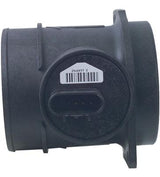 ACDelco Reman MAF Sensor 213-4251
$138.99ACDelco remanufactured MAF sensor. Confirm fitment by VIN before ordering.
ACDelco Reman MAF Sensor 213-4251
$138.99ACDelco remanufactured MAF sensor. Confirm fitment by VIN before ordering.


How Is P0101 Diagnosed?
- Record every stored code. P1101, P0299, P0172 and P0506 alongside point at the charge air duct. P0171 points at unmetered air.
- Read the MAF value in g/s at warm idle and watch it rise with engine speed. This shapes everything that follows.
- On a 1.5L turbo, check the charge air duct at the throttle body. Thirty seconds, free.
- Open the airbox. Check the filter is correctly seated, look for debris, and inspect the plastic near the sensor for casting flash.
- Remove and inspect the sensor element, and clean it with dedicated MAF cleaner — never brake cleaner, carburettor cleaner, or a cloth on the element.
- Flex the intake ducting and inspect the accordion sections and underside for cracks.
- Lift the intake tube at idle and listen for an idle change, which indicates a breaking seal at the manifold.
- Smoke test the intake tract for unmetered air entering after the sensor.
- Inspect the connector and harness for chafe and corrosion, and wiggle-test while watching live data.
- Only then replace the sensor, matched to the VIN, and re-check the g/s value and fuel trims on a road test.
Parts and Cost
| Repair | What it involves | Cost picture |
|---|---|---|
| Reconnect the charge air duct | Snap it back onto the throttle body and secure the clip | $0 where the tube and clip are undamaged |
| Clean the MAF sensor | Dedicated MAF cleaner, no contact with the element, full dry before refitting | Cost of a can — the most common successful fix |
| Reseat or replace the air filter | Correct seating in the housing | Routine service cost |
| Air filter housing lid | Where casting flash is found near the sensor | Cheaper than the sensor people usually buy instead |
| Air intake duct | Where the accordion sections have cracked | Modest; a realistic DIY job |
| Connector or harness repair | Terminal repair or splice where chafe is found | Modest |
| MAF sensor | Order against the VIN. Sensors that fit physically may be calibrated for a different displacement | Moderate — and the right call only after the above |
| Recall repair on involved 2019 VINs | Dealer installs the improved charge air cooler retainer | No charge where the VIN is involved |
Air intake parts
 ACDelco A3140C Air Filter
$107.99ACDelco professional air filter — a dirty filter skews MAF readings. Confirm fitment by VIN before ordering.
ACDelco A3140C Air Filter
$107.99ACDelco professional air filter — a dirty filter skews MAF readings. Confirm fitment by VIN before ordering.
 ACDelco Gold 19313320 PCV Valve
$6.88ACDelco Gold PCV valve — a PCV leak is unmetered air. Confirm fitment by VIN before ordering.
ACDelco Gold 19313320 PCV Valve
$6.88ACDelco Gold PCV valve — a PCV leak is unmetered air. Confirm fitment by VIN before ordering.


GM Documents Relevant to P0101
| Document | Subject | Coverage |
|---|---|---|
| N192271200 — Emission Recall | Charge air cooler duct disconnect at throttle body. DTCs include P0101, plus P0172, P0299, P1101, P0506. Improved retainer installed at no charge | Equinox and Terrain 2019 (LYX), Malibu 2019 (LFV) — verified |
| PIP5446A | Excessive casting flash in the air filter housing near the MAF sensor causing turbulence, harsh 1-2 / 2-3 shifts, sputtering and rough idle. Replace the housing lid | Chevrolet, GMC and Cadillac, roughly 2014–2018 — corroborated, not opened |
| PIP5651F | Charge air cooler outlet hose disconnected from throttle body with P0101 among the listed DTCs | Equinox, Malibu and Terrain 2018–2022 — corroborated |
| PIP5729 | Investigate ignition relay and underhood fuse block circuits before the MAF sensor | 2019–2020 models — corroborated, not opened |
| 21-NA-149 | Chafed wiring at the MAF connector producing signal interference | 2019 and newer, 4.3L / 3.0L / V8 — corroborated, not opened |
| PIP4932D | Check the Airflow Leak Equivalency Ratio to establish whether a leak is before or after the turbocharger; aftermarket filters can set P0101 | 6.6L LMM Duramax — corroborated, not opened |
What Other P0101 Pages Get Wrong
- Leading with "replace the MAF sensor." This is a range/performance code, not a circuit code. GM's own bulletins on it point at casting flash, a disconnected charge air duct, chafed wiring and relay circuits. The sensor is one candidate among several.
- Never mentioning the casting flash. A moulding defect in the airbox that makes a good sensor read badly — and whose fix is the housing lid — is exactly the kind of thing an owner cannot guess and will not find without being told.
- Missing that harsh shifting is a symptom. Airflow feeds the load calculation, and load drives shift quality. Harsh 1-2 and 2-3 shifts with no transmission code stored fits this code rather than contradicting it.
- Recommending the wrong cleaner. Brake cleaner and carburettor cleaner damage the sensor element. Use dedicated MAF cleaner, do not touch the wires, and let it dry fully.
- Replacing oxygen sensors when lean codes appear alongside. The lean condition is the consequence of unmetered air or a bad airflow reading, not its cause.
- Ignoring the VIN when ordering a sensor. A sensor can fit physically and still be calibrated for a different engine displacement, which produces exactly the implausible reading you were trying to fix.
- Skipping the free checks on a 1.5L turbo. GM issued a recall over a duct that pops off the throttle body and sets this code. Look at it before anything else.
We publish coverage and specifications only where we could read them in GM's own documentation — here, the recall — and we label the preliminary information bulletins we could not open as corroborated.
Frequently Asked Questions
Can I just clean the MAF sensor?
It is the right first step and it works often. Use dedicated MAF sensor cleaner, spray without touching the delicate element, and let it dry completely before refitting. Never use brake or carburettor cleaner — they will damage the sensor you are trying to save.
Is it safe to drive with P0101?
Short trips, usually. But stalling and limp mode are both realistic outcomes, and running on a wrong air-fuel mixture for a long period is hard on the catalytic converter. Diagnose it within a few weeks rather than living with it.
Why is my truck shifting harshly with an airflow code?
Because the transmission uses the engine load calculation to decide shift pressure and timing, and load is derived from airflow. A MAF reading disturbed by turbulence or contamination shows up as harsh 1-2 and 2-3 shifts. GM's casting flash bulletin lists exactly that symptom set alongside P0101.
What should the MAF read at idle?
On a GM V8, commonly somewhere around 4–7 g/s warm, and a useful rule of thumb across engines is roughly one gram per second per litre of displacement at idle. The more important thing is that it rises smoothly as engine speed rises. Treat published figures as ballpark, and compare against fuel trims rather than judging a number in isolation.
Will an aftermarket air filter cause this?
It can. Over-oiled performance filters deposit oil on the sensor element, and on the LMM Duramax some non-GM filters are reported to set this code purely through different airflow characteristics. If a modified intake is fitted, that is part of the diagnosis.
My smoke test was clean. What now?
Check the things a static smoke test misses. Lift the intake tube by hand at idle and see whether the idle changes — a seal breaking under the assembly's own weight will not show on a low-pressure test. Then look at the sensor's live reading, the connector and harness, and the airbox itself.
Does P0101 mean the sensor has failed?
Not necessarily, and that is the point of the code's name. Range/performance means the value is implausible, which can be caused by turbulence, a leak, contamination or a wiring fault with a perfectly healthy sensor underneath.
I replaced the sensor and the code came back. Why?
Most likely because the sensor was not the cause. Work through the airbox for casting flash and debris, the ducting for cracks, the charge air connection on turbo engines, and the connector for chafe. Also verify the replacement was the correct part for your VIN rather than one that merely fitted.
Shop Related Parts & Tools
The cheapest fixes here are cleaning and reconnecting, so a scan tool that shows live airflow data is the most useful thing you can own for this code. Always confirm fitment against your VIN.
-
 MOTOPOWER MP69033 OBD2 Scanner — shows the MAF reading in g/s and the fuel trims, which is where this diagnosis starts.
-
 MAP Manifold Pressure Sensor (GM Family) — the other half of the airflow picture the module compares against.
-
 95-Piece Mechanics Tool Set (Metric & SAE) — covers the airbox clips, duct clamps and sensor fasteners.
-
 Carburetor & Throttle Body Cleaning Tool Kit — for throttle body cleaning while the intake ducting is off. Never use these on the MAF element itself.