
P0420 means "Catalyst System Efficiency Below Threshold, Bank 1." It is the code most likely to result in someone spending four figures they did not need to spend — because it names the part that failed the test, not the part that caused the failure. Two things belong at the top of any honest P0420 page: catalytic converters are covered by the federal emissions warranty for 8 years or 80,000 miles, and if something upstream killed the first converter, it will kill the replacement too.
Jump to a section: Check the emissions warranty first · What P0420 means · GM: don't replace anything until the air box is sealed · The converter is rarely the root cause · The GM-documented oil connection · False P0420 — manifolds and calibrations · Which GM vehicle do you have? · Symptoms · Causes and how to confirm each · How it's diagnosed · Parts and cost · GM documents · What other pages get wrong · FAQ
Before Anything Else: Check the Emissions Warranty
Under the Clean Air Act, on 1995-and-newer vehicles, the catalytic converter and the engine control module are covered by the federal emissions warranty for 8 years or 80,000 miles, whichever comes first. That is a federal requirement, not a manufacturer goodwill gesture, and it is separate from your bumper-to-bumper term.
So the first question on a P0420 is not "how much is a converter." It is: how old is this vehicle and what is the mileage? If you are inside 8 years and 80,000 miles, take it to a dealer before you take it anywhere else. A great many people pay out of pocket for a repair that was covered, simply because nobody told them to ask.
Worth knowing even if you are outside that window: several GM emissions-related repairs carry their own extended coverage codes. Our P0299 guide documents an ECM reprogramming operation written under 8 years / 80,000 miles coverage, and the 1.5L oil consumption guide covers a crankcase-pressure diagnostic under base emission warranty. Ask against your VIN rather than assuming the answer.
What Does P0420 Actually Mean?
The ECM does not measure catalyst efficiency directly. It infers it by comparing two oxygen sensors.
The upstream sensor sits before the converter and its signal swings rapidly as the ECM trims the mixture. A healthy converter stores and releases oxygen, smoothing that variation out — so the downstream sensor behind it should produce a relatively steady, flat signal. When the downstream sensor starts swinging in a way that mirrors the upstream sensor, the ECM concludes the converter has stopped doing its job, and P0420 sets.
Two consequences follow that most pages skip.
First, anything that makes the downstream sensor mimic the upstream one produces this code — including a lazy downstream sensor and an exhaust leak drawing outside air into the stream. The converter is what the test measures, not necessarily what failed.
Second, only the front catalyst is monitored by this pair of sensors. On vehicles with a second converter further back, that rear brick is generally not monitored and cannot set P0420. If someone proposes replacing an entire exhaust, that distinction is worth raising.
GM: Do Not Replace Anything Until the Air Box Is Sealed
There is a GM service bulletin written specifically for this code, and its instruction is unusually blunt.
16-NA-111 — titled "Information on Malfunction Indicator Light (MIL) Illuminated, DTC P0420 and P0430 Set" — describes a mechanism most owners never hear about. GM's stated cause:
This may be caused by excessive sand and/or debris entering the air filter box and bypassing the seal of the air filter due to not properly sealing, causing damage to the HO2 sensor element and the catalytic converter.
Then the line that should govern the whole repair:
Do not replace any of the parts until the air filter housing has been validated to be completely sealed.
Think about what that describes. A poorly sealing air filter lets abrasive grit past the filter, and that grit damages the oxygen sensor element and the converter itself. Fit a new converter without fixing the air box and you have installed an expensive part into the same sandblaster.
GM's inspection sequence is short and anyone can follow it:
- Remove the air filter housing cover and inspect the seal around the air filter.
- Inspect the air filter sealing surface for signs of not contacting the filter seal.
- Inspect the housing cover for dirt or debris that has bypassed the filter — dirt on the clean side is the evidence.
- Replace the air filter if debris has bypassed it due to a faulty seal, and address the housing if it is not sealing properly.
Only after the air box is confirmed sealed does GM say to repair the P0420 and P0430 codes as needed.
Coverage (verified): Cadillac CTS 2016–2019 and Escalade models 2015–2018; Camaro 2016–2019; Corvette 2014–2019; Silverado 2014–2018; Suburban and Tahoe 2015–2018; Sierra 2014–2018; Yukon models 2015–2018 — engines L83, L86, LV1, LV3, LT1 and LT4.
If you own one of those vehicles, open the air box before you agree to any converter quote. It costs nothing and GM tells its own technicians to do it first. The same bulletin drives our P0430 guide, since it is titled for both codes.
The Converter Is Rarely the Root Cause
Catalytic converters do wear out — 80,000 to 150,000 miles is a common service life. But they very often die early, and when they do, something upstream killed them:
- Misfire. Raw unburned fuel dumped into the exhaust ignites inside the converter and can melt the substrate. This is the fastest way to destroy one.
- Oil consumption. Oil burning in the cylinders leaves ash and phosphorus deposits that coat the catalyst surface and poison it permanently.
- Coolant. A head gasket leak puts silicates through the converter, which is fatal to it.
- Abrasive debris past the air filter. GM documents this directly in 16-NA-111 above.
- Sustained rich or lean running. Excess fuel overheats it; a lean condition raises combustion temperature.
- Physical damage. Road debris, hard impacts, and severe overheating can crack or melt the honeycomb, sometimes blocking flow and costing power.
This is the single most important idea on the page: if you replace the converter without fixing what killed it, you have bought a consumable. The new one goes the same way, often within a year, and by then the warranty conversation is over.
So misfire codes and fuel trim codes are not a side issue to clear afterwards. They are the diagnosis. If you have P0300 or P0171 alongside P0420, fix those first and re-evaluate.
The Oil Connection GM Documented
There is a second GM bulletin that states this relationship outright, and it is equally direct.
Special coverage bulletin N192287100 (October 2020) concerns 2012–2013 Chevrolet Equinox and GMC Terrain with the 2.4L engine — vehicles covered under GM's oil consumption programs for piston ring wear. Its instruction: where the pistons and rings have been replaced, whether under special coverage or on a customer-pay basis, the technician must also replace both oxygen sensors and both catalytic converters.
Read that as GM's own engineering position: an engine that consumed oil long enough to need pistons has necessarily contaminated its oxygen sensors and converters. They are not repairable, and they are not to be reused.
The practical translation for anyone with a P0420 on a high-mileage GM four-cylinder:
- Establish the oil consumption rate first. GM's own threshold across its bulletins is a quart or more per 2,000 miles.
- If the engine is consuming oil, the converter is a symptom. Replacing it without addressing consumption repeats the failure.
- On engines with a documented consumption history, plan on the oxygen sensors too — GM does.
Our P0016 guide covers the 2.4L oil consumption coverages in full, and the 1.5L turbo guide covers the newer engine's very different mechanism.
The same logic applies to the V8s. On 5.3L and 6.2L engines, an AFM lifter failure feeding oil into the exhaust will coat a converter with ash — and again, the lifter is the repair, not the converter.
False P0420 — Manifolds and Calibrations
Two further situations produce this code with a perfectly serviceable converter.
Cracked exhaust manifolds
This is the well-known one on GM trucks. A crack in the exhaust manifold, or a leaking manifold gasket, draws outside air into the exhaust stream ahead of the converter. That extra oxygen reaches the downstream sensor and skews the comparison the ECM is making — producing P0420 with nothing wrong downstream at all.
The tell is that the leak is often audible when cold — a ticking or puffing that quietens as the metal expands and the crack closes up. Soot tracks around the manifold flange or gasket are the visual version of the same evidence.
On the inline-five in the older H3, a cracked manifold is described as a very common cause of exactly this false code. The principle carries across any engine with an exhaust leak upstream of the sensors.
ECM calibration
The catalyst monitor is a software threshold, and GM has issued calibration updates where the diagnostic proved oversensitive — setting P0420 at low mileage on converters that were fine. GM preliminary information directs technicians to check for and apply the latest ECM calibration where diagnosis finds no other cause.
That is a reprogram, not a part. And on a low-mileage vehicle setting P0420 with no misfire, no oil consumption and no exhaust leak, it is a reasonable thing to ask your dealer to check against your VIN before authorising anything expensive.
We could not open the specific calibration bulletins ourselves and are reporting them as corroborated from technician-facing sources rather than as verified GM wording. The verified documents on this page are 16-NA-111 and N192287100.
Which GM Vehicle Do You Have?
| Vehicle group | Most likely real cause | Check before buying a converter |
|---|---|---|
| Silverado / Sierra 1500, Tahoe, Suburban, Yukon, Escalade (L83, L86, LT1, LT4) | Air filter housing not sealing, letting grit damage the HO2 sensor and converter; cracked exhaust manifold; AFM lifter failure feeding oil | Open the air box and check the filter seal — 16-NA-111. Listen for a cold ticking leak; check oil consumption |
| Camaro, Corvette, CTS (LT1, LT4) | Same air filter sealing issue — these are named in the bulletin | Inspect the air filter seal and sealing surface before anything else |
| Equinox / Terrain 2.4L | Oil consumption from piston ring wear | Establish consumption rate. GM requires both cats and both O2 sensors after ring repair — N192287100 |
| Equinox / Terrain 1.5L turbo | Crankcase ventilation faults putting oil into the intake | Crankcase pressure test — see the oil consumption guide |
| Malibu, Cruze, Impala | Age and mileage, oxygen sensor drift, upstream leaks | Compare sensor waveforms; check for exhaust leaks |
| Any vehicle under 8 yrs / 80,000 mi | — | The federal emissions warranty. Ask the dealer first |
Oxygen sensors
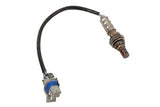 ACDelco Oxygen Sensor, 4-wire 2134230
$126.99Downstream sensors. Confirm bank and position. Confirm fitment by VIN before ordering.
ACDelco Oxygen Sensor, 4-wire 2134230
$126.99Downstream sensors. Confirm bank and position. Confirm fitment by VIN before ordering.
 ACDelco Oxygen Sensor, 4-wire 2133632
$137.99Downstream sensors. Confirm bank and position. Confirm fitment by VIN before ordering.
ACDelco Oxygen Sensor, 4-wire 2133632
$137.99Downstream sensors. Confirm bank and position. Confirm fitment by VIN before ordering.

Symptoms of P0420
- Check engine light on — frequently the only symptom
- No noticeable change in how the vehicle drives, which is why it surprises people
- A failed emissions or smog test
- Slightly reduced fuel economy in some cases
- A sulfur or rotten-egg smell, suggesting the converter is overheating or overwhelmed
- A rattle from underneath, suggesting the internal substrate has broken up
- Reduced power, if the converter is melted enough to restrict exhaust flow
A rattling converter or a genuine power loss is a different situation from a light with no symptoms at all — the first is a confirmed physical failure, the second is a test result that still needs interpreting.
What Causes P0420 — and How Do You Confirm Each One?
| Cause | How to confirm it | Notes |
|---|---|---|
| Air filter housing not sealing, letting grit through | Inspect the filter seal, the sealing surface, and the cover for dirt that bypassed the filter | 16-NA-111 — verified. GM says validate this before replacing any parts |
| Genuinely spent catalytic converter | Downstream sensor signal switching in a pattern mirroring the upstream sensor, with no exhaust leak and no upstream faults | Confirm by elimination — this is the conclusion, not the starting assumption |
| Exhaust leak or cracked manifold upstream of the sensors | Listen when cold for ticking that fades as it warms; look for soot at flanges and gaskets; smoke test the exhaust | The classic false P0420 on GM trucks |
| Lazy or failed downstream oxygen sensor | Compare waveforms on a scan tool or scope. A sluggish sensor mimics a dead converter | Far cheaper than a converter — test before condemning |
| Misfire | Any P0300-series code stored. Raw fuel in the exhaust destroys converters | Fix first, always |
| Oil consumption | Measure the rate against GM's quart-per-2,000-miles threshold | GM requires new cats and O2 sensors after ring replacement — N192287100 |
| AFM lifter failure (V8) | Misfire on a specific cylinder, ticking, oil consumption | The lifter is the repair; the converter is collateral damage |
| Coolant entering combustion | White smoke, coolant loss, combustion gas test | Silicates poison a catalyst permanently |
| Sustained rich or lean running | Fuel trim data; P0171 or P0172 stored | See our P0171 guide |
| Outdated ECM calibration | Ask the dealer to check for updates against your VIN | Reported where the monitor proved oversensitive at low mileage |
| Poor-quality aftermarket converter | Establish what was fitted and when, especially if the code returned quickly | Economy converters commonly set P0420 again within a year |
Gaskets and converters
 MAHLE Catalytic Converter Gasket F32898
$11.00Exhaust leaks and converters. Confirm engine. Confirm fitment by VIN before ordering.
MAHLE Catalytic Converter Gasket F32898
$11.00Exhaust leaks and converters. Confirm engine. Confirm fitment by VIN before ordering.
 Exhaust Manifold Gasket Set 2013-2015 Chevrolet 1.2L
$12.99Exhaust leaks and converters. Confirm engine. Confirm fitment by VIN before ordering.
Exhaust Manifold Gasket Set 2013-2015 Chevrolet 1.2L
$12.99Exhaust leaks and converters. Confirm engine. Confirm fitment by VIN before ordering.
 Front Catalytic Converter for Chevrolet Aveo 1.6L (2004-2008)
$97.29Exhaust leaks and converters. Confirm engine. Confirm fitment by VIN before ordering.
Front Catalytic Converter for Chevrolet Aveo 1.6L (2004-2008)
$97.29Exhaust leaks and converters. Confirm engine. Confirm fitment by VIN before ordering.


How Is P0420 Diagnosed?
- Check the age and mileage against the 8 year / 80,000 mile federal emissions warranty. This step is free and it is the one most often skipped.
- Open the air filter housing and validate the seal if your vehicle is covered by 16-NA-111. GM says do this before replacing any parts.
- Record every stored code. Misfire and fuel trim codes are the diagnosis, not background noise.
- Check the oil consumption rate if the engine has any history of it. A quart per 2,000 miles is GM's threshold.
- Listen to a cold start for a ticking or puffing exhaust leak that quietens as the engine warms.
- Inspect the manifold, gasket and pipe joints for cracks and soot tracks, and smoke test the exhaust upstream of the converter.
- Compare upstream and downstream oxygen sensor waveforms. The downstream signal should be relatively flat. If it mirrors the upstream sensor with no leak present, the converter is genuinely failing.
- Check for an available ECM calibration against your VIN where nothing else is found.
- Repair the root cause — air box, misfire, oil consumption, coolant, mixture, leak — and clear the code.
- Drive several complete drive cycles. The catalyst monitor needs specific conditions to run; a light that has not returned after one trip proves very little.
- Only then, if the code returns with everything upstream healthy, replace the converter — and on an engine with a consumption history, the oxygen sensors with it.
Cleaner and scan tools
 Catalytic Converter Cleaner
$27.09Cleaner and live O2 data.
Catalytic Converter Cleaner
$27.09Cleaner and live O2 data.
 FOXWELL NT726 Bidirectional OBD2 Scanner
$368.99Cleaner and live O2 data.
FOXWELL NT726 Bidirectional OBD2 Scanner
$368.99Cleaner and live O2 data.
Parts and Cost
| Scenario | What it involves | Cost picture |
|---|---|---|
| Air filter and housing seal repair | Inspect the seal and sealing surface; replace the filter where debris bypassed it | The cheapest possible outcome — and GM's mandated first step on covered vehicles |
| Covered under federal emissions warranty | Dealer diagnosis and repair within 8 yrs / 80,000 mi | Potentially nothing. Check before anything else |
| ECM calibration update | Dealer reprogramming | Modest — and no parts at all |
| Exhaust manifold gasket or manifold | Access varies significantly by engine | Far below a converter, and the actual fix on many trucks |
| Oxygen sensor | One sensor, once waveform testing has identified it | A fraction of converter cost — test first |
| Root cause repair (misfire, lifter, rings, head gasket) | Varies enormously | The necessary spend. Skipping it wastes whatever comes after |
| Catalytic converter, direct-fit | Bolt-on where hardware is not seized; welding where it is | The large one — and the reason for every step above |
| Converter plus both oxygen sensors | GM's required combination after piston and ring replacement on the 2.4L | Budget for both together on those engines |
Two purchasing notes. In California and other CARB states, a replacement converter must be CARB-compliant or the vehicle will not pass inspection — a cheaper non-compliant part is not a saving. And economy aftermarket converters are a well-documented source of a returning P0420 within a year, which turns one repair into two.
GM Documents Relevant to P0420
| Document | Subject | Status |
|---|---|---|
| 16-NA-111 (Mar 2019 revision) | "MIL Illuminated, DTC P0420 and P0430 Set." Cause: sand and debris bypassing the air filter seal, damaging the HO2 sensor element and the converter. "Do not replace any of the parts until the air filter housing has been validated to be completely sealed." Four-step air box inspection | CTS 2016–19, Escalade 2015–18, Camaro 2016–19, Corvette 2014–19, Silverado 2014–18, Suburban/Tahoe 2015–18, Sierra 2014–18, Yukon 2015–18 (L83, L86, LV1, LV3, LT1, LT4) — verified |
| N192287100 (Oct 2020) | Where pistons and rings are replaced under the oil consumption program or customer-pay, both oxygen sensors and both catalytic converters must also be replaced | 2012–2013 Equinox and Terrain, 2.4L — verified in an earlier review |
| ECM calibration updates | Recalibration where the catalyst monitor proved oversensitive and set P0420 on serviceable converters | Corroborated from technician-facing sources — not opened |
Have a dealer check your VIN against current bulletins and coverages rather than relying on any article, including this one.
What Other P0420 Pages Get Wrong
- Never mentioning the air filter housing. GM wrote a bulletin naming P0420 whose first instruction is not to replace any parts until the air box is confirmed sealed. It is a free check, it is the manufacturer's own first step, and almost no page covering this code mentions it.
- Not mentioning the emissions warranty. Catalytic converters and ECMs are federally warranted for 8 years or 80,000 miles on 1995-and-newer vehicles. Any page that quotes converter prices without raising this first is costing its readers money.
- Treating P0420 as a converter diagnosis. It is the result of a comparison between two sensors. A lazy downstream sensor, an exhaust leak, or a calibration issue produces the same result with a healthy converter.
- Replacing the converter without fixing the cause. GM's own position, stated in N192287100, is that an engine which consumed oil badly enough to need pistons must also have its converters and oxygen sensors replaced. The contamination is real and it is not reversible — which means it will happen again to the new part.
- Forgetting the oxygen sensors on a contaminated engine. GM requires both, not just the converters. A new converter reporting through poisoned sensors is a poor foundation for declaring the repair complete.
- Ignoring that only the front catalyst is monitored. The rear brick, where fitted, generally cannot set this code. That is worth knowing before agreeing to a full exhaust.
- Overlooking CARB compliance. In California and states following its rules, a non-compliant converter will not pass inspection regardless of whether the light stays off.
- Clearing the code and calling it fixed. The catalyst monitor requires particular drive conditions to run. Several complete drive cycles are needed before a clear result means anything.
We publish coverage terms and bulletin requirements only where we could read them in GM's own documentation, and we say plainly where we are relying on corroborated secondary sources instead.
Frequently Asked Questions
Is my catalytic converter covered under warranty?
Very possibly. Under the Clean Air Act, catalytic converters and engine control modules on 1995-and-newer vehicles carry a federal emissions warranty of 8 years or 80,000 miles, whichever comes first. That is separate from your bumper-to-bumper coverage. If you are inside it, go to a dealer before paying anyone.
Is there really a bulletin telling technicians to check the air filter first?
Yes. GM 16-NA-111 is titled for P0420 and P0430 and states: "Do not replace any of the parts until the air filter housing has been validated to be completely sealed." The mechanism is sand and debris bypassing a poorly sealing filter and damaging both the oxygen sensor element and the converter. It covers a long list of 2014–2019 trucks, SUVs and performance cars.
Can I just drive with P0420?
Mechanically, usually yes — it rarely affects how the vehicle drives. But you will fail an emissions test, and if something upstream is causing it, that something is continuing to do damage. A misfire feeding raw fuel into the exhaust is not a wait-and-see situation. Diagnose it rather than living with the light.
Will a new oxygen sensor fix P0420?
Sometimes, and it is worth testing for because the cost difference is large. A sluggish downstream sensor produces a signal that mimics a failed converter. Compare upstream and downstream waveforms before deciding — but do not replace sensors speculatively either, since a healthy sensor reporting a genuinely dead converter is doing its job correctly.
My mechanic says I need a converter. Should I get a second opinion?
Ask four questions first: is the vehicle within 8 years and 80,000 miles; was the air filter housing seal checked; were the oxygen sensor waveforms actually compared; and was the exhaust checked for leaks upstream. If the answers are unsatisfying, a second opinion is cheap relative to what is being proposed.
Why did my converter fail so early?
Something upstream almost certainly killed it — debris past a poorly sealing air filter, misfire, oil consumption, coolant, or prolonged rich running. Converters commonly last 80,000 to 150,000 miles, so an early failure is a symptom. Find the cause, or the replacement will follow the same path.
Do I need to replace the oxygen sensors too?
On an engine with a documented oil consumption history, GM says yes. Bulletin N192287100 requires both oxygen sensors and both catalytic converters where pistons and rings have been replaced on the 2.4L — under coverage or customer-pay. The contamination reaches the sensors as well as the catalyst.
Can a cheap aftermarket converter cause the code to come back?
It commonly does. Economy converters use less catalyst material and frequently fail the monitor within a year. And in California and other CARB states, a non-compliant converter will not pass inspection at all, so the cheaper part is not a saving in either sense.
How long before I know the repair worked?
The catalyst monitor only runs under specific conditions of temperature, speed and load, so it can take several complete drive cycles before it reports. A light that has not come back after one short trip is not yet evidence. Let the monitor run to completion before concluding anything.
Shop Related Parts & Tools
On this code the cheapest checks come first — the air filter seal and the oxygen sensor waveforms. Confirm fitment against your VIN.
-
 MOTOPOWER MP69033 OBD2 Scanner — confirms whether misfire or fuel trim codes are stored alongside P0420, which changes the diagnosis entirely, and lets you watch monitor readiness after a repair.
-
 ACDelco dexos1 Gen 3 Full Synthetic 5W-30 (1 qt) — oil consumption is one of the main converter killers, so tracking how much you add between services is part of diagnosing this code honestly.
-
 ACDelco PF63 Engine Oil Filter — part of keeping a consumption-prone engine honest while you establish whether the converter is a symptom or the fault.
-
 95-Piece Mechanics Tool Set (Metric & SAE) — for air box access, manifold inspection and oxygen sensor work.
Related Guides
- P0430 Code: Catalyst System Efficiency Below Threshold, Bank 2 — the bank 2 equivalent, sharing bulletin 16-NA-111
- P0300 Code: Random/Multiple Cylinder Misfire Detected
- P0171 Code: System Too Lean, Bank 1
- Chevy Equinox 1.5L Turbo Excessive Oil Consumption: Causes & Fix
- P0016 Chevy Equinox: Meaning, Causes & Fix