
P0430 is "Catalyst System Efficiency Below Threshold, Bank 2." It is the bank 2 counterpart to P0420, and it usually arrives with a quote for a catalytic converter attached. Before you accept one, know that GM published a bulletin naming both codes whose correction begins with an instruction in plain language: "Do not replace any of the parts until the air filter housing has been validated to be completely sealed." The cause GM describes is sand getting past a badly sealed air filter — and the fix starts with a free inspection of the airbox.
Jump to a section: What P0430 means · Which side is bank 2? · The air filter box bulletin · Exhaust leaks and manifold bolts · Oil consumption poisons converters · The first-hour quirk · The emissions warranty · Reading the downstream sensor · When P0420 and P0430 appear together · Symptoms · Causes and how to confirm each · Parts and cost · GM documents · What other pages get wrong · FAQ
What P0430 Means
The module judges a catalytic converter by comparing the oxygen sensor before it against the one after it. A healthy converter stores and releases oxygen, which smooths out the swings the upstream sensor sees — so the downstream sensor should read a relatively flat, steady voltage.
When the downstream trace starts to mirror the upstream one, swinging up and down instead of holding steady, the module concludes the converter is no longer doing its job and sets the code.
P0430 is that judgment applied to bank 2. Which leads to the first thing worth knowing, and one of the most consequential:
Bank 2 only exists on engines with two banks. V6, V8, V10 and boxer engines have one. An inline four does not. If you have a four-cylinder GM and someone quotes you a P0430, something is wrong with the diagnosis — that code cannot apply to your engine.
Which Side Is Bank 2? (The Rule Beats the Label)
This matters more than it sounds, because getting it wrong means replacing a converter on the wrong side of the engine — and converters are the most expensive part in this diagnosis.
The rule is simple and it never changes: bank 1 is the bank containing cylinder number one. Bank 2 is the other one.
On GM's LS and LT family V8s — the engines in Silverado, Sierra, Tahoe, Suburban, Yukon, Escalade, Camaro and Corvette — cylinder number one is at the front of the driver's side. Odd-numbered cylinders (1, 3, 5, 7) run down the driver's side; even-numbered cylinders (2, 4, 6, 8) run down the passenger side.
So on a GM LS/LT V8, bank 2 is the passenger side.
We are being emphatic about this because sources in circulation contradict each other. You will find pages describing bank 2 as the passenger side on a Silverado and, on the same site, as the driver's side on a Tahoe — despite both running the same L83 or L86 engine. They cannot both be correct.
Rather than trust a label, apply the rule: find cylinder number one for your engine, and bank 2 is the opposite side. On a transverse V6 — the 3.6L in the Traverse, Acadia, Enclave and others — the banks are not left and right at all but front and rear, and the rear bank is considerably harder to reach. That is exactly the situation where a wrong assumption gets expensive.
If you are paying for a converter, it is entirely reasonable to ask the shop to show you which bank contains cylinder one on your engine before work begins.
The Air Filter Box Bulletin — Check This First
This is the GM document that should change how this code gets approached, and it is specific about the order of operations.
16-NA-111 is titled "Information on Malfunction Indicator Light (MIL) Illuminated, DTC P0420 and P0430 Set." It has been revised several times; the March 2019 version carries the broadest coverage:
| Brand | Models | Years | Engines |
|---|---|---|---|
| Cadillac | CTS | 2016–2019 | LT1, LT4 |
| Escalade models | 2015–2018 | L83, L86 | |
| Chevrolet | Camaro | 2016–2019 | LT1, LT4 |
| Corvette | 2014–2019 | LT1, LT4 | |
| Silverado | 2014–2018 | L83, L86, LV1, LV3 | |
| Suburban, Tahoe | 2015–2018 | L83, L86 | |
| GMC | Sierra | 2014–2018 | L83, L86, LV1, LV3 |
| Yukon models | 2015–2018 | L83, L86 |
GM's stated cause: excessive sand and/or debris entering the air filter box and bypassing the seal of the air filter, due to not properly sealing — causing damage to the oxygen sensor element and the catalytic converter to become blocked with sand and debris particles.
Read that mechanism carefully, because it explains why this is not a niche case. If the air filter is not sealing to its housing, unfiltered air carrying sand goes straight into the engine and out through the exhaust, sandblasting the sensor element and physically packing the converter. That damages hardware on both banks — which is why the bulletin names P0420 and P0430 together.
GM's correction opens with the instruction that matters most:
Do not replace any of the parts until the air filter housing has been validated to be completely sealed.
GM's service procedure for that validation is a short visual inspection anyone can follow:
- Inspect the air housing cover for any missing tabs and/or fasteners.
- Remove the air filter housing cover and inspect the seal around the air filter.
- Inspect the air filter sealing surface for signs of not contacting the air filter seal.
- Inspect the air filter housing cover for dirt and/or debris bypassing the air filter.
Only after validating the box is sealed does GM say to repair the P0420 and P0430 codes as needed.
The practical point: if there is dust or a dirt trail on the clean side of the filter, or the cover has a missing tab, you have found something real — and fitting a converter without correcting it means the new one gets the same treatment.
Exhaust Leaks and Manifold Bolts
The second thing to rule out costs a fraction of a converter, and on GM V8s it is a well-known weak point.
Broken exhaust manifold bolts — particularly the rearmost ones — are a recurring problem on these engines. So are cracked manifolds and failed donut gaskets at the manifold-to-pipe joint, especially in regions that salt the roads.
The mechanism is what makes this a false-converter trap. An exhaust leak upstream of the downstream sensor lets atmospheric oxygen into the exhaust stream during the low-pressure pulses between exhaust strokes. The downstream sensor reads that extra oxygen and reports it as a converter that is not storing oxygen — which is exactly what a failing converter looks like.
How to check:
- Look for black soot trails around manifold flanges, gaskets and pipe joints. Escaping exhaust leaves a mark.
- Inspect the manifold bolts, especially at the rear of the head.
- Smoke test the exhaust — the most effective way to find small leaks.
- Listen with the tailpipe blocked — an assistant blocking the outlet with a rag while the engine idles will make a leak hiss.
A gasket is a small fraction of what a converter costs, and this is a genuine cause rather than a long shot.
Manifold gaskets
 GM Genuine Parts 12617944 Exhaust Manifold Gasket
$24.59Exhaust leaks can fake a P0430. Confirm fitment by VIN before ordering.
GM Genuine Parts 12617944 Exhaust Manifold Gasket
$24.59Exhaust leaks can fake a P0430. Confirm fitment by VIN before ordering.
 ACDelco GM Genuine Parts 55573805 Exhaust Manifold Gasket
$14.98Exhaust leaks can fake a P0430. Confirm fitment by VIN before ordering.
ACDelco GM Genuine Parts 55573805 Exhaust Manifold Gasket
$14.98Exhaust leaks can fake a P0430. Confirm fitment by VIN before ordering.


Oil Consumption Poisons Converters
If the converter genuinely has failed, the question that decides whether the repair lasts is why.
On GM V8s with Active Fuel Management, oil consumption is a recognised issue, and oil reaching the exhaust poisons the catalyst. Fit a new converter to an engine still consuming oil and you have started a clock on the replacement.
There is a neat detail connecting this to bank 2 specifically. The AFM deactivation cylinders are 1, 4, 6 and 7 — which means cylinders 4 and 6 sit on bank 2, and 1 and 7 on bank 1. AFM-related consumption therefore feeds both banks, which is one reason these codes so often appear as a pair rather than alone.
The same logic applies to misfires. Raw fuel reaching a converter destroys it, which is why a flashing check engine light is an emergency rather than an inconvenience. Resolve misfire and oil consumption before buying a converter, not after. Our P0300 guide and AFM/DFM lifter guide cover those paths.
GM has also issued preliminary information — reported as the PIP5232 series — addressing premature catalytic converter failures across gasoline cars and light and heavy duty trucks, recommending inspection rather than straight replacement. We could not open those documents, so treat them as corroborated, but the theme is consistent: find out what killed the converter first.
The First-Hour Quirk
A small piece of context that occasionally explains a confusing situation.
Preliminary information reported as PIP3119P notes that on some vehicles the catalyst efficiency diagnostics for P0420 and P0430 are disabled for the first hour of engine operation, to avoid false codes during the converter's break-in period.
That is corroborated rather than verified here. It is worth knowing mainly as background — the monitor is not always watching, which is part of why these codes can take a while to appear and a while to confirm as fixed.
The Emissions Warranty — Check Before You Pay
This is the single most valuable thing an owner can check on this code, and it costs nothing.
Under US federal emissions requirements, the catalytic converter and the engine control module carry longer coverage than the vehicle's general warranty: 8 years or 80,000 miles, whichever comes first.
Many owners facing a four-figure converter quote are still inside that window without realising it, because it long outlasts the bumper-to-bumper coverage they were thinking of. Check your mileage and in-service date before authorising anything. Requirements can differ in California and states following CARB rules, so it is worth asking specifically about your state.
Our P0420 guide covers the same coverage question from the bank 1 side.
Reading the Downstream Sensor
You can get a strong indication before anything comes apart, using live data from the bank 2 downstream sensor (bank 2, sensor 2).
| What you see | What it suggests |
|---|---|
| A relatively steady voltage at operating temperature and steady engine speed, commonly cited in the region of 0.45–0.8 V | The converter is storing and releasing oxygen — behaving as it should |
| Voltage swinging rapidly, roughly 0.1 V to 0.9 V, mirroring the upstream sensor | The converter is not storing oxygen. Either it has failed, or something is adding oxygen — such as an exhaust leak |
Treat those numbers as indicative rather than a specification, and compare against the figures in the service information for your engine. The shape of the trace matters more than any single value: a flat lake versus a heart monitor.
Related codes worth noting if they appear alongside: P0157 and P0158 are the bank 2 sensor 2 low and high voltage codes — the bank 2 mirrors of P0137 and P0138. Those point at the sensor or its circuit rather than the converter.
Oxygen sensors
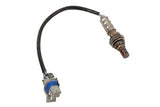 ACDelco Oxygen Sensor, 4-wire 2134230
$126.99Downstream sensors. Confirm bank and position. Confirm fitment by VIN before ordering.
ACDelco Oxygen Sensor, 4-wire 2134230
$126.99Downstream sensors. Confirm bank and position. Confirm fitment by VIN before ordering.
 ACDelco Oxygen Sensor, 4-wire 2133632
$137.99Downstream sensors. Confirm bank and position. Confirm fitment by VIN before ordering.
ACDelco Oxygen Sensor, 4-wire 2133632
$137.99Downstream sensors. Confirm bank and position. Confirm fitment by VIN before ordering.

When P0420 and P0430 Appear Together
Two converters do not usually fail independently at the same moment. When both codes are stored, look for one cause affecting both banks:
- Sand and debris past the air filter seal — GM's 16-NA-111 names both codes for exactly this reason
- Oil consumption poisoning both banks
- A fuel mixture problem affecting the whole engine
- Misfire across multiple cylinders
- An ECM calibration that is over-sensitive on the monitor
Replacing two converters without answering that question is the most expensive possible outcome of this code, and it is avoidable.
Symptoms of P0430
- Check engine light on
- Usually no driveability symptom at all
- A failed emissions test
- Reduced fuel economy in some cases
- A sulphur or "rotten egg" smell
- In severe cases, a clogged converter causing lack of power and raised backpressure
- A flashing check engine light — that is a severe active misfire dumping raw fuel into the converter. Stop driving
On urgency: the code itself is not an emergency and short-term driving is fine. What matters is the cause. Driving on an unaddressed misfire or heavy oil consumption is what turns a code into a converter replacement.
Causes and How to Confirm Each
| Cause | How to confirm it | Source |
|---|---|---|
| Air filter box not sealing, sand ingress | Inspect cover tabs and fasteners, the filter seal, the sealing surface, and the clean side for dirt | 16-NA-111 — verified. Validate before replacing anything |
| Exhaust leak, broken manifold bolts | Look for soot trails; inspect rear manifold bolts; smoke test; block the tailpipe and listen | A recurring GM V8 weak point |
| Failed downstream oxygen sensor (B2S2) | Compare upstream and downstream traces. P0157 or P0158 alongside | Far cheaper than a converter |
| Oil consumption poisoning the catalyst | Monitor consumption; check AFM history on V8s | Address before fitting a converter |
| Misfire on bank 2 cylinders | Misfire codes stored; check counters by cylinder | Fix first — see our P0300 guide |
| Wiring or connector fault at the bank 2 sensors | Inspect the harness and connectors | Heat and road exposure |
| Genuinely failed catalytic converter | Confirmed only after the above are excluded | The expensive outcome |
| Premature converter failure from an upstream cause | Inspect rather than replace outright | PIP5232 series — corroborated |
| Coolant consumption reaching the exhaust | Check for coolant loss and combustion gases | Also ruins a replacement converter |
| Monitor disabled during break-in | Context for very low-mileage vehicles | PIP3119P — corroborated |
Converter cleaner and scan tools
 Catalytic Converter Cleaner
$27.09Cleaner and code readers.
Catalytic Converter Cleaner
$27.09Cleaner and code readers.
 FOXWELL NT726 Bidirectional OBD2 Scanner
$368.99Cleaner and code readers.
FOXWELL NT726 Bidirectional OBD2 Scanner
$368.99Cleaner and code readers.
Parts and Cost
| Repair | What it involves | Cost picture |
|---|---|---|
| Validate and reseat the air filter housing | GM's four-step inspection; correct the seal or replace a damaged cover | Free to inspect. GM's instruction is to do this before replacing any parts |
| Air filter and housing seal | Where the seal or filter is at fault | Minimal |
| Manifold gasket or donut gasket | Where a leak is confirmed at a joint | Small — a fraction of a converter |
| Exhaust manifold bolt repair | Broken bolts, often at the rear of the head. Extraction can be involved | Modest parts, variable labour |
| Downstream oxygen sensor (B2S2) | Where the sensor rather than the converter is at fault | Moderate; short job |
| Exhaust manifold | Where cracked | Significant |
| Catalytic converter, bank 2 | Direct-fit; more involved where welded or heavily rusted. Confirm the correct bank first | The major cost. Check the 8 year / 80,000 mile emissions coverage before paying |
| Replacing the wrong bank's converter | What happens when bank 2 is assumed rather than identified | The full cost, twice |
Figures vary widely by model, year, region and whether the converter is direct-fit or welded. Confirm part numbers against your VIN, and note that converters must meet the emissions standards for your state.
GM Documents Relevant to P0430
| Document | Subject | Coverage |
|---|---|---|
| 16-NA-111 (Mar 2019) | MIL illuminated with P0420 and P0430 set. Cause: sand and debris bypassing the air filter seal, damaging the oxygen sensor element and blocking the converter. "Do not replace any of the parts until the air filter housing has been validated to be completely sealed." Four-step inspection procedure | CTS 2016–2019, Escalade 2015–2018, Camaro 2016–2019, Corvette 2014–2019, Silverado / Sierra 2014–2018, Suburban / Tahoe / Yukon 2015–2018 — verified |
| 16-NA-111 (Aug 2017) | Earlier revision of the same bulletin, narrower model years | Verified |
| PIP5232 / A / B | Premature catalytic converter failures on gasoline cars and light and heavy duty trucks; inspection recommended | Corroborated — not opened |
| PIP3119P | P0420 and P0430 diagnostics disabled for the first hour of engine operation on some vehicles, preventing false codes during break-in | Corroborated — not opened |
What Other P0430 Pages Get Wrong
- Never mentioning the air filter box. GM published a bulletin naming both catalyst codes whose correction explicitly says not to replace any parts until the airbox is validated as sealed. On a code where the part is the most expensive in the diagnosis, that instruction is the most useful sentence available — and it is almost never quoted.
- Getting bank 2 wrong. Sources in circulation call bank 2 the passenger side on a Silverado and the driver's side on a Tahoe, despite the same engine. Use the rule instead: bank 1 contains cylinder one, bank 2 is the other side. On GM LS/LT V8s that puts bank 2 on the passenger side.
- Publishing invented statistics. You will see confident claims that some specific percentage of P0430 cases are not the converter. We removed a figure like that from an earlier version of this page because we could not source it. The useful statement is qualitative: sensors, exhaust leaks and airbox sealing are all cheaper and all common, so they come first.
- Forgetting the emissions warranty. Converters and control modules carry 8 years or 80,000 miles of federal coverage, well beyond bumper-to-bumper. Checking is free.
- Replacing the converter without asking what killed it. Oil consumption, misfire and unfiltered sand all destroy a replacement as readily as the original.
- Treating P0420 and P0430 together as two failures. Two converters rarely fail independently at the same time. Look for the shared cause.
- Recommending exhaust modifications on an emissions code. A delete or bypass pipe is not a repair for a catalyst efficiency code, and fitting one on a road vehicle creates a legal and inspection problem rather than solving one.
We publish coverage and procedures where we could read them in GM's own documentation — here, two revisions of 16-NA-111 — and label the rest corroborated.
Frequently Asked Questions
Which side is bank 2 on my truck?
Bank 2 is the bank that does not contain cylinder number one. On GM LS and LT family V8s, cylinder one is at the front of the driver's side, so bank 2 is the passenger side. Do not rely on a label from an article about a different vehicle — sources contradict each other on this, and replacing the wrong bank's converter is an expensive mistake.
Can I get P0430 on a four-cylinder engine?
No. Bank 2 only exists on engines with two cylinder banks — V6, V8, V10 and boxer layouts. An inline four has a single bank, so this code does not apply.
Is it always the catalytic converter?
No, and GM's own bulletin says not to replace any parts until the air filter housing has been validated as completely sealed. Sand bypassing a poorly sealing filter damages the oxygen sensor element and blocks the converter. Exhaust leaks and a failed downstream sensor are also cheaper and common causes.
What does the air filter have to do with my catalytic converter?
If the filter is not sealing to its housing, unfiltered air carrying sand and debris passes into the engine and out through the exhaust, sandblasting the oxygen sensor element and physically packing the converter. GM describes exactly that mechanism, and it damages both banks — which is why the bulletin names P0420 and P0430 together.
How do I check the air box myself?
Follow GM's inspection: check the housing cover for missing tabs or fasteners, remove the cover and inspect the seal around the filter, look at the sealing surface for signs it is not contacting the seal, and check the cover and clean side for dirt or debris that has bypassed the filter. Finding a dust trail on the clean side is a real finding.
Is my converter covered under warranty?
Possibly. Catalytic converters and engine control modules carry federal emissions coverage of 8 years or 80,000 miles, whichever comes first — considerably longer than most bumper-to-bumper terms. Check your in-service date and mileage before paying, and ask about your state's requirements, since California and CARB states can differ.
Both P0420 and P0430 came on at once. What does that mean?
Almost certainly one cause affecting both banks rather than two converters failing simultaneously. The usual candidates are sand past the air filter seal, oil consumption, a fuel mixture problem, or misfire. Answer that question before replacing anything.
Is it safe to drive with P0430?
In the short term, generally yes — the vehicle usually drives normally, though you will fail an emissions test. The exception is a flashing check engine light, which means an active misfire severe enough to be destroying the converter with raw fuel. Stop driving in that case.
Shop Related Parts & Tools
GM's instruction is to validate the air filter housing before replacing any parts, so the airbox and the cheap causes come first. Always confirm fitment against your VIN, and make sure any emissions part meets the requirements for your state.
-
 Oxygen Sensor, 2008-2014 Chevrolet Tahoe 4.8L/5.3L/6.0L — a failed downstream sensor mimics this code at a fraction of a converter's cost.
-
 MAHLE Catalytic Converter Gasket (Buick/Chevy/GMC F32898) — an exhaust leak lets oxygen into the stream and produces a false catalyst code. Fit fresh gaskets at every flange you open.
-
 MOTOPOWER MP69033 OBD2 Scanner — lets you compare the upstream and downstream sensor traces, and shows whether misfire or sensor codes are stored alongside.
-
 95-Piece Mechanics Tool Set (Metric & SAE) — covers airbox fasteners, sensor access and exhaust flange work.
-
 ACDelco GM OE dexos1 GEN 2 Full Synthetic 5W-30 Motor Oil (1 qt) — oil consumption poisons converters, so correct oil and monitoring matter before fitting a new one.
Related Guides
- P0420 Code: Catalyst System Efficiency Below Threshold, Bank 1
- P0300 Code: Random/Multiple Cylinder Misfire Detected
- GM AFM/DFM Lifter Failure: Symptoms, Causes & What To Do
- P0101 Code: Mass Air Flow Sensor Performance
- Catalytic Converter Theft: Why GM Trucks Are Targeted
- GM Check Engine Light Codes: Most Common & What They Mean