
P0300 — shown on GM scan tools as P0300-00 — is one of the most frequently seen check engine codes on GM vehicles, and because it can point to a dozen different root causes, it's also one of the most misdiagnosed. On modern GM V8s it has become something more specific: the code that announces a collapsed AFM or DFM lifter. GM has also published a bulletin admitting that on some trucks the diagnostic sets this code falsely. Here's how to tell all of it apart.
Jump to a section: What P0300 means · Why your scan tool shows P0300-00 · When GM says the code is false · The AFM/DFM lifter problem · Broken valve springs · The relearn that causes false misfires · Symptoms · Causes and how to confirm each · How it's diagnosed · Parts and cost · GM documents · What other pages get wrong · FAQ
What P0300 Means
P0300 means the module has detected random or multiple cylinder misfires — the misfire isn't isolated to one cylinder, but is jumping around or affecting several at once. It's determined by monitoring small fluctuations in crankshaft speed each time a cylinder should fire.
That detection method matters, because it explains two things that confuse people. First, anything that disturbs the crankshaft speed signal can look like a misfire — including a module that hasn't learned the crankshaft's variations. Second, when several cylinders fail together, you get P0300 rather than individual cylinder codes.
That second point has a specific consequence on GM V8s. The AFM deactivation cylinders are 1, 4, 6 and 7. If lifters on those cylinders fail together, the module reports the shared P0300 rather than four separate codes — which is exactly why a random misfire on a high-mileage AFM truck deserves more suspicion than a random misfire on most other engines.
Why Your Scan Tool Shows P0300-00
If you are reading codes with GDS2, Tech2, or most bidirectional scan tools on a late-model GM, the code appears as P0300-00 rather than plain P0300. GM uses a two-part diagnostic trouble code: the five-character base code, then a two-digit failure type byte after the dash that describes the specific fault mode.
| What you see | What it means |
|---|---|
| P0300 | The base code — random/multiple cylinder misfire detected |
| -00 | Failure type byte 00: no sub-type information. The module is reporting the misfire itself, with no further circuit-level detail |
| P0300-00 | The full GM-format code. Functionally identical to P0300 — diagnose it exactly the same way |
In short: P0300 and P0300-00 are the same fault. A generic code reader shows the short form; a GM-capable scan tool shows the long form. Neither tells you which component failed — that is what the diagnosis below is for.
When GM Says the Code Is False
This is the most surprising GM document on this code, and it comes with an important boundary.
Preliminary information PIP5809 and its revision PIP5809A are titled "DTC P0300 Engine Misfire Detected Not Felt." They cover 2020–2021 Chevrolet Silverado 1500 and GMC Sierra 1500 with the 5.3L L84.
GM's described condition: customers may comment that the SES lamp is illuminated, or was illuminated and then turned off, and a technician may find P0300 active or stored in history. Critically, GM adds that customers may also comment that the check engine light was flashing while driving up a long grade, or on a smooth road with steady throttle.
GM's stated cause is remarkable:
This condition may be caused by the P0300 diagnostic falsely setting the DTC under certain driving conditions.
GM also notes that on reviewing scan data, misfires may be recorded on any cylinder but may be more noticeable on cylinders 1 and 6.
Now the boundary, because this matters. The universal advice about a flashing check engine light — treat it as urgent, because an active misfire can destroy a catalytic converter quickly — remains correct, and we are not walking it back. What this bulletin adds is a narrow, specific exception: a 2020–2021 L84 truck, a light that flashes under steady throttle on a grade or smooth road, and no misfire you can actually feel. That combination has a documented GM explanation.
If the truck is shaking, stumbling, or running badly, this bulletin is not your answer regardless of model year. And if it does fit your vehicle, the right move is to have a dealer check your VIN for the current calibration rather than to start ignoring warning lights.
The AFM/DFM Lifter Problem
On 5.3L and 6.2L V8s with cylinder deactivation, this is the cause that dominates everything else — and the one with the largest bill attached.
Active Fuel Management and its successor Dynamic Fuel Management shut cylinders down under light load using specialised lifters. Those lifters can collapse, stick, or come apart internally, which stops the valve opening and produces a misfire. GM has addressed this across multiple bulletins, reported to include 23-NA-043, PIP5776H and 15-06-01-002M.
How to recognise it:
- A ticking or tapping noise from the upper engine — the single strongest indicator, and it often precedes the code.
- Rising oil consumption alongside the noise.
- Misfires concentrated on cylinders 1, 4, 6 or 7 on AFM engines — the deactivation cylinders.
- Cylinder-specific codes (P0301–P0308) appearing alongside P0300 as the failure progresses. 23-NA-043 is reported to confirm these are frequently set together due to valve lifter concerns.
How it's confirmed: a cylinder deactivation test with a scan tool, then removing the valve covers to watch rocker arm movement — a rocker that isn't moving indicates a collapsed lifter. Final confirmation means removing the cylinder head to inspect lifters, pushrods and camshaft.
Two details worth knowing before you buy parts:
- A build-date issue is widely reported. Lifters installed in engines built before 5 March 2021 are described as having lock pin springs with improper heat treating, producing a high rate of early failure. Failures under 10,000 miles are reported. That is corroborated rather than confirmed by us, but it is worth raising with a dealer.
- AFM and DFM lifters are not interchangeable in both directions. The later DFM-design lifter is reported to be backward compatible into AFM applications, while the original AFM lifter will not work in a DFM engine. Order against your VIN.
This failure is also the subject of class-action litigation against GM. We're not going to characterise the legal position, but if your truck is affected it is reasonable to ask a dealer what applies to your VIN. Our AFM/DFM lifter failure guide and 5.3L lifter noise guide cover this in depth.
Do not ignore a ticking noise with P0300 on an AFM or DFM truck. A failing lifter can destroy the camshaft, which turns an expensive repair into a far worse one.
Lifters
 Valve Lifter Kit 2005-2020 GM
$471.99Lifter kit. Confirm engine. Confirm fitment by VIN before ordering.
Valve Lifter Kit 2005-2020 GM
$471.99Lifter kit. Confirm engine. Confirm fitment by VIN before ordering.

Broken Valve Springs — the Three-Code Signature
There is a second mechanical cause GM documents specifically, and it has a recognisable code combination.
GM preliminary information PIP5752E describes a concern of service engine light, misfire and engine noise, with possible DTCs P0300, P0106 and P0506. GM's stated cause: possible broken valve spring. Coverage spans 2020 Silverado and Sierra (5.3L L82/L84, 6.2L L87, 6.6L L8T), 2021 Tahoe, Suburban, Yukon and Escalade, 2020–2021 Camaro and 2020 Corvette.
PIP5801A (April 2021) extends the DTC list to include P3189, P318A through P318F and P3190, with the same cause, and gives the replacement guidance:
- Where a broken valve spring is found, perform a cylinder leakage test on the affected cylinder.
- For 6.2L engines (RPO L87, LT1, LT4, LT2): under 1,000 km, replace all valve springs. Above 1,000 km, replace just the broken one.
- For all other engine RPOs — L82, L84 and L8T — just replace the affected valve spring.
The earlier PIP5423 adds an instruction that saves a repeat repair: remove the valve cover and inspect for a broken valve spring, and if one is found, inspect the intake manifold for a collapsed runner. It also notes replacing the broken spring where the valve did not drop and cause block damage.
So: P0300 with P0106 and P0506, plus engine noise, is GM's own documented valve spring signature. Our P0106 guide covers this from the other direction.
The Relearn That Causes False Misfires
Here is a cause that catches people after a repair, and it costs nothing to rule out.
Because misfire detection works by measuring crankshaft speed fluctuations, the module has to know the small manufacturing variations in the reluctor wheel and crank sensor. It learns them during GM's Crankshaft Position System Variation Learning Procedure, and only a scan tool can command it.
GM requires that learn after a control module replacement, an engine replacement, any work affecting the crankshaft or the crank sensor's relationship to the reluctor wheel — and after the ignition has been left on until the battery drained.
Skip it and the module can report misfires that are not happening. If P0300 appeared shortly after a crank sensor, module or timing repair, check whether the relearn was performed before you start replacing plugs and coils. Our P0335 guide covers the procedure in full.
Symptoms of P0300
- Check engine light on, or flashing if the misfire is severe enough to risk catalytic converter damage
- Rough or shaky idle
- Hesitation or stumble on acceleration
- Ticking or tapping from the upper engine — the lifter warning sign
- Reduced engine power
- Poor fuel economy
- Rising oil consumption where lifters are involved
- Possible stalling at idle or when the A/C compressor engages
- Smell of unburned fuel from the exhaust
- Cold-start roughness that clears when warm, often with P050D stored
On urgency: a flashing light means an active misfire severe enough to damage the catalytic converter — stop driving. A steady light with a ticking noise on an AFM or DFM V8 is also not a "next month" job, because a failing lifter can take the camshaft with it.
Common Causes of P0300 — and How to Confirm Each One
| Cause | How to confirm it | Typical engines / source |
|---|---|---|
| Worn spark plugs | Pull and inspect. The most common single cause, and the cheapest to rule out | All |
| Failing ignition coil | Swap the suspect coil to another cylinder; if the misfire follows the coil, it is the coil | All |
| AFM/DFM lifter collapse | Ticking noise plus rising oil consumption. Misfires on cylinders 1, 4, 6, 7. Valve cover off to watch rocker movement | 5.3L and 6.2L V8 — 23-NA-043, PIP5776H, 15-06-01-002M (corroborated) |
| Broken valve spring | P0106 and P0506 alongside, plus engine noise. Valve cover off; cylinder leakage test | PIP5752E, PIP5801A, PIP5423 — verified |
| False setting of the diagnostic | Light flashes under steady throttle on a grade or smooth road, with no misfire felt | 2020–2021 L84 — PIP5809 / PIP5809A — verified |
| Missed crankshaft variation relearn | Code appeared after sensor, module or timing work | GM service information — see our P0335 guide |
| Vacuum leak | Smoke test the intake. Check manifold gasket, PCV hoses, brake booster line. Lean fuel trims support this | All — see our P0171 guide |
| Low fuel pressure / weak pump | Gauge the fuel rail under load, not just at idle | All — see our P0087 guide |
| Injector balance, especially cold | Compare injector balance. P050D stored alongside supports a cold-start cause | Direct-injection V8s |
| Carbon buildup on intake valves | Borescope the intake ports. Common on direct injection with no port-injection wash | 1.4L/1.5L/2.0L turbo, 3.6L V6 |
| Chafed engine wiring harness | Inspect GM's named chafe points; look for a scatter of unrelated codes | 21-NA-149 — verified. See our P0335 guide |
| Timing chain stretch | Cam/crank correlation codes alongside; compare actual against desired cam position | 3.6L V6, 2.4L — see our P0016 guide |
| Broken piston ring land | Compression and leakdown testing where lean codes accompany the misfire | GM documents it causing both P0300 and P0171 |
| Internal coolant leak | Cold-start misfire that clears warm; check coolant loss and combustion gases | Rare but documented |
| Engine running cold | A stuck-open thermostat keeps the engine in warm-up enrichment | See our P0128 guide |
Plugs and coils
 ACDelco 41-114 Iridium Spark Plugs 12622441, GM OE, Qty 8
$109.99Plugs and coils. Confirm engine. Confirm fitment by VIN before ordering.
ACDelco 41-114 Iridium Spark Plugs 12622441, GM OE, Qty 8
$109.99Plugs and coils. Confirm engine. Confirm fitment by VIN before ordering.
 IWOKPHD Ignition Coil 12654078
$43.58Plugs and coils. Confirm engine. Confirm fitment by VIN before ordering.
IWOKPHD Ignition Coil 12654078
$43.58Plugs and coils. Confirm engine. Confirm fitment by VIN before ordering.
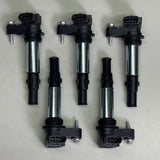 WALKER ThunderSpark Ignition Coil 921-2075
$35.00Plugs and coils. Confirm engine. Confirm fitment by VIN before ordering.
WALKER ThunderSpark Ignition Coil 921-2075
$35.00Plugs and coils. Confirm engine. Confirm fitment by VIN before ordering.


How to Diagnose P0300
- Listen first. A ticking or tapping noise on an AFM or DFM V8 changes the whole diagnosis before you plug anything in.
- Pull codes and freeze frame. P0106 and P0506 alongside point at valve springs. P050D points at cold-start injector or coolant issues. A scatter of unrelated codes suggests harness chafing.
- Read misfire counters per cylinder over a full drive cycle, under Mode $06 or the module's misfire data list. This is the single most useful step, because it tells you whether the misfire is genuinely random or concentrated — and whether it sits on cylinders 1, 4, 6 and 7.
- Ask what was done recently. A code appearing after sensor, module or timing work points at a missed crankshaft variation relearn.
- Consider the false-set bulletin if it's a 2020–2021 L84 with a flashing light under steady throttle and no misfire you can feel.
- Inspect spark plugs and swap a suspect ignition coil to another cylinder to see if the misfire follows it.
- Smoke test for intake vacuum leaks.
- Check fuel trims and fuel pressure. Lean trims across both banks point toward a vacuum leak or fuel supply problem rather than ignition.
- Inspect for carbon buildup on intake valves on direct-injection engines.
- If the picture is mechanical, remove the valve cover and watch rocker movement, then perform compression or cylinder leakage testing as appropriate.
Fuel and scan tools
 BG 44K Fuel System Cleaner Power Enhancer 11oz.
$24.95Cleaner and misfire data.
BG 44K Fuel System Cleaner Power Enhancer 11oz.
$24.95Cleaner and misfire data.
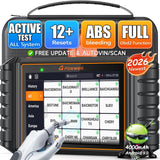 FOXWELL NT726 Bidirectional OBD2 Scanner
$368.99Cleaner and misfire data.
FOXWELL NT726 Bidirectional OBD2 Scanner
$368.99Cleaner and misfire data.

Parts, Labor Time and Repair Cost
| Repair | What it involves | Cost picture |
|---|---|---|
| Crankshaft variation relearn | Scan tool command where the learn was missed after a repair | Minimal — and it can be the entire fix |
| Calibration update | Where the false-set bulletin applies to the VIN | Dealer visit, no parts |
| Spark plugs | Full set, correct part for the engine | Modest part cost; 1–2 hours labour |
| Ignition coils | Confirm by swapping before replacing | Moderate per coil; 1–2 hours |
| Intake manifold gasket | Where a smoke test finds the leak | Modest part; 2–4 hours |
| Intake valve carbon cleaning | Walnut blasting or GM's top engine cleaner procedure | Moderate, mostly labour |
| Valve spring replacement | Valve cover off, cylinder leakage test, spring replacement per GM's mileage and RPO rules | Significant labour |
| AFM/DFM lifter and camshaft | Head removal, lifter and cam replacement. Order against the VIN — AFM and DFM lifters are not freely interchangeable | The major repair — commonly quoted in thousands |
Costs vary by region, shop, model year and mileage. Always confirm exact part numbers against your VIN before ordering.
GM Documents Relevant to P0300
| Document | Subject | Status |
|---|---|---|
| PIP5809A (and PIP5809) | "DTC P0300 Engine Misfire Detected Not Felt." Light may flash on a long grade or smooth road with steady throttle. Cause: the P0300 diagnostic falsely setting the DTC under certain driving conditions; misfires more noticeable on cylinders 1 and 6 | Silverado 1500 and Sierra 1500, 2020–2021, 5.3L L84 — verified |
| PIP5752E | Service engine light, misfire and engine noise with P0300, P0106, P0506. Cause: possible broken valve spring | Silverado/Sierra 2020, Tahoe/Suburban/Yukon/Escalade 2021, Camaro 2020–21, Corvette 2020 — verified |
| PIP5801A | Same condition, extended DTC list. Cylinder leakage test required. 6.2L under 1,000 km replace all springs, above replace the broken one; L82, L84 and L8T replace only the affected spring | 6.2L L87/LT1/LT4/LT2 and related — verified |
| PIP5423 | P0106 and P0506 from a broken valve spring; if found, inspect the intake manifold for a collapsed runner | Earlier GM V8s — verified |
| 21-NA-149 | Engine wire harness chafing causing runs rough, stalls and various DTCs | Silverado/Sierra 2019–2022, Tahoe/Suburban/Escalade 2021–2023 — verified |
| 23-NA-043, PIP5776H, 15-06-01-002M | AFM/DFM valve lifter diagnosis and replacement; cylinder-specific codes frequently set alongside P0300 | Corroborated — not opened |
What Other P0300 Pages Get Wrong
- Treating it as an ignition code. Plugs and coils are the right first checks, but on a modern GM V8 the code that most often ends in a four-figure bill is this one, and the reason is lifters. A ticking noise reframes the whole diagnosis.
- Never mentioning the deactivation cylinders. AFM shuts down cylinders 1, 4, 6 and 7. Misfire counters concentrated there are pointing at the lifters, not at random chance.
- Missing the valve spring signature. P0300 with P0106 and P0506 and engine noise is GM's own documented combination, with a published mileage rule for how many springs to replace.
- Not knowing GM published a false-set bulletin. On 2020–2021 L84 trucks GM states the diagnostic can set this code falsely, including a flashing light, under steady throttle on a grade — with no misfire felt. That is worth knowing before authorising engine work.
- Forgetting the crankshaft relearn. Misfire detection depends on learned crankshaft variation. Skip the relearn after a sensor or module replacement and the module reports misfires that are not occurring.
- Ordering lifters without checking the VIN. AFM and DFM lifters are not freely interchangeable, and a build-date issue before March 2021 is widely reported.
- Publishing a single percentage for "the most common cause." The honest answer is that it depends on the engine: on a 1.4L turbo the odds favour coils and carbon; on a high-mileage AFM V8 with a tick, they do not.
We publish coverage and specifications where we could read them in GM's own documentation — here, five bulletins — and label the rest corroborated.
Frequently Asked Questions
What does the -00 mean in P0300-00?
It is GM's failure type byte. The two digits after the dash describe the specific fault mode, and 00 means "no sub-type information" — the module is reporting the misfire itself without further circuit detail. P0300-00 and P0300 are the same fault and are diagnosed identically.
Is P0300 dangerous to drive with?
If the check engine light is flashing rather than steady, treat it as urgent — an active misfire that severe can destroy a catalytic converter quickly. A steady light is generally less immediate, but a steady light with a ticking noise on an AFM or DFM V8 is its own kind of urgent, because a failing lifter can damage the camshaft.
My light flashed but the truck felt fine. What does that mean?
On a 2020–2021 Silverado or Sierra with the 5.3L L84, GM published preliminary information titled "DTC P0300 Engine Misfire Detected Not Felt," stating the diagnostic can falsely set the code under certain driving conditions — including the light flashing on a long grade or smooth road at steady throttle. Have a dealer check your VIN for the current calibration. If the engine genuinely runs badly, this is not your answer.
How do I know if AFM or DFM lifter failure is causing my P0300?
Listen for a ticking or tapping noise from the upper engine and watch for rising oil consumption — these usually precede a full collapse. Check whether misfire counters concentrate on cylinders 1, 4, 6 or 7. Confirmation means removing a valve cover to watch rocker arm movement, and ultimately the cylinder head to inspect the lifters and camshaft.
What does P0300 with P0106 and P0506 mean?
That combination, especially with engine noise, is GM's documented broken valve spring signature across several V8 engines. The published procedure involves removing the valve cover to inspect, performing a cylinder leakage test on the affected cylinder, and checking the intake manifold for a collapsed runner if a broken spring is found.
How is P0300 different from a single-cylinder code like P0301?
P0300 means the misfire is random or affecting multiple cylinders, which usually points to a shared cause — fuel delivery, a vacuum leak, valve springs, or lifters. A cylinder-specific code more often points to that cylinder's own coil, plug or injector. Note that when all four AFM deactivation cylinders fail together, you get P0300 rather than four separate codes.
I just had work done and now I have P0300. Why?
Check whether the crankshaft variation relearn was performed. Misfire detection relies on the module having learned small crankshaft and reluctor wheel variations, and GM requires the relearn after module or engine replacement and after work affecting the crank sensor relationship. Without it, the module can report misfires that are not happening.
Can worn spark plugs alone cause P0300?
Yes, and they remain the cheapest thing to rule out first. Just don't stop there if the engine is ticking, burning oil, or storing P0106 and P0506 alongside — those point somewhere considerably more expensive.
Will a P0300 code clear itself?
The light can go out on its own if the misfire stops and enough clean drive cycles complete, but the code stays stored in history. A light that clears and returns usually means an intermittent fault — a marginal coil or an early-stage lifter — that has not actually been fixed.
Shop Related Parts & Accessories
Start with the cheap checks — plugs and coils — then let the noise and the companion codes tell you whether the cause is mechanical. Confirm fitment against your VIN before ordering.
-
 ACDelco 41-162 Iridium Spark Plug (Pack of 2) — the cheapest cause to rule out first. Confirm the correct plug for your engine.
-
 Ignition Coil (GMC Acadia/Terrain/Canyon, Cadillac, Buick 3.6L/3.0L) — swap a suspect coil to another cylinder to confirm before replacing.
-
 Active Fuel Management (AFM/DFM) Disabler Device — keeps cylinder deactivation from engaging. Note this does not repair an already-failed lifter.
-
 8pc Spark Plug Wire Ignition Cable Set (GM V8) — for applications that still use plug wires.
-
 MOTOPOWER MP69033 OBD2 Scanner — reads the companion codes that separate an ignition fault from a valve spring or lifter failure.
Related Guides
- GM AFM/DFM Lifter Failure: Symptoms, Causes & What To Do
- 5.3L Lifter Noise: Meaning, Symptoms & Repair Guide
- P0106 Code: MAP Sensor Performance
- P0335 Code: Crankshaft Position Sensor Circuit
- P0171 Code: System Too Lean, Bank 1
- Engine Misfire: Meaning, Symptoms & Repair Guide
- GM Check Engine Light Codes: Most Common & What They Mean