
P0335 is "Crankshaft Position Sensor 'A' Circuit." The module has lost the signal that tells it where the crankshaft is — and without that, it cannot time spark or injection. This is one of the few codes that genuinely warrants "do not drive": the engine can stall at speed without warning, or simply refuse to restart. Two things make it different on a GM: a relearn procedure is mandatory after replacing the sensor, and GM has published multiple bulletins showing that the fault is often a chafed wiring harness rather than the sensor at all.
Jump to a section: What P0335 means · The relearn you cannot skip · The harness chafing bulletins · Behind the starter — why labour varies · The reluctor wheel · Companion codes · Symptoms · Causes and how to confirm each · How it's diagnosed · Parts and cost · GM documents · What other pages get wrong · FAQ
What Does P0335 Mean?
The crankshaft position sensor reads a toothed ring — the reluctor wheel — turning with the crankshaft. From that it derives engine speed and exact crank position, which the module needs for ignition timing, fuel injection timing, and misfire detection.
P0335 sets when that signal is absent or unusable. The related code P0336 means the signal is present but erratic or illogical, which usually points at the same root causes.
A useful first check with a scan tool: watch the engine speed PID while cranking. If RPM reads zero while the starter turns the engine, the module genuinely has no crank signal, which confirms a total loss in the circuit rather than an intermittent fault.
The sensor circuit is typically three wires — a low reference (ground), the signal, and a 5-volt reference — so the electrical checks are: is the reference voltage arriving, is the ground good, and is a signal coming back.
On safety, this code is different from most. A vehicle that can stall unexpectedly at highway speed, losing power assist as it does, is a genuine hazard. This is not a code to drive on while you decide what to do.
The Relearn You Cannot Skip
This is the GM-specific step that separates a repair that works from one that does not, and it is why people fit a brand new sensor and still have problems.
GM's service information describes the reasoning directly. The interval between crank sensor pulses is extremely small, and at high engine speeds slight variations in the reluctor wheel and the sensor make misfire detection difficult. The module learns those variations during the Crankshaft Position System Variation Learning Procedure and compensates for them when calculating misfire.
Critically: only a scan tool can command the module to perform that procedure. It does not happen on its own.
GM lists when the learn must be performed:
- After a control module replacement
- After any operation or repair involving the crankshaft, the CKP sensor, or the sensor-to-reluctor-wheel gap relationship
- After an engine replacement
- If the ignition switch has been left in the ON position until the battery drained
That last one surprises people, and it is worth remembering: leaving the key on until the battery goes flat can require a relearn on its own.
What happens if you skip it: the module's misfire detection is working from stale variation data. You can get P1336, false misfire codes such as P0300, rough running, erratic idle, and in some cases a vehicle that still will not start properly — all with a perfectly good new sensor fitted. Owners then conclude the new part is defective and replace it again.
This is the main reason a crank sensor job on a GM is not a pure parts swap. If you are doing it yourself, you need access to a bidirectional scan tool capable of commanding the procedure, or a shop willing to perform just the relearn afterwards.
Tools for checking the CKP signal
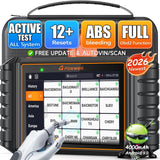 FOXWELL NT726 Bidirectional Scanner
$368.99Bidirectional scanner that shows crank sensor RPM signal and all-module codes during a no-start.
FOXWELL NT726 Bidirectional Scanner
$368.99Bidirectional scanner that shows crank sensor RPM signal and all-module codes during a no-start.
 FOXWELL NT301 Code Reader
$68.82Budget code reader with live data for confirming an engine speed signal while cranking.
FOXWELL NT301 Code Reader
$68.82Budget code reader with live data for confirming an engine speed signal while cranking.
 TOPDON BT200 Battery Tester
$103.99Low battery voltage while cranking can corrupt the CKP signal — test the battery first.
TOPDON BT200 Battery Tester
$103.99Low battery voltage while cranking can corrupt the CKP signal — test the battery first.

The Harness Chafing Bulletins — Check the Wiring First
GM has published a series of bulletins showing that no-start, stalling and a spread of codes on these vehicles frequently come from engine wiring harness chafing, not from the sensors those codes name.
21-NA-149 — the big one
Bulletin 21-NA-149 (March 2023) carries a subject line that tells you how broad this is: Engine Wire Harness Chafing / IPC Gauges Sweep / IPC Warning Message / SES/Check Engine/MIL / No Start / No Crank / Runs Rough / Stalls / Reduced Engine Power / Various DTCs. It replaces PIT5677E, PIT5713A, PIT5751C and PIT5742.
Coverage is extensive:
| Vehicle | Model years | Engines |
|---|---|---|
| Chevrolet Silverado 1500 (New Model) | 2019 | 5.3L L82, 5.3L L84, 6.2L L87, 4.3L LV3, 2.7L L3B, 3.0L LM2 |
| Chevrolet Silverado 1500 | 2020–2021 | As above |
| Chevrolet Silverado 1500 LTD (RPO J21) | 2022 | As above |
| Chevrolet Tahoe, Suburban | 2021–2023 | 5.3L L84 and L87, 2.7L L3B, 3.0L LM2 |
| Cadillac Escalade models | 2021–2023 | 5.3L L84 and L87, 2.7L L3B, 3.0L LM2 |
| GMC Sierra 1500 | Corresponding years | As above |
GM names specific chafe locations — the front corner of the left-hand cylinder head, the drive belt idler pulley bracket, and the oil dipstick bracket — and explains why the symptoms are so varied:
This harness chafing could cause shorting of any number of circuits to ground. Due to the number of circuits in the harness, there is a wide variety of different symptoms that could occur depending on which circuit(s) are damaged.
On the 3.0L LM2 specifically, GM directs technicians to a harness pinched or chafed roughly 18 inches from the ECM connectors, on top of the generator.
The reported root cause is instructive: an engine wire harness clip omitted during production, leaving an uncontrolled branch of harness free to rub against sharp metal edges near the ECM/TCM bracket. The correction is to repair the damaged wires and secure the harness — sleeve it and zip-tie it so it cannot move again. A complete harness replacement is usually not required.
Two more, on other platforms
16-NA-118 (July 2016) covers the 2013–2016 Chevrolet Sonic with the 1.8L LUW or LWE. Customers comment on no start, MIL on, and possible loss of steering assist. GM's cause: the engine harness routed too close to the ECM lower mounting bracket stud — the stud pierces the harness and chafes and shorts wires inside it. The correction is to inspect for contact or damage, then reroute or repair.
PIT5414A (June 2015) covers the 2015 Chevrolet Colorado and GMC Canyon for no crank / no start, loss of communication, engine stall, and SES with DIC messages. It directs inspection of the engine wiring harness at three named points: contact with the water pump pulley, chafing on the oil filter housing, and chafing on the engine boss at the left rear cylinder head behind the coolant pipe.
The pattern across all three is the same, and it is the practical lesson of this page: inspect the harness before condemning the sensor. Two further preliminary bulletins reported in circulation — PIP5553A and PIP5724 — describe a wiring jumper harness chafed at a bolt or pinched at a connector producing P0335 with a possible crank-no-start or stall. We could not open those two, so treat them as corroborated; the three above we have read.
Behind the Starter — Why the Labour Quote Varies So Much
On many GM V8 trucks the crankshaft position sensor sits on the lower passenger side of the engine, behind the starter motor. The starter has to come off to reach it.
That has three consequences worth knowing before you accept a quote:
- The part is cheap and the access is not. The sensor itself is inexpensive; the labour is what you are paying for.
- A no-start gets misdiagnosed as a starter. The symptom overlaps, and the parts sit in the same place. Confirm the crank signal before replacing a starter.
- Heat is the reason it failed. Sitting next to the starter and its main power cable means constant heat cycling — and it also means checking for melted wiring near the starter cable while you are in there.
On other GM engines the sensor is more accessible — on the 2.4L Ecotec, for example, it is a straightforward replacement, with the sensor commonly listed as part 12674703. Verify the location for your engine before assuming either extreme.
The Reluctor Wheel — When a New Sensor Does Not Help
The sensor reads a toothed ring. If the ring itself has moved, the sensor can be perfect and the signal still wrong.
On the 3.6L V6 used in the Acadia, Traverse, Enclave and others, a slipped crankshaft reluctor wheel is a recognised condition, and GM is reported to have issued a bulletin on it. It more commonly sets correlation codes such as P0016 or P0008 than P0335 itself — but it belongs on your list if a new sensor has not solved the problem.
The same engine family is known for timing chain stretch, and so is the 2.4L Ecotec, particularly where oil level has been allowed to run low. Our P0016 guide covers that path in detail.
The rule: P0335 with correlation codes alongside is a mechanical question, not a sensor question. Do not fit a third sensor — look at the chain and the reluctor.
What the Companion Codes Tell You
| Alongside P0335 | What it suggests |
|---|---|
| P0336 | Erratic rather than absent signal. Same root causes; often an intermittent connection |
| P1336 | The variation relearn has not been performed. Do the procedure before anything else |
| P0340 / P0365 (camshaft position) | Shared harness damage. GM's engineering information PIE0416A is reported to have investigated P0335, P0340 and P0365 together |
| P0016 or P0008 | Crank-to-cam correlation — timing chain or a slipped reluctor wheel, not the sensor |
| P0300 misfires after a repair | Very often the missed relearn rather than a genuine misfire |
| A wide scatter of unrelated codes, blown fuses, gauge sweeps | Harness chafing shorting multiple circuits — exactly what 21-NA-149 describes |
Symptoms of P0335
- No start — the engine cranks but will not fire
- Stalling without warning, including at speed
- Long crank times before starting
- Intermittent running that comes and goes with heat or vibration
- Rough running, hesitation, misfiring
- Reduced Engine Power message
- Instrument cluster gauges sweeping, or warning messages, where harness chafing is involved
- Check engine light — logged within seconds of losing the signal
- Engine speed reading zero on a scan tool while cranking
What Causes P0335 — and How Do You Confirm Each One?
| Cause | How to confirm it | Source |
|---|---|---|
| Chafed engine wiring harness | Inspect the named locations — left-hand cylinder head front corner, idler pulley bracket, oil dipstick bracket, ECM/TCM bracket | 21-NA-149 — verified |
| Harness pierced by the ECM mounting bracket stud | Inspect where the harness passes the ECM lower bracket | 16-NA-118 — verified (Sonic 1.8L) |
| Harness chafing at the water pump pulley, oil filter housing or cylinder head boss | Inspect those three named points | PIT5414A — verified (Colorado / Canyon) |
| Failed crankshaft position sensor | Check for the 5V reference and ground at the connector, then sensor resistance. Engine speed reading zero while cranking supports a total loss | The most common single component failure |
| Melted wiring near the starter cable | Inspect while the starter is off on V8 applications | Heat from the adjacent starter cable |
| Missed variation relearn after a repair | P1336 stored, or misfire codes after a sensor or module replacement | GM service information |
| Slipped reluctor wheel | Suspect where a new sensor did not help, particularly on the 3.6L V6 | Reported GM bulletin — corroborated |
| Stretched timing chain | P0016 or P0008 alongside | See our P0016 guide |
| Oil contamination of the connector | Inspect for oil in the connector; check for the crankcase pressure issues that cause leaks | See our P1101 guide on crankcase pressure |
| Low system voltage confusing the module | Test the battery and charging system | See our P0562 guide |
Crankshaft position sensors
 ACDelco Crankshaft Position Sensor 213-4761
$103.99ACDelco crankshaft position sensor for many Chevy and GMC engines. Confirm fitment by VIN before ordering.
ACDelco Crankshaft Position Sensor 213-4761
$103.99ACDelco crankshaft position sensor for many Chevy and GMC engines. Confirm fitment by VIN before ordering.
 ACDelco Gold 213-4761 Crankshaft Sensor
$57.70ACDelco Gold version of the 213-4761 sensor. Confirm fitment by VIN before ordering.
ACDelco Gold 213-4761 Crankshaft Sensor
$57.70ACDelco Gold version of the 213-4761 sensor. Confirm fitment by VIN before ordering.
 12636947 Crankshaft Position Sensor
$15.78Budget 12636947 crank sensor listed for Buick and Chevrolet applications. Confirm fitment by VIN before ordering.
12636947 Crankshaft Position Sensor
$15.78Budget 12636947 crank sensor listed for Buick and Chevrolet applications. Confirm fitment by VIN before ordering.


How Is P0335 Diagnosed?
- Stop driving it. Unexpected stalling at speed is the real risk here.
- Record every stored code. A wide scatter of unrelated codes, blown fuses or gauge sweeps points at harness chafing rather than the sensor.
- Watch engine speed while cranking. Zero RPM confirms a total loss of crank signal.
- Inspect the engine wiring harness at the locations GM names for your platform — this is the step most often skipped and most often productive.
- Check for melted wiring near the starter on V8 applications.
- Test the sensor circuit — 5V reference present, ground good, signal returning.
- Test the sensor itself against the specification for your engine.
- Check battery and charging health, since low voltage produces confusing behaviour across modules.
- Replace the sensor if confirmed, using a quality part matched to the VIN.
- Perform the Crankshaft Position System Variation Learning Procedure with a scan tool. This is not optional.
Parts and Cost
| Repair | What it involves | Cost picture |
|---|---|---|
| Harness repair and securing | Repair damaged wires, sleeve the harness, secure with ties so it cannot move again | Labour plus minor materials. GM notes full harness replacement is usually not required |
| Connector or pigtail repair | Where corrosion or oil intrusion is the fault | Modest |
| Crankshaft position sensor, accessible engine | Straightforward replacement — the 2.4L Ecotec sensor is commonly listed as 12674703 | Inexpensive part, modest labour |
| Crankshaft position sensor, behind the starter | Starter removal required for access on many V8 trucks | Cheap part, labour dominates |
| Variation relearn procedure | Bidirectional scan tool command. Mandatory after sensor or module replacement | Small charge if done alone — far cheaper than the problems skipping it causes |
| Timing chain or reluctor wheel | Only where correlation codes or a failed sensor replacement point there | The major repair in this group |
For the replacement job
 50-Piece 1/4 in. Drive Socket Set
$54.99Quarter-inch drive sockets for tight sensor bolts.
50-Piece 1/4 in. Drive Socket Set
$54.99Quarter-inch drive sockets for tight sensor bolts.
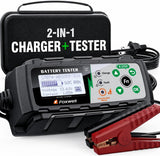 FOXWELL BC521 Battery Charger & Tester
$162.35Charger and tester for battery health.
FOXWELL BC521 Battery Charger & Tester
$162.35Charger and tester for battery health.

GM Documents Relevant to P0335
| Document | Date | Subject | Coverage |
|---|---|---|---|
| 21-NA-149 | Mar 2023 | Engine wire harness chafing — no start, no crank, runs rough, stalls, reduced engine power, gauge sweeps, various DTCs. Named chafe locations; repair and secure rather than replace the harness. Replaces PIT5677E, PIT5713A, PIT5751C, PIT5742 | Silverado 1500 2019–2022, Sierra 1500, Tahoe / Suburban 2021–2023, Escalade 2021–2023 — 5.3L L82/L84, 6.2L L87, 4.3L LV3, 2.7L L3B, 3.0L LM2 — verified |
| 16-NA-118 | Jul 2016 | Engine wiring harness chafing, no start or MIL on, possible loss of steering assist. Harness routed too close to the ECM lower mounting bracket stud, which pierces and shorts wires | Chevrolet Sonic 2013–2016, 1.8L LUW / LWE — verified |
| PIT5414A | Jun 2015 | No crank / no start, loss of communication, engine stall, SES with DIC messages. Inspect harness at the water pump pulley, oil filter housing, and engine boss at the left rear cylinder head | Chevrolet Colorado and GMC Canyon 2015 — verified |
| PIP5553A / PIP5724 | — | Wiring jumper harness chafed at a bolt or pinched at a connector, producing P0335 with possible crank-no-start or stall | Corroborated, not opened |
| PIE0416A | — | Engineering information gathering field data on P0335, P0340 and P0365 | Corroborated, not opened |
What Other P0335 Pages Get Wrong
- Not mentioning the relearn. On GM the Crankshaft Position System Variation Learning Procedure is mandatory after replacing the sensor or the module, and only a scan tool can command it. Skip it and you get P1336, false misfire codes and poor running with a brand new sensor — then people replace the new sensor.
- Going straight to the sensor. GM has published multiple bulletins showing harness chafing produces no-start, stalling and this code, and 21-NA-149 explicitly notes that damage to different circuits produces wildly different symptoms. Inspect the wiring first.
- Quoting one labour figure. On many V8 trucks the sensor is behind the starter and the starter must come off. On other GM engines it is easily reached. The part costs about the same either way; the labour does not.
- Mistaking it for a starter problem. A crank-no-start with the sensor sitting behind the starter invites exactly that error. Confirm the crank signal before replacing a starter motor.
- Ignoring the correlation codes. P0016 or P0008 alongside means the crank-to-cam relationship has moved — a timing chain or slipped reluctor wheel. A third sensor will not fix it.
- Treating it as safe to drive. Most codes are. This one can stall the vehicle at speed without warning, and that is a different category of risk.
- Recommending a full harness replacement. GM's own correction is to repair the damaged wires and secure the harness so it cannot chafe again. A complete harness is usually unnecessary.
We publish coverage and instructions only where we could read them in GM's own documentation — here, three harness bulletins — and we label the preliminary information we could not open as corroborated.
Frequently Asked Questions
Can I drive with P0335?
We would not. The engine can stall without warning, including at highway speed, and may not restart. That combination is a genuine safety risk rather than an inconvenience, which puts this code in a different category from most check engine lights.
What is the crank relearn and do I really need it?
It is the Crankshaft Position System Variation Learning Procedure, and on GM vehicles it is required after replacing the sensor, the module, or the engine — or after any repair that changes the sensor-to-reluctor-wheel relationship. The module learns small manufacturing variations so it can detect misfires accurately. Only a scan tool can command it, and skipping it causes P1336, false misfire codes and poor running with a new sensor fitted.
Why does leaving the key on require a relearn?
GM lists draining the battery by leaving the ignition switch in the ON position among the conditions requiring the learn procedure to be performed again. It is an easy one to overlook, and it explains some cases where the code appears without any repair having been done.
I replaced the sensor and it still runs badly. What now?
First check whether the relearn was performed — that is the most common answer by a distance. If it was, inspect the wiring harness at the locations GM names for your platform, and look at whether correlation codes such as P0016 are stored, which would point at the timing chain or a slipped reluctor wheel instead.
Could this be a bad starter instead?
A crank-no-start can look like either, and on many GM V8s the crank sensor sits directly behind the starter, which makes the confusion worse. Watch engine speed on a scan tool while cranking — if the engine is turning but RPM reads zero, the crank signal is missing and the starter is doing its job.
Is the wiring really a common cause?
Yes, and GM documented it repeatedly. 21-NA-149 covers harness chafing across the current truck and SUV range with a symptom list running from no-start to gauge sweeps, 16-NA-118 covers a bracket stud piercing the harness on the Sonic, and PIT5414A names three chafe points on the Colorado and Canyon. Inspecting the harness is free and frequently productive.
Do I need a full new wiring harness?
Usually not. GM's correction in the chafing bulletin is to repair the damaged wires and then secure the harness — sleeve it and tie it so it cannot move against the sharp edge again. A complete harness replacement is described as generally unnecessary.
What is a reluctor wheel?
The toothed ring on the crankshaft that the sensor reads. If it slips or is damaged, the signal is wrong even with a healthy sensor. It is a recognised condition on the 3.6L V6, and it more often shows as correlation codes like P0016 than as P0335 itself.
Shop Related Parts & Tools
A scan tool matters more than usual here, because the relearn cannot be done without one. Always confirm fitment against your VIN before ordering.
-
 MOTOPOWER MP69033 OBD2 Scanner — reads the codes and lets you watch engine speed while cranking, which confirms a total loss of crank signal.
-
 VDIAGTOOL BT500 Battery Tester — rules out low voltage, which produces confusing no-start behaviour across modules.
-
 95-Piece Mechanics Tool Set (Metric & SAE) — covers starter removal and sensor access on truck applications.
-
 ACDelco Gold Negative Battery Cable — for a corroded or damaged negative cable, a common source of intermittent electrical faults.