
P0741 stands for "Torque Converter Clutch Circuit Performance or Stuck Off" — the control module commanded the torque converter clutch to lock, watched input and output shaft speeds to confirm it, and did not see the lockup it expected. Before you price a torque converter, there is something worth knowing: on GM's 8-speed transmissions, the underlying condition is frequently a fluid problem GM documented in detail, with a specific fluid, a specific procedure, and a warning that a normal drain-and-fill will not fix it.
Jump to a section: What P0741 means · Shudder vs P0741 — not the same complaint · The 8-speed fluid bulletin · The fluid level rule almost nobody follows · Which transmission do you have? · Symptoms · Causes and how to confirm each · How it's diagnosed · Parts and cost · GM documents · What other pages get wrong · FAQ
What Does P0741 Actually Mean?
The torque converter is a fluid coupling — efficient at low speed, but it always slips a little, and slip means wasted energy and heat. So at cruising speed the transmission applies a clutch inside the converter that mechanically locks the engine to the transmission, eliminating that slip.
The control module commands that clutch through the TCC solenoid, then verifies the result by comparing engine speed against transmission input and output shaft speeds. If the clutch is genuinely locked, those speeds hold a fixed relationship. When the module commands lockup and the expected relationship does not appear, P0741 sets.
Note the word performance in the code name. This is not purely an electrical code — the circuit can be intact and the solenoid can click on command, and P0741 will still set if the clutch does not actually take hold. That is why testing the solenoid electrically and declaring it fine is not a complete diagnosis.
Shudder vs P0741 — Not the Same Complaint
This distinction matters, and getting it right saves people from paying for the wrong repair.
| Complaint | What is happening | What you feel |
|---|---|---|
| TCC shudder | The clutch is applying, but slipping and grabbing rapidly instead of holding smoothly | A vibration at steady cruise, commonly described as driving over rumble strips or rough expansion joints. Often no code at all |
| P0741 (stuck off) | The clutch is not achieving lockup at all when commanded | Higher RPM at highway cruise, worse fuel economy, extra heat. Check engine light on |
They are related — both concern the same clutch — and shudder left alone long enough can progress to a converter that no longer locks properly. But they are diagnosed differently, and the GM bulletin below addresses the shudder condition specifically. If you have both, the shudder is the earlier, cheaper, better-documented problem, and it is where to start.
Transmission fluid
 ACDelco 10-9243 Dexron VI Full Synthetic ATF 88865549, 1 Qt
$16.99Dexron VI. Confirm the spec for your transmission. Confirm fitment by VIN before ordering.
ACDelco 10-9243 Dexron VI Full Synthetic ATF 88865549, 1 Qt
$16.99Dexron VI. Confirm the spec for your transmission. Confirm fitment by VIN before ordering.
 ACDelco 10-9244 Dexron VI Full Synthetic ATF 88865618, 1 Gal
$49.99Dexron VI. Confirm the spec for your transmission. Confirm fitment by VIN before ordering.
ACDelco 10-9244 Dexron VI Full Synthetic ATF 88865618, 1 Gal
$49.99Dexron VI. Confirm the spec for your transmission. Confirm fitment by VIN before ordering.
 ACDelco 10-9395 Dexron VI Automatic Transmission Fluid
$41.99Dexron VI. Confirm the spec for your transmission. Confirm fitment by VIN before ordering.
ACDelco 10-9395 Dexron VI Automatic Transmission Fluid
$41.99Dexron VI. Confirm the spec for your transmission. Confirm fitment by VIN before ordering.


The 8-Speed Fluid Bulletin — 18-NA-355
If your vehicle has an 8L45 or 8L90 eight-speed automatic, this is the single most valuable document on the subject, and most pages either skip it or describe it wrongly.
GM bulletin 18-NA-355 (August 2019 revision) addresses "shake and/or shudder during light throttle acceleration between 25 and 80 mph at steady speed" — specifically when the transmission is not actively shifting gears. GM's own description of how it feels: "as if they are driving over rumble strips or a concrete road surface with rough expansion joints."
GM's stated cause is torque converter clutch shudder, and the correction is a fluid exchange — not a torque converter.
Which vehicles it covers
| Vehicle | Model years | Transmission RPO |
|---|---|---|
| Cadillac ATS, CTS | 2016–2019 | M5N, M5T, M5U |
| Cadillac CT6 | 2016–2018 | M5N, M5X |
| Cadillac Escalade models | 2015–2017 | M5U |
| Chevrolet Camaro | 2016–2019 | M5T, M5U |
| Chevrolet Colorado / GMC Canyon | 2017–2019 | M5T |
| Chevrolet Corvette | 2015–2019 | M5U |
| Chevrolet Silverado / GMC Sierra models | 2015–2018 | M5U, M5X |
| GMC Yukon models | 2015–2017 | M5U |
Our dedicated 8L90 shudder and hard shift guide covers this transmission in more depth.
GM includes date breakpoints — vehicles built after the listed production dates already left the factory with the latest fluid, and those follow normal diagnostics instead.
Why a drain-and-fill will not do it
This is the part worth quoting almost directly. GM states the procedure must be followed as published, that the exchange process is required to obtain the proper concentration of the new blue label Mobil 1 Synthetic LV ATF HP fluid, and that intermixing other transmission fluids or aftermarket additive packages will result in a low concentration of new fluid and will not provide satisfactory results.
The reason is volume. A pan drop replaces only what is in the pan. The torque converter and cooler lines hold several quarts of the old fluid, which then dilutes whatever you put in. GM's procedure pushes roughly 16 quarts through the system using a flush machine connected at the cooler lines, then flushes the cooler and lines with a further 2 quarts in both directions.
So "I had the transmission fluid changed and it did not help" is a very common and very misleading data point. A drain-and-fill is not the repair this bulletin describes, and it is not a fair test of it.
The part that surprises owners
GM notes the shudder should be directionally improved immediately, but that it may take up to 200 miles (320 km) and a minimum of two cold-to-operating-temperature drive cycles for the condition to be eliminated. The dealer is not required to drive it that far — the customer is supposed to be told.
If you have the service done and the shudder is better but not gone on the drive home, that is the documented expectation, not a failed repair. Give it the 200 miles and the two cold cycles before going back.
Parts and labor GM publishes
| Item | Detail |
|---|---|
| Fluid | Mobil 1 Synthetic LV ATF HP, 19417577 (US, 1 quart) — 20 quarts, or 24 for CT6 and Corvette |
| Cooler pipe fitting retainer | 24205103, qty 2 |
| Cooler pipe seal | 23135703, qty 1 |
| Labor operation | 8480818, fluid exchange — 1.1 hrs |
| Add: CT6 or Corvette triple drain and fill | 1.0–1.6 hrs depending on model |
Note also that GM lists this under Powertrain coverage for warranty purposes, with involvement checked against the vehicle's history — worth asking about rather than assuming.
The Fluid Level Rule Almost Nobody Follows
These transmissions have no dipstick. Level is set through a check plug in the pan, and GM is emphatic about the conditions — because getting it wrong causes the exact damage you are trying to avoid.
- Fluid temperature must be between 35–45°C (95–113°F) when the level is checked. GM spells out the consequence of ignoring it: above 45°C the transmission ends up under-filled; below 35°C it ends up over-filled.
- The engine must be running when the check plug is removed. GM warns that removing it with the engine off causes excessive fluid loss and an under-filled transmission.
- The vehicle must be level, in Park, at low idle, after cycling through the gear ranges with a pause in each.
- On Silverado, Sierra, Yukon and Escalade models with a thermal bypass valve, GM says to first bring fluid temperature to 90°C (194°F) to open the bypass and fill the cooler, then let it cool back to 35–45°C before checking. Otherwise the reading is wrong.
GM's stated consequences are worth repeating: an under-filled transmission causes premature component wear or damage. An over-filled one can discharge fluid out the vent tube, possibly causing a fire, along with fluid foaming and pump cavitation.
If a shop tells you they topped up your 8-speed without a temperature reading, that is not a small shortcut.
Which Transmission Do You Have?
P0741 appears across the GM lineup, but the likely cause and the available documentation differ by unit.
| Transmission | Typical vehicles | Where to look first |
|---|---|---|
| 8L45 / 8L90 | Silverado, Sierra, Yukon, Escalade, Camaro, Corvette, ATS, CTS, CT6, Colorado, Canyon | 18-NA-355 fluid exchange, especially if shudder is present |
| 4L60E / 65E / 70E | Older Silverado, Sierra, Tahoe, Suburban | Fluid condition, TCC solenoid, valve body debris |
| 6L80 / 6L90 | Trucks and SUVs, mid-era | Fluid and filter service, TCC/PWM solenoid |
| 6T70 / 6T75 | Equinox, Terrain, Malibu, Traverse, Acadia, Enclave | Fluid condition, solenoid and valve body |
| 9T65 | Later Equinox, Terrain, Acadia, Traverse | See our 9T65 failure guide |
Torque converters
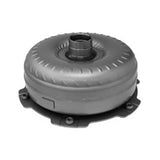 VEGE Remanufactured Torque Converter TQGM4 (2015-2021)
$433.99Converters. Confirm transmission. Confirm fitment by VIN before ordering.
VEGE Remanufactured Torque Converter TQGM4 (2015-2021)
$433.99Converters. Confirm transmission. Confirm fitment by VIN before ordering.
 VEGE Remanufactured Torque Converter TQBU52 (2002-2013)
$309.99Converters. Confirm transmission. Confirm fitment by VIN before ordering.
VEGE Remanufactured Torque Converter TQBU52 (2002-2013)
$309.99Converters. Confirm transmission. Confirm fitment by VIN before ordering.

Symptoms of P0741
- Check engine light on
- Higher than normal RPM at highway cruise — the clearest sign the converter is never locking
- A noticeable drop in fuel economy
- Shudder or vibration at steady speed between roughly 25 and 80 mph, when the transmission is not shifting
- Delayed, harsh or erratic shifting
- Transmission running hotter than normal, sometimes with a temperature warning
- On some vehicles, the transmission entering a protective mode
The RPM symptom is the most diagnostic. If your engine speed at a steady 60 mph is several hundred RPM higher than it used to be, the converter is not locking, and that heat is the reason this code should not be ignored for months.
What Causes P0741 — and How Do You Confirm Each One?
| Cause | How to confirm it | Notes |
|---|---|---|
| Degraded or moisture-affected fluid causing clutch slip | Check fluid condition, and note whether shudder accompanies the code on an 8L45/8L90 | 18-NA-355 fluid exchange is the documented remedy |
| Low fluid level, or level set incorrectly | Check at 35–45°C fluid temperature with the engine running, per the rule above | A mis-set level is a repair that created a fault |
| Debris or varnish blocking the TCC solenoid or valve body passages | Drop the pan; inspect the filter, screen and magnet for debris | The classic cause on older units |
| Failed TCC or pressure control solenoid | Check resistance and circuit against spec, then command the solenoid with a bidirectional scan tool while watching shaft speeds respond | The electrical test alone is not conclusive — watch for the mechanical result |
| Damaged wiring or corroded connector at the transmission | Inspect the external connector and harness; wiggle-test while monitoring | Cheap to find, expensive to miss |
| Worn or damaged valve body | Pressure testing and inspection after fluid and solenoid are ruled out | Ranks after the cheaper items for a reason |
| Torque converter clutch friction material glazed or worn | Considered when a correct fluid exchange does not resolve it | The expensive outcome — confirm before committing |
| Overheating from towing or a restricted cooler | Check cooler flow and any thermal bypass function | Heat is both cause and consequence here |
| Control module fault | Last, after circuit and hydraulics are proven | Rare relative to everything above |
Filters and solenoids
 CARQUEST 85976 Transmission Filter Kit
$22.00Filter kits and shift solenoids. Confirm transmission. Confirm fitment by VIN before ordering.
CARQUEST 85976 Transmission Filter Kit
$22.00Filter kits and shift solenoids. Confirm transmission. Confirm fitment by VIN before ordering.
 CARQUEST 96080 Transmission Filter Kit
$13.00Filter kits and shift solenoids. Confirm transmission. Confirm fitment by VIN before ordering.
CARQUEST 96080 Transmission Filter Kit
$13.00Filter kits and shift solenoids. Confirm transmission. Confirm fitment by VIN before ordering.
 GM Genuine Parts 24230298 1-2/3-4 Shift Solenoid
$17.21Filter kits and shift solenoids. Confirm transmission. Confirm fitment by VIN before ordering.
GM Genuine Parts 24230298 1-2/3-4 Shift Solenoid
$17.21Filter kits and shift solenoids. Confirm transmission. Confirm fitment by VIN before ordering.


How Is P0741 Diagnosed?
- Record all codes and the freeze frame. Speed, load and temperature when it set will tell you a lot.
- Ask about shudder. A vibration at steady cruise between 25 and 80 mph on an 8L45/8L90 puts you directly on the 18-NA-355 path.
- Check fluid level properly — 35–45°C, engine running, vehicle level, and the 90°C pre-heat step on thermal-bypass trucks.
- Assess fluid condition. Dark, burnt-smelling or varnished fluid is a finding in itself.
- Check RPM at a steady highway cruise against what the vehicle used to do, to confirm lockup is genuinely absent.
- Test the TCC solenoid circuit — resistance and voltage against spec, plus the connector.
- Command the solenoid with a bidirectional scan tool and watch shaft speeds for a real response. This separates "the solenoid clicks" from "the clutch applies."
- Drop the pan and inspect the filter, screen and magnet for debris if the electrical side checks out.
- Do the correct fluid exchange where the bulletin applies — not a drain-and-fill — and allow 200 miles and two cold cycles before judging it.
- Only then consider the valve body or the converter itself.
Scan tools
 FOXWELL NT726 Bidirectional OBD2 Scanner
$368.99Watch TCC slip in live data.
FOXWELL NT726 Bidirectional OBD2 Scanner
$368.99Watch TCC slip in live data.
 FOXWELL NT614 Elite OBD2 Scanner
$233.69Watch TCC slip in live data.
FOXWELL NT614 Elite OBD2 Scanner
$233.69Watch TCC slip in live data.

Parts and Cost
The GM labor operation and part numbers below come from 18-NA-355, which we read directly. Other figures are typical ranges rather than GM-published times.
| Repair | What it involves | Cost picture |
|---|---|---|
| Correct fluid level check | Temperature-controlled check at the pan plug | Minimal — and it can be the whole fix |
| 8L45 / 8L90 fluid exchange per 18-NA-355 | 20 quarts of Mobil 1 Synthetic LV ATF HP (19417577), retainers 24205103, seal 23135703. GM labor operation 8480818 at 1.1 hrs | Dominated by the fluid volume; listed under Powertrain coverage for warranty purposes |
| Conventional fluid and filter service | Pan, filter, gasket, fluid | Modest — the right first step on older units |
| TCC solenoid replacement | Valve body access | Several hours of labour plus the part |
| Valve body replacement | Significant disassembly | Well into four figures at most shops |
| Torque converter replacement | Transmission removal | The expensive outcome, and why the fluid path gets tried first |
| Transmission rebuild | Where heat damage has already occurred | The reason not to drive on this for months |
The shape here is unusually favourable: on the 8-speeds, GM's own documented remedy is a 1.1-hour fluid service rather than a converter. That is worth exhausting before anyone quotes you a transmission.
GM Documents Behind P0741 and TCC Shudder
| Document | Date | Subject | Coverage |
|---|---|---|---|
| 18-NA-355 | Jan 2019, rev. Aug 2019 (v5) | Shake and/or shudder during light throttle acceleration between 25 and 80 mph at steady speed — TCC shudder. Fluid exchange with Mobil 1 Synthetic LV ATF HP; full procedure, parts and labor | 8L45 / 8L90 — ATS, CTS, CT6, Escalade, Camaro, Colorado, Corvette, Silverado, Canyon, Sierra, Yukon (see table above). U.S., Canada and Middle East |
| 19-NA-018 | — | The equivalent guidance for Mexico and Export regions, referenced by 18-NA-355 | Outside U.S./Canada/MEO |
| 16-NA-175 / 18-NA-177 | Superseded | Earlier TCC shudder bulletins, replaced by the 18-NA-355 procedure | Historic — worth knowing if your service history references them |
What Other P0741 Pages Get Wrong
- "A transmission fluid change often fixes it." True in spirit, badly wrong in detail on the 8-speeds. GM explicitly states the exchange procedure must be followed as published, and that intermixing other fluids or additive packages produces a low concentration of new fluid and will not give satisfactory results. A pan drop leaves the converter and cooler lines full of the old fluid.
- Treating shudder and P0741 as the same complaint. Shudder is a clutch applying and slipping; P0741 is a clutch not locking at all. GM's bulletin addresses the shudder condition, between 25 and 80 mph at steady speed. Knowing which you have determines where to start.
- Using any Dexron VI fluid. The bulletin specifies blue label Mobil 1 Synthetic LV ATF HP by part number. On these transmissions that specificity is the point of the repair, not a brand preference.
- Ignoring the fluid temperature rule. These units have no dipstick. GM requires the level check at 35–45°C with the engine running, and states that outside that window you will end up over- or under-filled — with consequences ranging from premature wear to fluid discharged from the vent and a possible fire.
- Judging the repair on the drive home. GM says full effect may take up to 200 miles and at least two cold-to-operating-temperature cycles. Declaring failure after twenty minutes is premature.
- Condemning the solenoid on an electrical test alone. P0741 is a performance code. A solenoid can pass resistance testing and still fail to produce lockup. Command it and watch the shaft speeds.
We publish part numbers, labor operations, specifications and vehicle coverage only where we could read them in GM's own documentation.
Frequently Asked Questions
Can I keep driving with P0741?
Short trips, yes. But a converter clutch that will not lock generates significant extra heat, and heat is what turns a fluid or solenoid problem into a rebuild. Avoid towing and long highway runs until it is diagnosed — those are exactly the conditions that do the damage.
Will a fluid change fix P0741?
On the 8L45 and 8L90 it very often does — but only the exchange procedure GM published, not a drain-and-fill. GM's own wording is that the exchange process is required to reach the proper concentration of the new fluid, and that mixing in other fluids or additives will not give satisfactory results. On older transmissions, a proper fluid and filter service clears many cases where debris was blocking the solenoid.
What fluid does my 8-speed need?
Blue label Mobil 1 Synthetic LV ATF HP — GM part 19417577 in the US. The bulletin calls for 20 quarts for most models and 24 for CT6 and Corvette. Substituting generic Dexron VI is not a cost saving here; it is skipping the repair.
How long until the shudder goes away after the service?
GM says it should be directionally improved immediately, but that full elimination may take up to 200 miles and a minimum of two cold-to-operating-temperature drive cycles. Dealers are told to advise customers of this. Give it that distance before concluding it did not work.
Why does my transmission have no dipstick?
Level is set through a check plug in the pan instead, and it must be done at a fluid temperature of 35–45°C with the engine running and the vehicle level. Outside that temperature window the level ends up wrong in a predictable direction — too hot means under-filled, too cold means over-filled.
Is P0741 covered under warranty?
The 18-NA-355 fluid exchange is written under Powertrain coverage, with involvement checked against the vehicle's history. Whether it applies depends on your VIN, mileage and in-service date, so it is worth asking specifically rather than assuming either way.
My shop says I need a new torque converter. Should I get a second opinion?
If you have an 8L45 or 8L90 and the correct fluid exchange has not been performed, yes. GM's documented first response to this condition is the fluid procedure, not the converter. If a proper exchange has already been done and the shudder or code persists, a damaged converter clutch becomes the reasonable next conclusion.
Does P0741 affect fuel economy?
Yes, measurably. Converter lockup exists to eliminate slip at cruise, so without it the engine runs at higher RPM for the same road speed and burns more fuel. A sudden unexplained drop in highway economy alongside this code is consistent, not coincidental.
Shop Related Parts & Accessories
Since fluid condition and a clean valve body cause most P0741 cases, these are the parts to have on hand for the fluid/filter service or solenoid repair.


